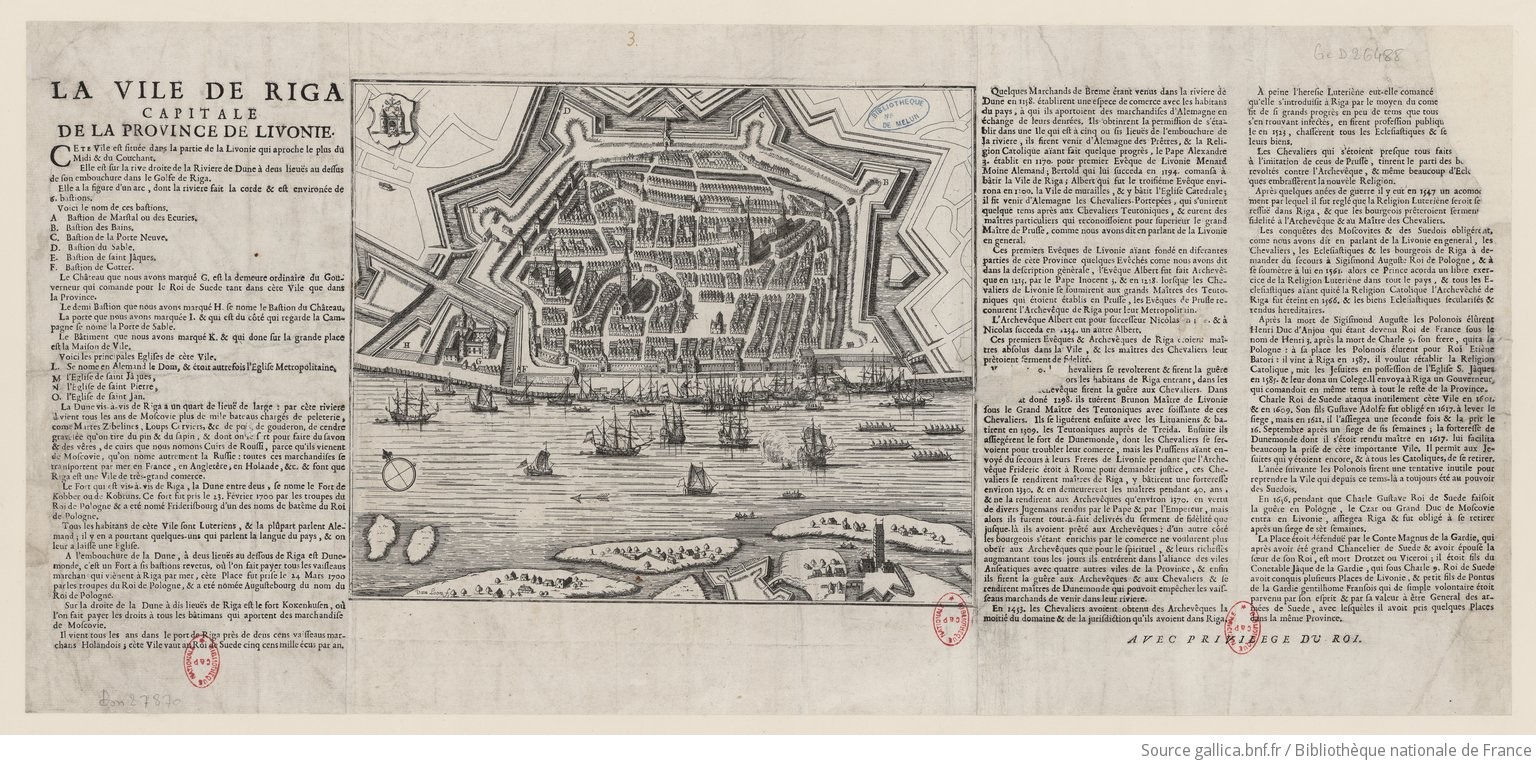
For nearly 700 years, a small German-speaking elite ran Latvia. They built the castles, owned the land, governed the cities, shaped the culture. Then in October 1939, they all packed up and left. About 60,000 people. Six weeks. Gone. If you've ever wondered why a tiny Baltic country has baroque palaces and an Old Town that looks like northern Germany — this is why.
It Starts with Crusaders (1201)
In 1201, Bishop Albert of Bremen sailed up the River Daugava and founded Riga. The official purpose was to convert the pagan Baltic peoples to Christianity. The unofficial purpose was land, power, and the very lucrative fur and amber trade. Within fifty years the entire territory was conquered. The castles you can visit today — Bauska, Cēsis, Sigulda — date from this period, built as statements: We're here. We're staying. They meant it for seven hundred years.
When Latvia Had a Caribbean Colony
After the Livonian Order collapsed in 1561, the southern half of Latvia became the Duchy of Courland, run by Baltic German nobility. Under Duke Jacob Kettler (1642–1682), this duchy the size of a medium English county acquired overseas colonies — part of the Gambia River in West Africa, and the Caribbean island of Tobago. Latvia had a Caribbean colony. The island where they now make rum and host cricket matches. For a few decades in the 17th century, there were Courlanders building fortifications on a tropical beach thousands of kilometres from the Baltic. The audacity of it is still breathtaking.
The Exit — October 1939
Following the Molotov-Ribbentrop Pact, Hitler called the German Balts "home to the Reich." Within six weeks, 60,000 people packed up centuries of accumulated life and sailed away — families with records in Latvia going back to the 13th century, leaving for a "homeland" most had never visited. They were resettled on farms confiscated from Polish families in occupied Poland. The bitter irony of displaced people settled on the property of other displaced people was apparently lost on the regime organising it.
I'm a Latvian. My ancestors were the serfs, not the barons. And yet I spend my working life showing visitors the palaces and castles that the German Balt elite built — because those stories are part of my country's story, and they're extraordinary. — Daiga
Walk Through This History with Me
On my day excursion to Rundāle Palace and Bauska Castle, I bring this 700-year story to life — the crusader fortress, the baroque palace, the countryside they shaped. Plus a stop at a local brewery.
See the Excursion Details →