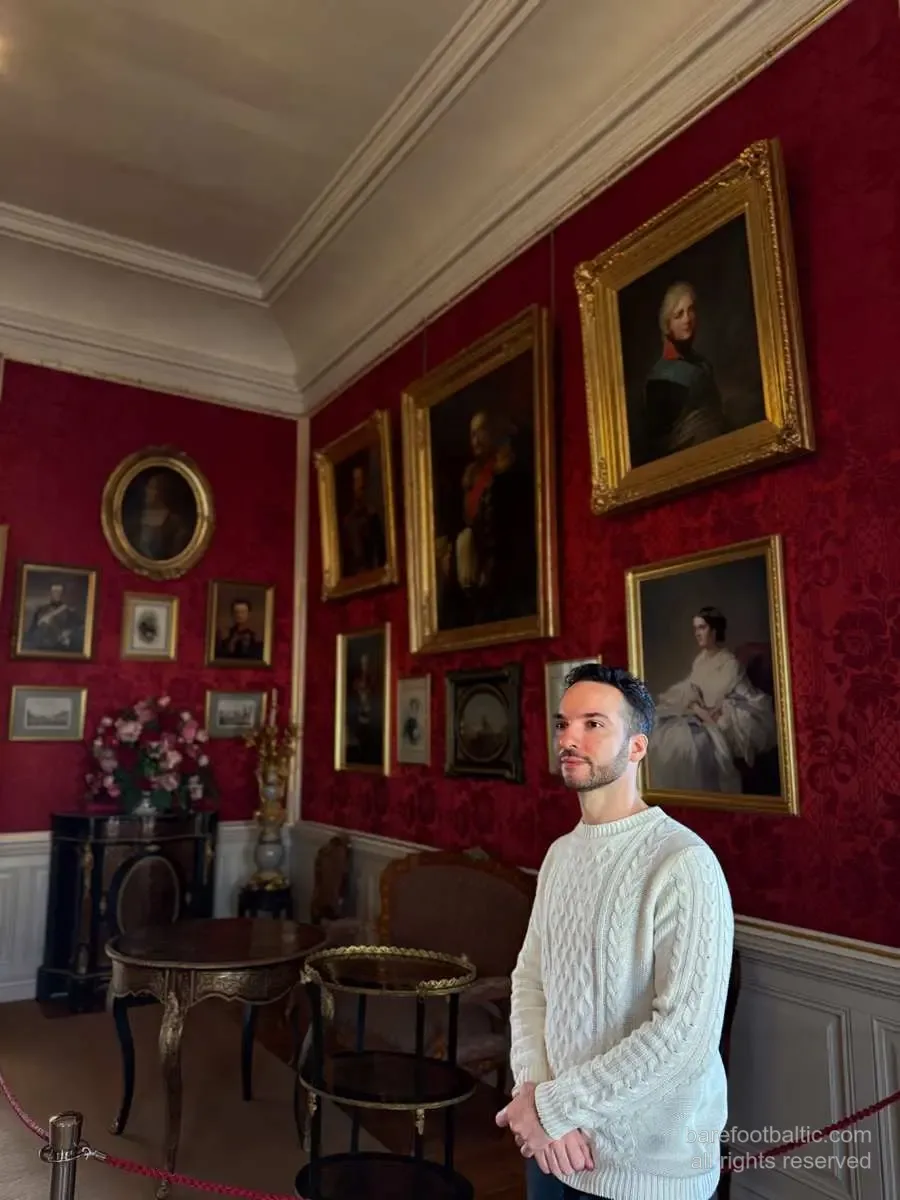
Let me tell you about a man who had everything, lost everything, spent twenty years in Siberia, came back at seventy-two, and finished building his palace anyway.
From Nobody to Running the Russian Empire
Ernst Johann von Biron was born in 1690 into a minor Baltic German noble family in Courland — essentially nobody by the standards of European aristocracy. He was reportedly expelled from university for bad behaviour and came home without obvious prospects. Then he met Anna Ivanovna, the niece of Peter the Great and the newly widowed Duchess of Courland. Biron became her confidant, advisor, and — according to every source from the period — her lover.
When Anna unexpectedly became Empress of Russia in 1730, she brought Biron with her. Overnight, the minor nobleman from Courland was effectively running the largest empire in the world. The Russian nobility were furious — a Baltic German with a funny accent, running their empire. They called him a jumped-up stable boy. He didn't care. He had over 100 gold snuffboxes, rooms of furniture from Paris, and silverware for 400 guests. In 1736 he hired a 36-year-old Italian architect named Rastrelli — later famous for the Winter Palace — to build a 138-room baroque palace in a Latvian wheat field.
The Fall — Arrested in His Nightshirt
Empress Anna died in 1740. Biron lasted twenty-two days as regent before soldiers arrested him in his nightshirt. Sentenced to death, then commuted to life exile in Siberia. He was allowed to take servants. He took sixteen. To Siberia. Even at the worst moment of his life, Ernst Johann von Biron was not lowering his standards. The palace at Rundāle sat half-finished in the wind for twenty years.
The Comeback
In 1762, aged seventy-two, Biron was pardoned and his title restored. The first thing he did was call Rastrelli — who had spent the intervening decades building the Catherine Palace in St Petersburg — and finish the job. Two old men, looking at an unfinished palace, deciding to finish it anyway. The Gold Hall you stand in today, with its gilded stucco and painted ceilings, was completed then. Biron died in 1772 having enjoyed his palace for less than a decade. But he died as Duke of Courland, on his terms. Twenty years in Siberia, and he still got the Gold Hall.
I've taken hundreds of visitors to Rundāle. The question I always get is: "Why have I never heard of this place?" The answer is Latvia itself — still being discovered by the wider world. Come before that changes. — Daiga
Come See It with Me
Full-day excursion from Riga combining Rundāle Palace with Bauska Castle and a local brewery. €85 per adult, all entrance fees included. I'll tell you about Biron's sixteen servants in Siberia and show you the ceiling painting almost nobody looks up to find.
See Full Excursion Details →