Western Europeans have largely never heard of the Suwałki Gap. In the Baltics, we cannot stop thinking about it.
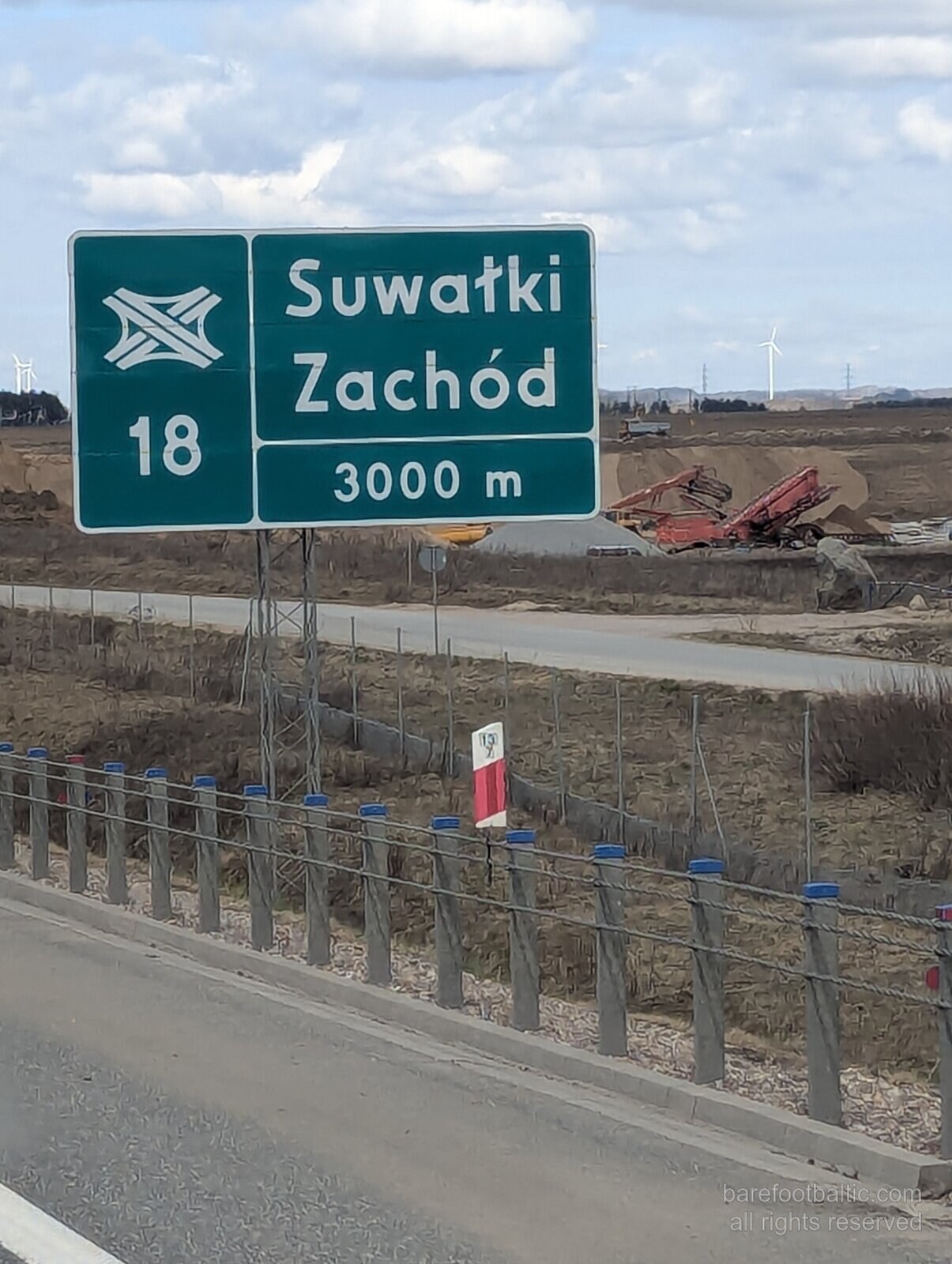
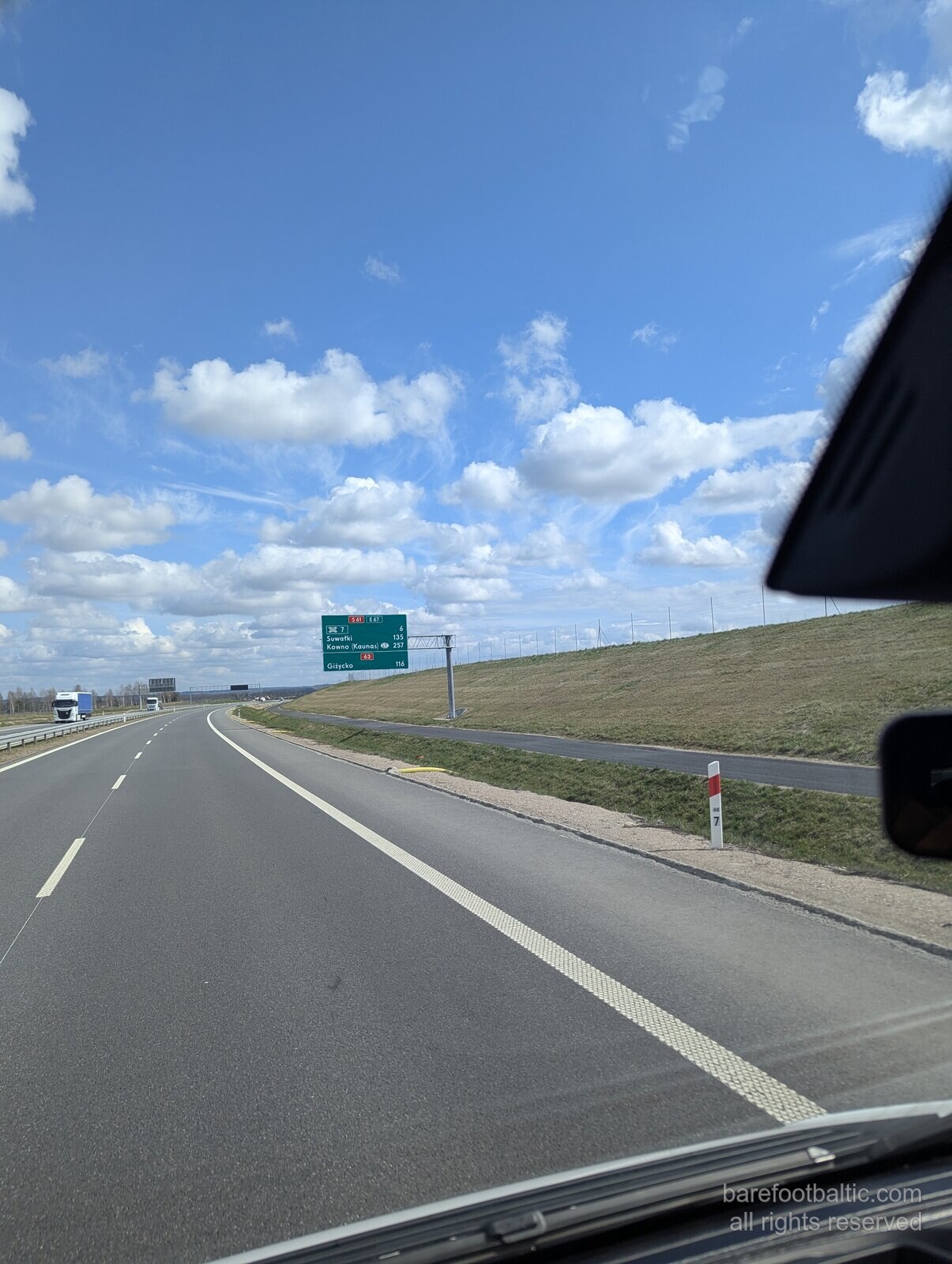
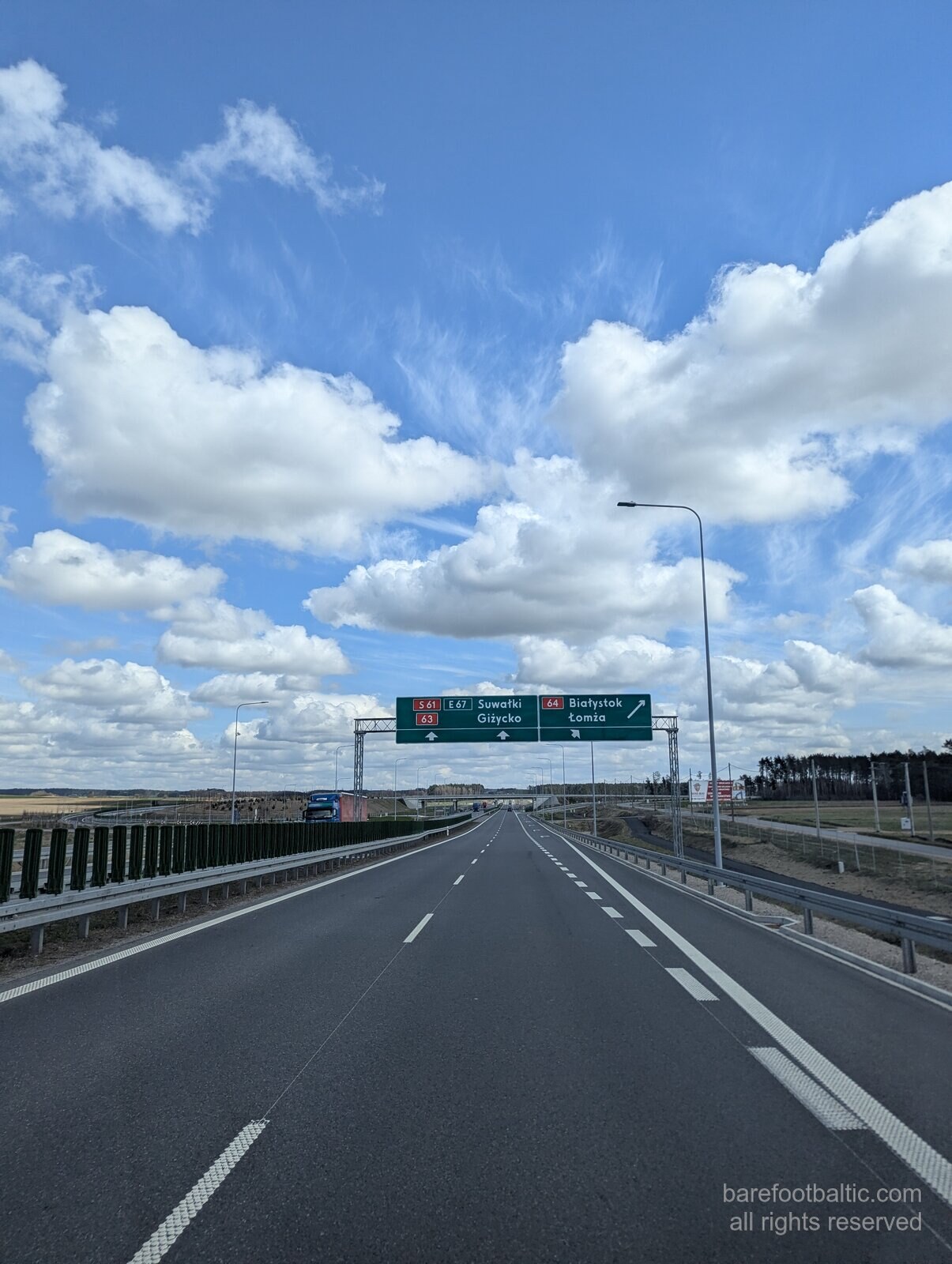
Photos: the gallery below opens as a clickable lightbox. Photographed driving the S61 expressway through the Suwałki Gap, April 2026.
I drove home from Germany to Riga last month. Germany to Poland, Poland to Lithuania, Lithuania to Latvia, the same route my parents would have taken in another century if borders had been open. North of Białystok the road quietens. The forest closes in. Signs become bilingual. And somewhere in the vicinity of the Polish town of Suwałki, you cross what military analysts call one of the most consequential pieces of geography in modern Europe. A narrow corridor of farmland and pine forest that is, on a quiet Tuesday afternoon, completely indistinguishable from anywhere else in eastern Poland.
You wouldn’t know to look at it. But I knew, and so does anyone driving home to the Baltic.
What the Suwałki Gap actually is
Pull up a map of northeastern Europe and look at the Polish-Lithuanian border. It runs about 100 kilometres in total. The strategically meaningful part, what NATO planners call the Suwałki Gap or Suwałki Corridor, is around 65 kilometres of land separating two Russian-aligned territories.
To the west sits Kaliningrad, a Russian exclave on the Baltic Sea. It is the former East Prussian city of Königsberg, annexed by the Soviet Union in 1945 and never returned. Ice-free year-round, heavily militarised, and physically disconnected from the rest of Russia. To the east sits Belarus, an independent country in name and a near-province of Russia in practice, with Russian troops and, since 2023, Russian nuclear weapons stationed on its territory.
Between them, for a single thin band of land, runs the Polish-Lithuanian border. That border is the only land route connecting the three Baltic states to the rest of NATO. Everything else has to come through here. Every reinforcement, every supply convoy, every train carrying anything heavier than what an aircraft can lift.
Sixty-five kilometres. That is the geography we live with.
Where the border came from
The current Polish-Lithuanian border is, like most borders in this part of the world, an accident of war.
In October 1920, Poland and Lithuania were both newly independent after a century and a half under foreign empires. Both wanted Vilnius. It was the historical capital of the Grand Duchy of Lithuania, but a city whose population at the time was overwhelmingly Polish and Jewish, with only a small Lithuanian minority. After months of skirmishing along the contested frontier, under pressure from the League of Nations, the two countries signed the Suwałki Agreement on 7 October 1920, drawing a temporary demarcation line.
Two days later, a Polish general named Lucjan Żeligowski staged what was officially called a “mutiny” but everyone understood to be a quiet directive from Warsaw. He marched his troops into Vilnius and announced the creation of a Polish puppet state. Lithuania protested. The League of Nations dithered. The seizure stuck. Vilnius remained Polish until 1939, when the Molotov-Ribbentrop Pact rearranged everything yet again.
Poland and Lithuania did not exchange ambassadors until 1938. They did not have a normal relationship until both joined NATO. The line drawn at Suwałki in 1920, a temporary demarcation signed in haste and broken within forty-eight hours, is, with minor adjustments, still the border today.
Borders in this part of Europe are improvisations that lasted.
Why it matters to us, specifically
The phrase “Suwałki Gap” was coined as recently as 2015, by Toomas Hendrik Ilves, then president of Estonia. Around the same time, the American general Ben Hodges, then commanding US ground forces in Europe, called it “one of the most volatile points on the world map.” Since then, the term has migrated from Pentagon briefings into newspaper columns, then into ordinary conversation in the Baltics. Older Latvians I know use it without explanation now, as if it were the name of a neighbourhood.
The fear is straightforward. If the Russian and Belarusian armies were ever to close the Suwałki Gap, pushing from Kaliningrad and Belarus to meet in the middle, the three Baltic states would be cut off from the rest of NATO by land. Reinforcement would have to come by sea, which is contested by Russian missiles based in Kaliningrad, or by air, which is contested by the same. We would be alone with whatever forces we already had on our soil.
Serious analysts disagree about how realistic this scenario is. The terrain favours the defender. The gap is full of hills, forests, lakes, and bogs, none of it ideal for armoured columns. Finland and Sweden joined NATO in 2023 and 2024, which has turned the Baltic Sea into something close to a NATO lake. Some researchers at places like Chatham House argue that the Suwałki Gap’s strategic vulnerability has been overstated, that the alliance has the means to defend it, and that the doomsday scenarios of the late 2010s were a planning exercise that escaped into the public imagination.
I hope they are right. I am not in a position to know.
What I do know is what it feels like to live next door to a war.
What we think about, watching the news
There is a particular quality of stillness in Latvian living rooms when the evening news shows footage from Ukraine. Not the noisy, performative attention of countries far from the fighting. Something quieter. The look of people who recognise, very specifically, what is on the screen.
We have seen those tanks before. Our grandparents saw them in 1940 and 1944. Our parents grew up with them parked permanently on Latvian soil, and they did not leave until 1994. The vehicles in the news are newer models, but the silhouettes are old, and the doctrine they’re operating under has not really changed in eighty years.
We are aware that we are small. Latvia has roughly two million people. So does Brooklyn. We know how this sentence ends if the wrong things happen.
That is the existential weight of this geography. It is not theoretical. It is not paranoia. It is the rational response of a small country, with a long memory, watching its larger neighbour invade another small country less than a thousand kilometres away.
What we want
I will say this plainly, because it is not complicated.
We want the war to end. We want it to end in a way that does not reward the invasion, because we know, viscerally, what happens if territorial aggression is rewarded. We have been the territory in question more times than any country should have to count.
We want every young man on every side of that war to be allowed to grow old. Russian, Ukrainian, Belarusian, every one of those mothers is the same mother. There is no version of these casualties that is acceptable. There is no political calculation that justifies any more of them.
We want the families displaced from their homes to be allowed to go back. Or, where they cannot, to build new homes in countries that welcome them properly. Latvia has taken in tens of thousands of Ukrainians, more per capita than most European countries. We are not saints. We recognise what those women carrying their children at the border are carrying. Our grandmothers carried the same things.
We want, frankly, to be left alone to live our lives. To run our businesses, raise our children, sing our songs at midsummer, drive home from Germany without thinking about the political geography of every kilometre we cover. We want ordinary peace, the thing every people on Earth wants and very few are reliably permitted.
We are not under any illusion that wanting this is enough. The Suwałki Gap exists whether we think about it or not. The decisions that will determine whether it remains quiet or becomes loud will be made by people in capitals that are not ours. We have been on the receiving end of those decisions for eight hundred years. We know how this works.
But we also know that hope is not a strategy and despair is not a luxury we can afford. So we vote, we serve, we welcome the refugees, we pay our NATO dues, we keep our country honest, we sing in our choirs, and we hope.
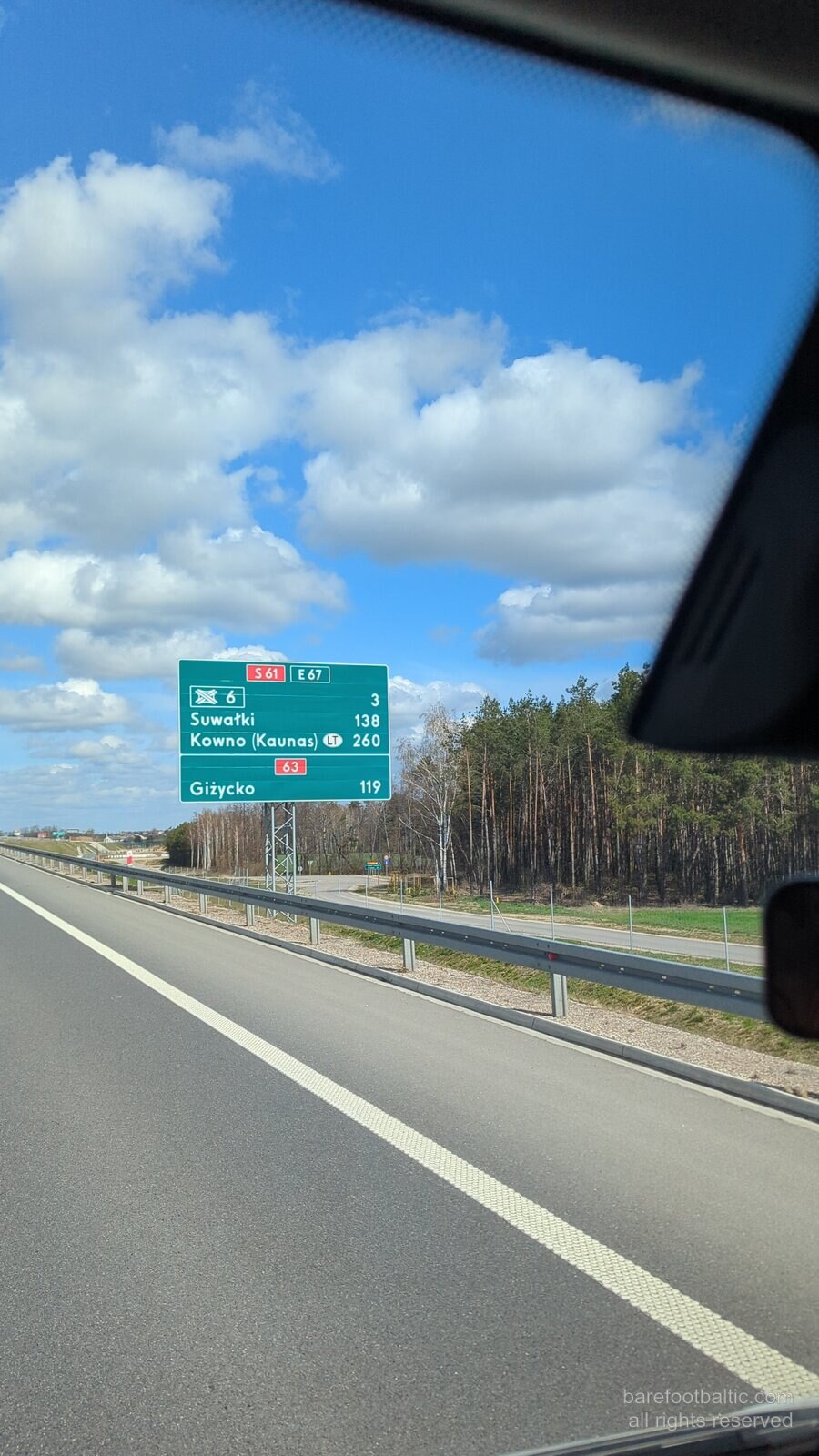
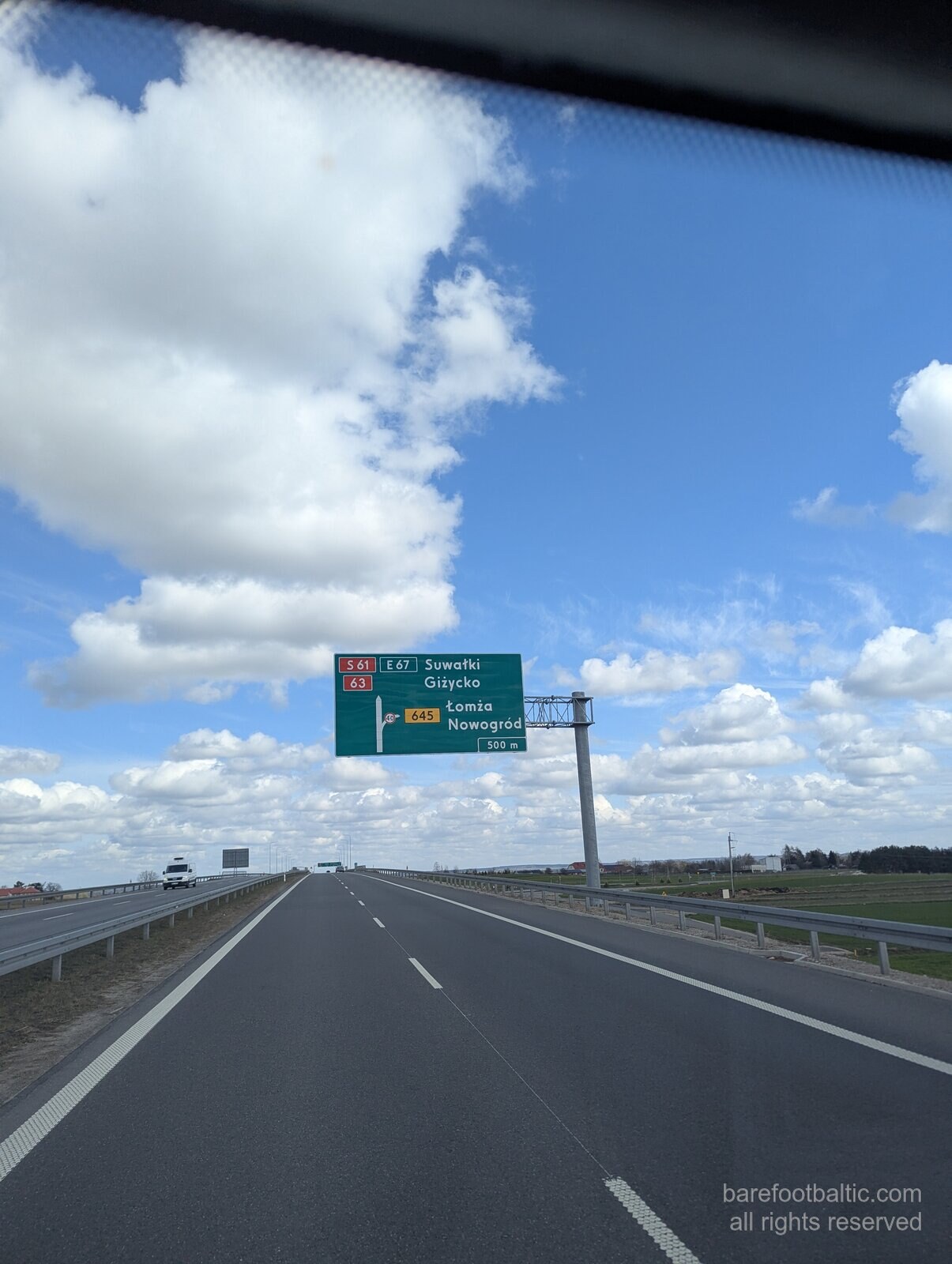
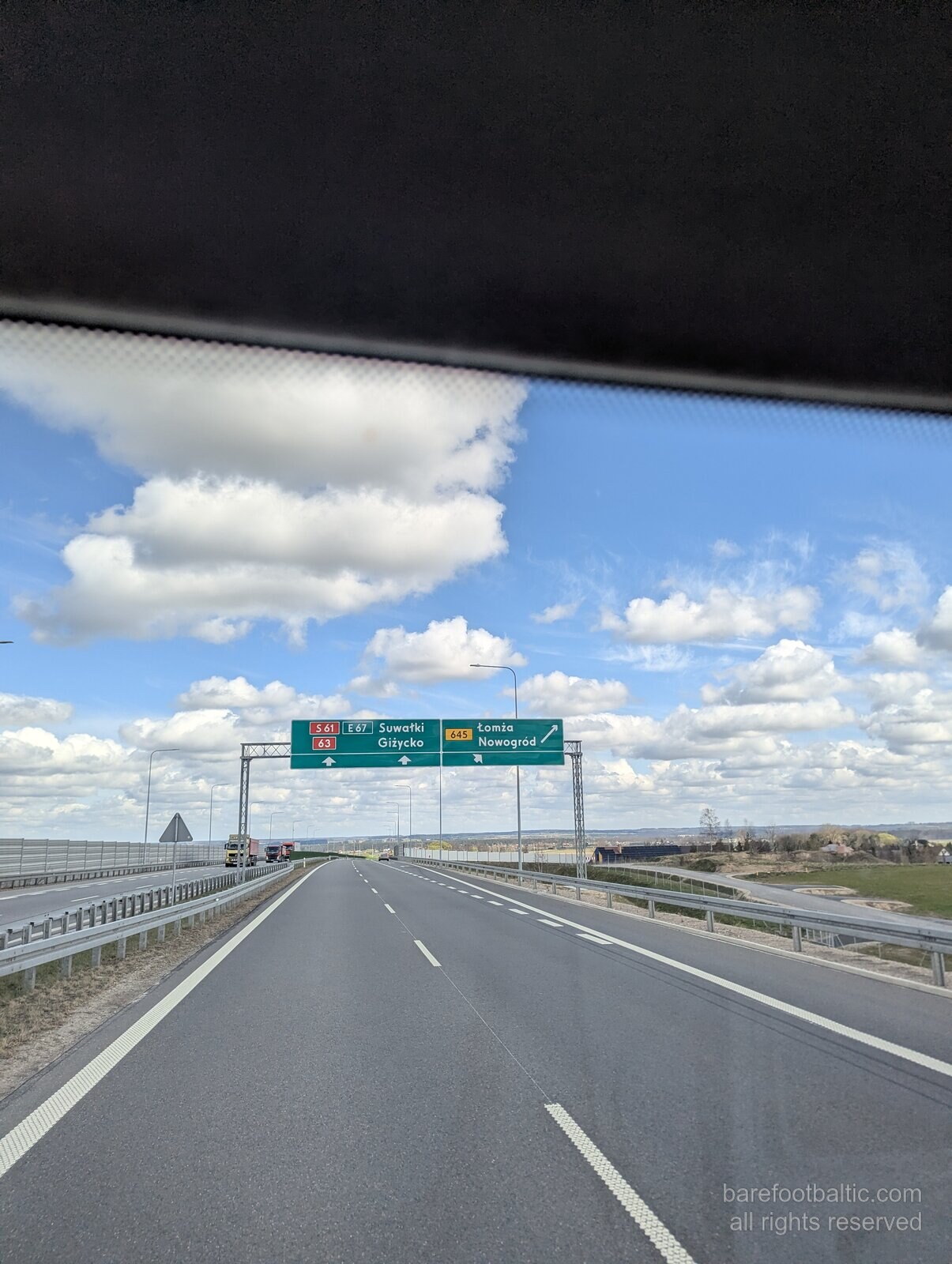
Driving home
The actual drive through Suwałki is, on a quiet day, beautiful. Lakes in every direction. Forest you could lose an army in, which is part of the point. Storks on telephone poles. Roadside stalls selling smoked fish and the kind of bread you can’t buy in any city.
The new Via Baltica highway, completed in October 2025, has made the journey faster than it has ever been. Six hours from Warsaw to the Latvian border, more or less. You do not stop at customs anywhere. Schengen made that disappear in 2007. The border between Poland and Lithuania is just a sign, in two languages, in a forest.
Somewhere along that road, you cross from one NATO country to another. You also cross a piece of land that has, at various times, belonged to the Teutonic Knights, the Polish-Lithuanian Commonwealth, the Russian Empire, the German Empire, two different versions of independent Poland, the Third Reich, the Soviet Union, and the European Union. The bears do not care. The storks do not care. Somewhere underneath the asphalt is the same soil my great-grandmother walked on when this region was part of an empire that no longer exists.
I drove home to Riga. I unpacked my car. I made coffee. I watched the news.
I hope the war ends. I hope my children’s children will read about the Suwałki Gap the way my children read about the Berlin Wall. A thing that mattered terribly to people in their grandparents’ generation, and which has, mercifully, become history.
I hope. We all do.
That is what living here teaches you. Not optimism, exactly. Something more durable than that. A refusal to give up on the possibility of ordinary, uneventful peace, even after eight centuries of evidence that ordinary peace is not what this part of the world has been given.
We keep hoping anyway.
We have to.
This is also a road we know professionally. The drive from Riga down through Lithuania and across the Gap to Warsaw is one we've done with guests as a private long-distance transfer. Get in touch if you're routing this way.