Short answer, read this first
If you only have time to visit one Baltic capital, here's my take. I live in Riga and run tours here, so take the Riga verdict with a pinch of salt. I've spent real time in Tallinn and Vilnius, and I'll tell you when they do something better.
- Pick Tallinn if you want the best-preserved medieval old town in Europe, you're coming in for a weekend from Helsinki or Stockholm, and you want the fairytale Instagram version of the Baltics.
- Pick Riga if you want the best-value Baltic capital, the most serious Art Nouveau architecture on the continent, the best food scene of the three, and quieter streets. It also has the biggest old town of the three.
- Pick Vilnius if you want baroque Catholicism, an under-the-radar Northern European old town, the warmest atmosphere, and the cheapest beer.
If you have a week, do two or three of them. They're all within 4 hours of each other by bus, and the differences between them are large enough that seeing two in one trip doesn't feel repetitive. Two cities in one trip is how you actually understand the Baltics.
The comparison at a glance
| Riga, Latvia | Tallinn, Estonia | Vilnius, Lithuania | |
|---|---|---|---|
| Country population | 1.8 million | 1.4 million | 2.8 million |
| City population | ~615,000 | ~460,000 | ~590,000 |
| Old town size | 438 hectares (UNESCO) | 113 hectares (UNESCO) | 359 hectares (UNESCO, Northern Europe's largest) |
| Architectural headline | Art Nouveau, 800+ buildings, densest in Europe | Medieval, best-preserved medieval old town in Europe | Baroque, over 65 churches, many Catholic |
| Religion (heritage) | Protestant (Lutheran) | Protestant (Lutheran) | Catholic |
| Language family | Latvian, Baltic (Indo-European, related to Sanskrit) | Estonian, Finno-Ugric (related to Finnish) | Lithuanian, Baltic (oldest living Indo-European language) |
| Currency | Euro | Euro | Euro |
| Vibe (one word) | Restrained | Fairytale | Romantic |
| Food scene | Strong, Michelin entered the country in 2024 | Solid, Finnish-inflected | Warm, Polish-inflected |
| Nightlife | Serious, especially UK stag crowd | Quieter, earlier nights | Lively, student-dense |
| Average beer (Old Town) | €4–6 | €5–8 | €3–5 |
| Average meal | €15–30 | €20–35 | €12–25 |
| Hotel, central 4★, Sep | €70–120 | €90–150 | €60–100 |
| Day trips | Rundāle, Sigulda, Ķemeri, Jūrmala | Lahemaa, Tartu, Saaremaa (ferry) | Trakai, Hill of Crosses, Kaunas |
| Best day trip (my take) | Rundāle Palace | Lahemaa National Park | Trakai Island Castle |
| Flight hub access | airBaltic home; UK budget routes | Helsinki-adjacent; Nordic routes | Ryanair hub; budget Europe routes |
| Winter personality | Quiet, snowy, Christmas market is #3 in Europe | Quieter still, Nordic dark | Warmest of the three, lights up at Christmas |
| Best for | Value + architecture + food + space | Medieval postcard + weekend break | Atmosphere + budget + warmth |
| Wrong for | People wanting fairy-tale cobbles | People wanting lively nightlife | People wanting architectural variety |
How to pick in 30 seconds
Four questions.
- Is this your first trip to the Baltics, and you have 2 or 3 nights? Pick the one closest to your arrival airport. Don't agonise. They're all good.
- Do you care more about medieval or modern? Medieval → Tallinn. Early-20th-century modern (Art Nouveau, post-Soviet renewal) → Riga. Baroque → Vilnius.
- Are you on a tight budget? Vilnius is the cheapest, Riga is second, Tallinn is the most expensive, especially in summer.
- Are you combining with Helsinki, St Petersburg (no longer recommended), or Stockholm? Tallinn is the natural Baltic partner for Finland/Sweden trips. Riga is the most central if you're doing more than one.
Who this piece isn't for
- People who want a ranking. There isn't one. These are three different cities and the "best" one depends on what you like. Anyone who tells you Tallinn beats Riga beats Vilnius in some absolute sense is either a tourist board or lazy.
- People who want to do all three in 48 hours. It's physically possible but you'll spend more time on buses than in old towns. Minimum time for the three-capital run is 6 days, ideally 8 to 10.
- People who hate cities. The three capitals are the gateway but they're not the whole story. If what you want is forests, coastline, and villages, read my day-trips post instead.
Now the longer version
I'll tell you what each city does best, what each does worst, and when I'd send a visitor to one of the others instead.
What Tallinn does best
Tallinn has the most perfectly preserved medieval old town in Northern Europe, and probably in Europe full stop. The town walls are still there, intact, for most of their length. The Town Hall is the oldest still-functioning one in Northern Europe. Toompea hill gives you the postcard view that everyone who's been to Tallinn has in their phone.
Tallinn is also the best Baltic capital for a short weekend break from a Nordic country. The ferry from Helsinki takes 2 hours and costs €20 to €60 return. Stockholm is an overnight ferry away. If you're Finnish or Swedish and you want a foreign weekend, Tallinn is closer than anywhere on your own coastline.
Estonia's tech culture gives Tallinn a character the other two don't have. The e-Residency programme, the mobile-first government, the way you can buy a bus ticket by SMS, which has worked since 2003. There's a real innovation quarter at Telliskivi and Noblessner with craft breweries, restored industrial buildings, and Michelin-starred restaurants. If you want your Baltic weekend to feel like Copenhagen with a medieval core, Tallinn is the pick.
The Estonian sauna culture is also the most developed of the three. A proper smoke sauna in Estonia is a different thing entirely from the hotel-spa version.
What Tallinn does worst. It's the most expensive of the three and the gap has widened since the Finns replaced the Russians as the dominant visitor group. Old Town restaurants on Raekoja plats charge Helsinki prices and serve Helsinki-adjacent food. The old town itself is tiny (113 hectares) and you can see it all in one long afternoon, which means the "this is too short" feeling hits harder here than in Riga or Vilnius. And because the old town is so concentrated, it's the most touristy of the three. In July you will queue for things.
What Riga does best
Riga has the biggest old town of the three at 438 hectares, and it doesn't feel touristy the way Tallinn's can. You can walk from the Freedom Monument to the Daugava without being photographed by a stag party or a bus tour group, which is increasingly rare in European capitals at our price point.
The real Riga advantage is the Art Nouveau district. I've said this in other posts and it bears repeating. Riga has the densest concentration of Art Nouveau architecture of any city in Europe, over 800 buildings, more than half the city's centre. Alberta iela is the most-photographed street, but there are dozens of others. If you care about architecture at all, this is a reason to come to Riga and not to either of the other two.
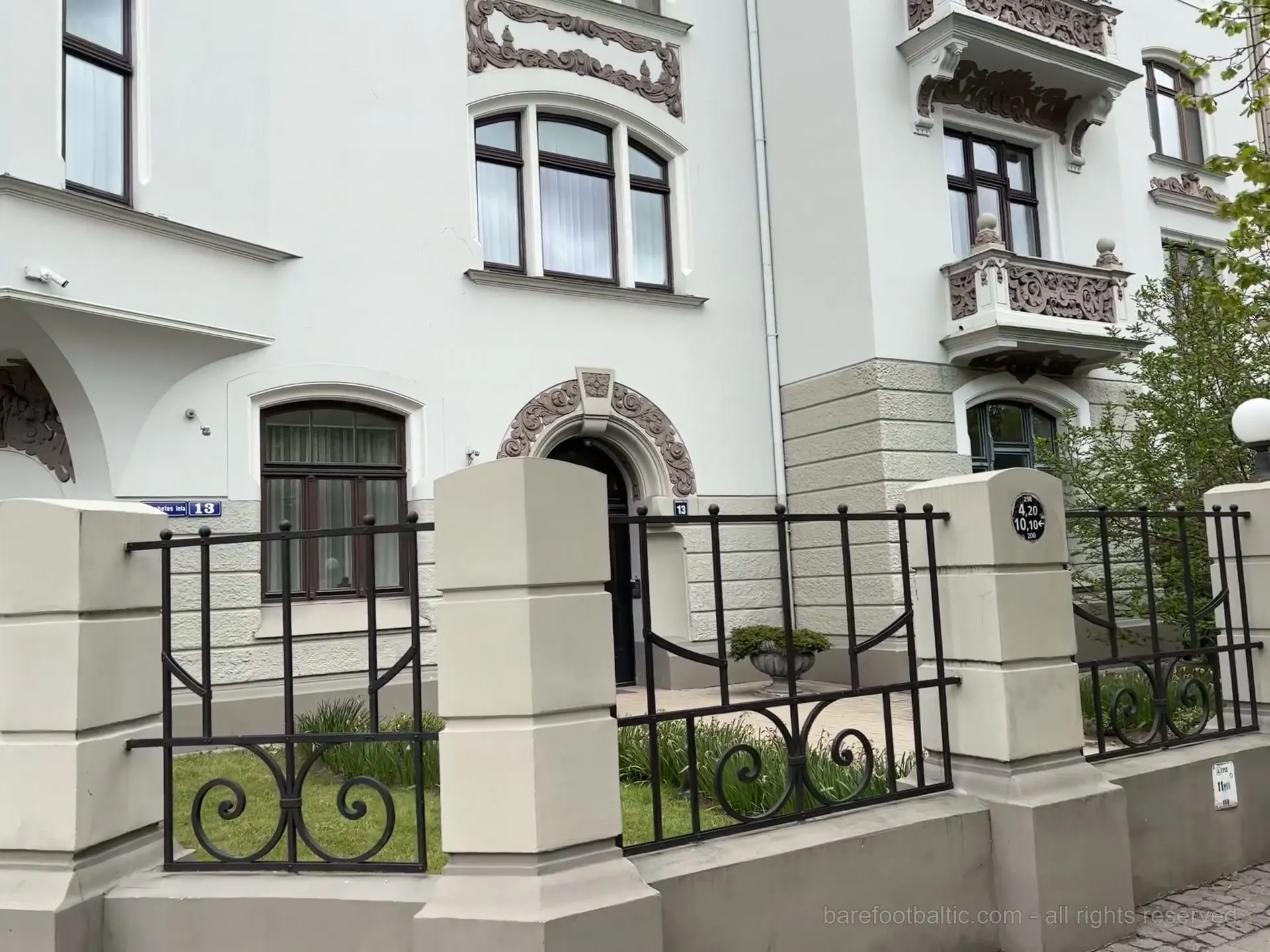
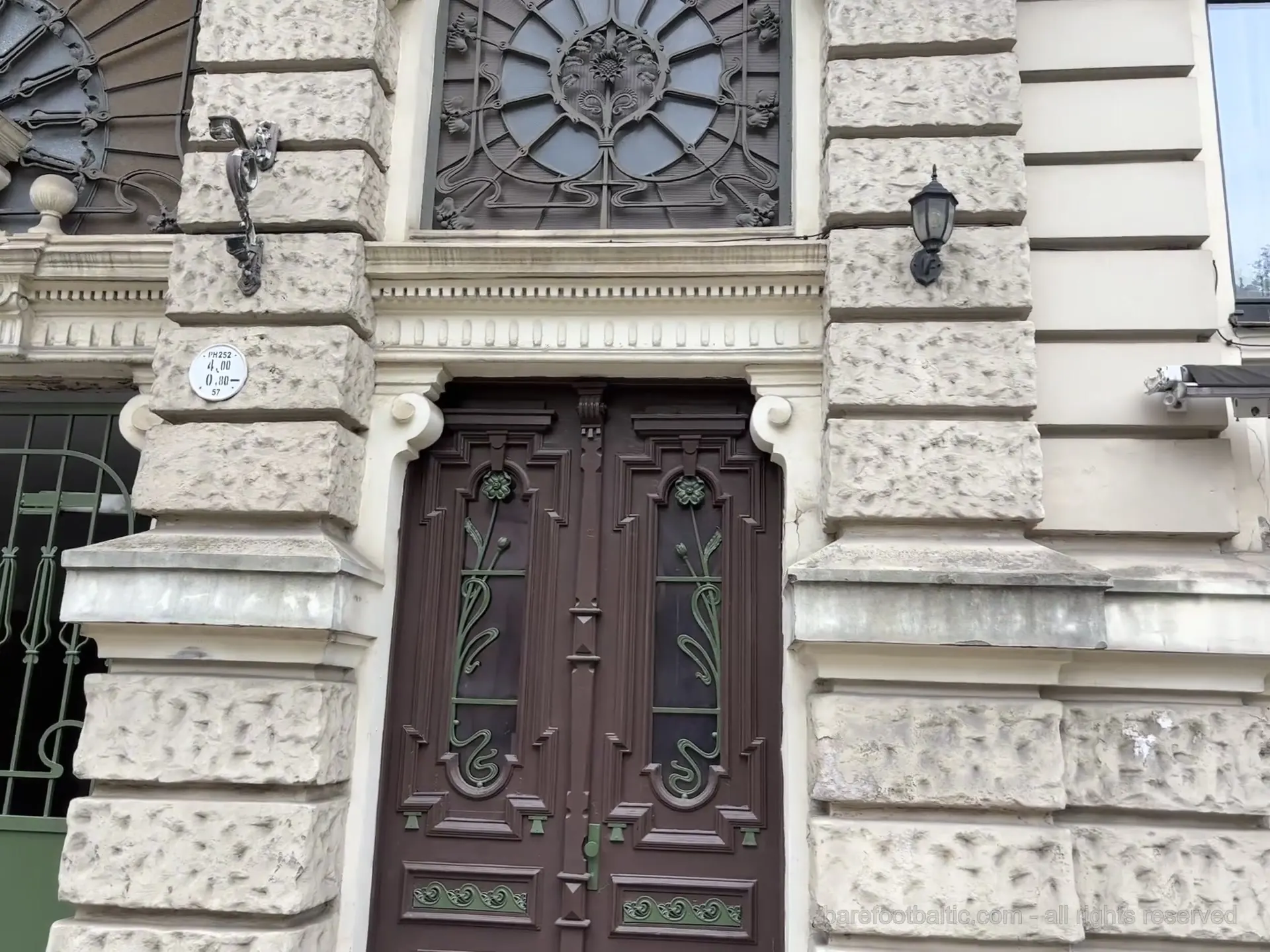
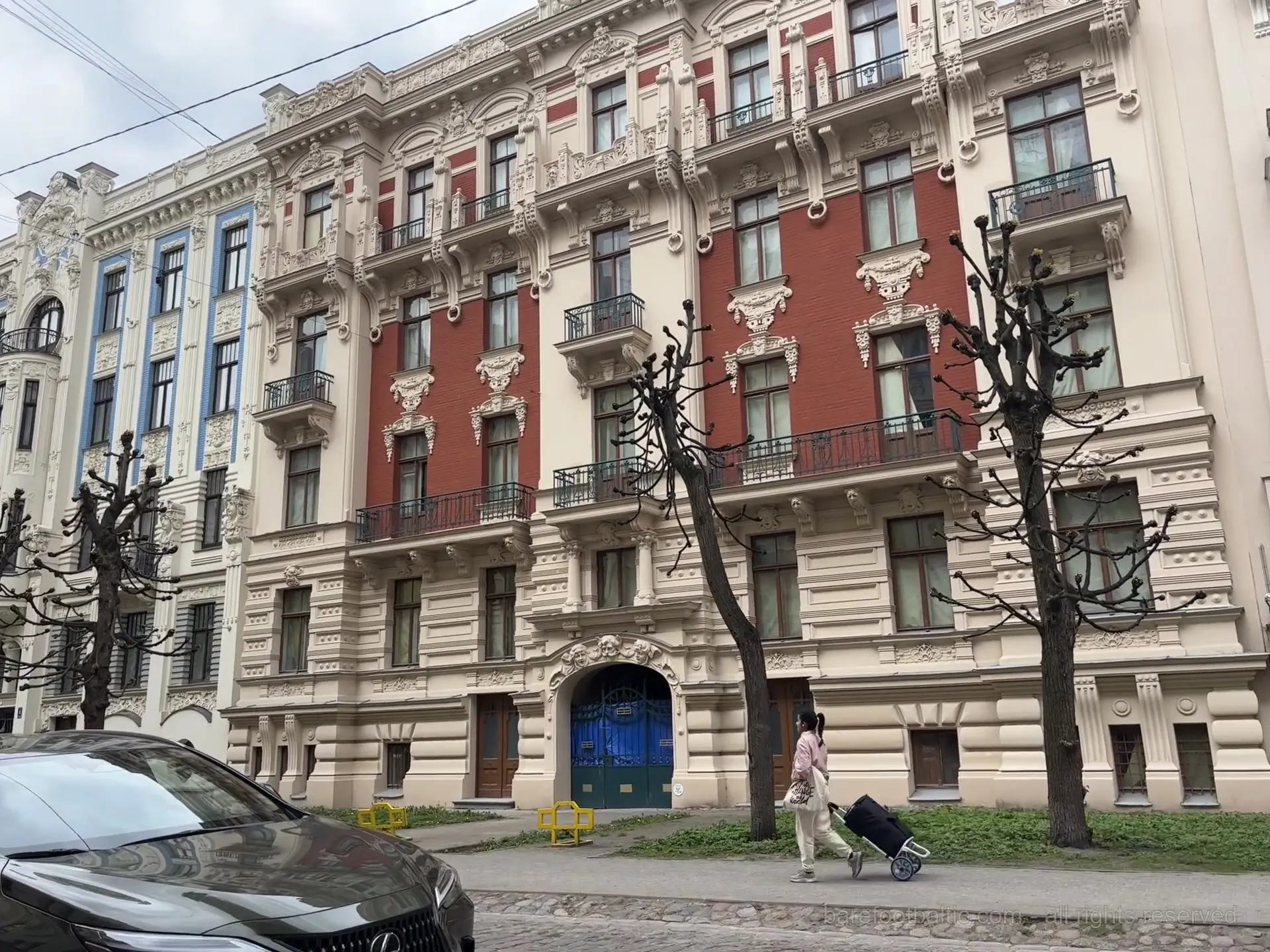
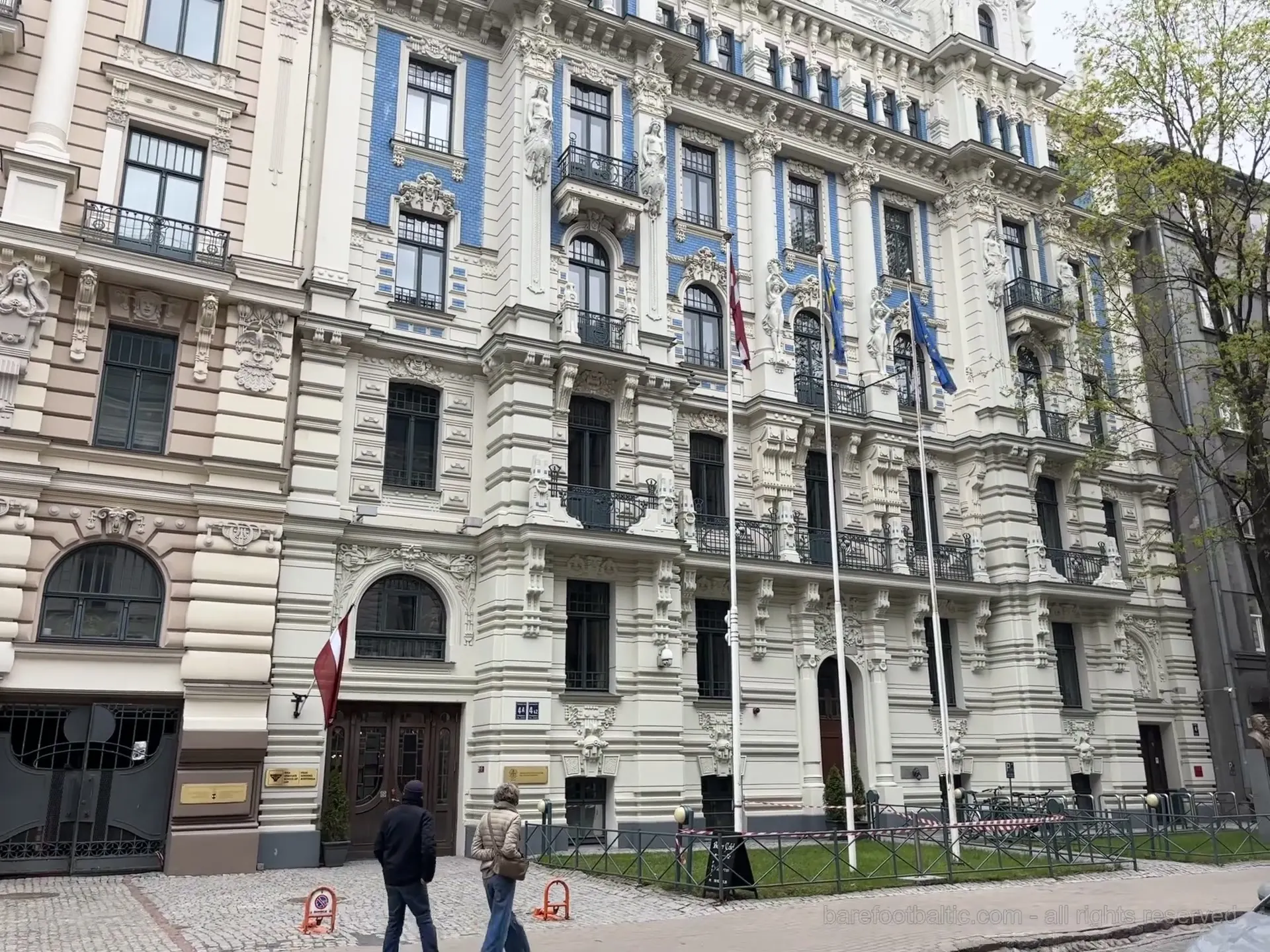
Riga also has, in my biased opinion, the best food scene of the three. Latvian cuisine isn't fancier than its neighbours, and Lithuanian food is arguably warmer and more generous. What changed is the modern restaurant scene, which has improved fast in the last few years. The Michelin guide added Latvian restaurants in 2024. Riga now has tasting menus at half the price of Tallinn or Stockholm.
And Riga has the best Christmas market of the three. It was voted third in Europe for 2025 to 2026 and December hotel prices are cheap. I wrote a whole piece on Riga in winter if that's what you're here for.
Finally, Riga is the middle Baltic capital geographically, which makes it the natural base if you want to do two or all three in one trip.
What Riga does worst. It doesn't have Tallinn's fairytale medieval postcard. The old town is beautiful, but it's a layered European old town rather than a single-era set piece. A bit of medieval, a bit of Hanseatic, a lot of Art Nouveau. If what you want is a pure medieval Disney moment, Riga is not it. And the UK stag-weekend scene is real in Riga, more than in Tallinn or Vilnius, which means one or two of the Old Town bars are actively unpleasant on Saturday nights.
What Vilnius does best
Vilnius has the largest old town of any city in Northern Europe, 359 hectares, UNESCO-listed. It's also the most atmospheric of the three. The baroque and the Catholic history give the city a warmth the Protestant Baltics don't quite match. Over 65 churches in the old town, most still in daily use. Walk into the Gate of Dawn by accident and you'll stay an hour.
Vilnius is the most affordable of the three Baltic capitals. A beer in an old town bar is often under €4. A meal is €12 to €25 for something good. Hotels are €60 to €100 for a proper 4-star in September. If your trip budget is tight, Vilnius gives you more for your money.
And Vilnius has the warmest atmosphere of the three. I mean this literally in summer (slightly further south, slightly warmer), but also socially. Lithuanians are more outgoing than Latvians and Estonians. We're all quiet northerners by British or Spanish standards, but Lithuania is the least quiet of the three. The Užupis neighbourhood, the self-declared "republic" of artists across the Vilnia river, has a playful streak the other two capitals don't have.
Vilnius also has the best day trip of any Baltic capital. Trakai Island Castle is a red-brick 14th-century fortress on an island in a lake 30 km from the city. It's the single most photographed thing in Lithuania and it lives up to its pictures. If I ran tours out of Vilnius, I'd run this one every day.
What Vilnius does worst. It has the weakest international flight access of the three. It's a Ryanair budget hub but airBaltic prioritises Riga, and there are no direct long-haul flights. If you're coming from North America or Asia you'll probably land in Warsaw, Frankfurt, or Helsinki and transfer. The food scene, while warm and generous, is less developed in the Michelin-guide sense than Riga's or Tallinn's. And Vilnius sits further from the Baltic Sea than the other two. It's an inland capital, not a coastal one, which matters if a beach day is part of your plan.
How the three countries fit together
People lump the three of us together. Up close the differences are bigger than an outsider expects. Very roughly, this is how they break down.
- Estonia is the northernmost, the smallest, the richest, the most Nordic-feeling, and the one that identifies most with Finland. Estonian is a completely different language family from Latvian and Lithuanian. It's Finno-Ugric, related to Finnish and Hungarian, not Indo-European at all.
- Latvia is the middle one in size, temperament, and latitude. Historically it's the most ethnically mixed of the three, because of its long position between Russia and the German Hanseatic world. Latvian is Baltic (Indo-European), along with Lithuanian.
- Lithuania is the southernmost, the largest, the most Catholic, and historically the most powerful. The Grand Duchy of Lithuania in the 14th to 16th centuries was one of the biggest states in Europe, stretching from the Baltic to the Black Sea. Lithuanian is often cited by linguists as the most archaic living Indo-European language, closer to Sanskrit than any other European tongue.
The three countries were incorporated into the Russian Empire at different times, were briefly independent between the wars, were annexed by the Soviet Union during WWII, and regained independence between 1990 and 1991 via the Singing Revolution. That's the name given to the mass non-violent independence movements across all three countries. The 2-million-person Baltic Way human chain in August 1989 ran from Tallinn through Riga to Vilnius, about 600 kilometres, and is still one of the most moving things in recent European history. If you're visiting more than one Baltic capital, learn about the Baltic Way before you come. It's the single most important context for why the three cities feel both separate and deeply linked.
The multi-city play if you have a week
Here's what I'd do with 7 to 10 days if you want all three capitals.
The 7-day version, tight but doable.
- Days 1 to 3: Tallinn. Arrive, see the Old Town, day trip to Lahemaa, evening in Telliskivi.
- Day 4: Bus to Riga (Lux Express or Ecolines, 4.5 hours, €20). Afternoon and evening in Riga's Art Nouveau quarter.
- Day 5: Day trip from Riga. My pick would be Rundāle Palace if you want big history, Sigulda if you want forests, or Ķemeri bog at sunrise if it's May to August. Evening back in Riga.
- Day 6: Bus to Vilnius (4 hours, €18). Afternoon in Old Town, evening in Užupis.
- Day 7: Day trip to Trakai, fly out from Vilnius.
The 10-day version, the one I'd actually recommend.
Same structure but with breathing room. Three nights in Tallinn, four nights in Riga with two day trips, three nights in Vilnius with a day trip to Trakai. The extra nights in Riga matter, because Riga is where you need the most time to actually understand what the city is doing. The Art Nouveau district, the Central Market, the food scene, and at least one of the proper day trips all want a slice of it.
The order. I'd go Tallinn → Riga → Vilnius, north to south. This is because you typically fly into Tallinn from a Nordic country (natural for UK/Finland/Sweden travellers) and fly out of Vilnius (Ryanair hub, easy onward to Warsaw, Barcelona, Rome, etc.). But the reverse works fine too if your flight logistics are cheaper that way. The bus routes run both directions.
The practical bits
- Flights from the UK: Ryanair and Wizz Air cover all three capitals from various UK airports. Riga has the most airBaltic connections. Tallinn has the most Nordic connections. Vilnius has the most Polish and central European connections.
- Flights from the US: No direct flights to any of the three. Connect through London, Frankfurt, Warsaw, Helsinki, or Amsterdam. Helsinki-Tallinn is the single shortest international hop if you want the fastest path into the Baltics (50 minutes by air, 2 hours by ferry).
- Moving between capitals: Lux Express and Ecolines are the two comfortable coach operators. Tallinn-Riga is 4.5 hours and €15 to €25 one-way. Riga-Vilnius is 4 hours and €15 to €22. Both coaches have WiFi, plug sockets, and coffee machines. There is currently no through train network (the long-promised Rail Baltica project is under construction and will open in 2030-ish). For speed, there are direct flights between all three capitals but they cost €80 to €150 and the airport transfers eat most of the time saving.
- Currency: All three use the euro.
- Language: All three capitals have near-universal English under 40. Russian is a common second language in Riga and Tallinn among older people, less so in Vilnius.
- Safety: All three are EU and NATO members, all three at US State Department Level 1. Riga has a lively stag-weekend scene that can make a couple of Old Town streets unpleasant on Saturday nights. Avoid Skyline Bar and the area around Kaļķu iela past midnight and you'll be fine.
- When to visit: Late May through early September for weather, December for Christmas markets. Shoulder months (April, October) are the best-value trips if you don't mind a coat.
A final thing
The three Baltic capitals are different enough that picking between them is a real decision, and similar enough that visiting one tends to make you want to come back for the others. That's the thing the guidebooks don't quite capture. They rank the three like they're competing, when actually they're a set.
If you're reading this and you've already decided on Riga, the day trips post is next. If you're deciding on Tallinn or Vilnius instead, I'm happy for you. They're both excellent, and I'd rather you pick the right one and love it than pick mine and feel let down. If you want to do two or three, write to me at [email protected] and I'll tell you what I'd do in your specific case. I'm the wrong guide for the other two cities but I can point you at the right people in each.
Frequently asked questions
Daiga Taurīte is a licensed Latvian tour guide and co-founder of Barefoot Baltic. She runs small-group day excursions from Riga. She grew up here, spent two decades in London, came home in 2024. Barefoot Baltic is licensed by Latvia's Consumer Rights Protection Centre (PTAC), holds ATD passenger transport licence PS-01995, and is insured by BTA Baltic for civil liability.
If you decide on Riga, or you're flying in to one capital and out of another, we run the local half of any of these visits, and we can hand you off to vetted guides in Tallinn or Vilnius for the rest. Get in touch with your route.