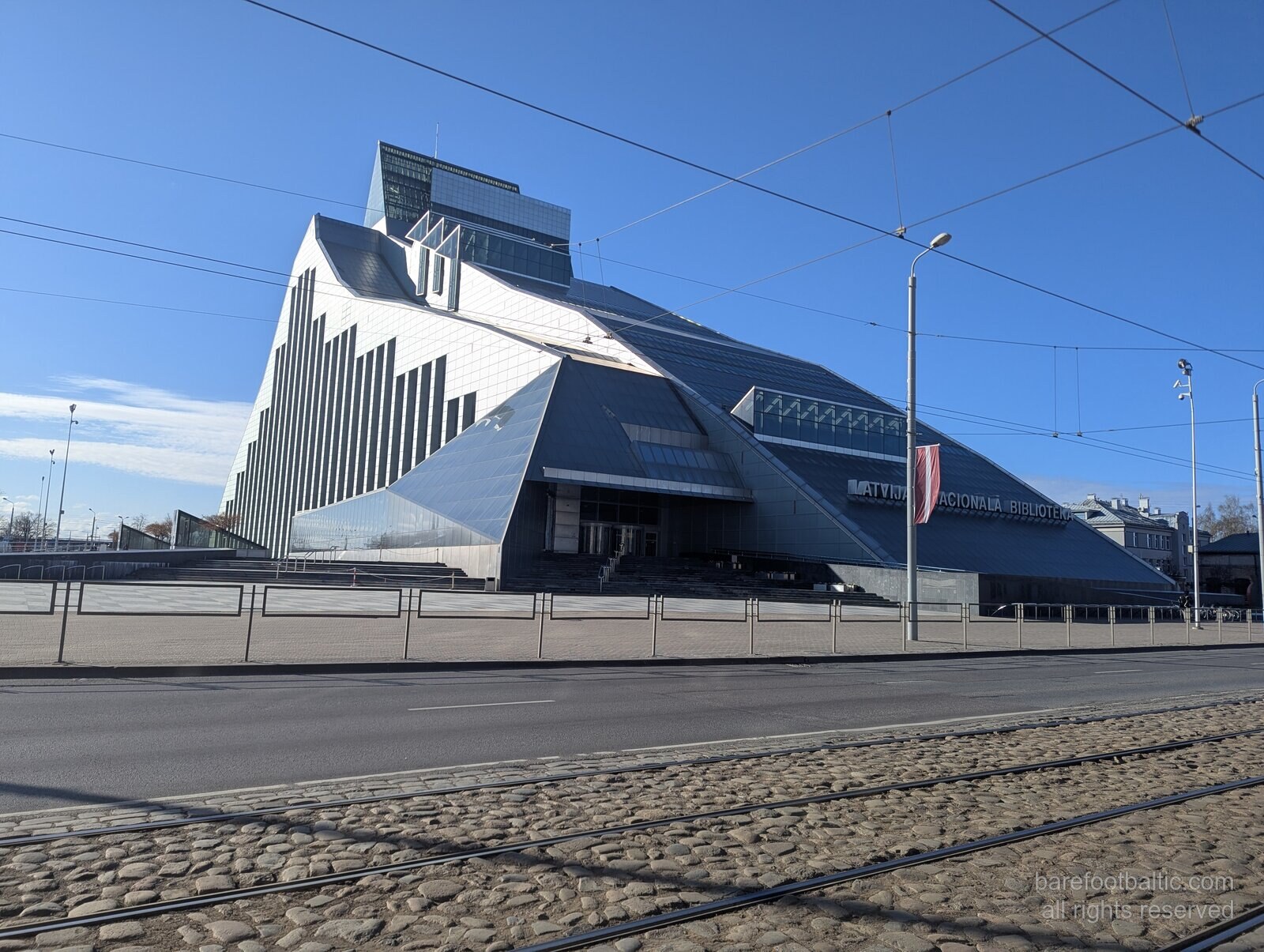
There are buildings you visit because the guidebook tells you to, and there are buildings you visit because, once you step inside, something shifts. The National Library of Latvia, Latvijas Nacionālā bibliotēka, but everyone in Riga calls it Gaismas Pils, the Castle of Light, is firmly in the second category. It is one of the few modern buildings anywhere in the Baltics that locals love as fiercely as visitors do, and the reason is not really architectural. The reason is emotional, and folkloric. It is a building that holds a story Latvians have been telling themselves for a thousand winters, finally given physical form.
Photos: the galleries below open as a clickable lightbox. Tap any thumbnail or hero image to enlarge. Photographs taken on visits across 2026.
If you come to Riga and see only the Old Town, you have seen a beautiful medieval city. If you walk across the Daugava and spend an hour inside the Castle of Light, you start to understand Latvia.
A glass mountain on the left bank
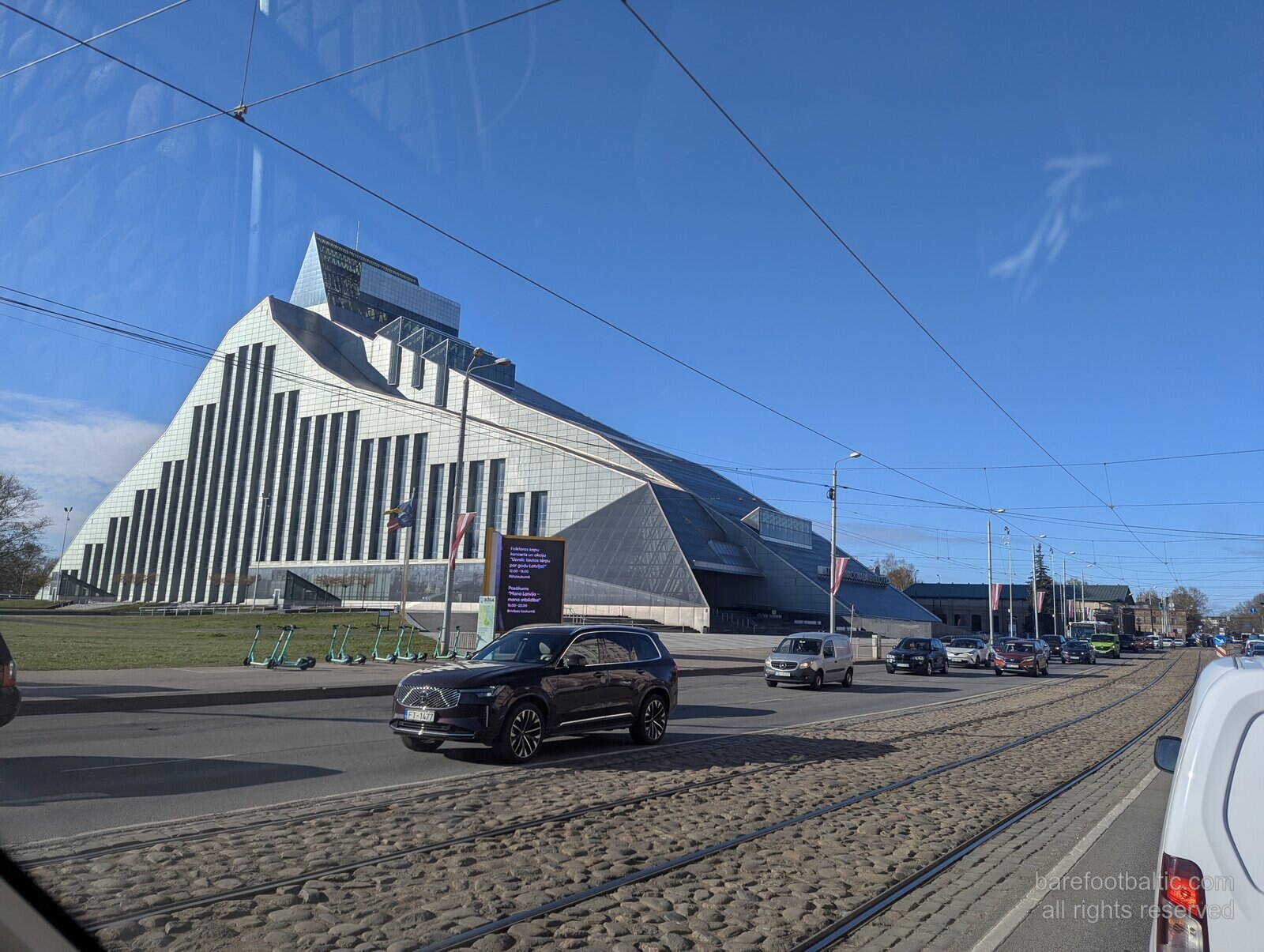
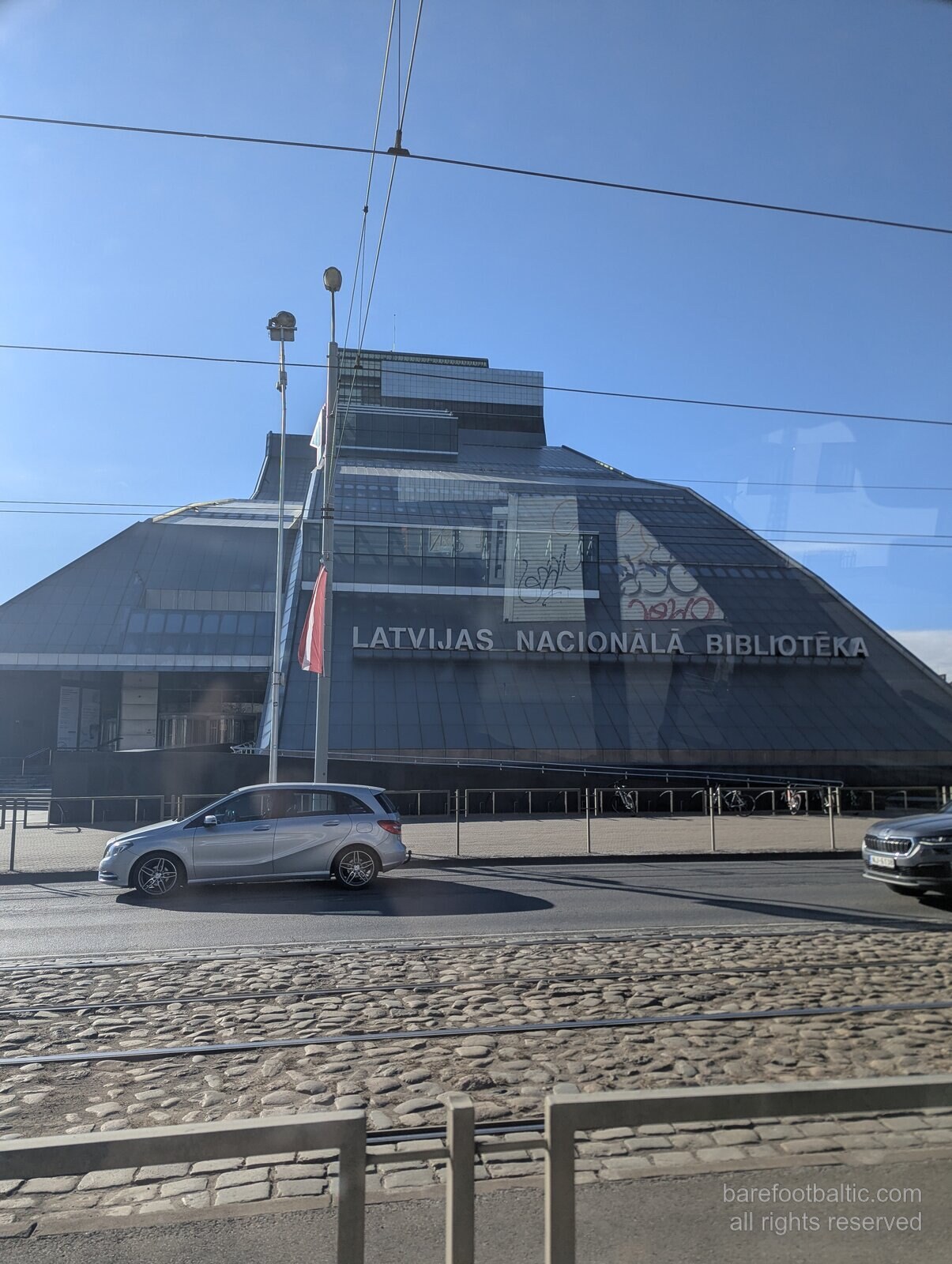
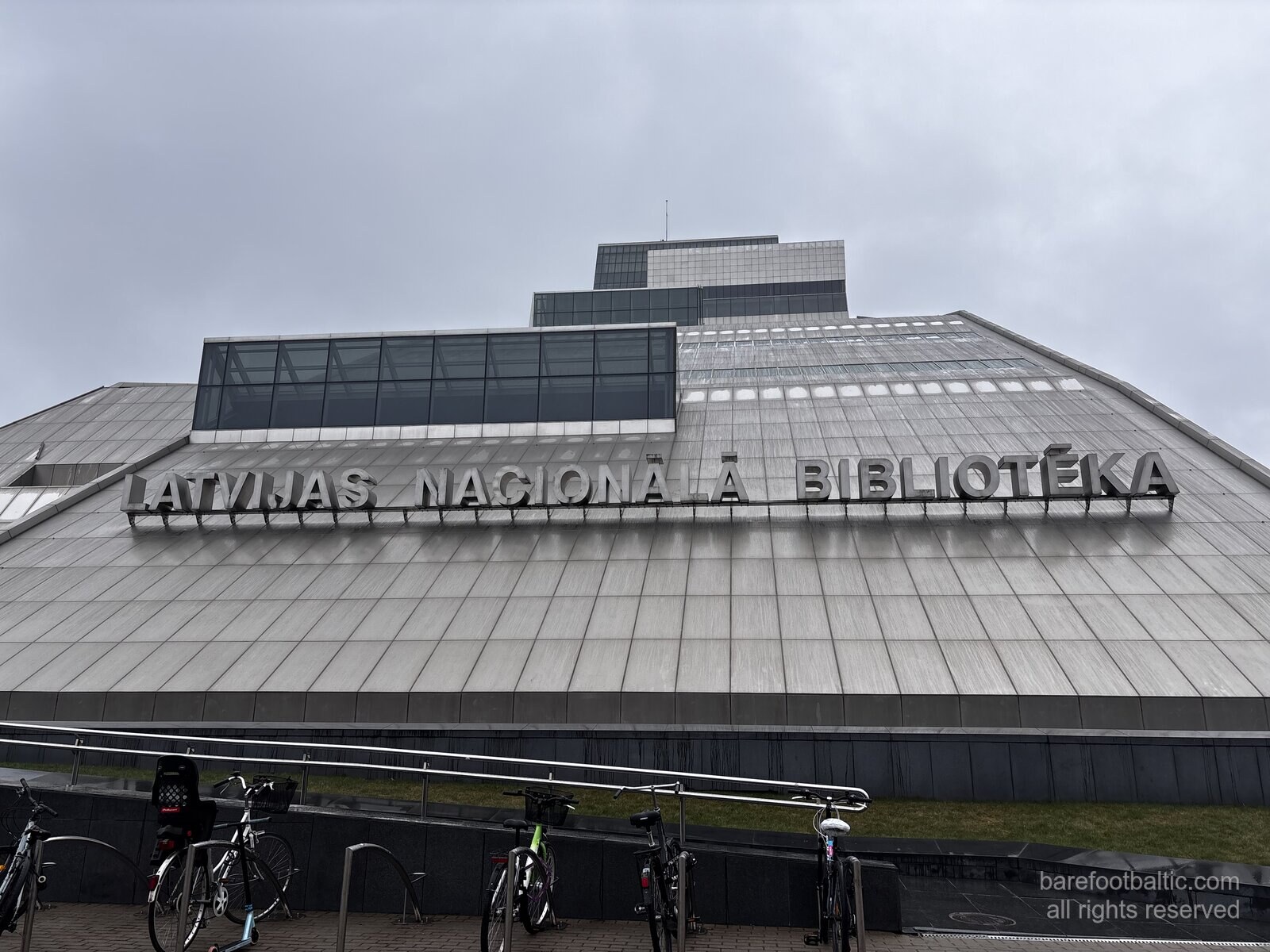
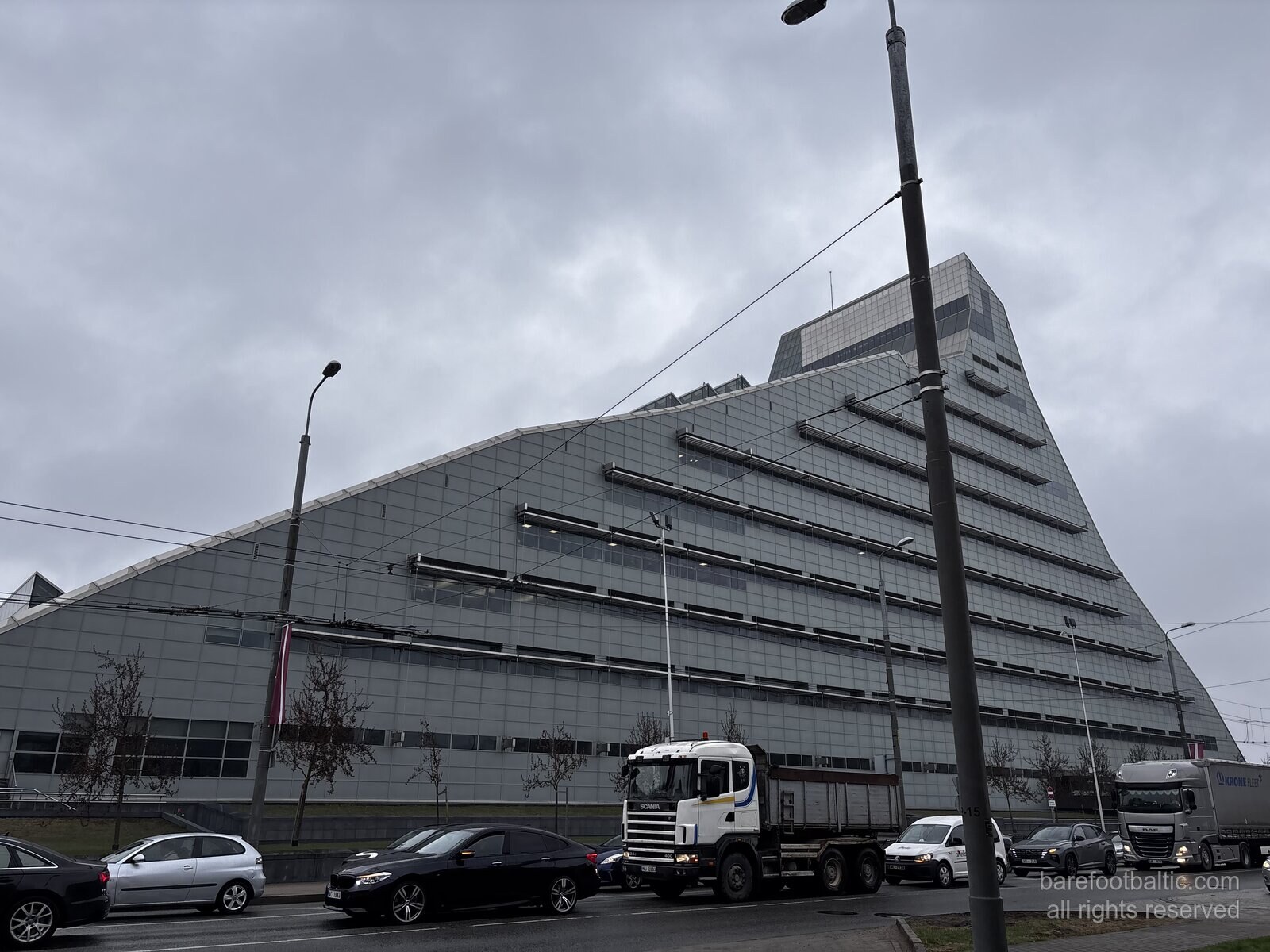
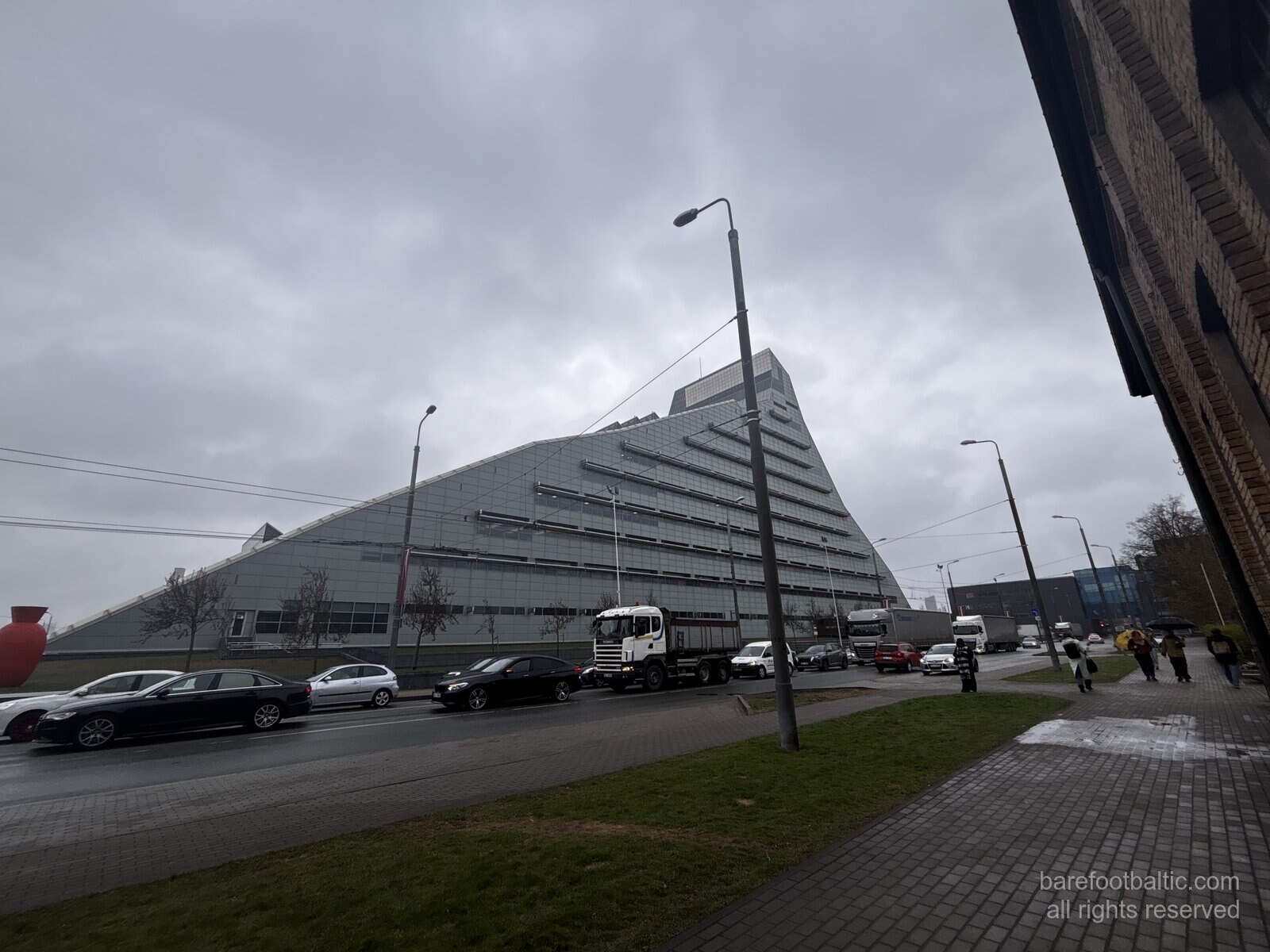
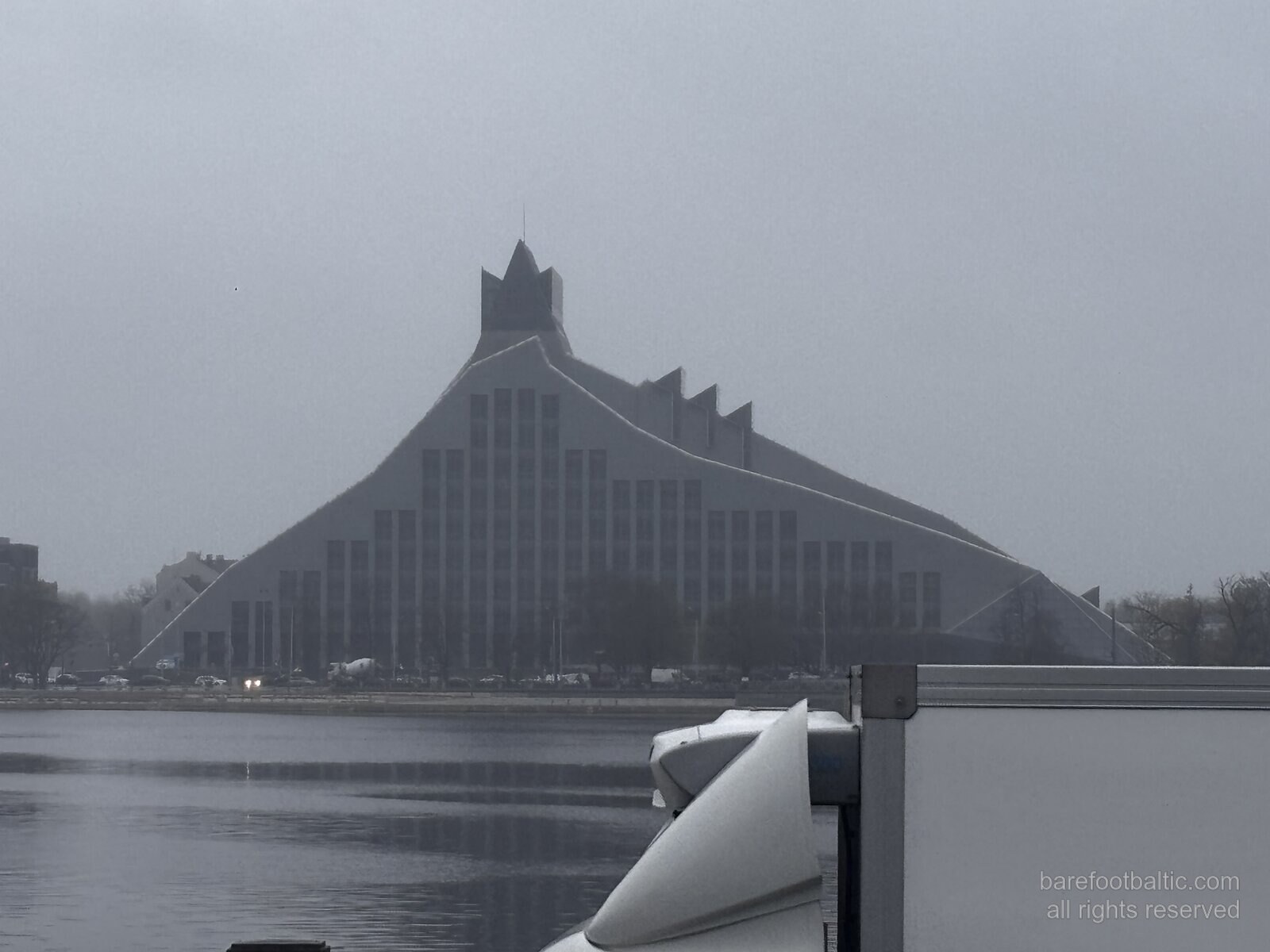
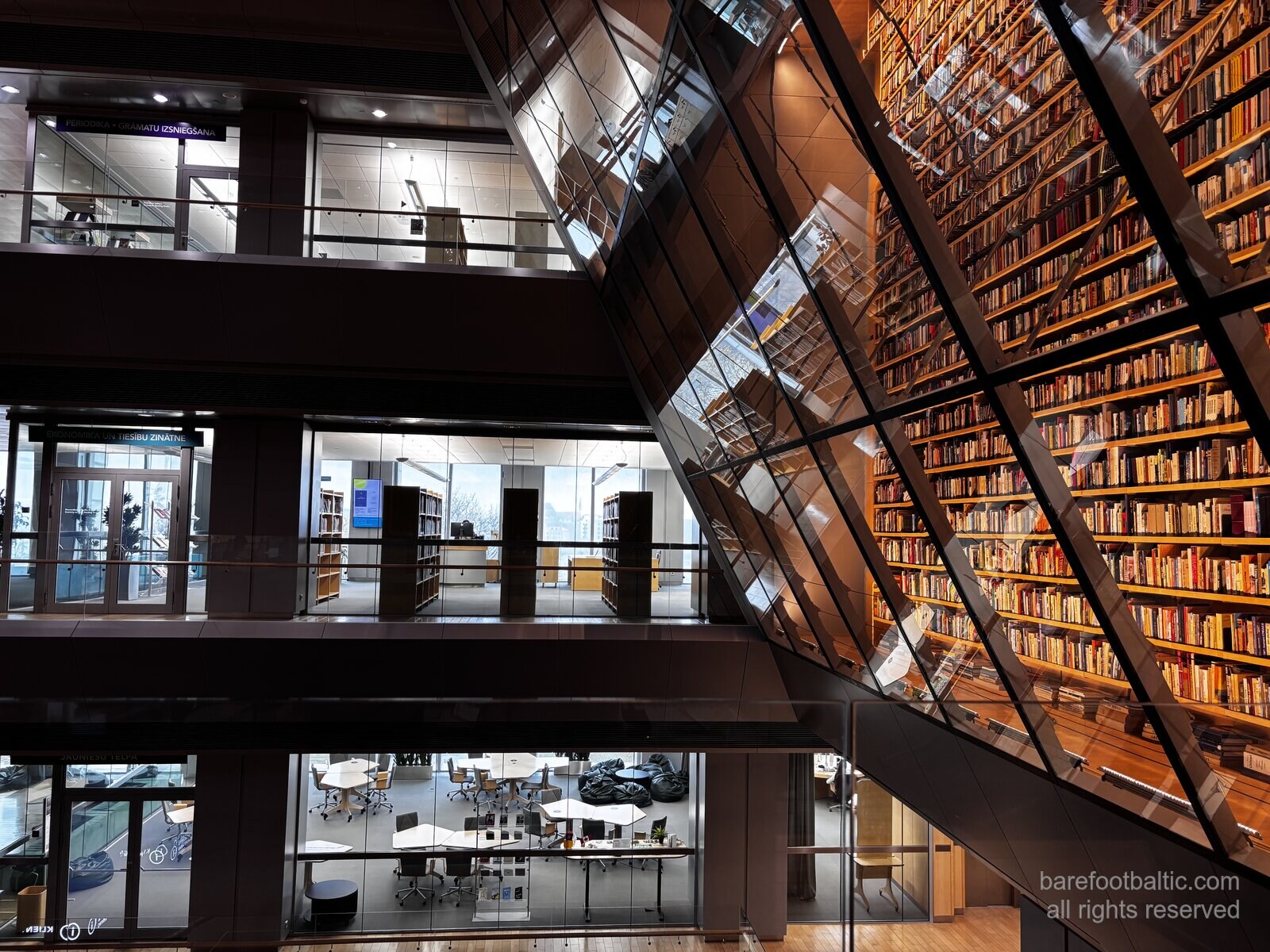
You see it long before you reach it. From the cobbled lanes of Vecrīga (Riga’s old town), from the spire of St Peter’s, from almost any high point in the old quarter, a steep silver-grey peak rises on the far bank of the Daugava. Angular, asymmetric, a little improbable. It looks like a piece of geometry that has decided to grow out of the riverbank. Twelve floors and a pinnacle, sixty-eight metres high, walls that lean inward at sharp angles and end in a small glass crown at the top.
This is one of the largest cultural buildings to go up in northern Europe in the twenty-first century, and it cost the country roughly €193 million to finish. But the numbers are the least interesting thing about it. What matters is what shape it took, and why.
The architect who waited fifty years to come home
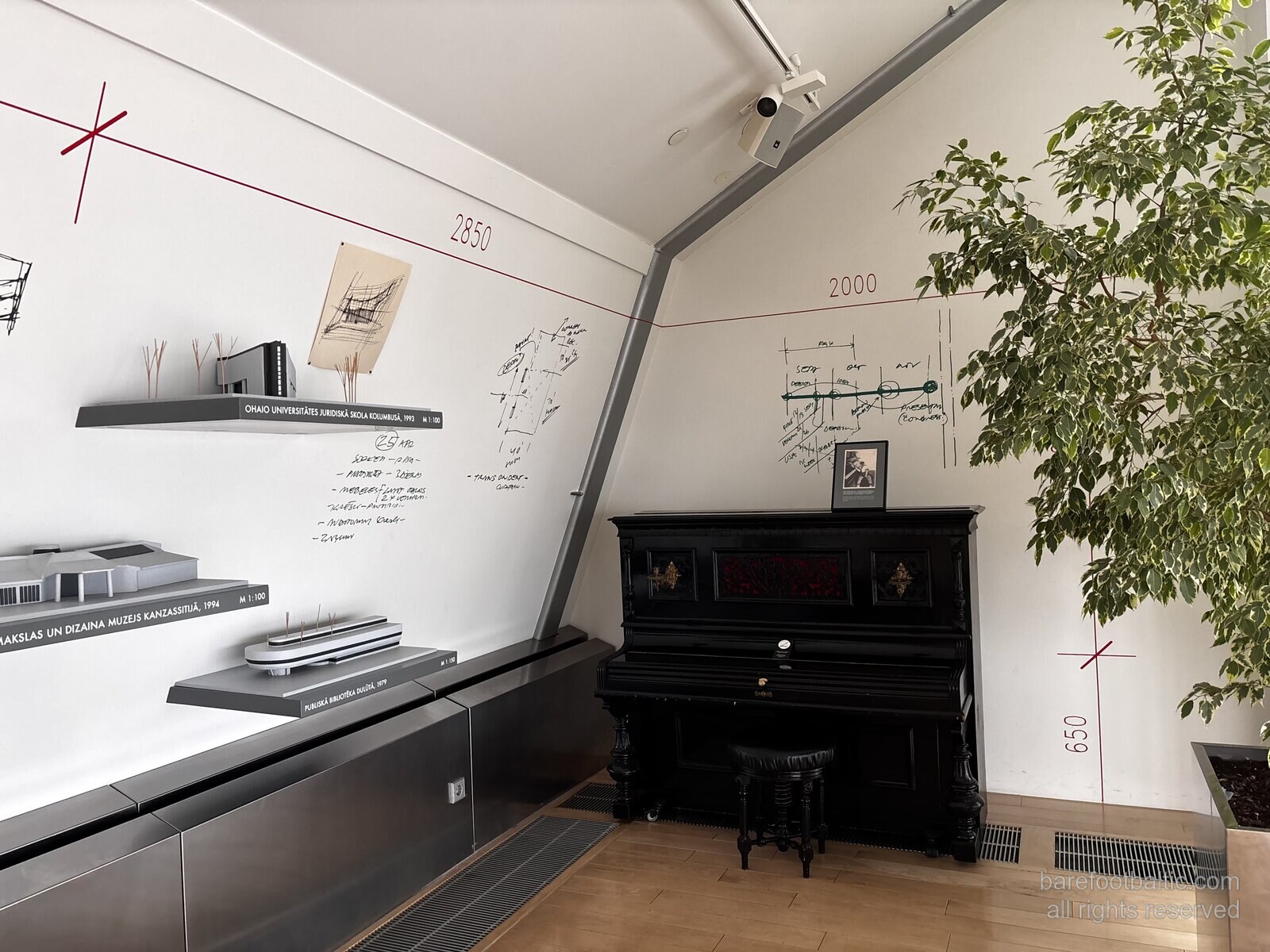
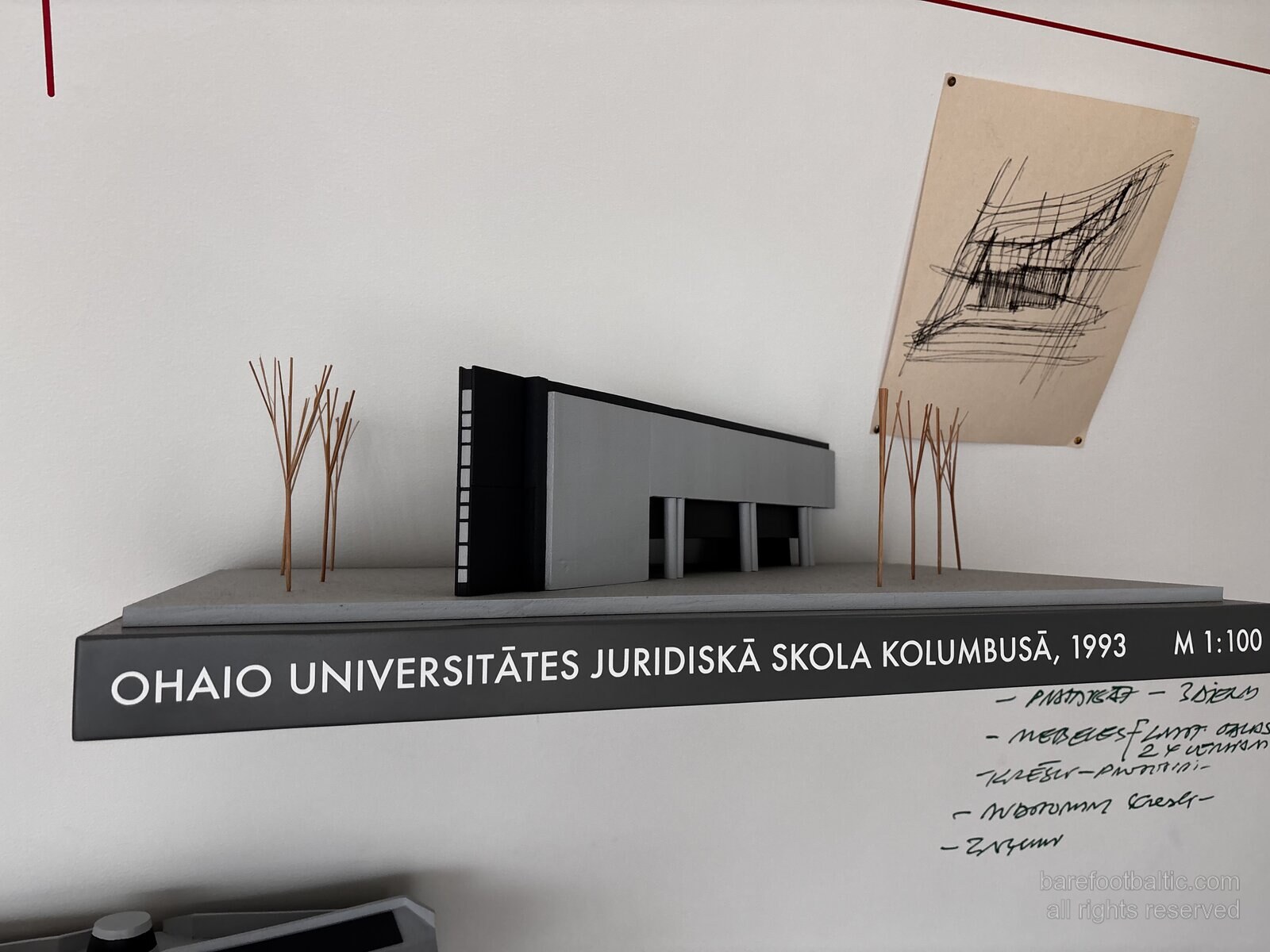
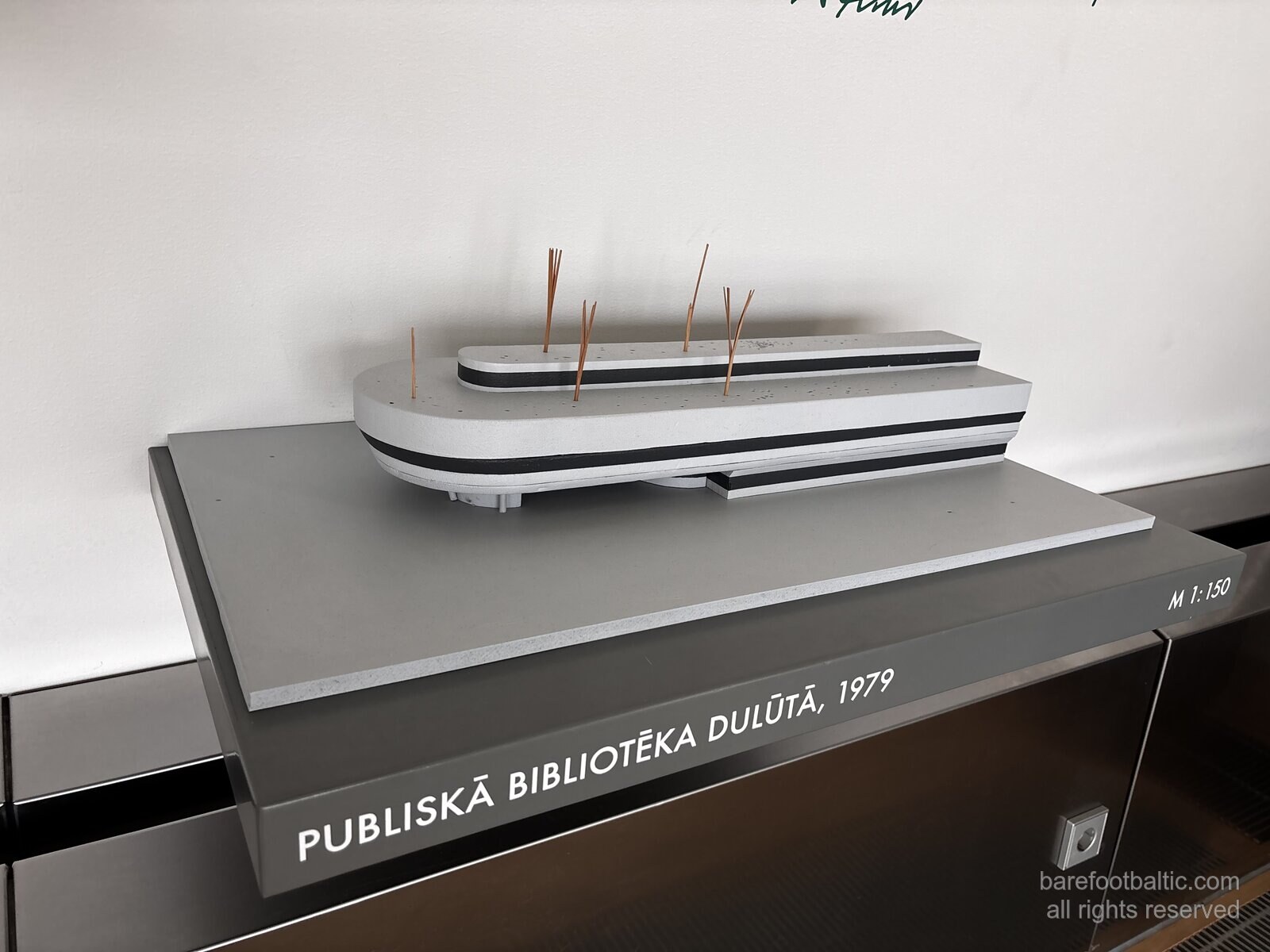
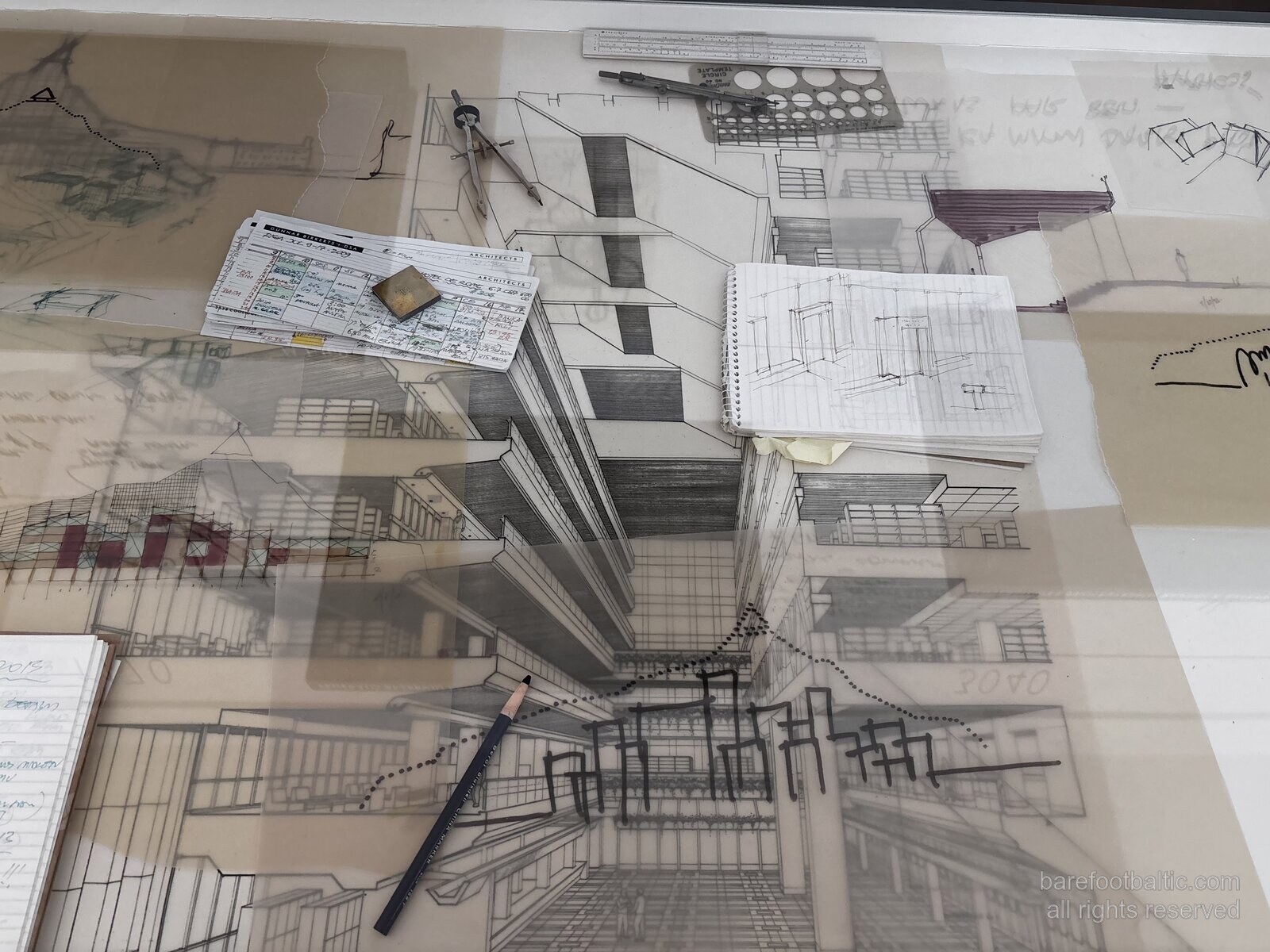
The Castle of Light was designed by Gunārs Birkerts, known in English as Gunnar Birkerts, a Latvian-American architect whose own life is bound up with the twentieth-century history of the country he was born in.
Birkerts was born in Riga in January 1925. As a teenager, he watched his country lose its independence twice in the space of a few years. First to the Soviets, then to the Germans, then to the Soviets again. In the closing months of the Second World War, ahead of the advancing Red Army, his family fled west. He was barely twenty. He never lived in Latvia again.
He finished his architectural studies at the Technische Hochschule in Stuttgart in 1949, emigrated to the United States the same year, and built an entire career in Detroit. He worked under Eero Saarinen and under Minoru Yamasaki, who designed the original World Trade Center. By 1962 he had opened his own practice. Over the following five decades he produced some of the most distinctive American buildings of his generation. A short list of the projects he is best remembered for outside Latvia:
- The Federal Reserve Bank of Minneapolis (1973), with its dramatic suspended structure
- The Corning Museum of Glass addition in Corning, New York (1980)
- The University of Michigan Law Library Addition (1981), an ingenious underground library, included in the American Institute of Architects’ list of 150 most notable American buildings
- The Kemper Museum of Contemporary Art in Kansas City (1994)
- The U.S. Embassy in Caracas, Venezuela (1996)
- St Peter’s Lutheran Church in Columbus, Indiana
He was made a Fellow of the American Institute of Architects in 1970 and received Latvia’s highest civilian honour, the Order of the Three Stars, in 1995. He worked into his late eighties. He died in Massachusetts in August 2017, aged 92, having lived to see the Castle of Light open three years earlier.
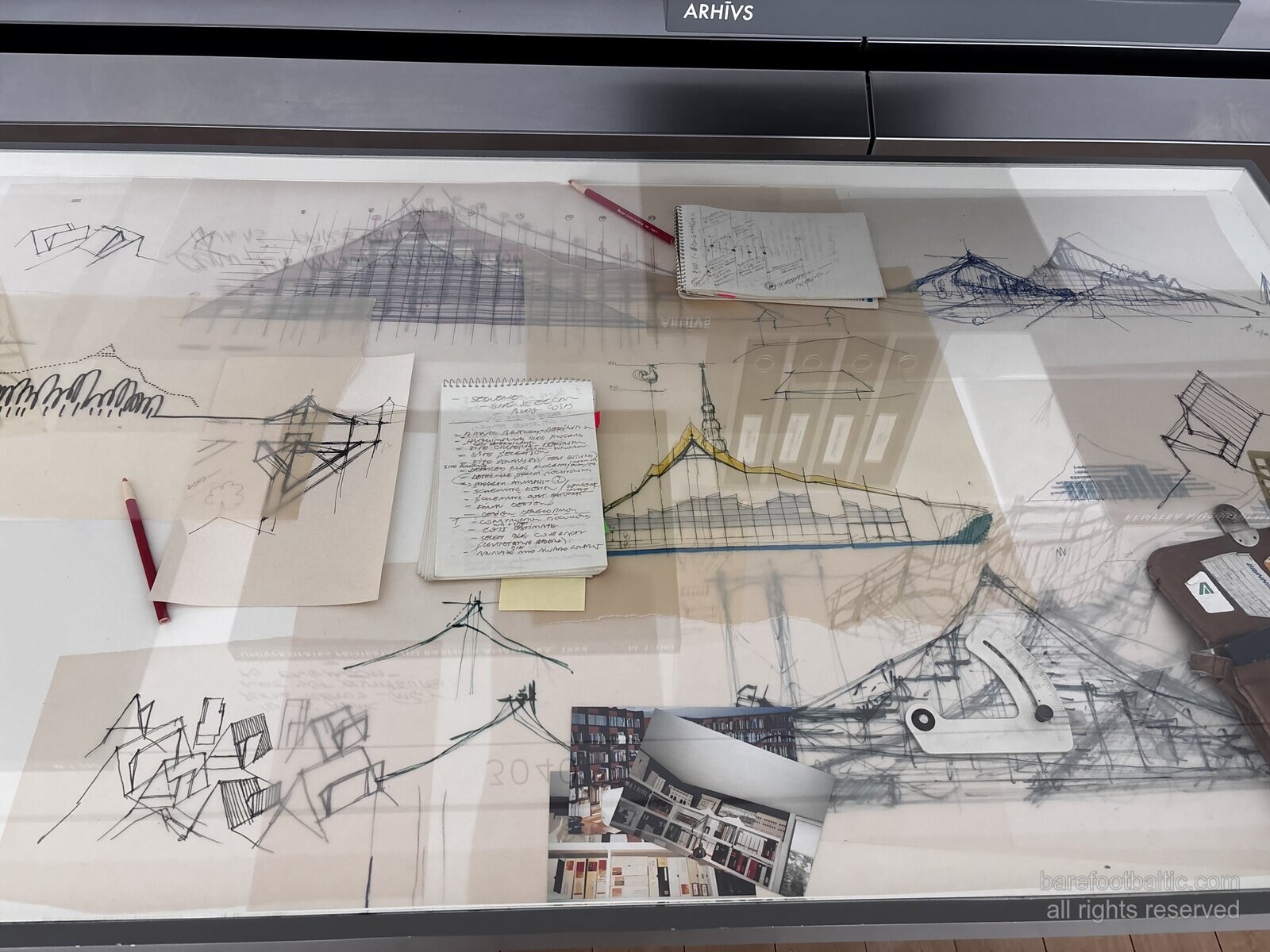
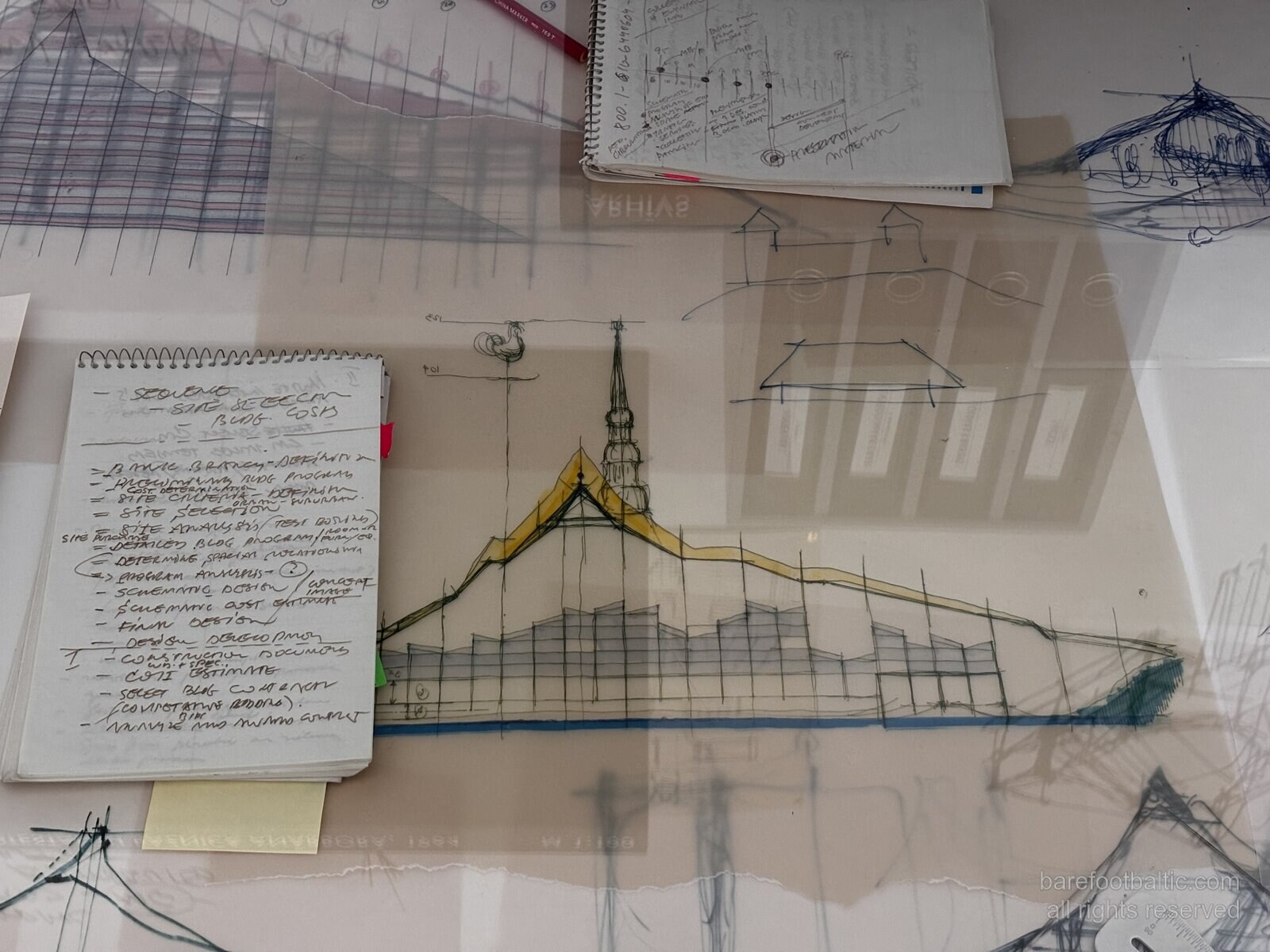
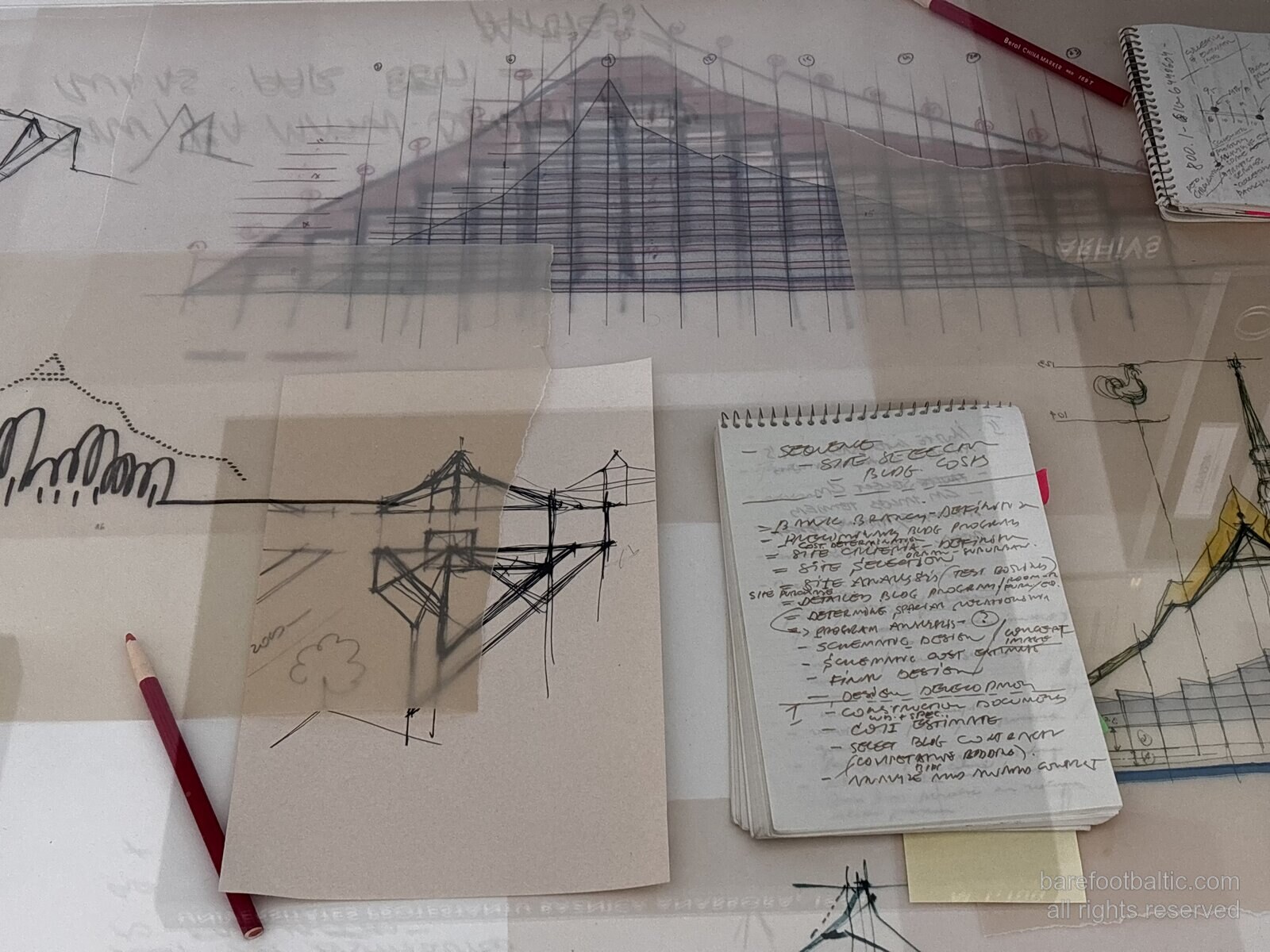
In 1989, when Latvia was just beginning to slip out of Soviet control, the new government commissioned Birkerts to design a national library. He was already in his mid-sixties. He took the commission and, characteristically, gave the design work to Latvia for free. He once told his close friend, the Latvian architect Jānis Dripe, that there are times when the need for a symbol of freedom overrides the question of quiet integration into the urban context. Sometimes it is more important that the building speaks.
The Castle of Light is the building speaking.
The longest version of the story, the Glass Mountain and the Castle of Light
Birkerts could have designed Latvia a sleek, glassy, internationally legible library in the manner of the late 1990s. He did not. He went back to Latvian folklore, and he chose two of the deepest images in it.
The Glass Mountain
In Latvian folktales there is a recurring figure called the Stikla kalns, the Glass Mountain (sometimes translated as the Crystal Mountain). It is a mountain so steep and so smooth that nothing can climb it. At its summit, depending on the version of the tale, sits a king’s daughter, or a princess, or a sleeping enchanted maiden, sometimes with three golden apples in her lap. She is unreachable. She is the prize of the impossible.
The story belongs to a folktale family that exists across northern Europe. Latvian folklorists have catalogued more than seventy-seven Latvian variants alone, and Latvian archives are said to contain over four hundred. But in the Latvian imagination it took on a particular weight. A king announces that whoever can ride to the top of the Glass Mountain and reach his daughter will marry her. Knights come from every direction. Their horses scrabble at the slope and slide back down. Princes break themselves trying. Day after day, the mountain defeats them.
In most Latvian versions there are three brothers. The two older brothers are clever and proud and come to nothing. The youngest is the foolish one, Muļķītis, “the little fool,” a stock figure of Latvian story-telling. He is mocked by his family, dressed in ashes and rags. But he has something the others do not. He keeps faith. He holds a vigil at his father’s grave for three nights, and on each of those nights a magical horse appears to him. A silver horse, then a golden horse, then a horse the colour of diamonds. On three successive days he tries the mountain. He climbs a third of the way, then two-thirds, and on the final day he rides to the very top, takes the princess’s ring (or her handkerchief, or one of her three golden apples, depending on the storyteller), and disappears before anyone sees who he is. Only at the end, summoned before the king, does he produce the proof and reveal that the boy in the ashes was the one who reached the summit.
This story matters because of what the mountain itself means. The Glass Mountain is a metaphor, a rather precise one, for the height of human achievement. It is the thing that cannot be reached without commitment, without faith, without a willingness to be mocked by the world while you are still trying. The princess at the top is the reward of perseverance, of wisdom, of self-mastery. She is, in a sense, what knowledge looks like.
The most famous adaptation of this folktale is Rainis’s play Zelta zirgs (The Golden Horse), written in 1909 by Latvia’s greatest poet and political thinker. In Rainis, the youngest brother is named Antiņš, and the princess on the Glass Mountain is asleep, frozen in a kind of enchanted darkness, waiting for someone brave enough to wake her. Rainis wrote Zelta zirgs during a long political exile in Switzerland, at a time when Latvia did not exist as an independent country and would not for another decade. Every Latvian schoolchild knows what the play was really about. The sleeping princess was Latvia. The mountain was history. The youngest brother was the Latvian people, told they were too small and too foolish to make a country of their own, and reaching the summit anyway.
The Castle of Light
The second image Birkerts drew on is older and stranger. There is an old Latvian song, Gaismas pils, “Castle of Light,” written by the nineteenth-century poet Auseklis and set to choral music that every Latvian sings. The song tells of a great castle of wisdom and learning that long ago sank into a lake, drowned in the dark waters of war and invasion, and lies at the bottom waiting. One day, the song promises, when the people have suffered enough and earned it back, the castle will rise out of the water again, gleaming, and bring light to the land.
For a country that spent most of its modern history occupied, by Swedes, by Russians, by Germans, by the Soviet Union, this is not a children’s lullaby. It is the central image of a national life. The wisdom is not lost. It is submerged. It will return.
Birkerts took both images and welded them into one building. The sloping silver flanks are the Glass Mountain. The little glass crown at the top, the box of light at the apex you can see clearly in the photographs, is the princess’s crown, the prize at the summit. And the whole structure, rising out of the riverbank opposite the Old Town, is the Castle of Light itself, finally lifted out of the dark waters of the twentieth century.
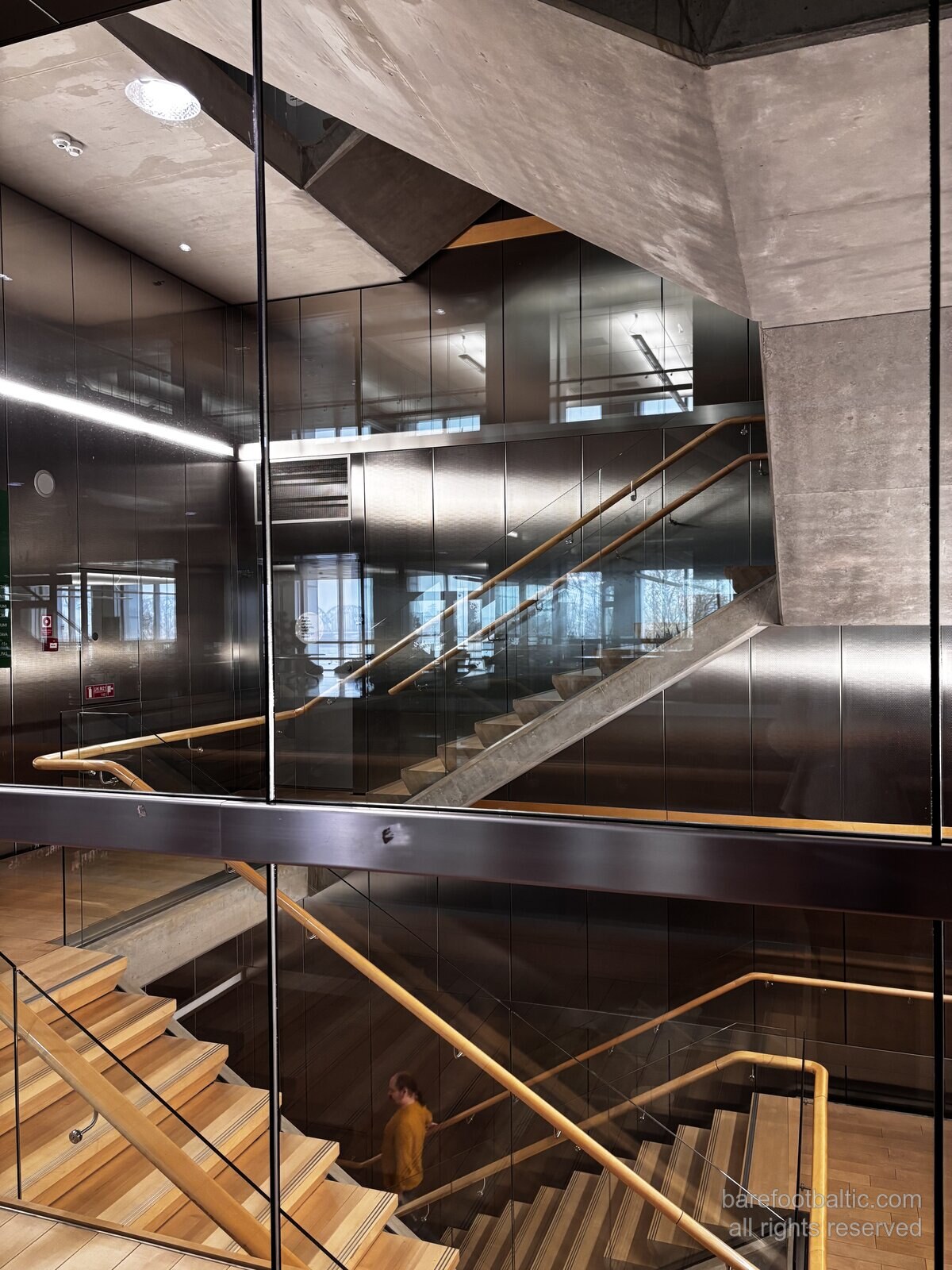
The colours inside the building deepen the symbolism. Each floor is painted in the colours of the old Latvian lats banknotes, the national currency the country used until it joined the euro in 2014, and which carried portraits of writers, folklorists, and the Daina maiden on its notes. Up on the upper floors sits the Cabinet of Folksongs, a wooden chest of drawers containing the original index cards on which Krišjānis Barons systematised over a quarter of a million dainas. These are Latvian folk verses, four-line poems, the closest thing the country has to a sacred text. Almost everything in the building is a quiet reference to something Latvian. The mountain you climb to reach the top of the building is, deliberately, the same mountain in the story.
The night of the human chain
The new library was structurally complete in early 2014. Latvia had just joined the euro on 1 January, and Riga had just been named European Capital of Culture for that year. The old library was actually eleven different buildings scattered across Riga, because the collection had outgrown every home it had ever had. Now it was about to be packed into trucks and moved across the river.
Then somebody had a different idea.
On Saturday, 18 January 2014, in the dead cold of a Latvian January, around fourteen thousand people lined up in a chain that began outside the old library on Krišjāņa Barona iela in the Old Town, ran through the centre of Riga, crossed the Akmens tilts, the Stone Bridge over the Daugava, and ended on the steps of the new Castle of Light on the opposite bank. The chain was roughly two kilometres long. The temperature, depending on which account you read, was somewhere around minus twelve to minus fifteen degrees Celsius. There were small children in it. There were elderly people leaning on canes. People came out of their offices and stood in line. People came in from villages outside Riga and stood in line.
And then they passed books.
One pair of cold hands to the next. From the old library to the new. The first book was lifted off a shelf by a librarian, handed to the first person in the chain, and travelled slowly and ceremonially through fourteen thousand pairs of mittened hands, across the city, across the river, into the new building. The Latvians called it the Path of Light, Gaismas ceļš.
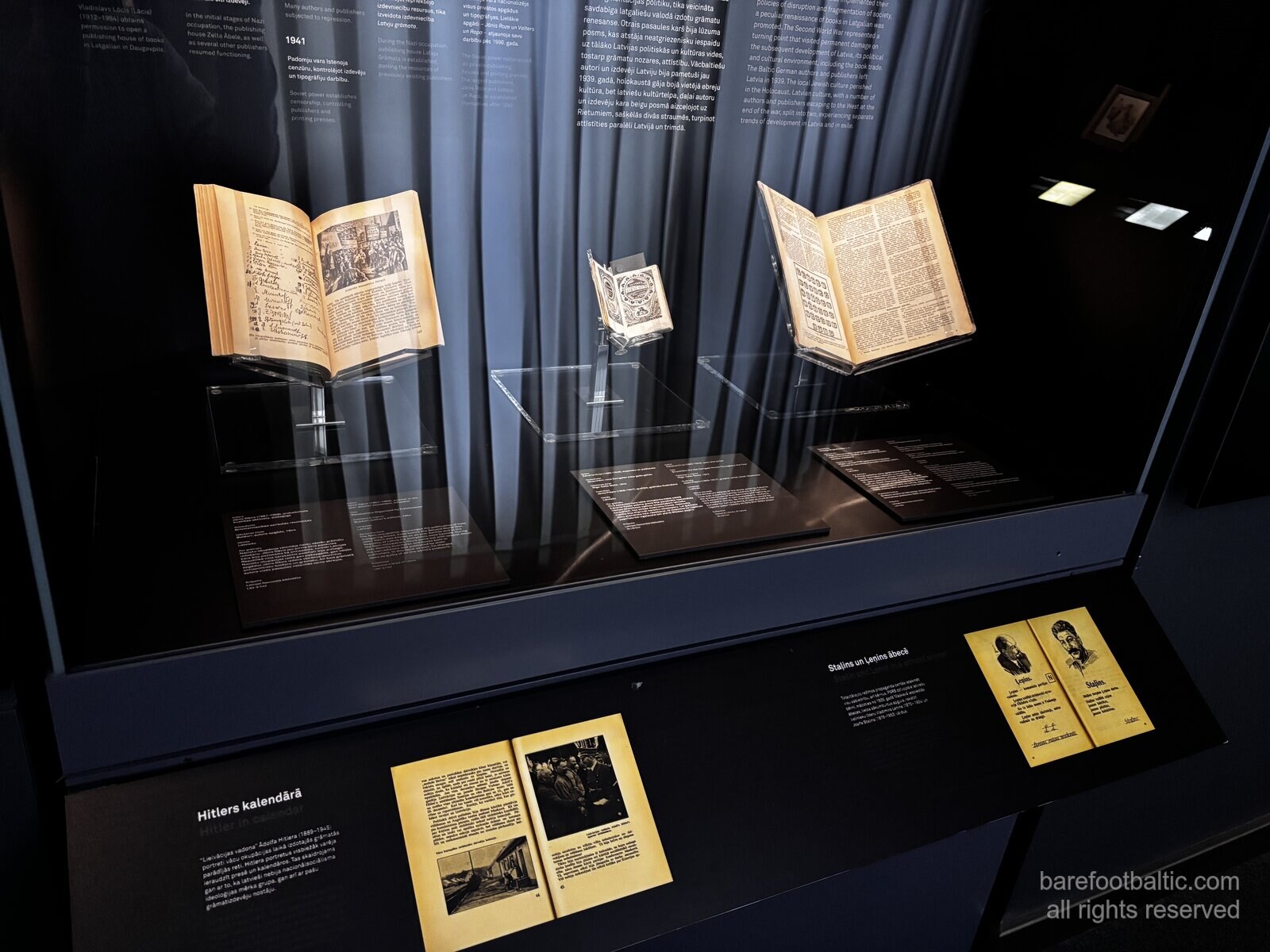
There is a story about this moment that Latvians like to tell. It is said that the first book passed across the chain was a Bible, and a particular one. Symbolically it was the Glück Bible, the seventeenth-century Latvian translation by the Lutheran pastor Ernst Glück, which is one of the cornerstones of the entire Latvian written language. Glück’s translation, finished in 1694 and printed in Riga, was the first complete Bible in Latvian, and it standardised Latvian spelling and grammar for the next three centuries. To send it across first, hand to hand, said something plain. This is where our literature begins, and everything else follows.
The chain was supposed to deliver thousands of books that day. In the end it managed only around two thousand. The reason is recorded in interviews afterwards by people who stood in the line. Everyone kept stopping to look at the books. Some held them too long because they were beautiful. Some held them too long because they could not believe they were holding them. A woman recognised a book she had read as a child. An old man recognised a book that had been banned under the Soviets and could only be read with a special permit until 1988. The line kept stalling. Nobody minded.
The remaining four million volumes followed in trucks over the next several months. But the trucks were not the point.
The point was that the human chain consciously echoed an older one, the Baltic Way of 23 August 1989, when roughly two million people from Estonia, Latvia and Lithuania joined hands in a single unbroken line stretching six hundred kilometres from Tallinn through Riga to Vilnius, demanding independence from the Soviet Union. Within two years, all three countries were free. Twenty-five years later, almost to the month, their grandchildren stood in the snow in Riga and used their hands for books instead of borders.
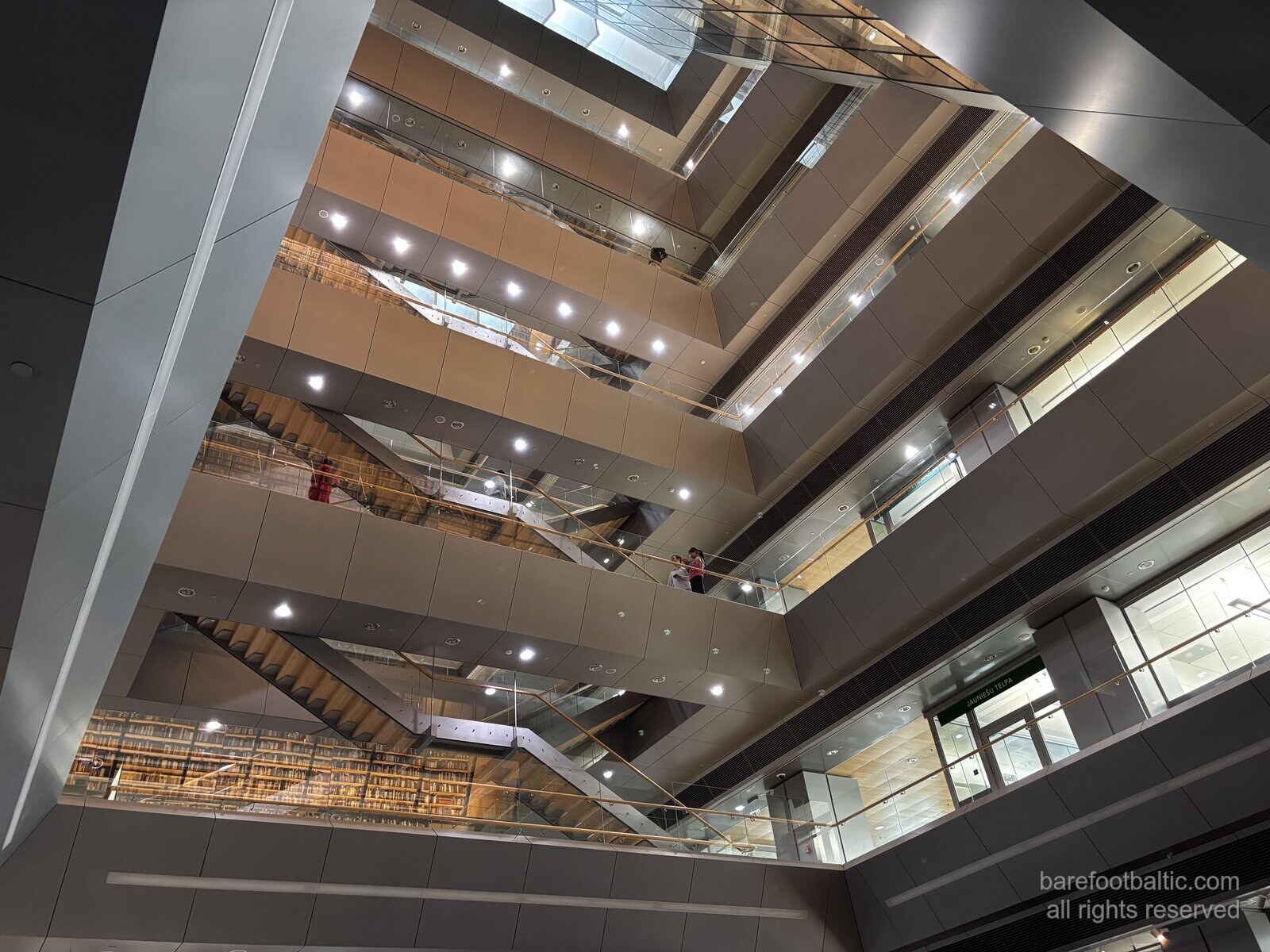
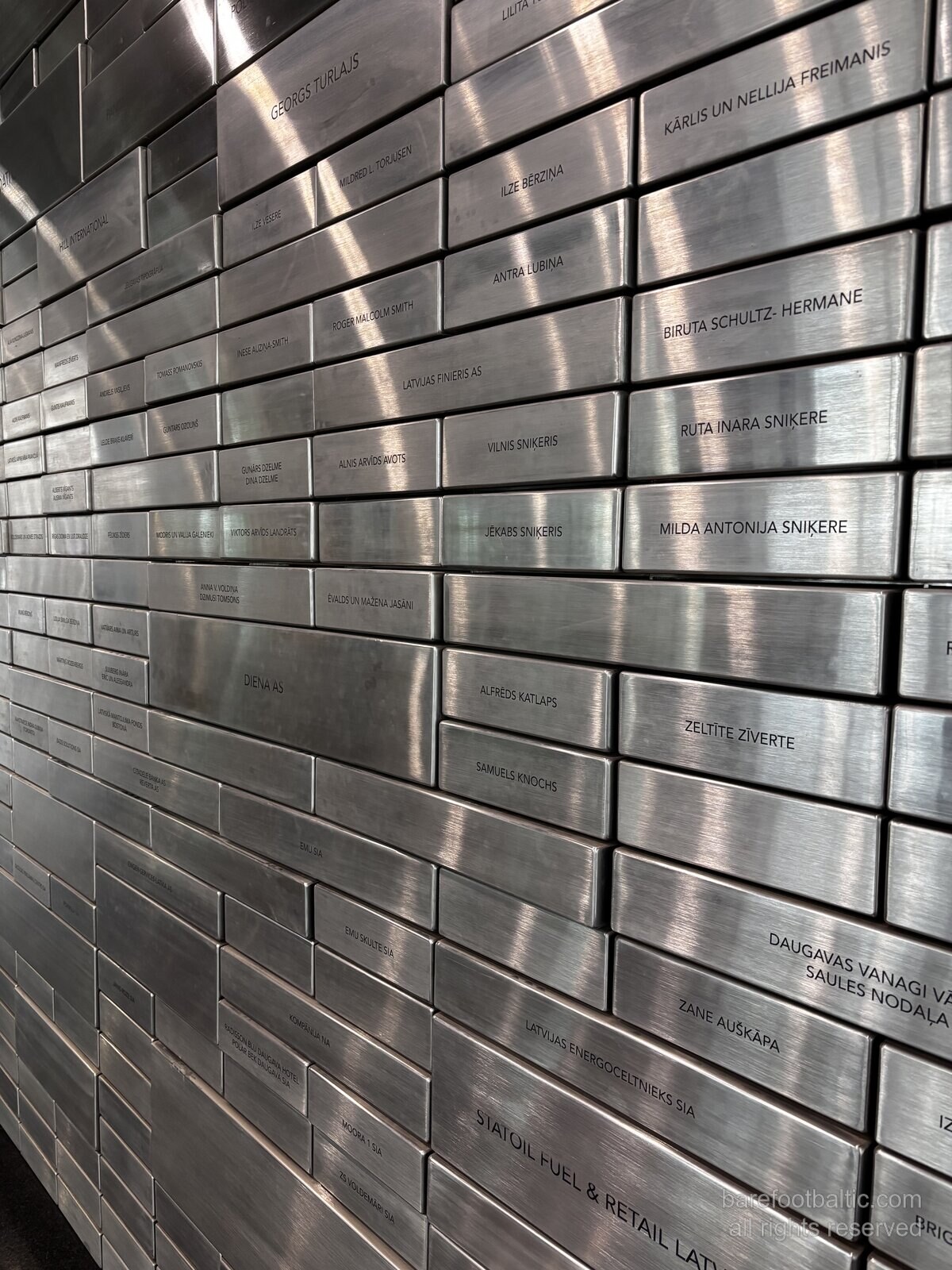
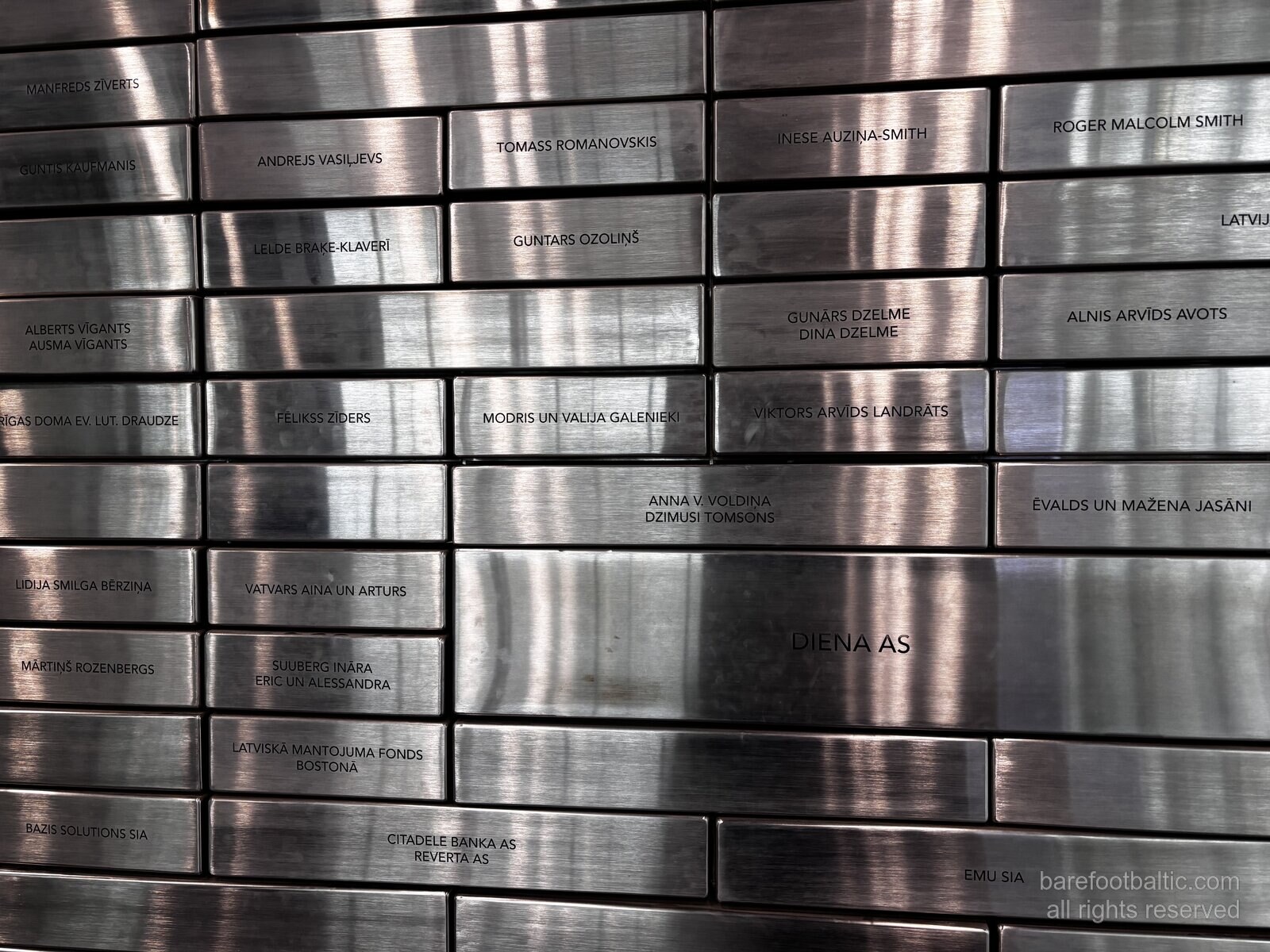
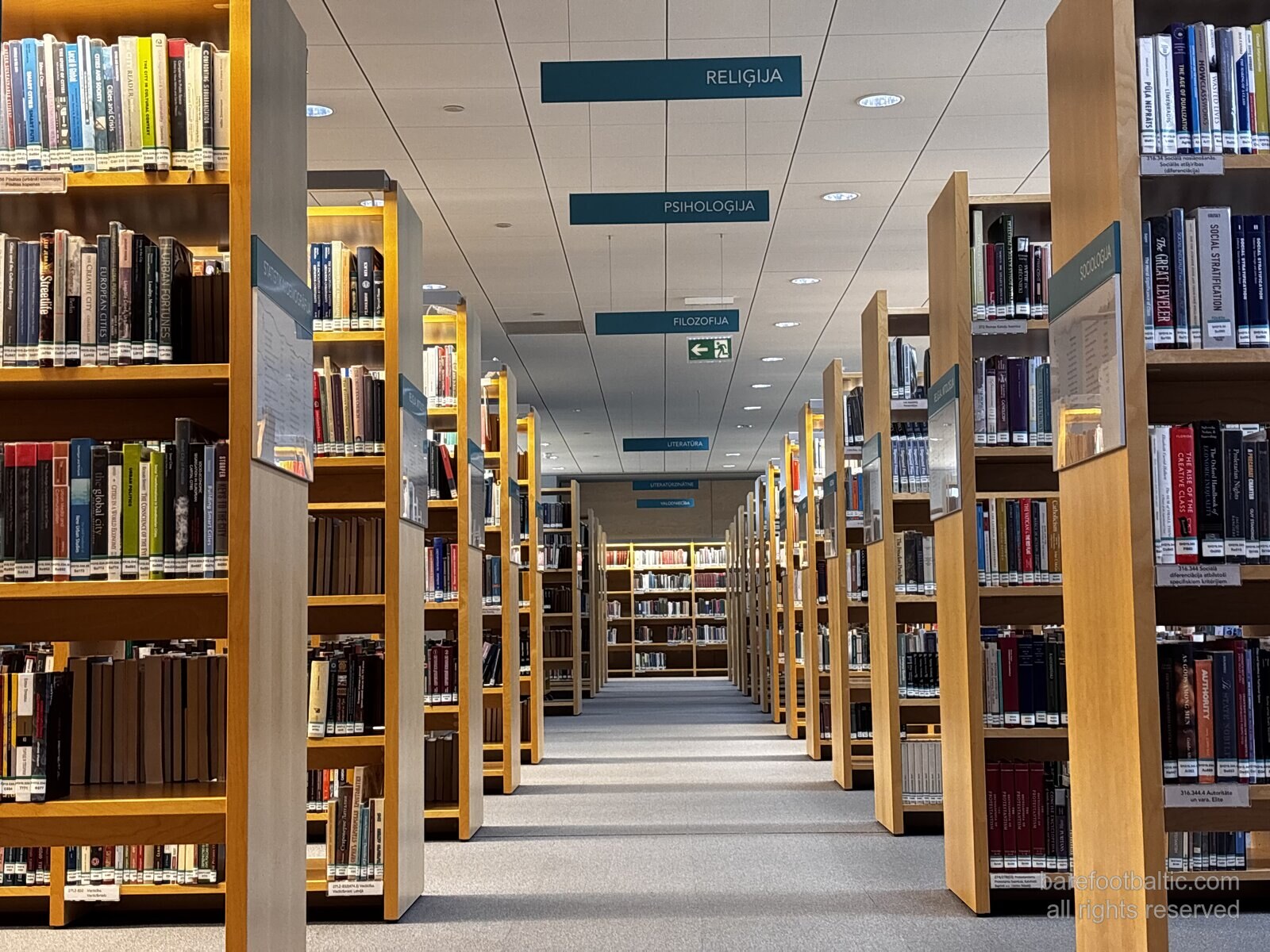
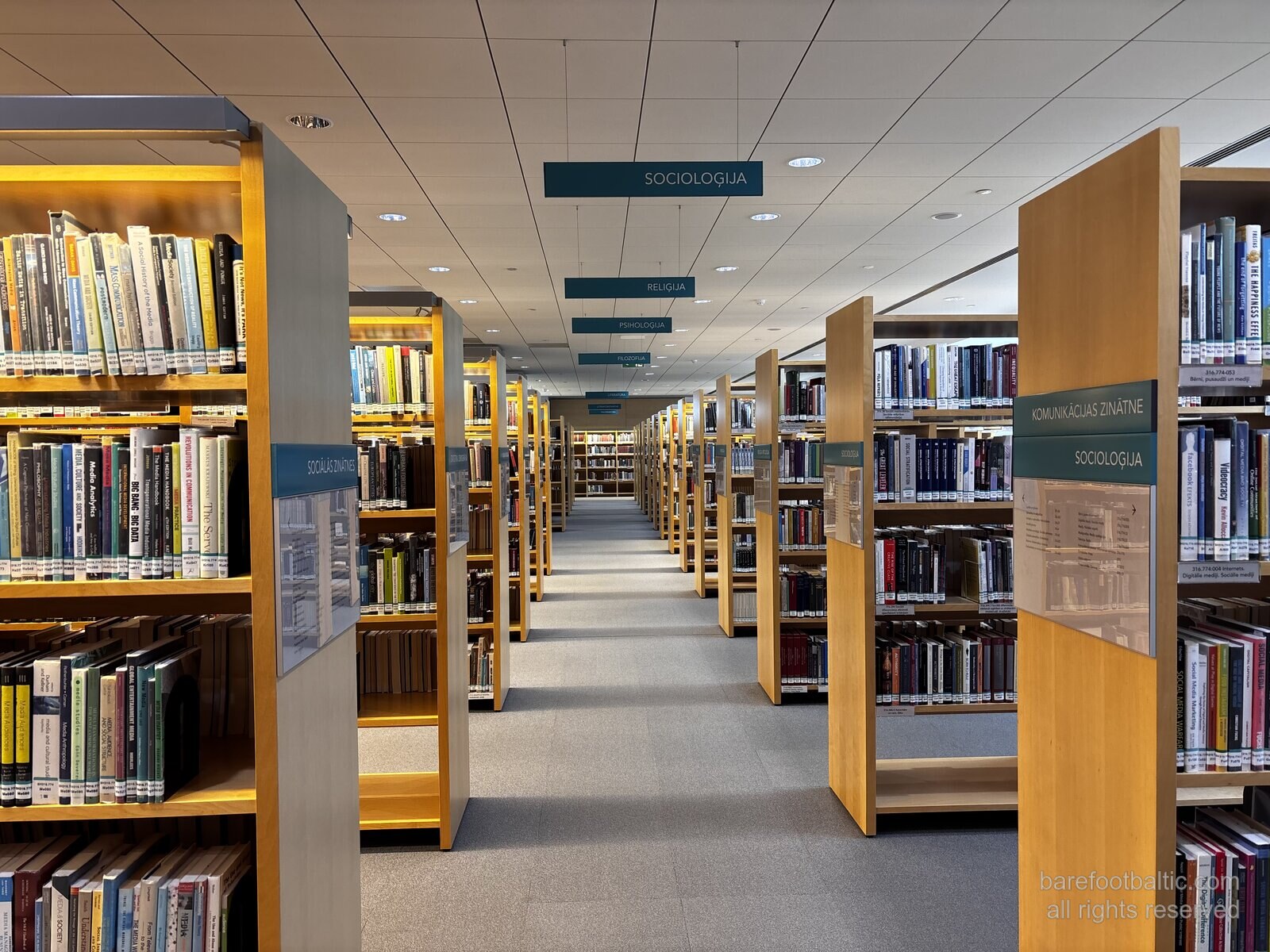
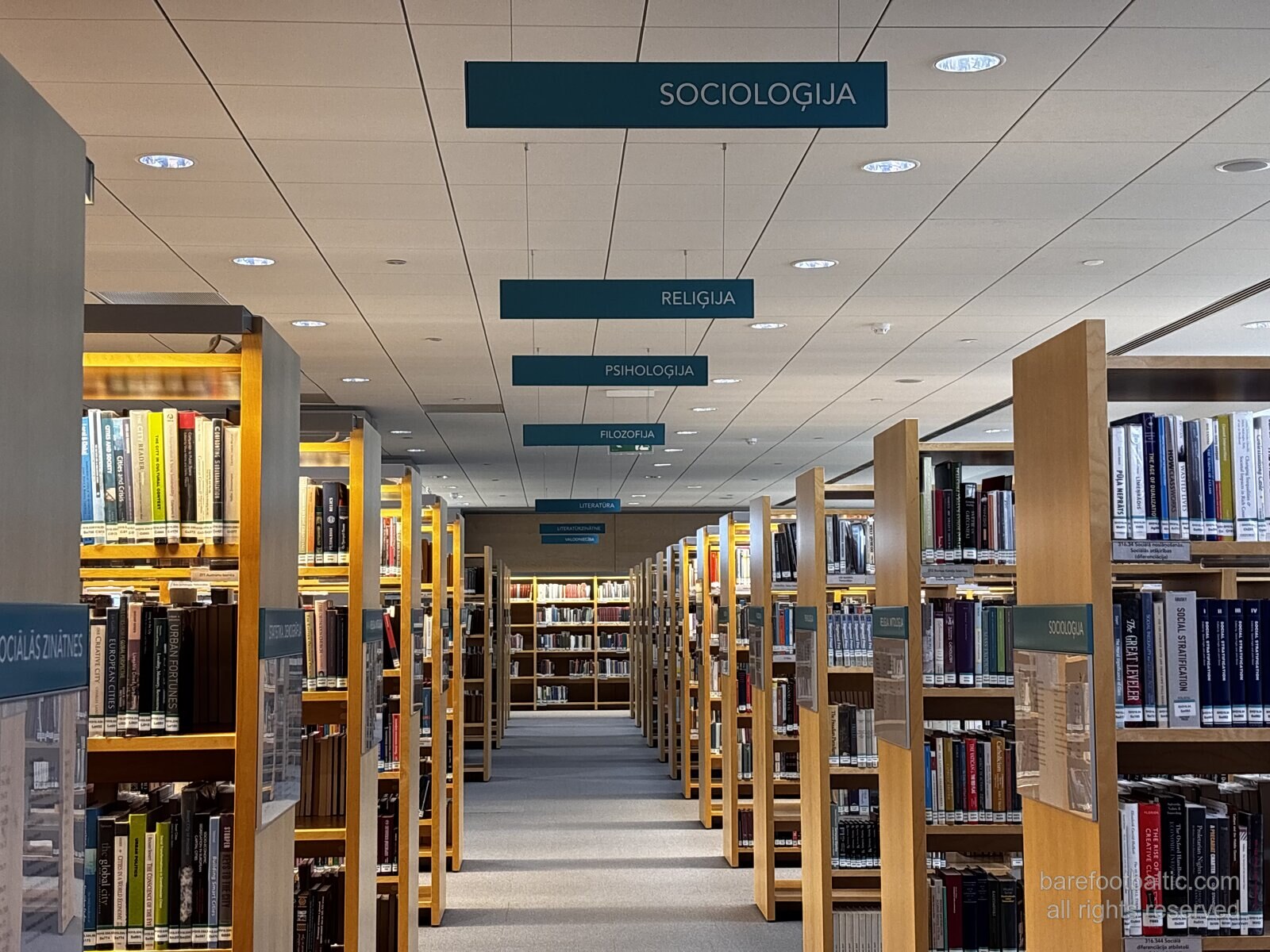
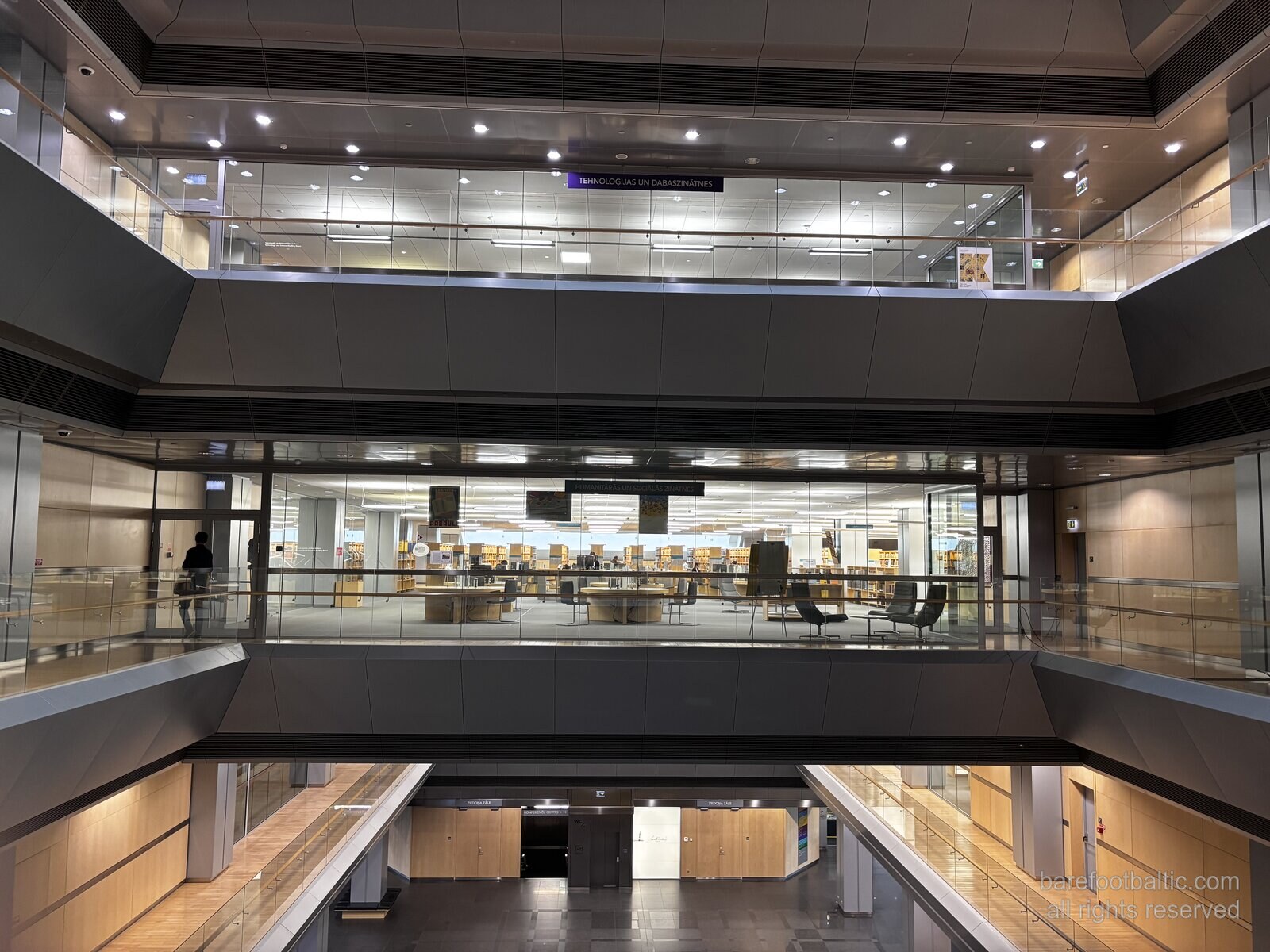
The two thousand books that arrived by hand on 18 January 2014 are still in the library. They have been placed on a special bookcase that rises five floors through the centre of the building. It is called the People’s Bookshelf, Tautas grāmatu plaukts, and any Latvian, anywhere in the world, can donate a book to it, on condition that they include a personal note explaining why the book mattered to them. It now holds many thousands of volumes in over fifty languages, and the shelf is still growing. When you walk into the atrium and look up, you are looking at a book wall that has been built, one personal story at a time, by an entire country.
What it is like to actually visit
Practical things now, because part of why the Castle of Light is a great recommendation for a visitor to Riga is that it is easy and free.
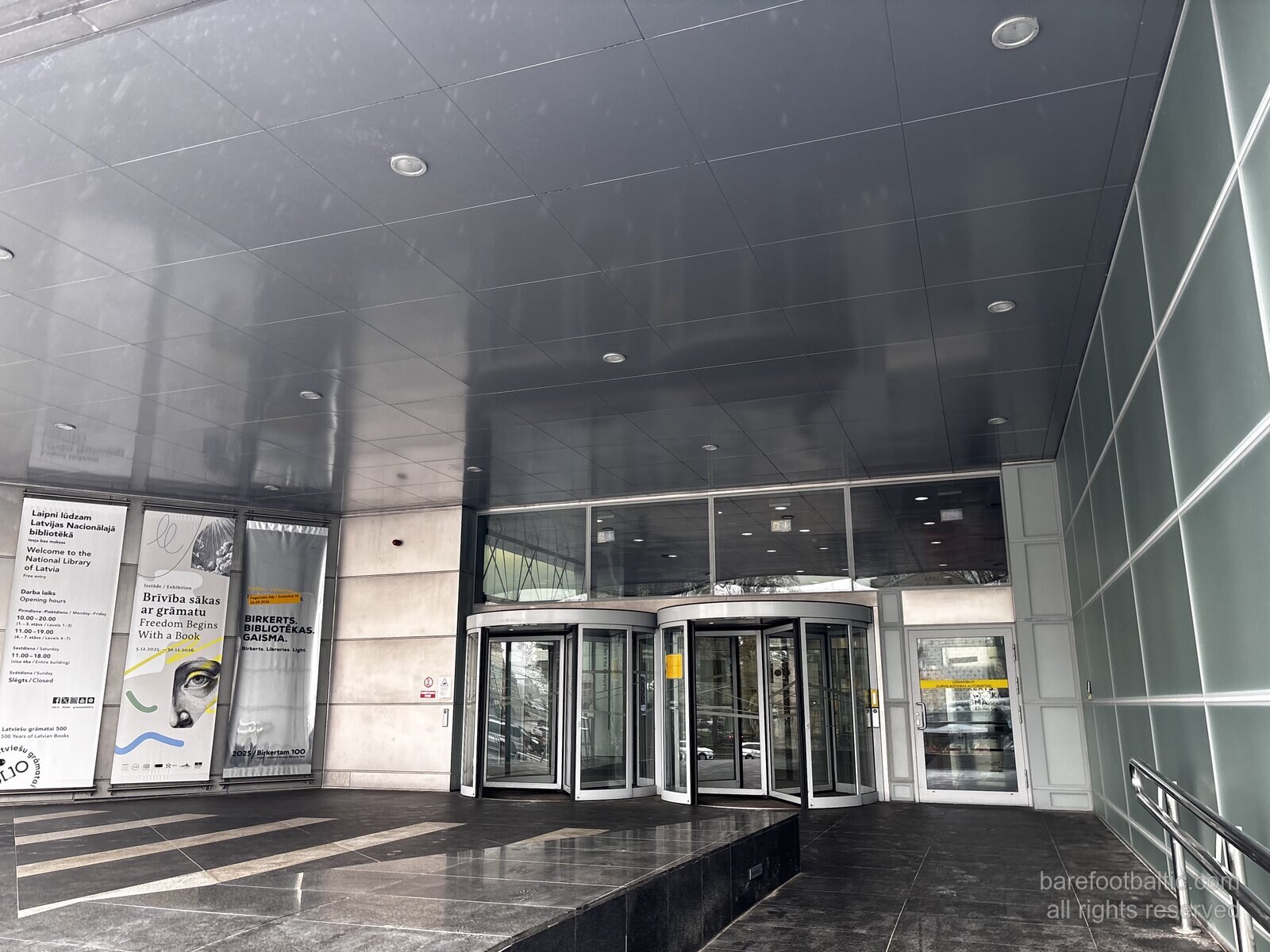
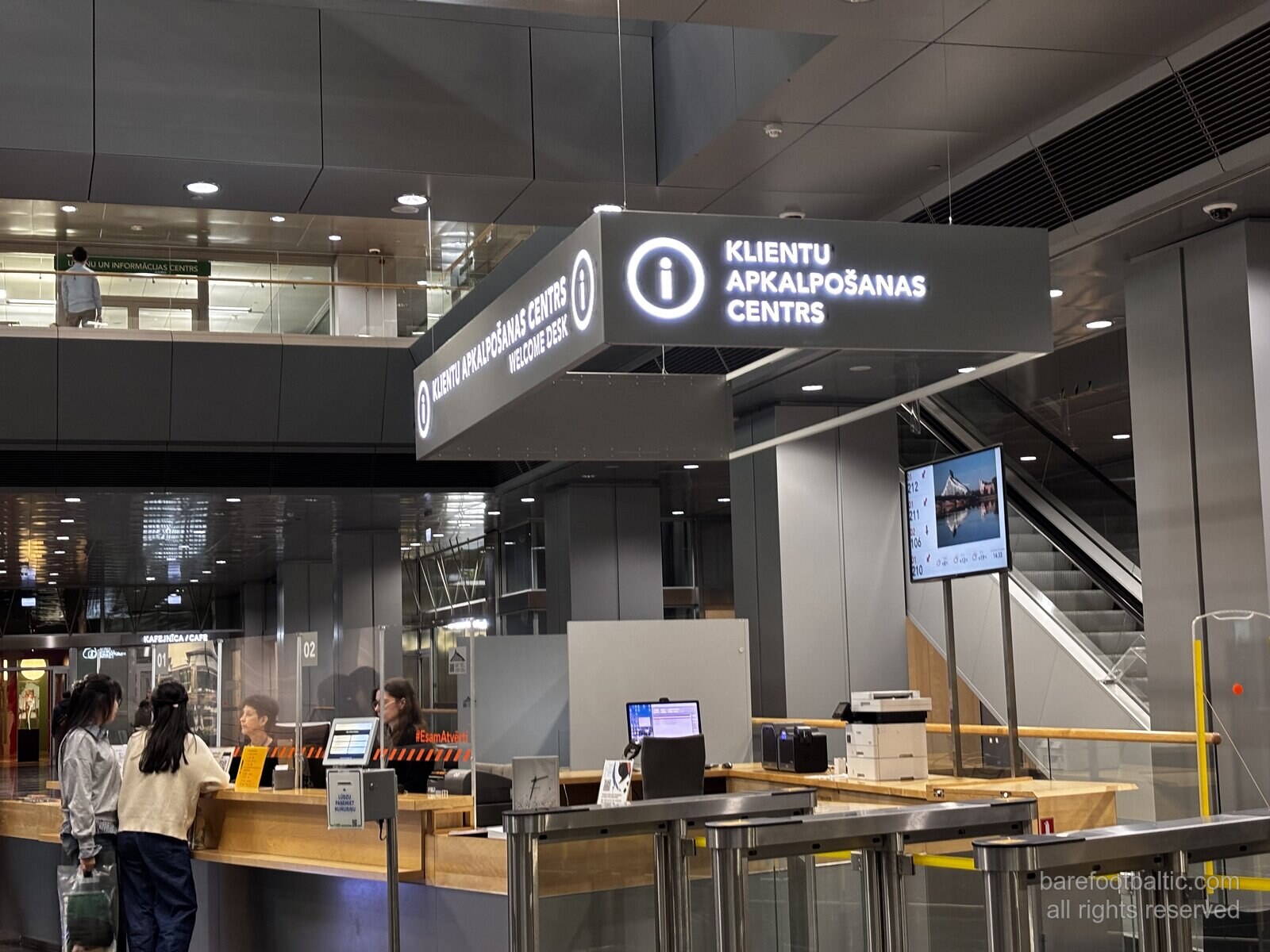
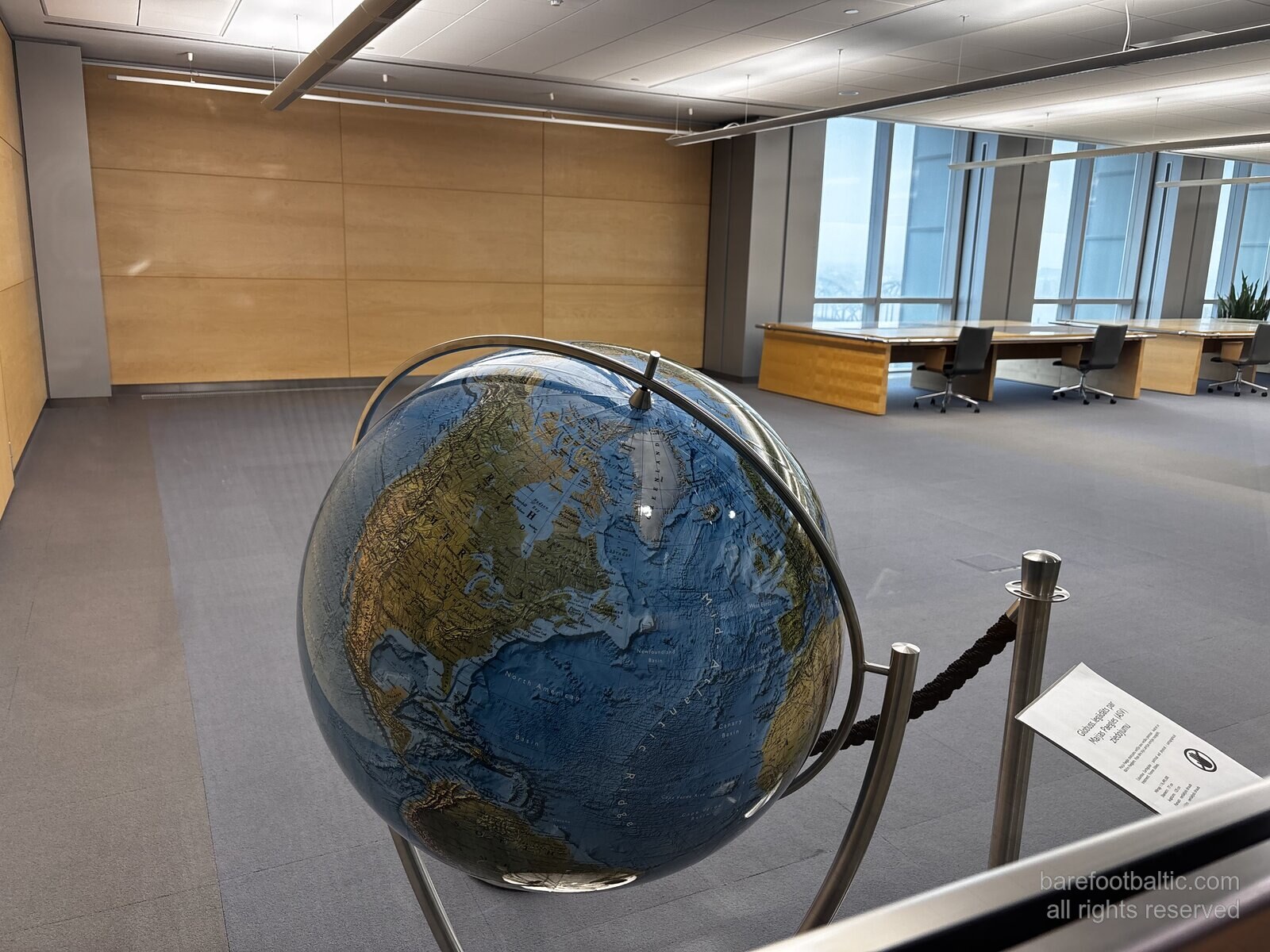
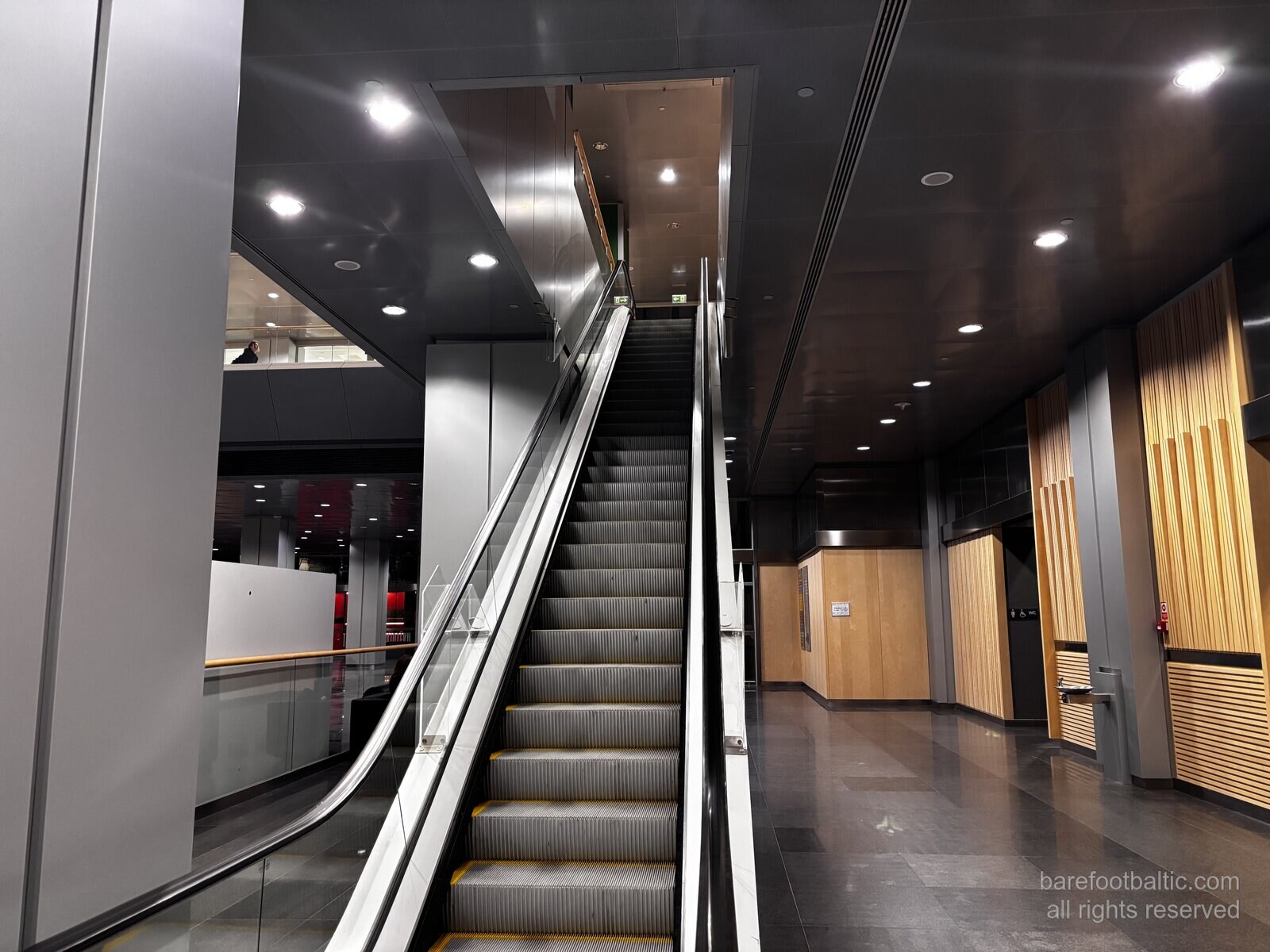
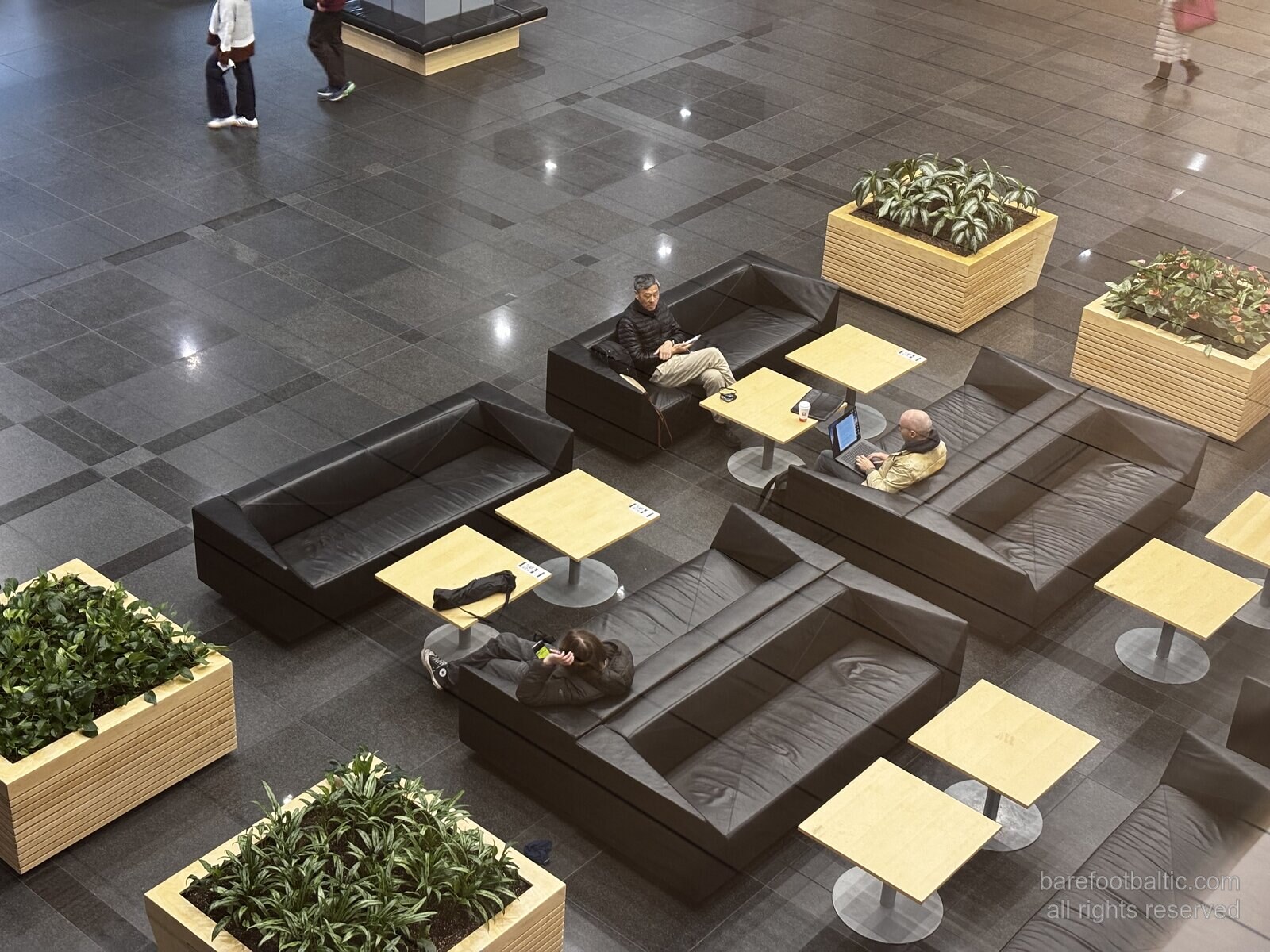
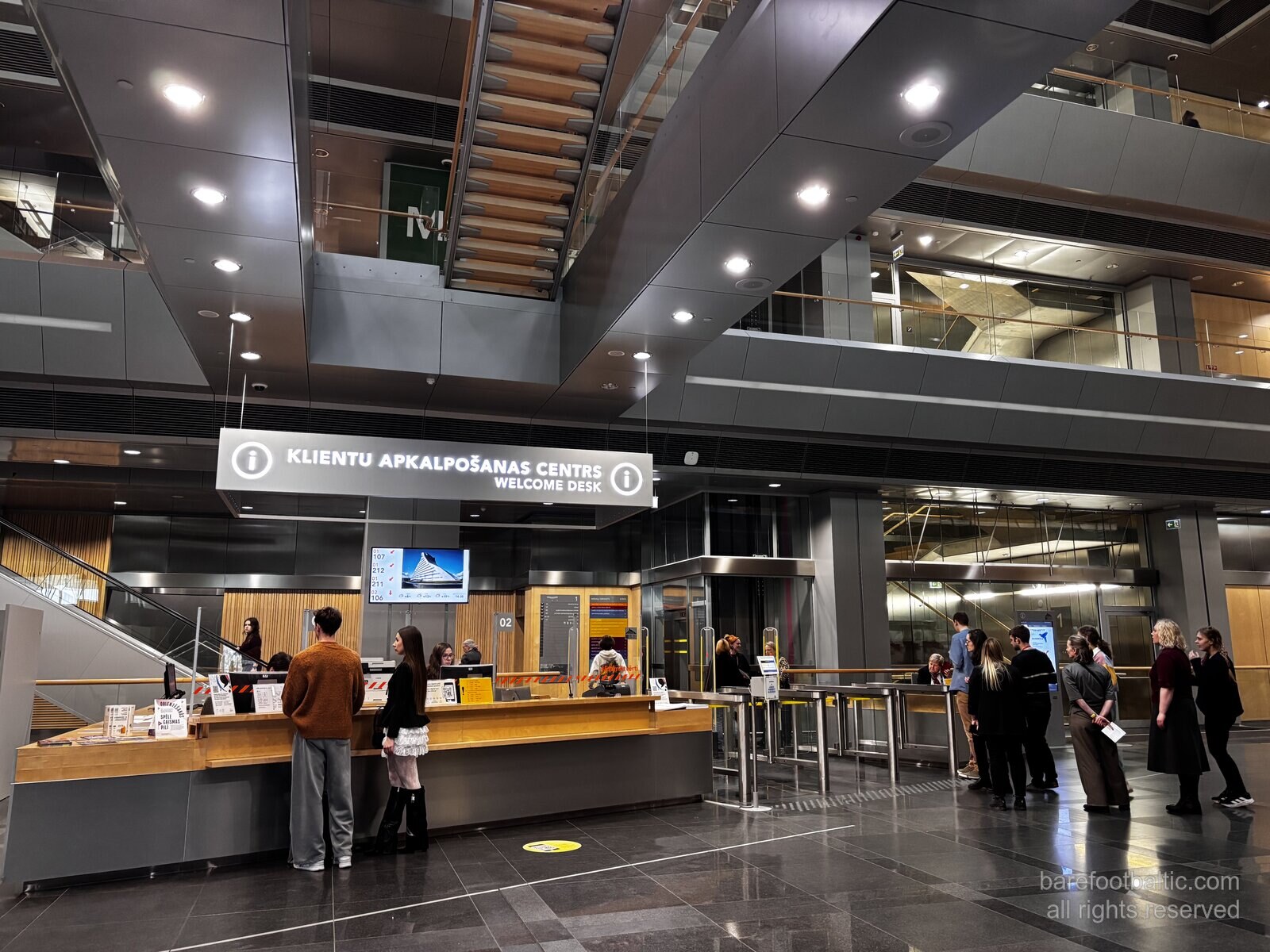
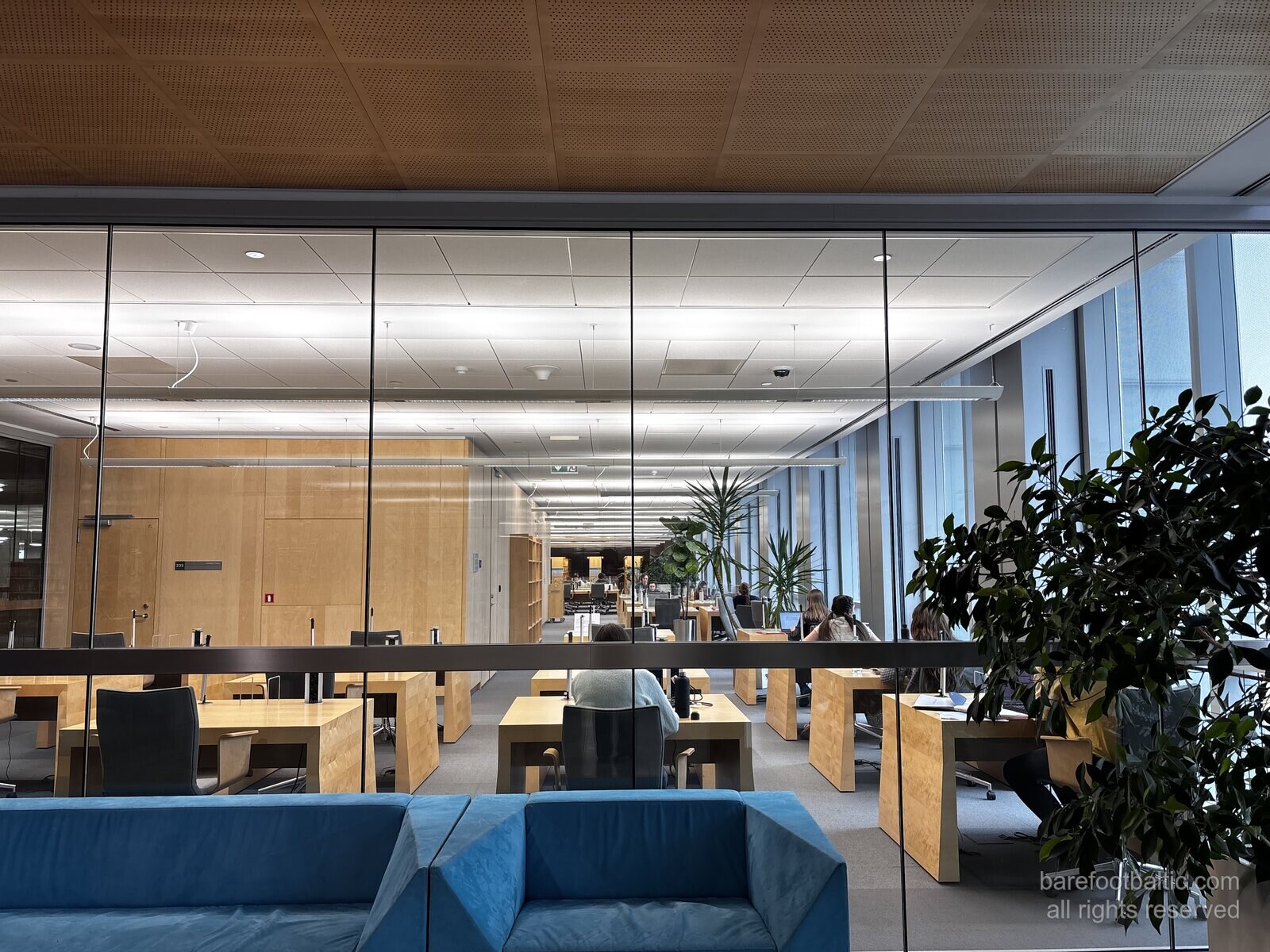
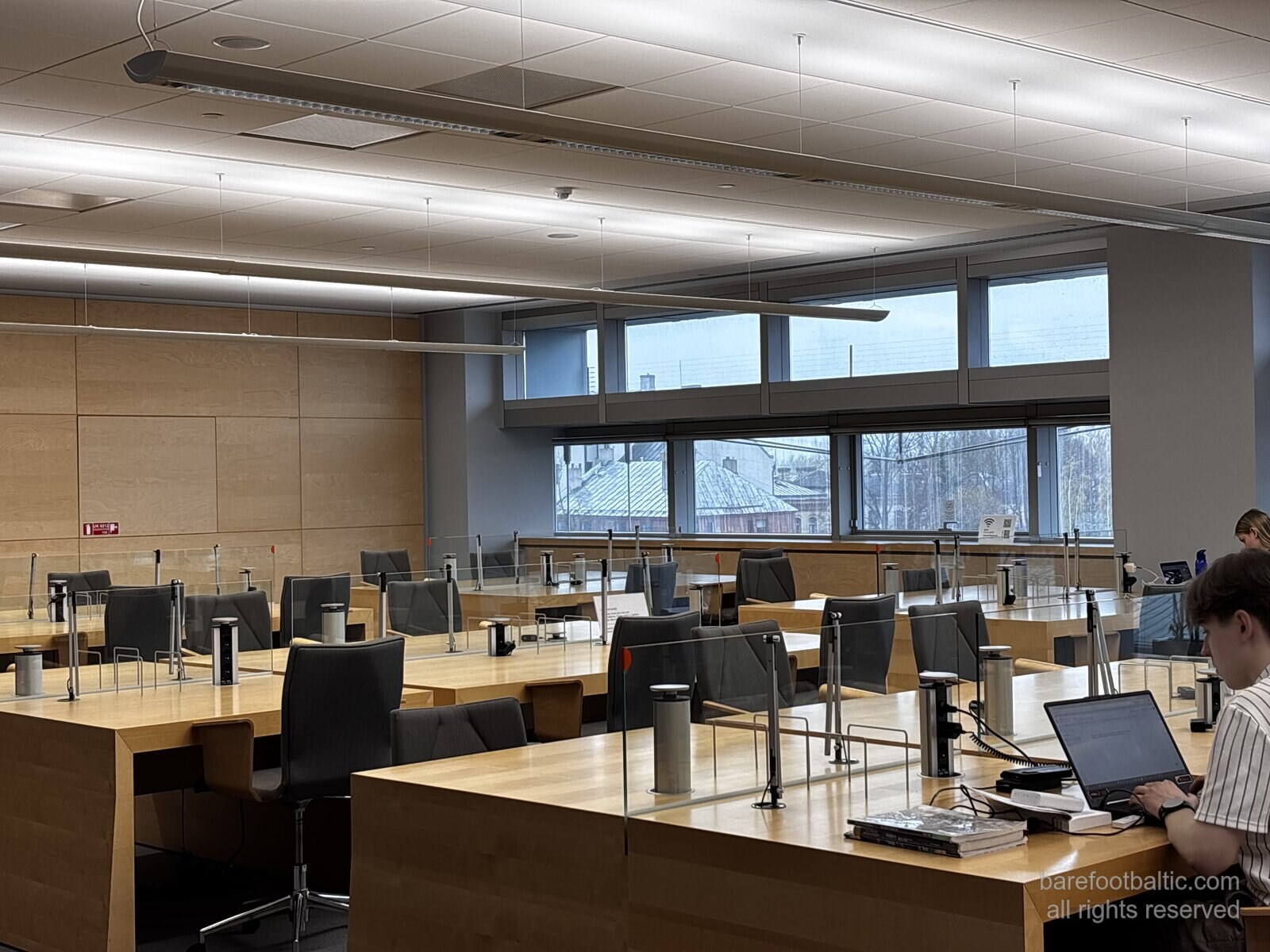
Entry is free for everyone. You walk in, leave your coat at the cloakroom (free) and your bag in a locker (one euro coin, refundable), pick up a free visitor pass at reception, and you are in. A proper library card, which gives you access to reading rooms and reference materials, needs a passport or national ID card. But for the architecture, the exhibitions, the People’s Bookshelf and, above all, the view, you do not need anything except yourself.
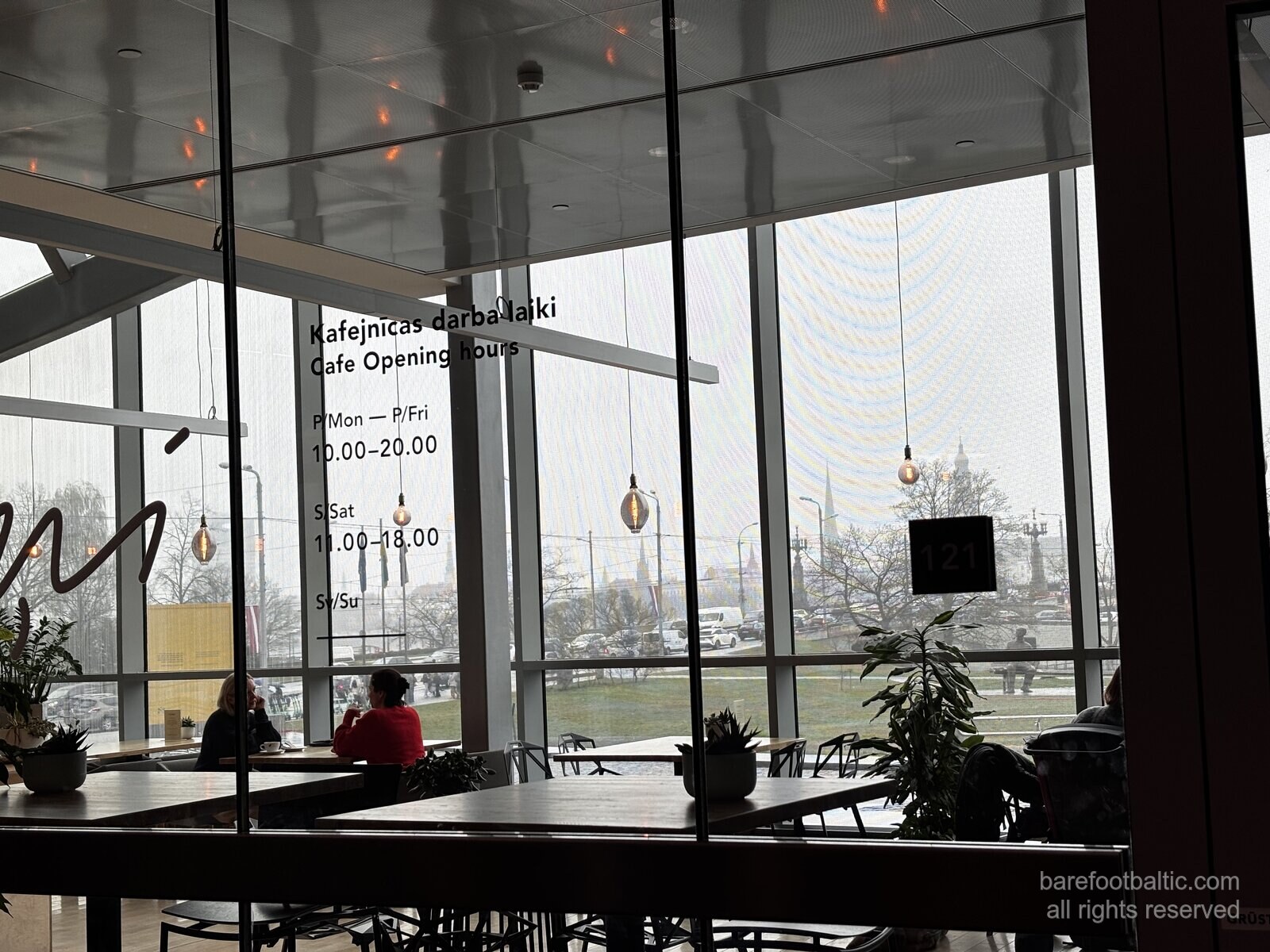
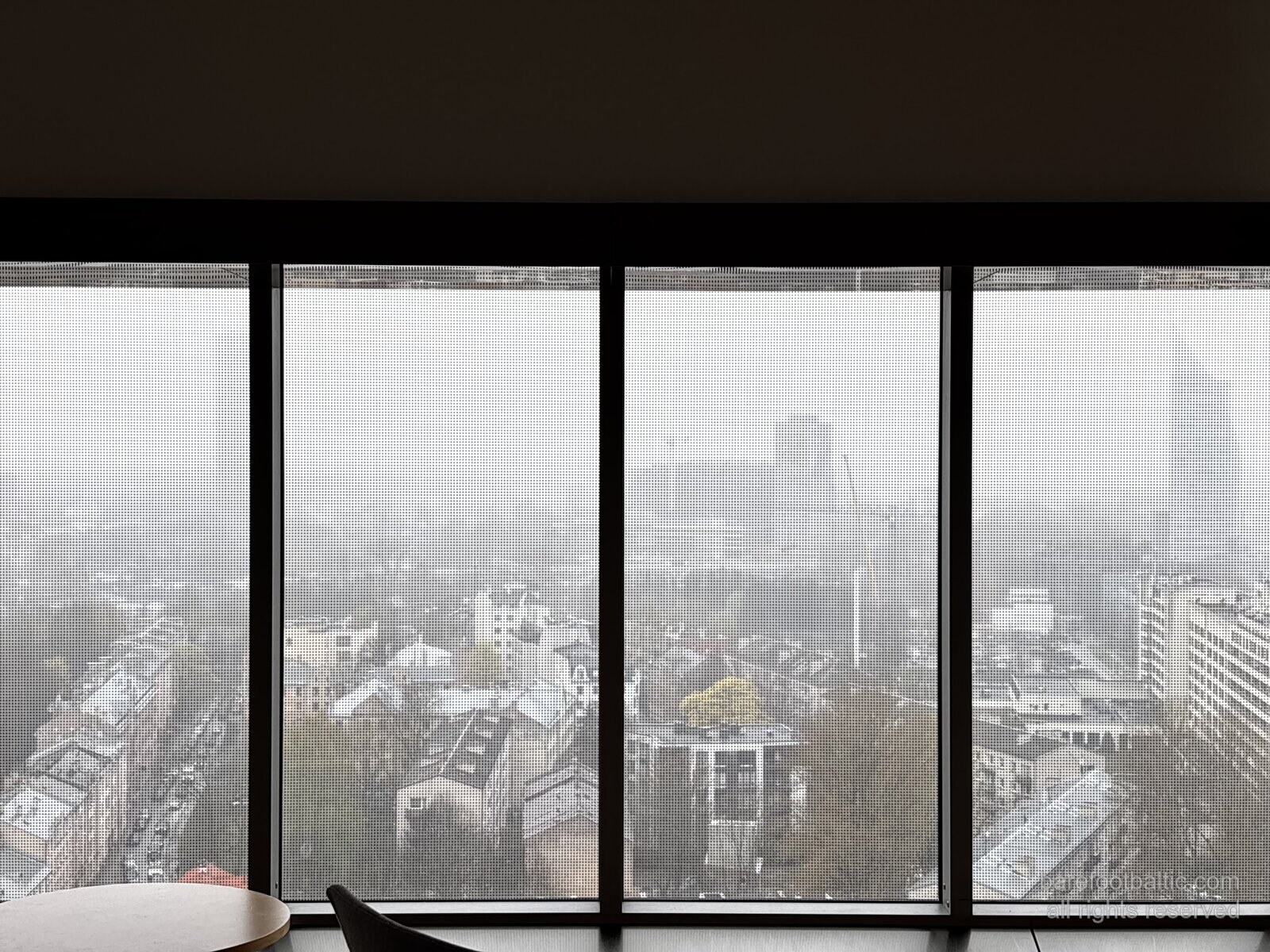
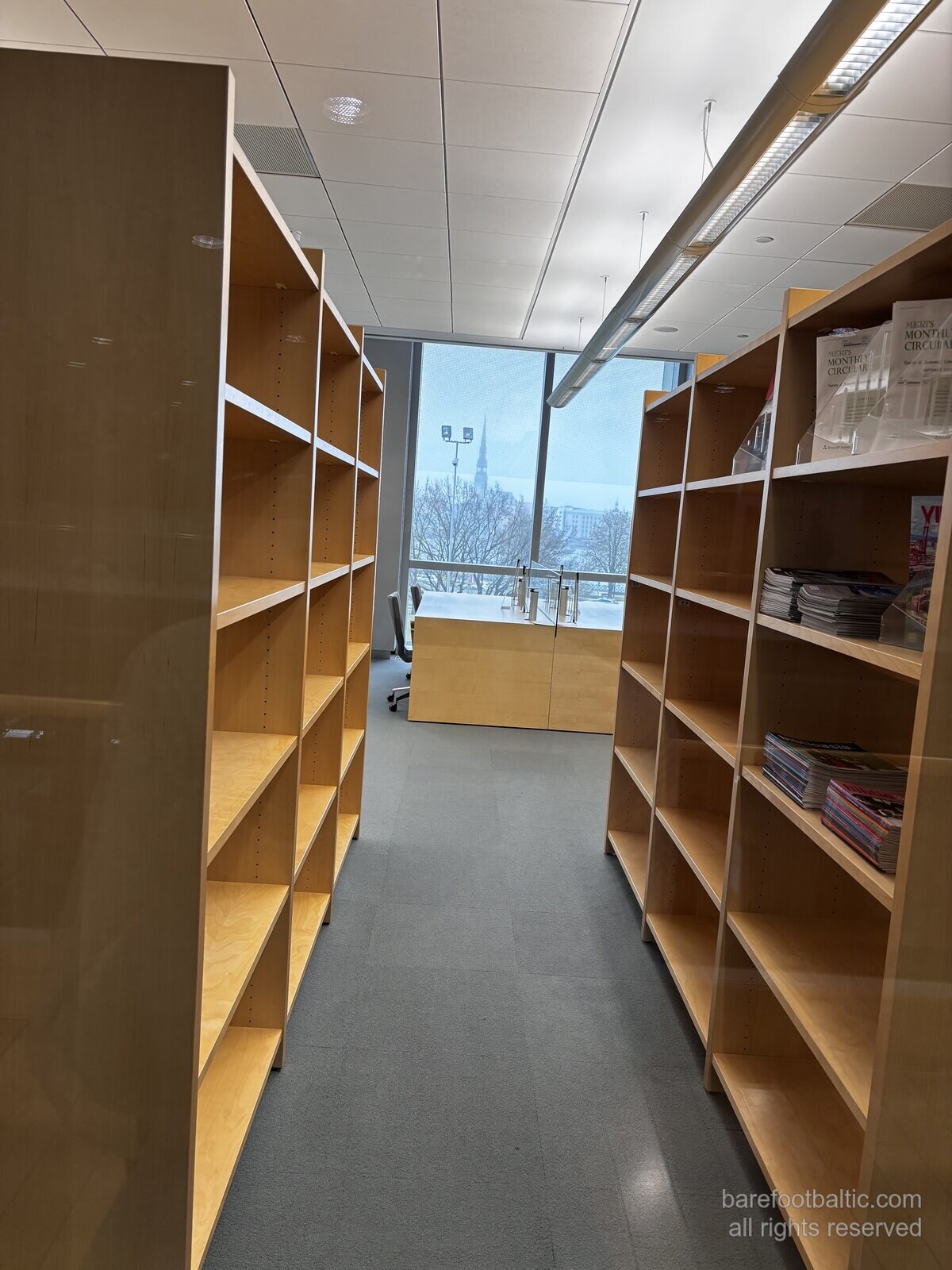
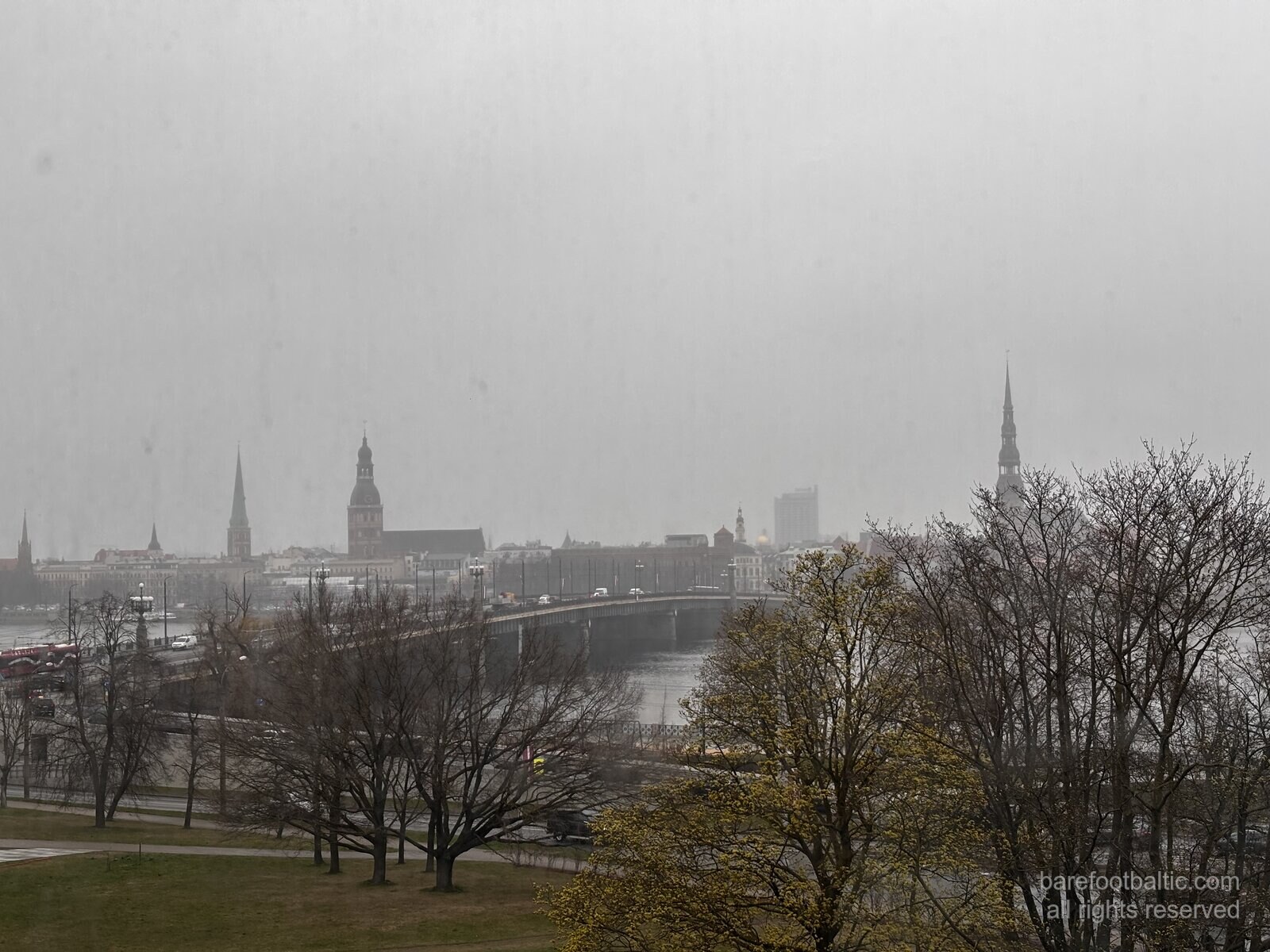
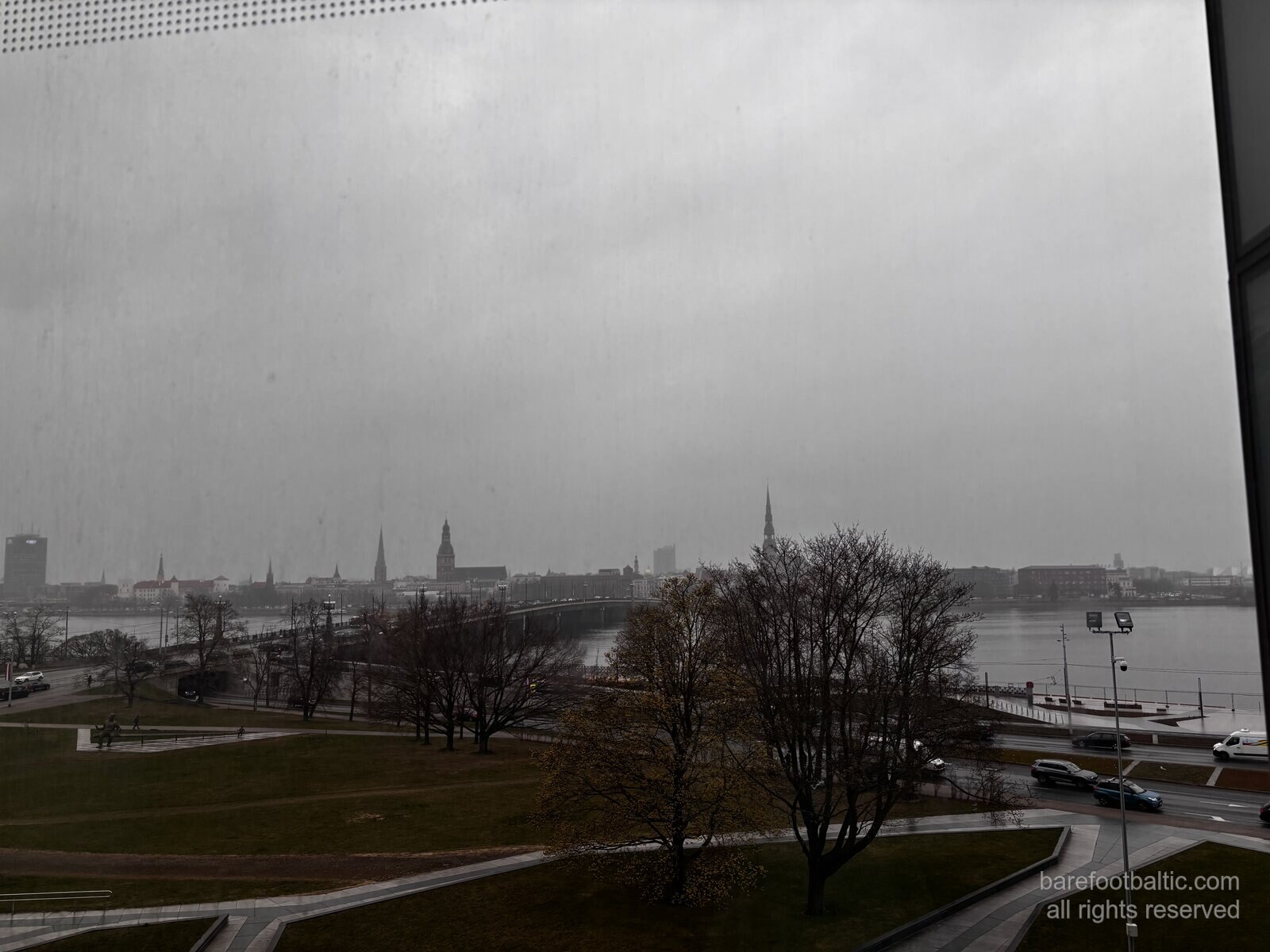
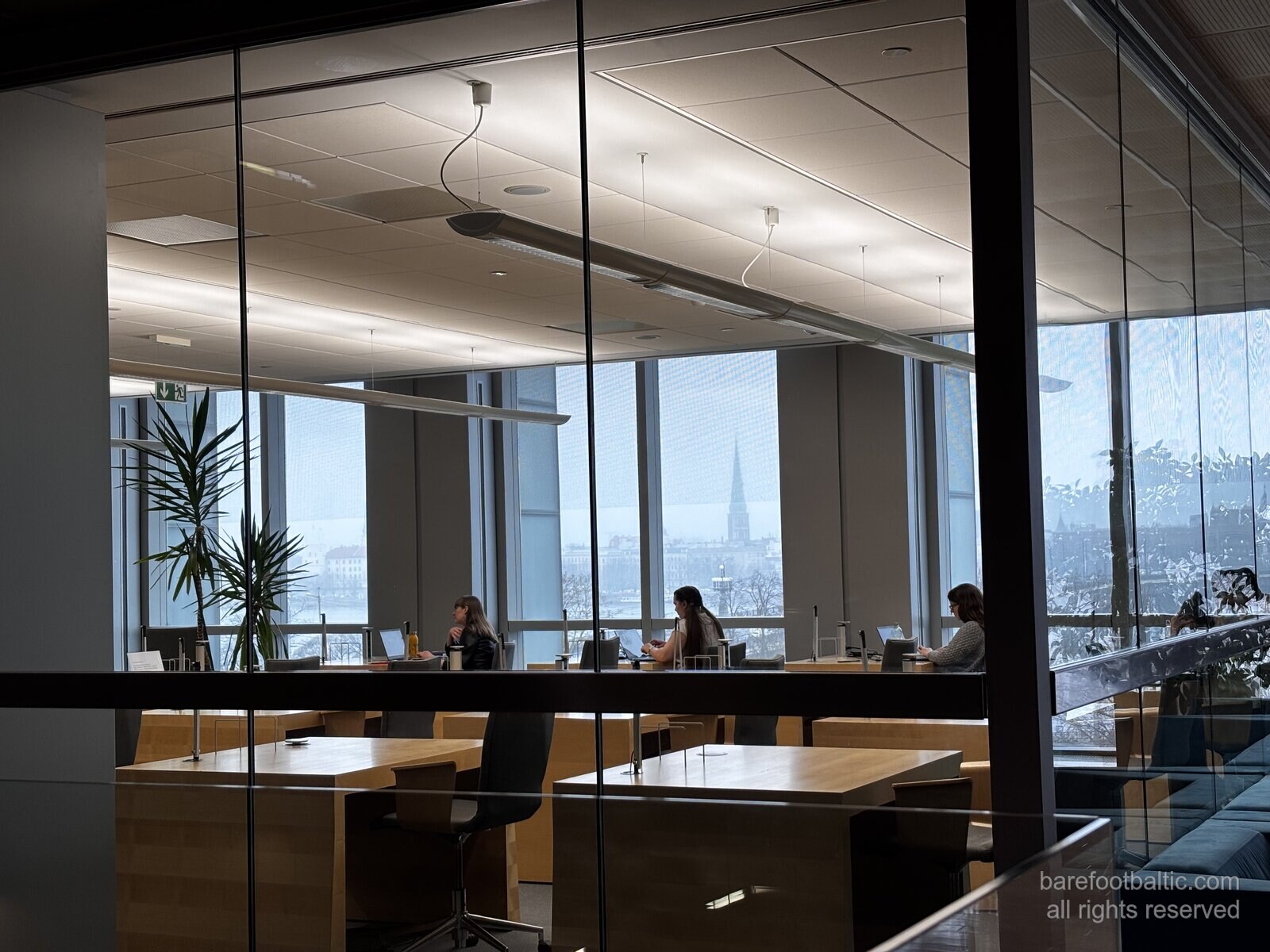
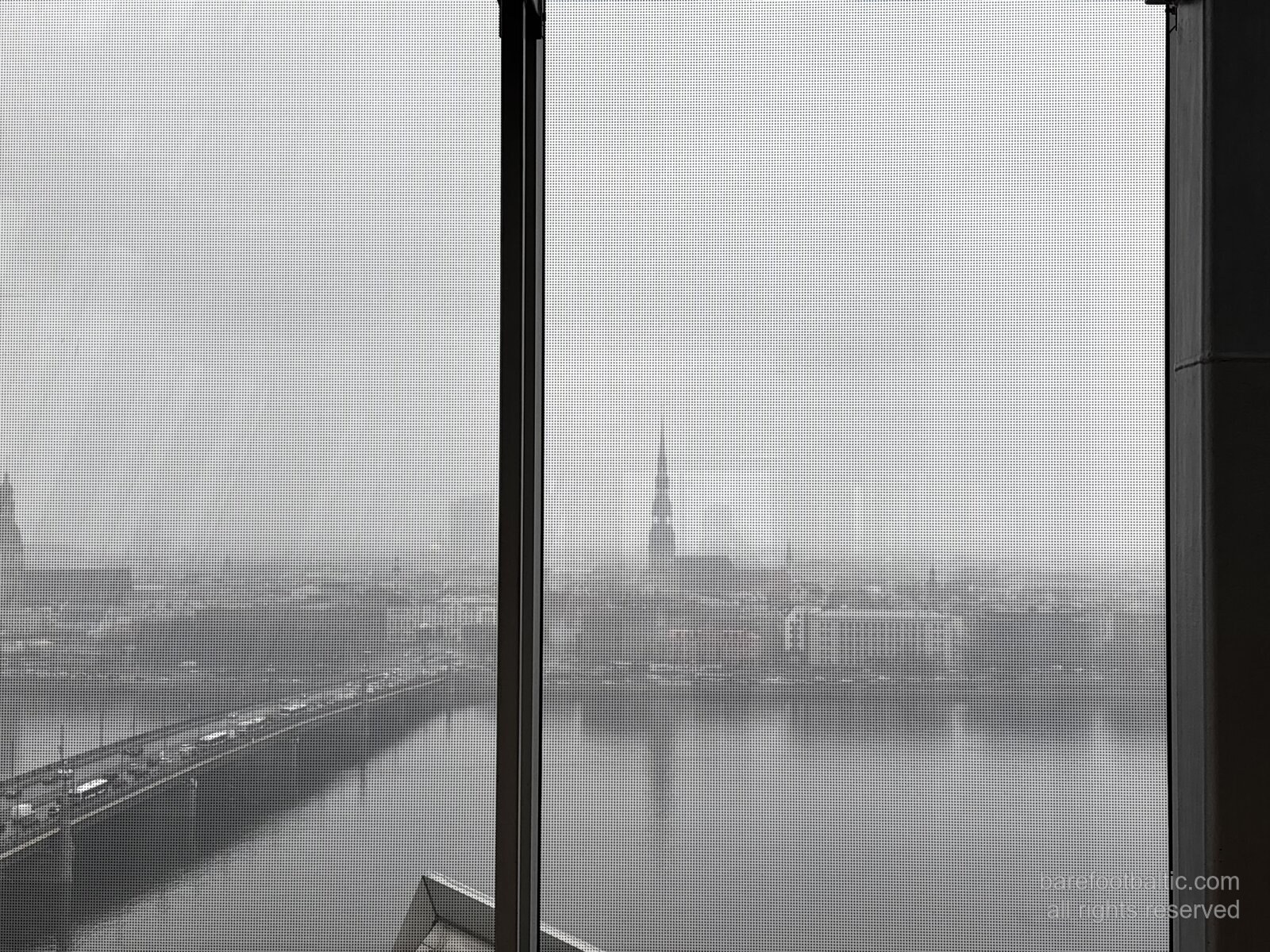
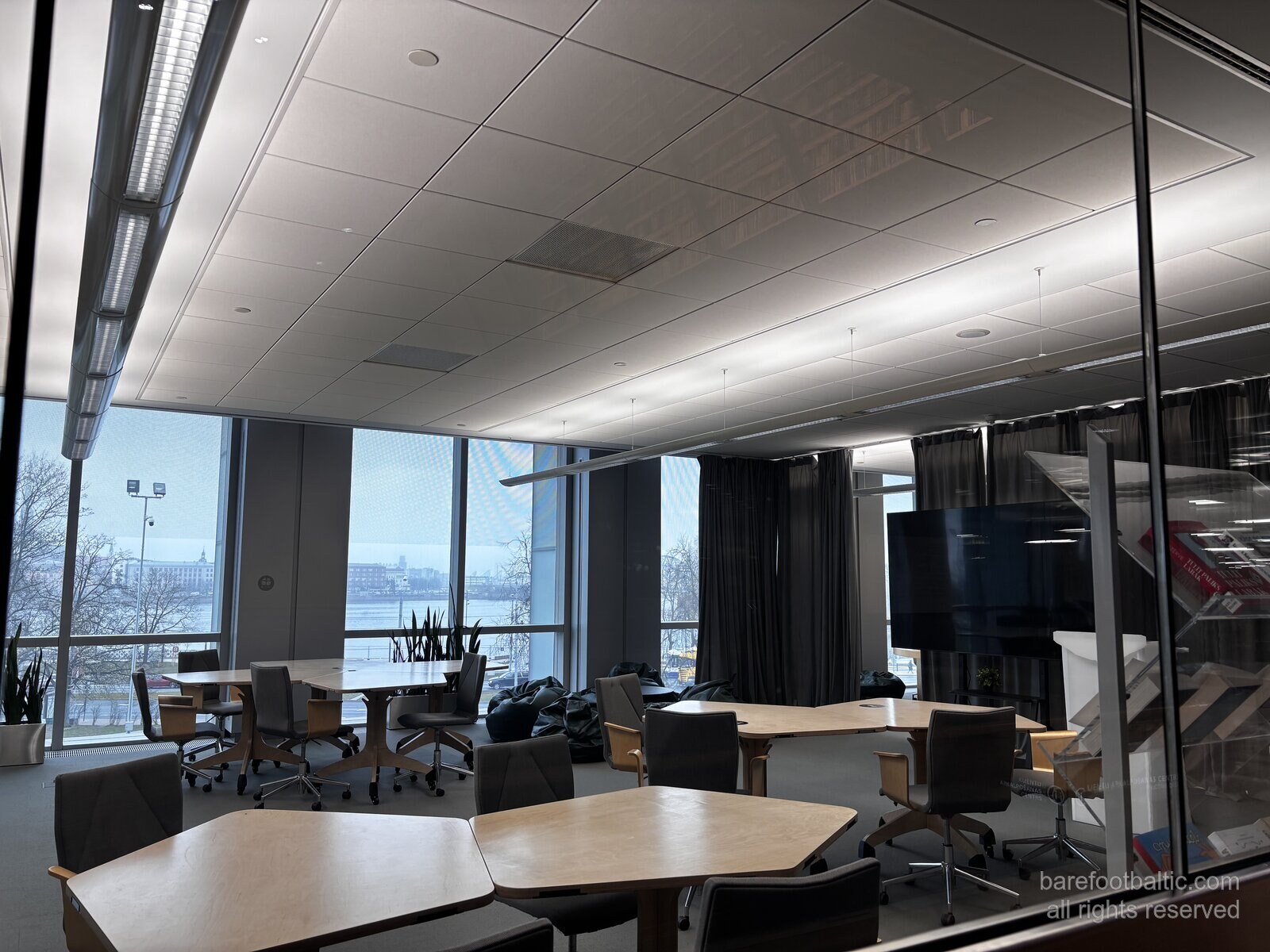
Go for the view. The viewing levels on the eleventh and twelfth floors are, in our opinion, the single best urban panorama in Riga. You take the lift to the eleventh, walk a flight of stairs to the twelfth, and the entire Old Town is laid out in front of you across the river. The spires of St Peter’s, the Dome Cathedral, Riga Castle, the snake of the Daugava, the five bridges, the Central Market pavilions (built from old Zeppelin hangars), the brutalist silhouette of the Latvian Academy of Sciences, the Art Nouveau districts beyond. On a clear evening just before sunset, with the river going silver and the Old Town turning gold, it is one of those views that justifies the trip on its own.
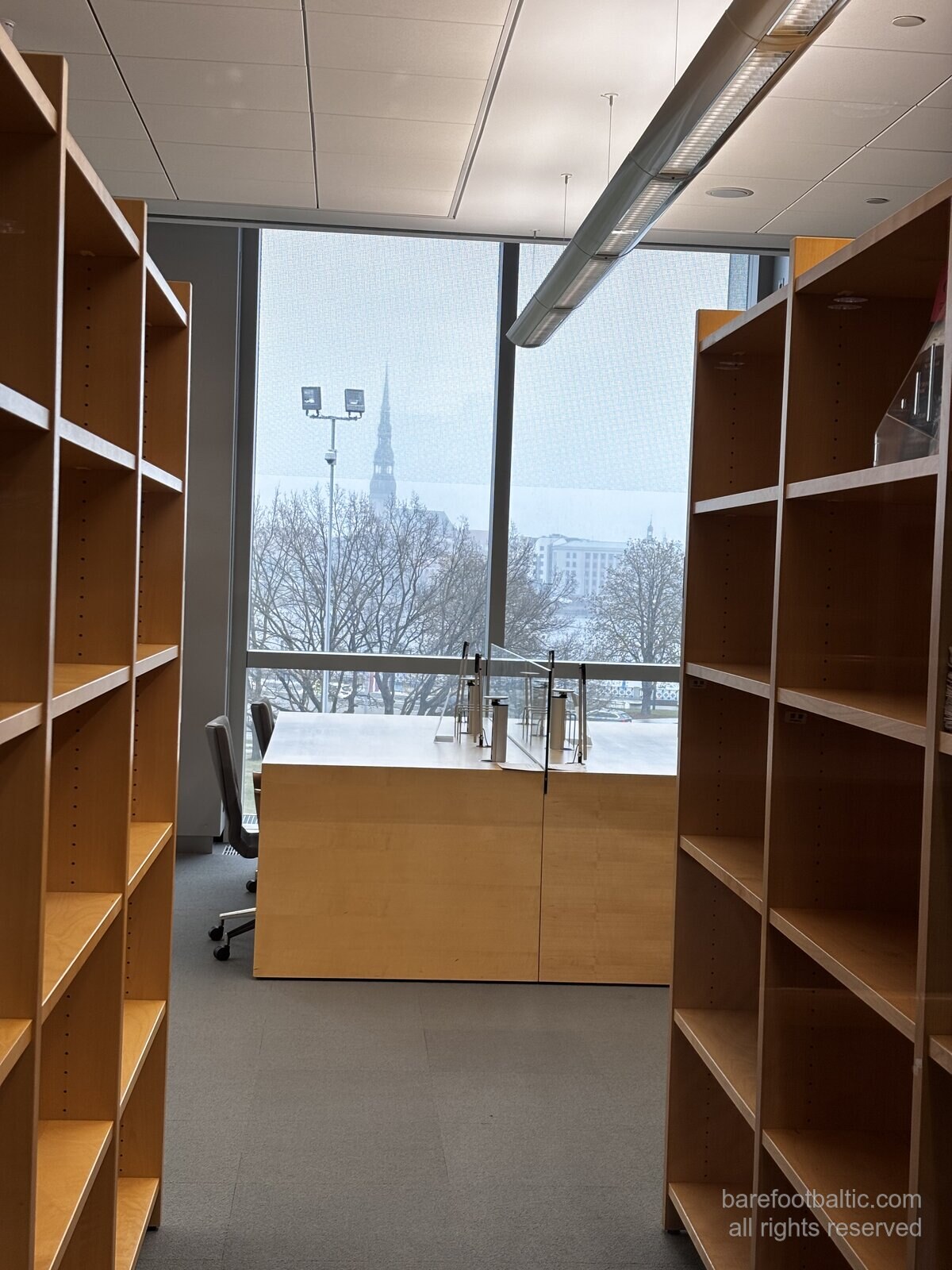
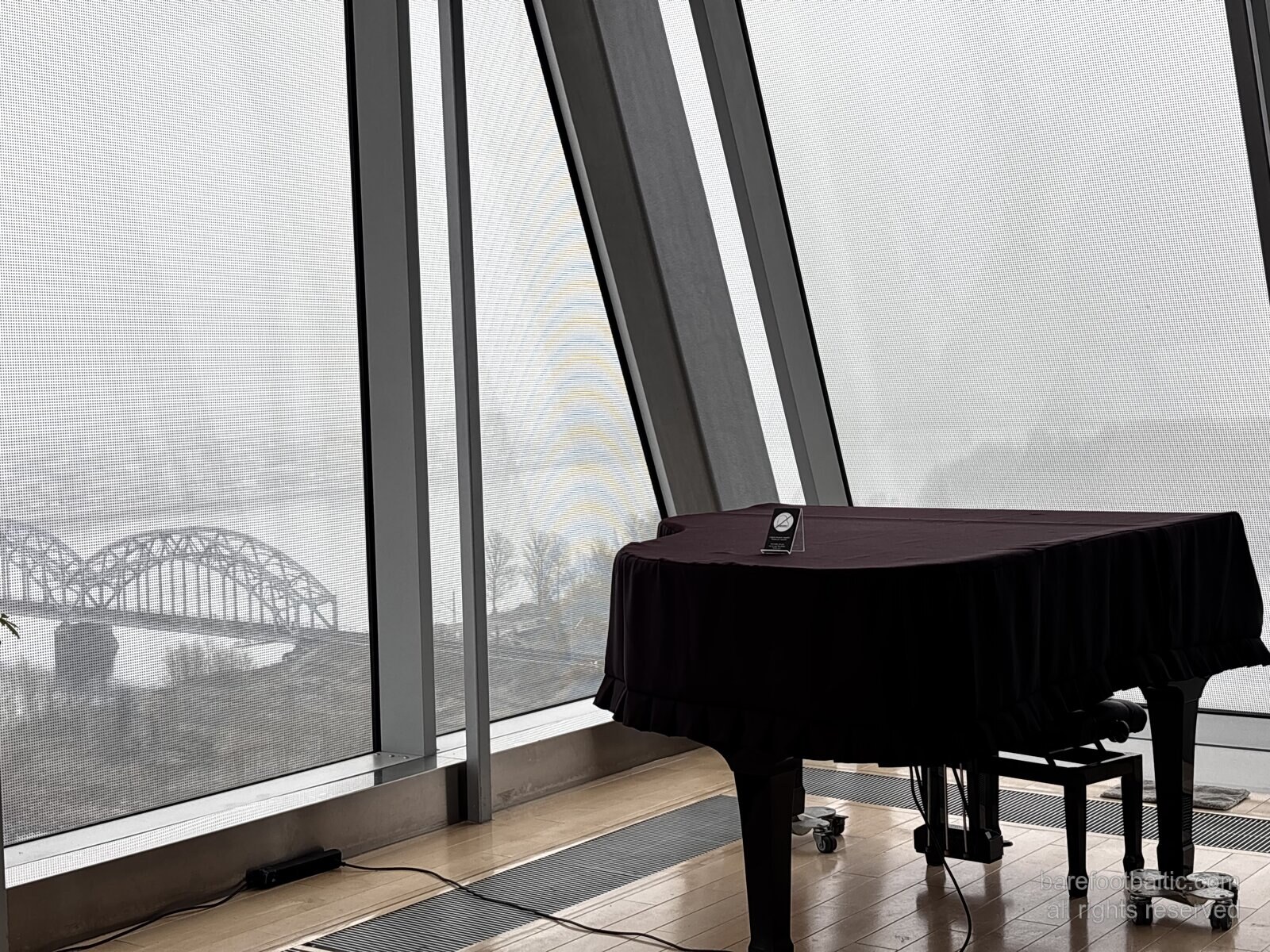
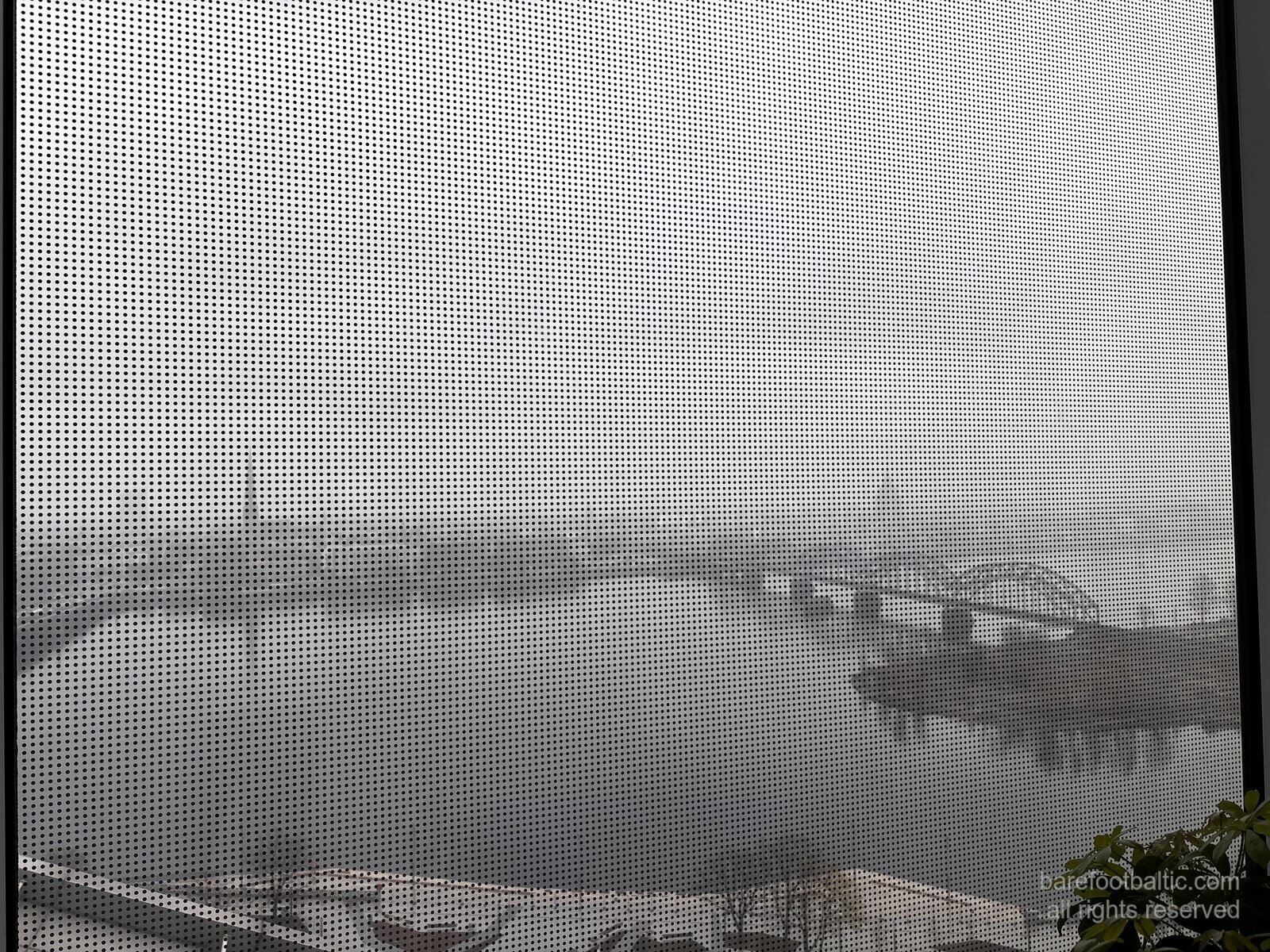
The windows on the upper floors have a wrap of small black dots, partly bird-strike protection, partly a design choice, and they make serious photography slightly tricky. Bring your eyes more than your phone.
A few things to find inside.
- The People’s Bookshelf, rising five storeys through the central atrium
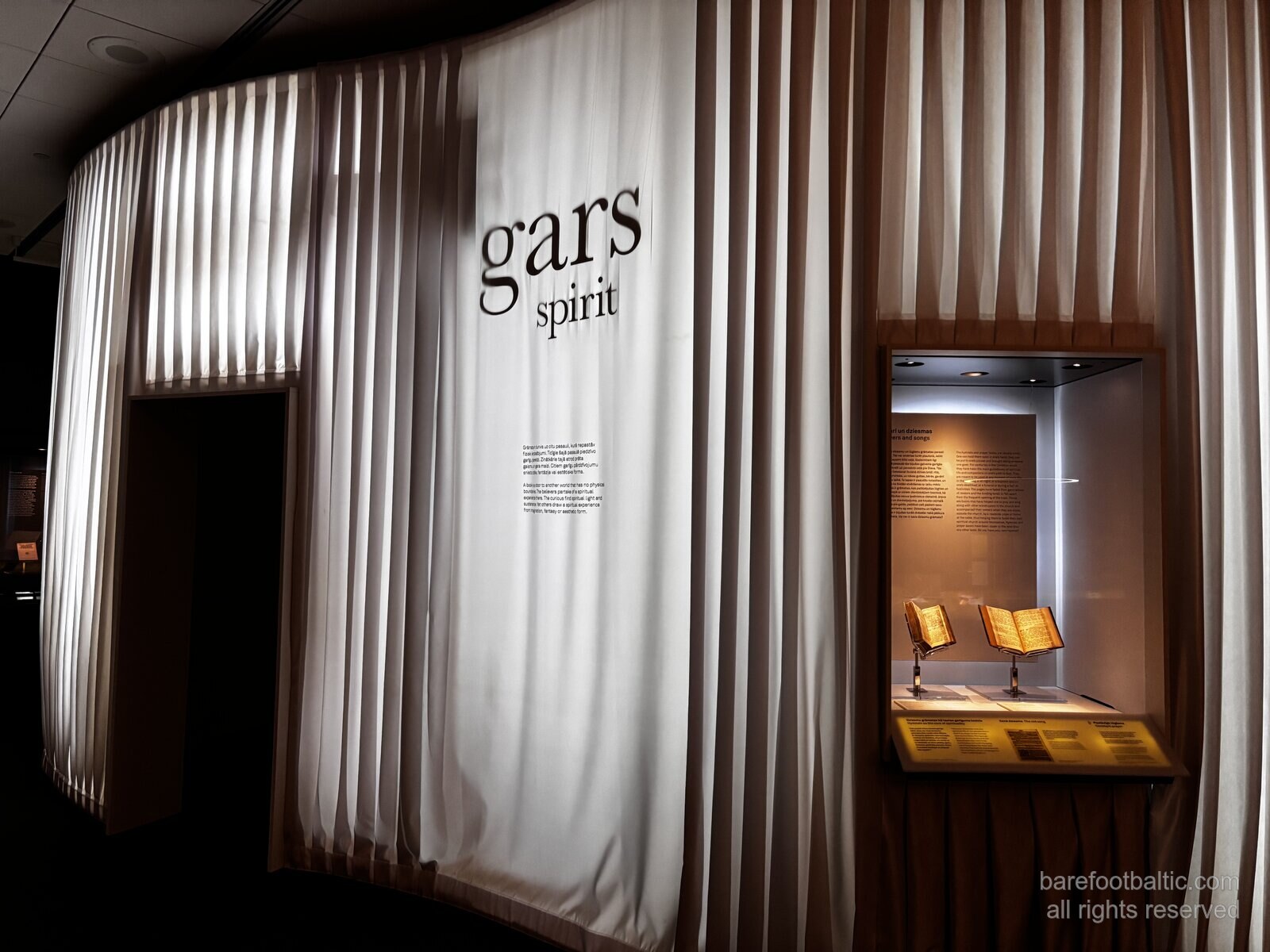
- The permanent exhibition “Castle of Light and Glass Mountain, The Story of the National Library of Latvia Project” on levels 1 and 12, which is the best place to read the building’s symbolism in detail
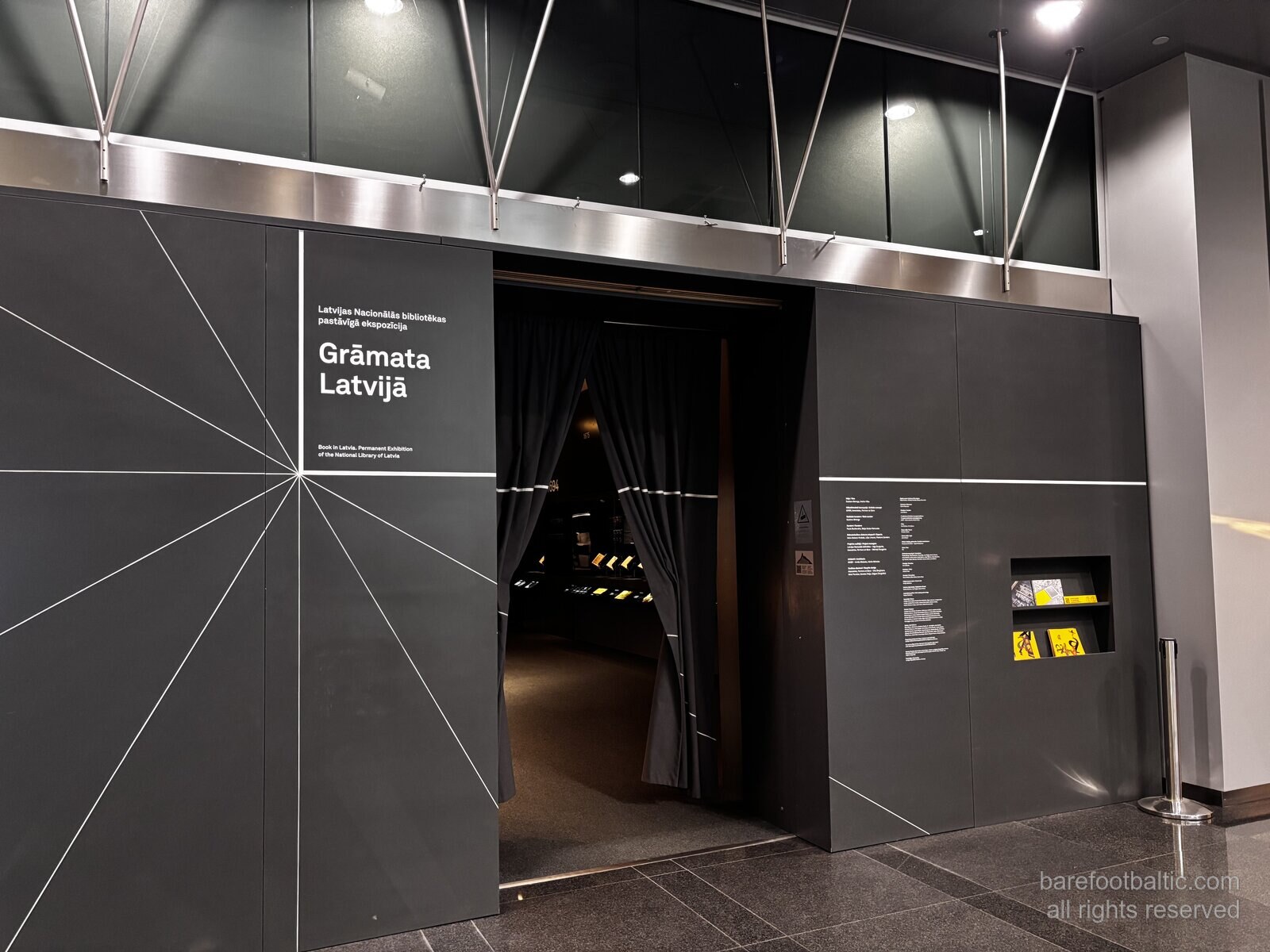
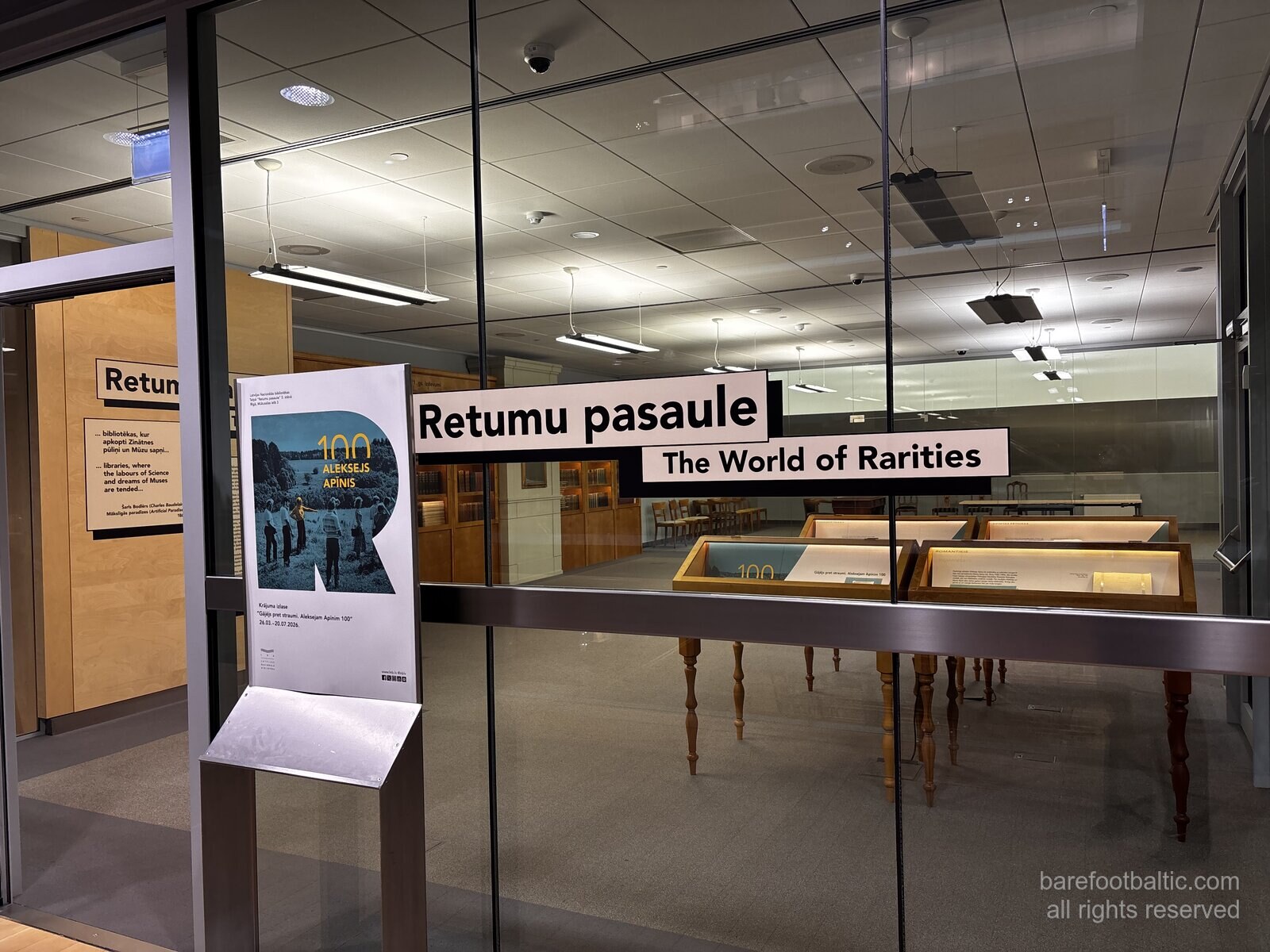
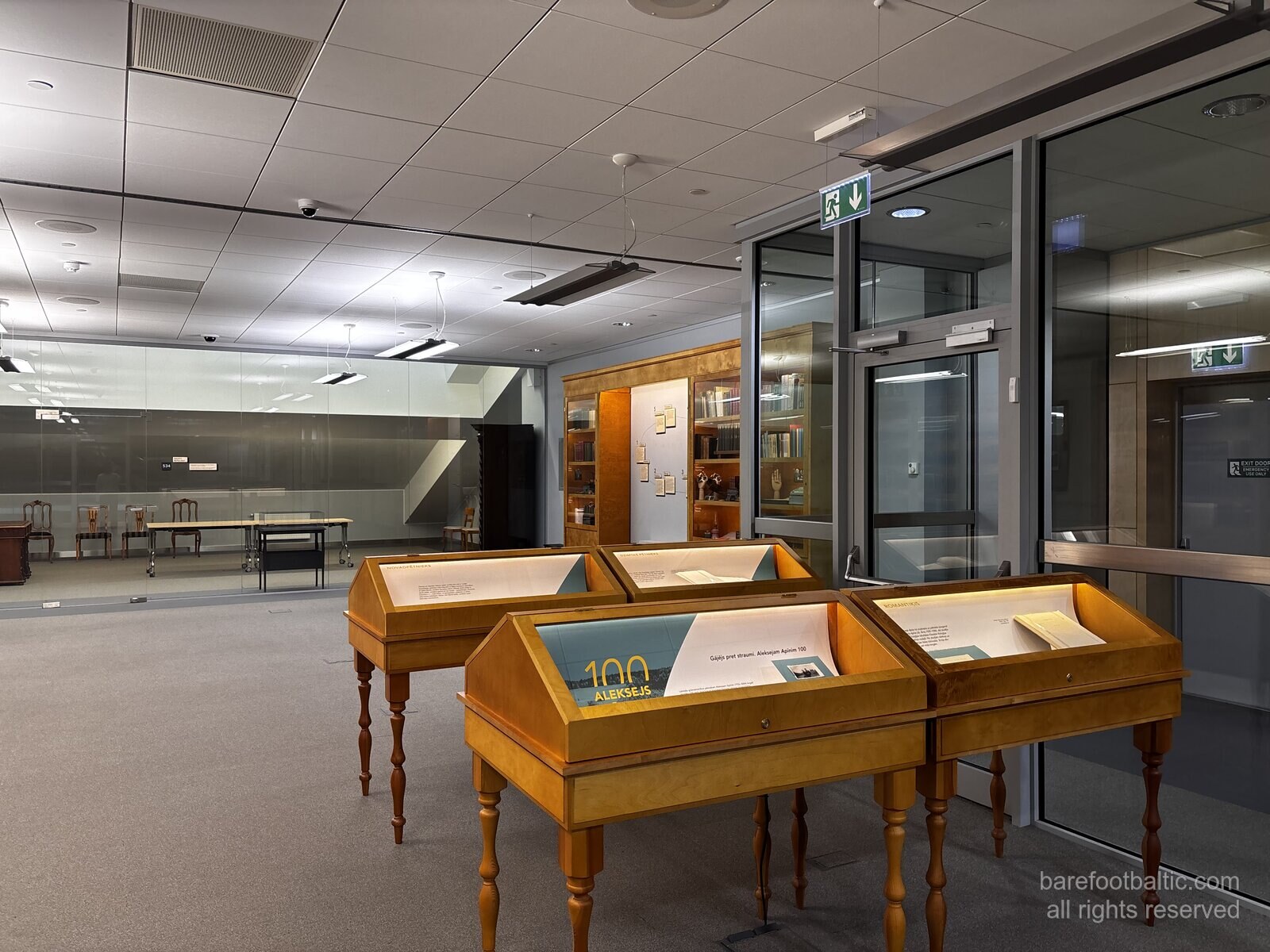
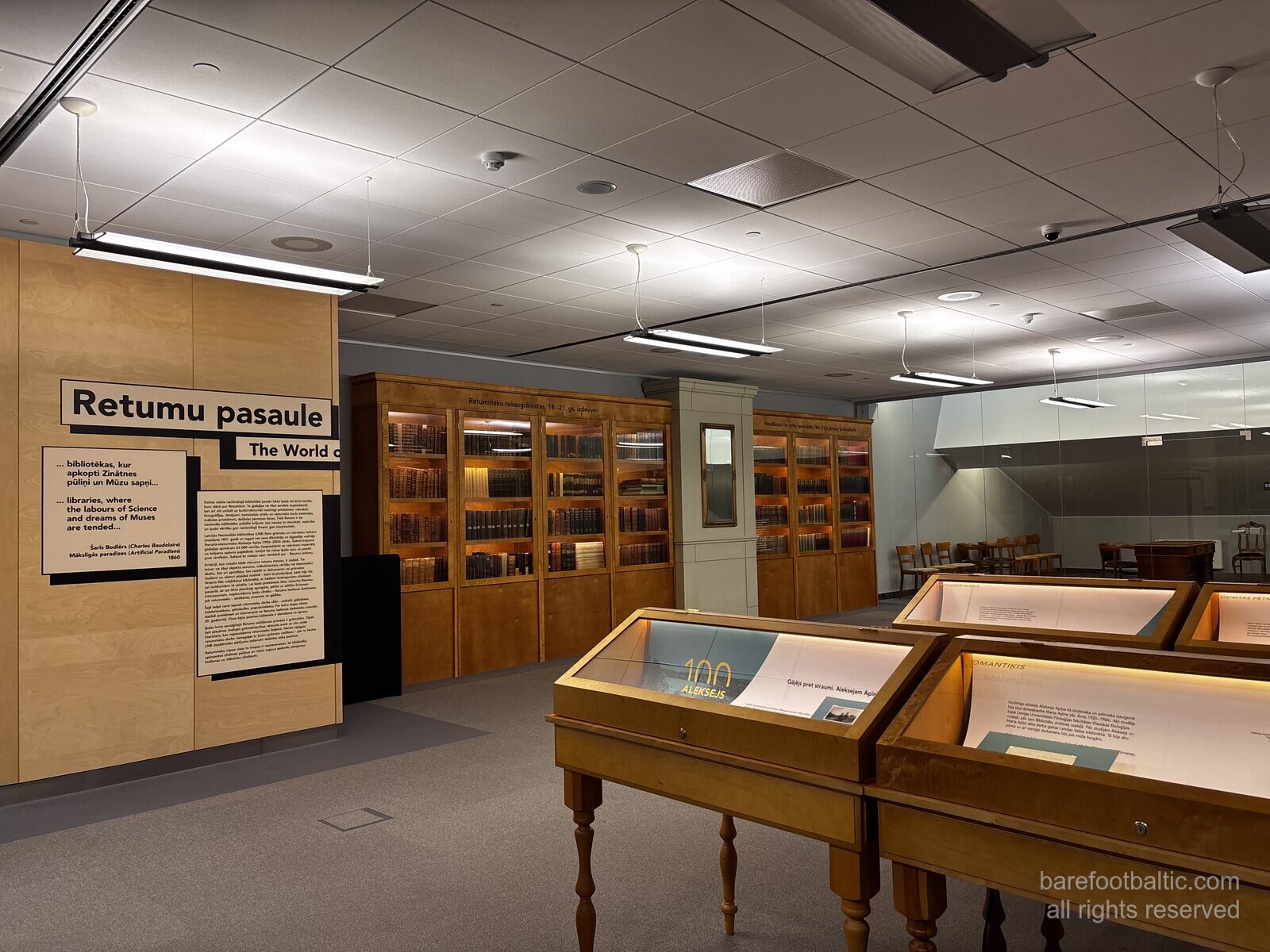
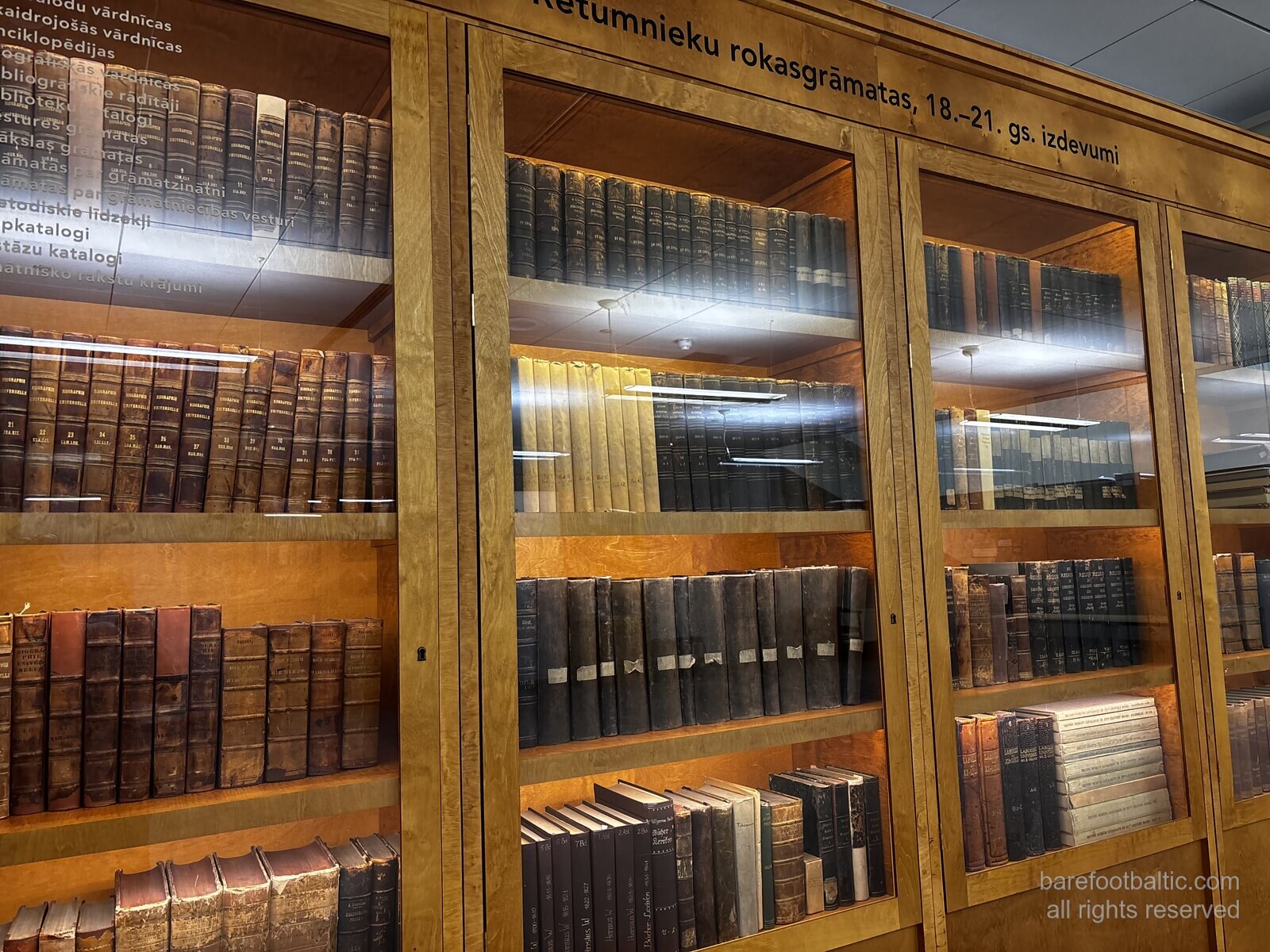
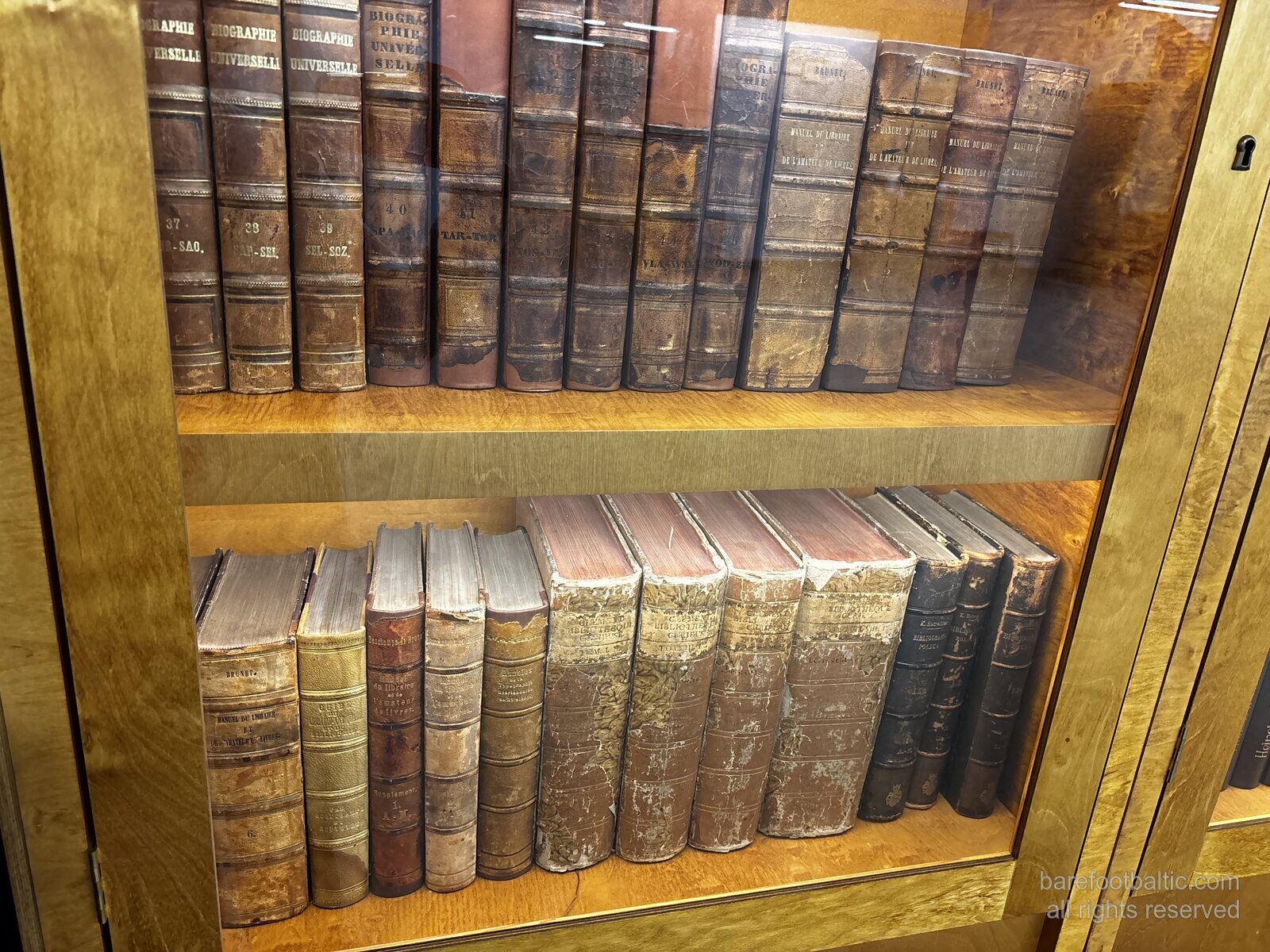
- The “Book in Latvia” permanent exhibition on the ground floor, five centuries of Latvian printing, including a copy of the Glück Bible
- The Cabinet of Folksongs (the Dainu skapis), Krišjānis Barons’s actual filing cabinet, holding hundreds of thousands of folk verses on small index cards
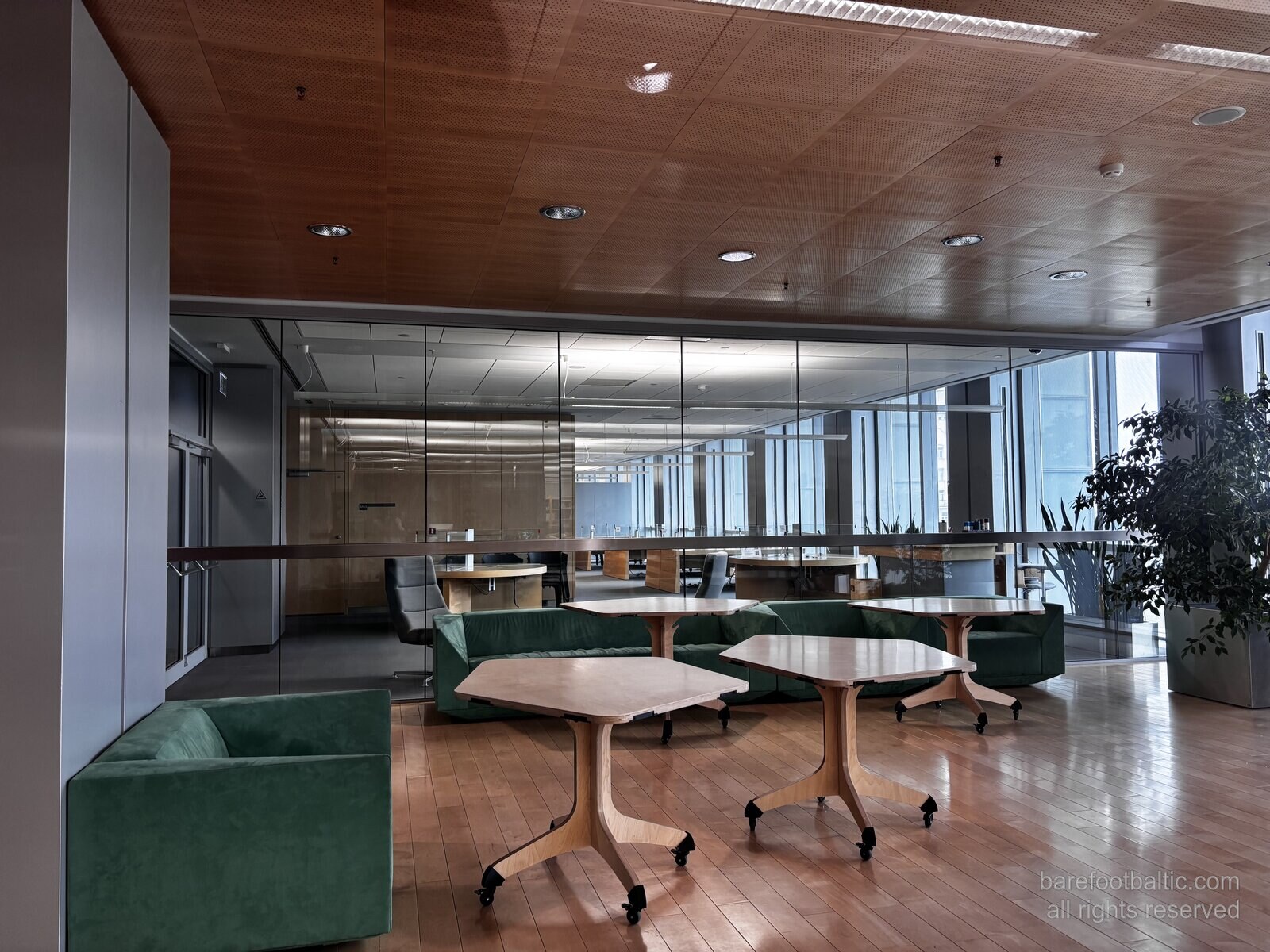
- The café on one of the upper floors, which has the same view as the observation deck and considerably better coffee than the ground-floor café
Getting there
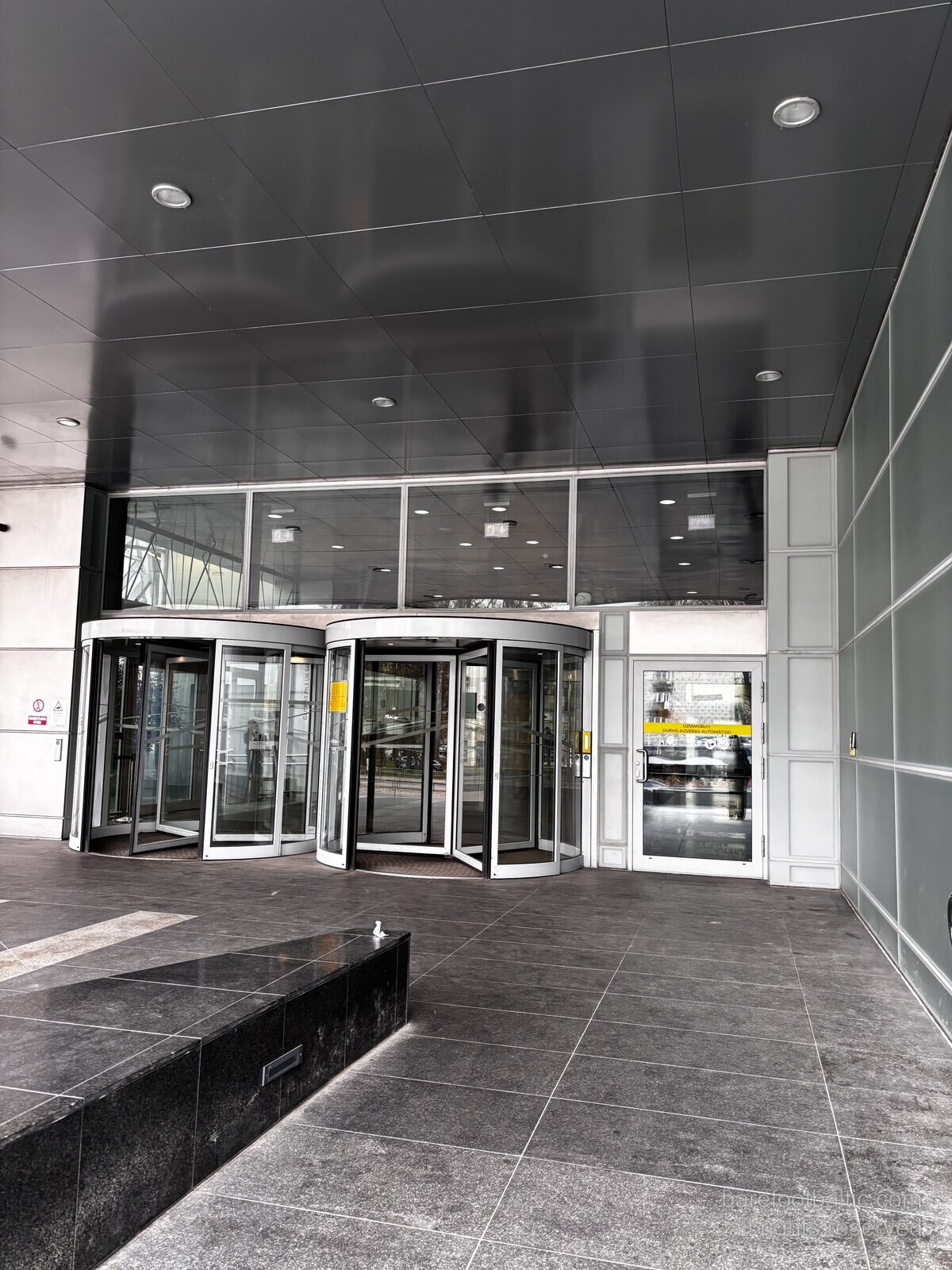
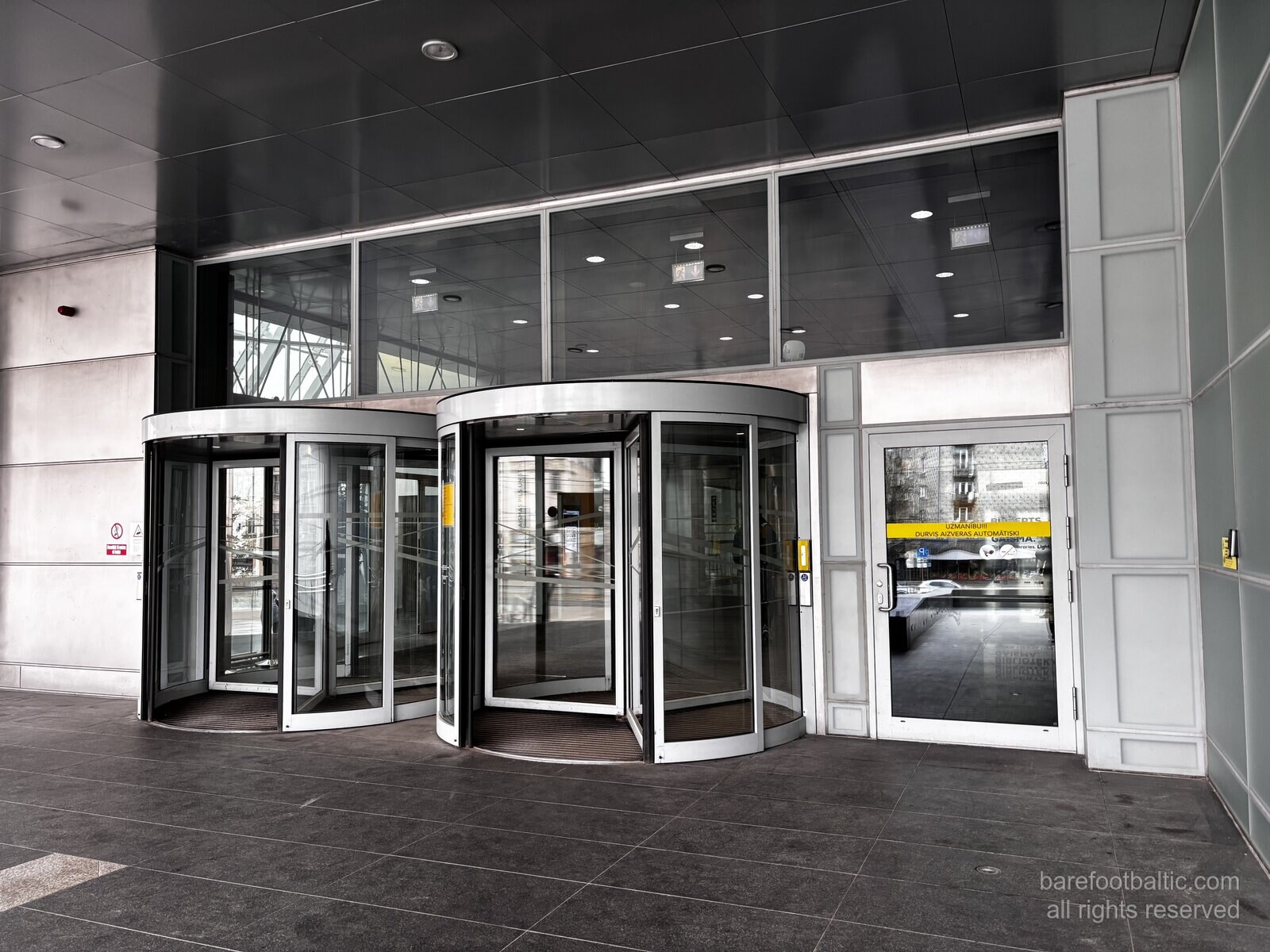
The library sits on Mūkusalas iela 3, on the left bank of the Daugava, directly opposite the Old Town. There are three good ways to reach it.
- Walking is what we recommend, and it is the most rewarding. From the House of the Blackheads or the Town Hall Square, walk down to the Stone Bridge (Akmens tilts) and cross. The walk takes ten to fifteen minutes. You get the full skyline behind you, the river under you, and the Castle of Light growing larger in front of you the entire time. On a clear morning the bridge view alone is worth the trip.
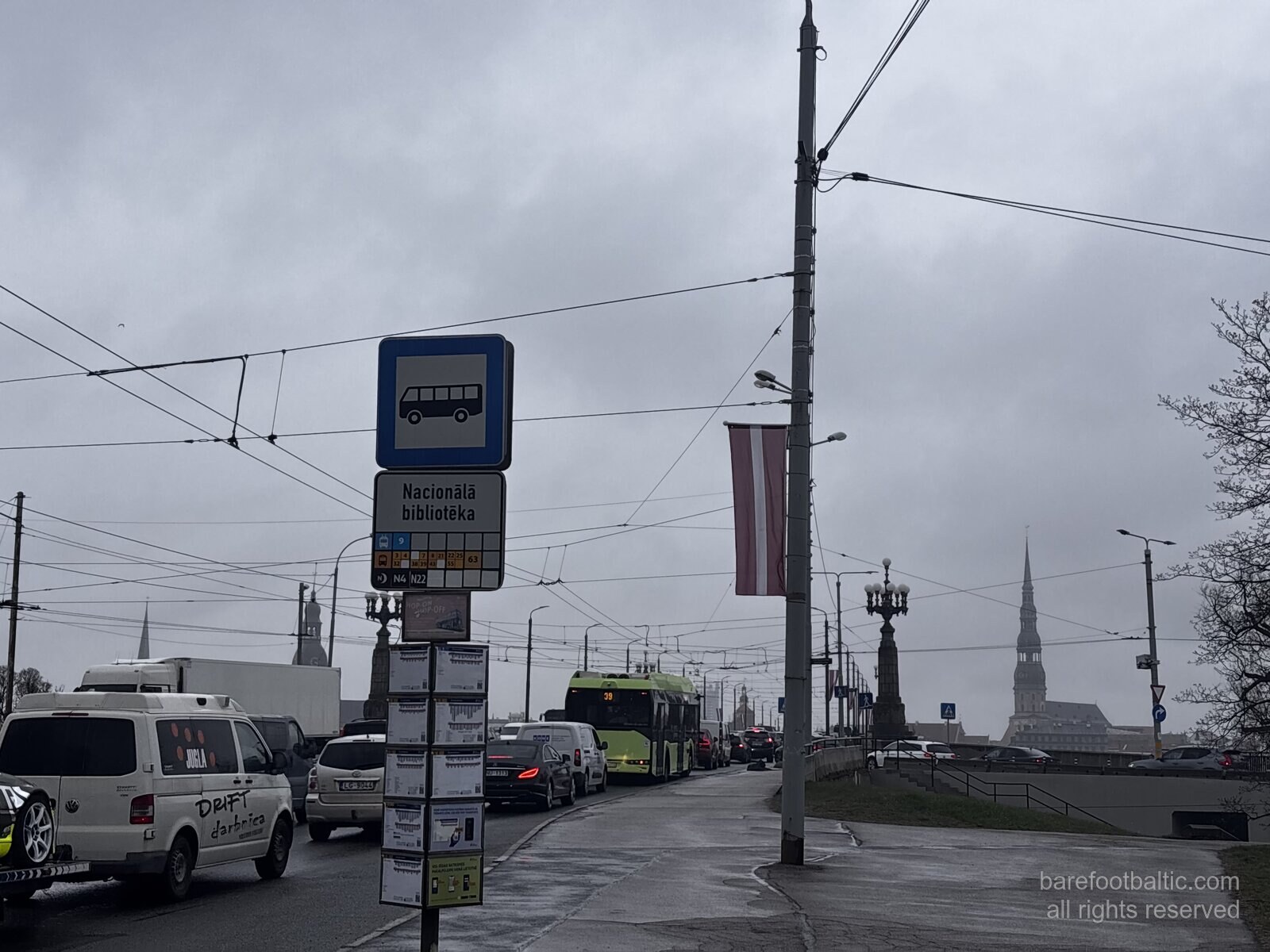
- Tram or bus. Tram 5 stops directly outside the library, and several buses also pass it. From the Old Town side, any tram crossing the Stone Bridge will get you there in a few minutes.
- Taxi or Bolt. Three or four euros from anywhere in the centre, but you will have missed the best part.
One note. The river you cross is the Daugava, Latvia’s great river, the one that runs through the entire country and is sometimes called the river of fate in Latvian poetry. The Gauja, often confused with it, is a different river, further north, the one that runs through Sigulda and the Gauja National Park.
Why we send our guests here
We take small groups around Riga and the Latvian countryside. One of the questions we get asked most often is what to see in Riga that isn’t in every guidebook. The Castle of Light is our standard answer. It isn’t hidden. The building is enormous, and you can see it from anywhere on the Old Town side. The catch is the river. The Old Town is where you spend your time, and the library sits on the far bank, so it is easy to leave Riga without ever crossing over to it.
This is a mistake.
The Castle of Light is what gives Riga its scale. From the inside, it is the one place where you see the whole city at once. Seen from across the Daugava at dusk, with its glass crown lit up against a winter sky, it holds its own against the medieval skyline it faces, which is rare for a modern building in the Baltics.
And the story it carries is the story of the country itself. A folktale, a sunken castle, a frozen princess, a younger brother written off as a fool, a Bible carried by hand across a frozen river by fourteen thousand people who understood exactly what they were doing.
If you have an afternoon in Riga, give two hours of it to the Castle of Light. Walk over the bridge, take the lift to the eleventh floor, look back across the river at the Old Town and try to imagine what it felt like, on a January night in 2014, to be standing somewhere in the chain with a book in your gloves.
Want to see the Castle of Light as part of a wider walk through Riga’s stories, the medieval Old Town, the Art Nouveau quarter, the layers of empire and resistance that built this city? Get in touch. Our small-group walking tours are designed around exactly this kind of detail.