Short answer, read this first
If you only have 48 hours in Riga, here’s the version I’d build for friends. I live here and I run tours here, so I have opinions, but this is the version that wastes the least time and makes you want to come back.
- Day one is the arrival day. Walk the Old Town slowly, climb St Peter’s for the panorama, lunch at the Central Market, then a long afternoon in the Art Nouveau district around Alberta iela. Dinner in the quiet streets behind the Cathedral.
- Day two is the real day. Get out of the city. Either Ķemeri bog at sunrise (May to August only), or Rundāle Palace and Bauska Castle (year-round), or Sigulda and Cēsis in the Gauja Valley (year-round, best in autumn). Back in Riga by evening for one last dinner.
That’s the whole answer. The rest of this post is the longer version, with the practical things travellers actually ask me about. How safe is it, how do I get from the airport, how much should I tip, and what’s the deal with the language.
Why 48 hours is the right length
Riga is not a 24-hour city. The Old Town is the largest of the three Baltic capitals at 438 hectares, and the Art Nouveau district is a separate world to the north of it. Trying to do both in one day means you do neither properly. But Riga is also not a five-day city. The city itself runs out at about three days unless you have specific museum interests, and the real magic of Latvia is what’s outside the capital.
So 48 hours splits cleanly. One day in the city, one day out of it. This is what I’d send anyone on if they asked.
Day one: the city, slowly
Morning, Old Town and St Peter’s tower
Start in the Old Town (Vecrīga) early. By 9 AM if you can. Cobblestones quieter, light good, cruise day-trippers not yet arrived (they flood in around 11 AM in summer). Walk a slow loop. Cathedral Square, the House of the Blackheads, the Three Brothers, Riga Castle from the outside, the Swedish Gate. Don’t worry about a fixed route. The Old Town is small enough to wander without getting lost.
The one thing I’d book a ticket for is the St Peter’s Church tower. It’s the best panorama of the city, you can see the red rooftops of the Old Town, the Daugava river, the Art Nouveau district to the north, and on a clear day all the way to Jūrmala on the coast. The lift takes you most of the way up. Tickets are around €9, you can buy on the door, and it’s most beautiful in late afternoon when the light goes golden, but morning works too.
Lunch at the Central Market
The Riga Central Market (Centrāltirgus) is one of the largest markets in Europe and is housed in five enormous buildings that started life as Zeppelin hangars in the First World War. It’s a 10-minute walk from the Old Town. Go for lunch and graze your way through smoked sprats, fresh rye bread, pickled cucumbers, smoked cheese, hot pīrāgi (small filled buns), and whatever’s in season. The fish hall is the most photogenic. The dairy hall has the best cheese.
This is also a much better lunch than most of the Old Town restaurants, where you’ll pay tourist prices for average versions of dishes that are excellent ten metres outside the cobblestones. If you want a sit-down lunch instead, the cafés on Miera iela in the Quiet Centre (15 minutes’ walk north of the Old Town) are where actual locals eat.
Afternoon: the Art Nouveau district
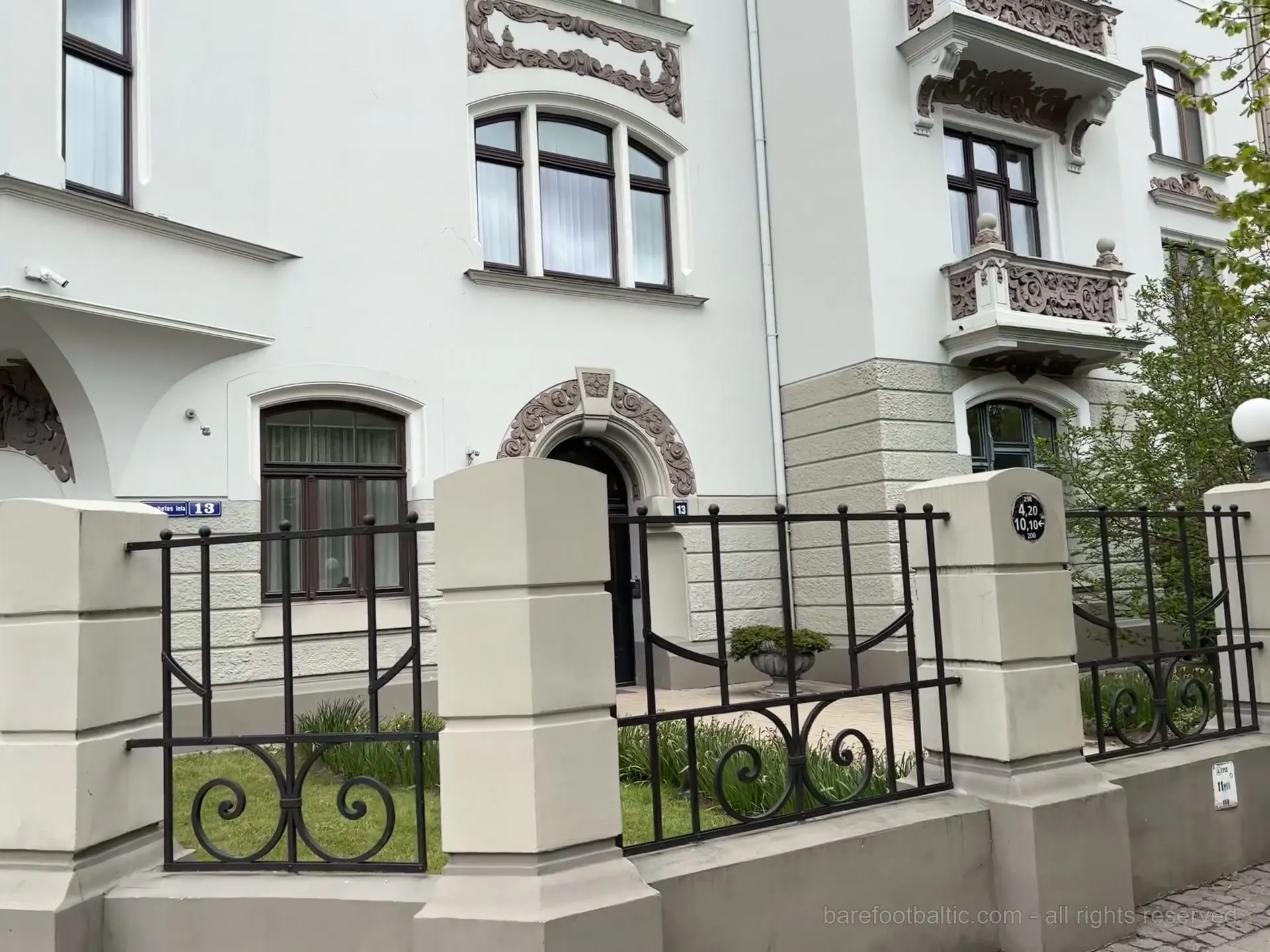
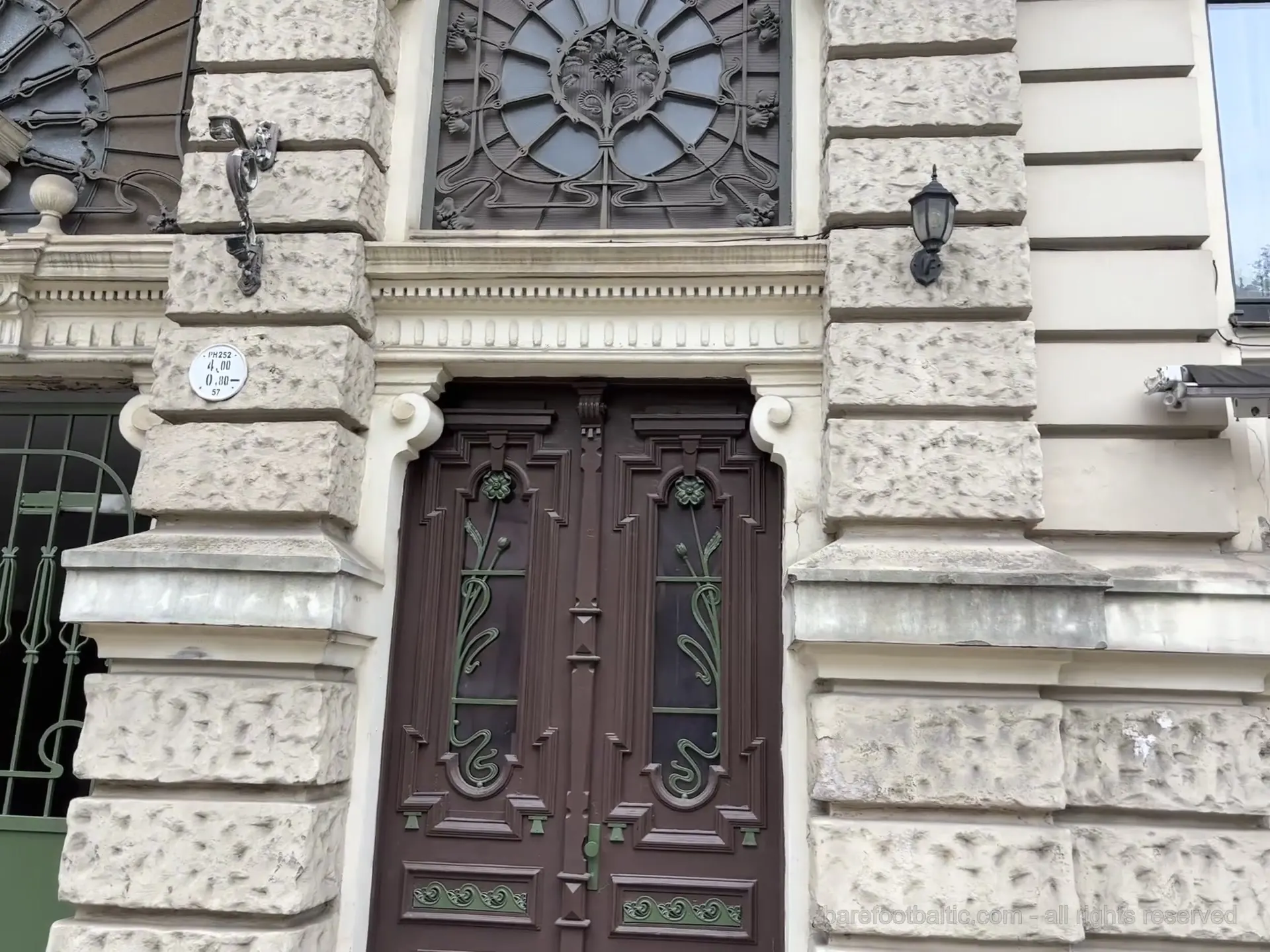
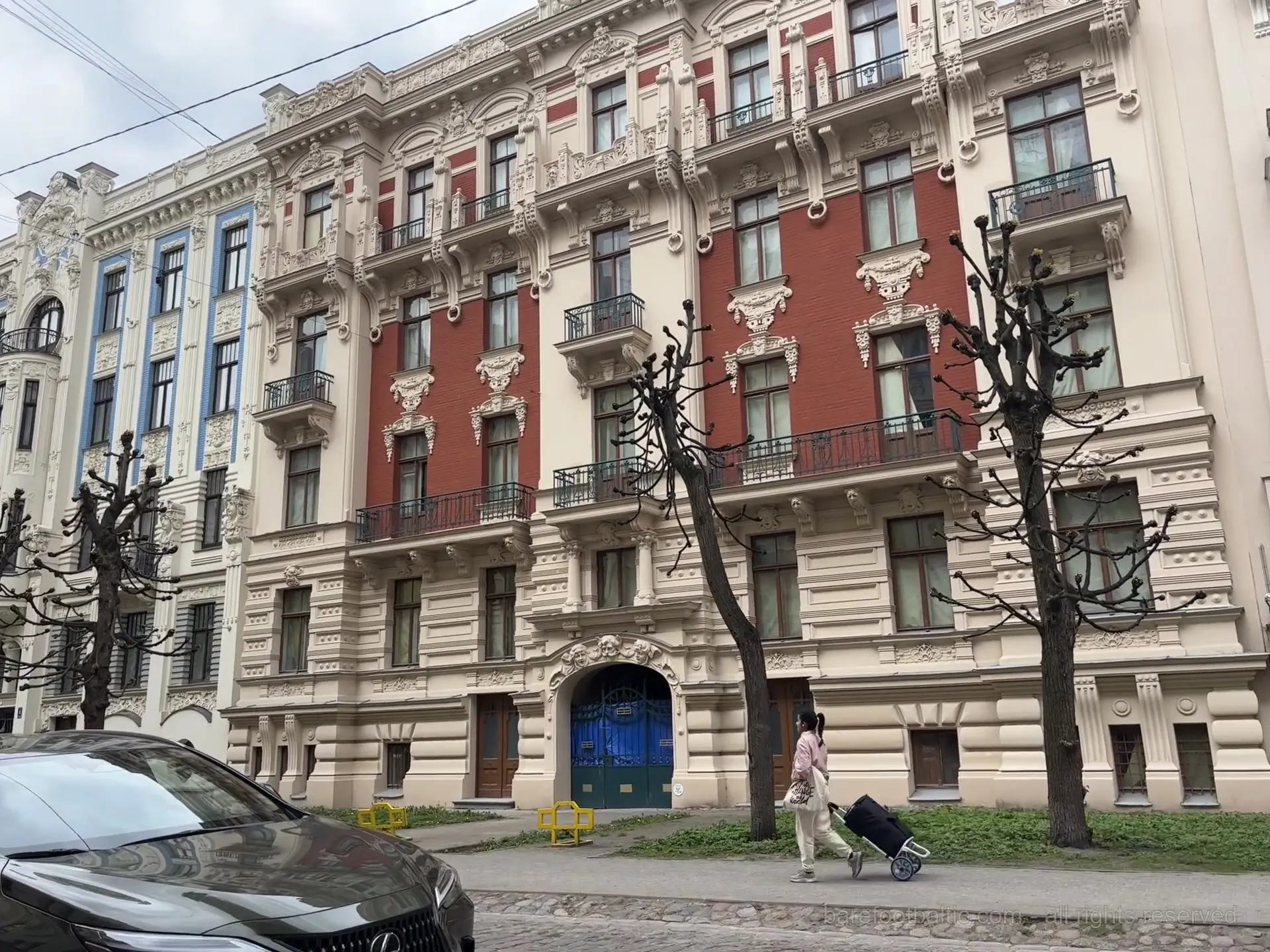
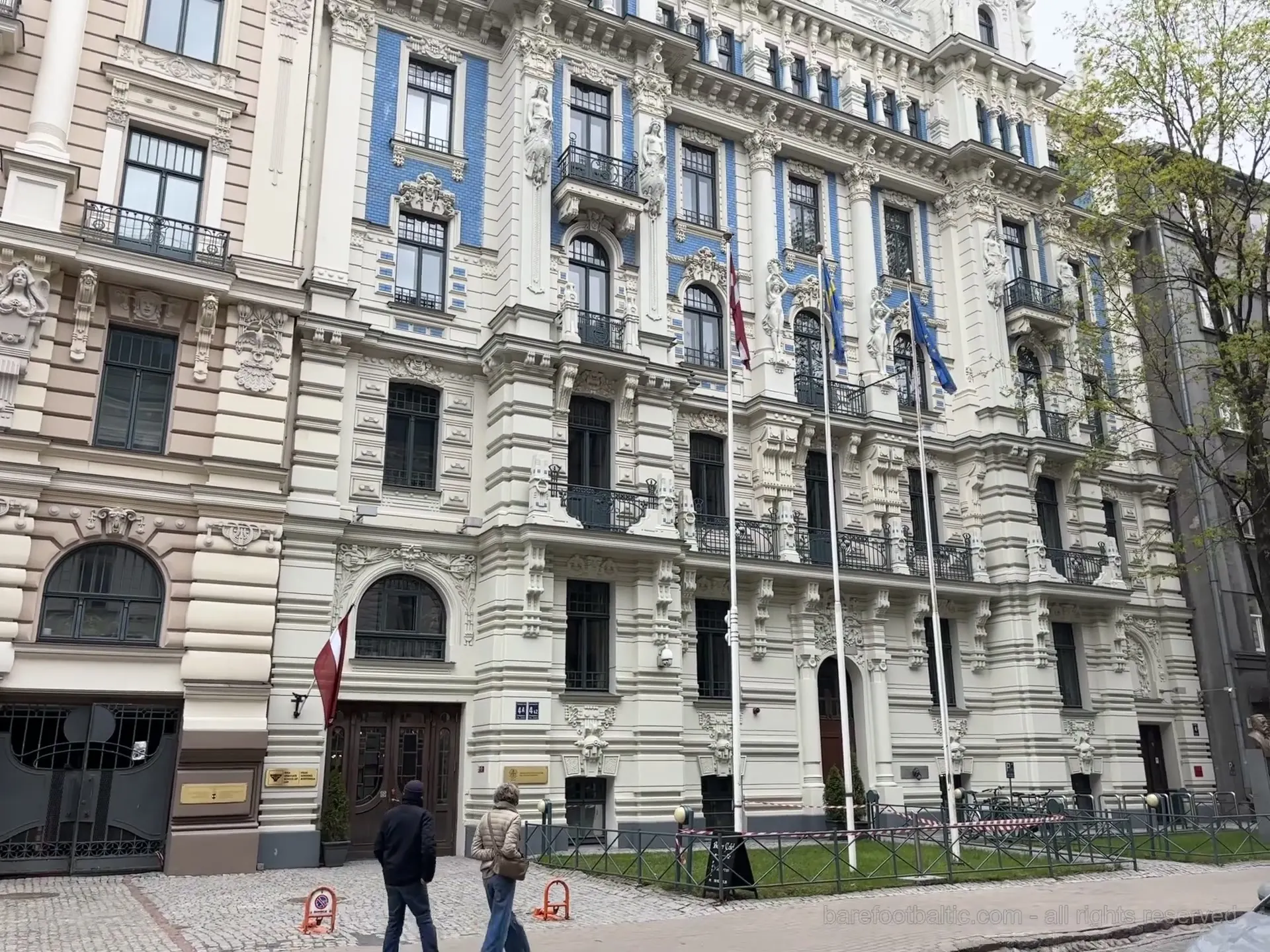
This is the part of Riga that hides in plain sight, and it is the city’s strongest cultural asset. Riga has the densest concentration of Art Nouveau (Jugendstil) buildings of any city in Europe, more than 800 of them, most built between 1900 and 1914 in a frenzy of confidence before the First World War broke everything. About a third of the city centre is Art Nouveau.
The most-photographed street is Alberta iela, designed almost in one go by the architect Mikhail Eisenstein (yes, the father of Sergei). Walk its full length and look up at peacocks, screaming faces, women with their hair on fire, weeping sphinxes. Strēlnieku and Elizabetes run parallel and are quieter, just as good. The Art Nouveau Museum at Alberta iela 12 is worth an hour if you want context. You walk through a preserved 1903 apartment of the architect Konstantīns Pēkšēns.
Evening: dinner in the quiet streets
Skip the restaurants on Kaļķu iela in the Old Town, this is the busy main pedestrian street and the food is correlated with how loudly the menu is shouted at you. Walk one street back, the lanes around the Cathedral and the Convent Yard have small, properly-run restaurants where you’ll get a good plate of modern Latvian food for €15 to €25, with wine. Bibliotēka Nº1 on Tērbatas, Vincents if you want something fancier, Kanepe Cultural Centre for casual.
If you’ve still got energy, end the night with a drink at one of the bars on Miera iela, the nearest thing Riga has to a hipster quarter. Or, if you’re tired (you arrived this morning, this is reasonable), an early night and a good breakfast for tomorrow, because day two starts properly.
Day two: out of the city
This is where 48-hour itineraries usually go wrong. People stay in Riga both days because they think that’s what you do with a city break. But Riga is a small capital with three good day-trip destinations within reach, and one of them is almost always available depending on the season. Pick one. They’re all guided as small-group day excursions from Riga, including by us, and a guided day saves you the logistics of public transport on a tight schedule.
Option A: Ķemeri bog at sunrise (May to August only)
If your dates fall in May, June, July, or August, this is the one I’d pick first. The Great Ķemeri Bog is a 10,000-year-old raised bog about 50 km west of Riga, a flat treeless landscape of dark mirror pools and dwarf pines, and at sunrise it’s the most photographed wetland in Latvia for good reason. The wooden boardwalk is empty, the mist lifts off the pools as the sun rises, and the photographs sell themselves.
Option B: Rundāle Palace and Bauska Castle (year-round)
If your dates are outside the bog season, or you’re an architecture and history person rather than a nature one, Rundāle is the day to do. It’s a 138-room baroque palace 75 km south of Riga, designed by Bartolomeo Rastrelli (the same architect who did the Winter Palace in St Petersburg) for a Russian aristocrat in the 1730s. The Gold Hall, the White Hall, and the formal French gardens are the highlights, and the rose garden has 2,300 varieties at peak in late June and July.
The day usually combines the palace with medieval Bauska Castle (a different period, a different mood), lunch at a local restaurant, and a gentle Ķemeri Bog boardwalk visit on the way back. It’s a 10-hour day, €94 per adult, and runs year-round. Our Rundāle tour is here.
Option C: Sigulda, Cēsis, and the Gauja Valley (year-round)
The Gauja River valley is the closest national park to Riga, about an hour northeast, and is the best of the three options for autumn, when the September and October foliage turns. You visit three medieval castles in one day. Sigulda, Turaida (the red-brick one in every postcard), and Cēsis, which you explore by candle lantern. The valley itself, with the Gauja cliffs and the cable car ride if it’s running, has earned the nickname “the Switzerland of Latvia,” which is generous but not entirely wrong.
Same price as Rundāle, €94, also a 10-hour day, also year-round. Best in autumn, brilliant in winter when the snow on Turaida is properly beautiful, lovely in spring and summer for the forests. Our Sigulda & Cēsis tour is here.
Which to pick if you can’t decide
I get this question almost every week. Here are three quick filters that usually settle it.
- Are you here in May, June, July, or August? Do Ķemeri at sunrise. The other two run year-round. This one only runs now.
- Are you a palaces-and-baroque person, or a forests-and-castles person? Rundāle for the first, Sigulda for the second.
- Is it autumn? Sigulda. The Gauja Valley in September and October is among the best autumn landscapes in Europe.
If you’re still stuck after that, message me at [email protected], tell me what kind of traveller you are, and I’ll tell you which.
Practical things travellers ask me before they arrive
Before I get to the FAQs at the bottom, four things I want to address up front because they come up in every booking conversation.
Is Riga safe?
Yes, properly. Riga is safer than most Western European capitals on most metrics, and Latvia as a whole has been a member of NATO and the European Union since 2004. People ask whether Latvia is at risk because of Russia. The answer is that Latvia takes its national defence seriously, NATO has reinforced its presence here significantly since 2022, and daily life is entirely normal. Tourism numbers are up, not down.
For ordinary city safety, Riga is calm and well-lit. The one thing I’d flag is that Old Town nightlife on weekend evenings can attract loud stag-party groups (mostly British), and a small number of bars on Kaļķu iela have a long-standing reputation for overcharging tourists who walk in off the street. Avoid bars where someone in the street is trying to pull you in, drink in places that look like residents are also there, and you’ll have a fine time. Solo female travellers regularly tell me they feel safer in Riga than in London or Paris, and they’re right.
Money, tipping, and prices
Latvia is in the eurozone. ATMs are everywhere and contactless payment is accepted in essentially every café, restaurant, supermarket, and taxi, often even in markets. You can have a perfectly normal week in Riga without ever drawing cash, though I’d carry €20 to €30 for tips and the occasional cash-only place.
Tipping is not the American 20%. Restaurant service is properly paid here and tipping is not socially expected. If service is good, 5 to 10% is generous and very much appreciated. Round up the taxi fare, leave a euro or two for housekeeping. For tour guides, ours included, tipping is appreciated but not expected, €5 to €10 per guest in cash if you had a great day. If you don’t tip, please don’t feel awkward, an honest review is worth more to us.
Riga is good value compared to Western European capitals. A solid mid-range restaurant dinner is €25 to €40 with wine. A 4-star hotel in the Old Town in shoulder season is €90 to €150 a night. A coffee is €3. A pint of local beer is €4 to €6.
Getting from the airport to the city
Riga International Airport (RIX) is 13 km from the city centre, about 25 minutes by car. You have three options.
- Bus 22. €2 if you buy from the kiosk, €3 from the driver, runs every 10 to 30 minutes from outside the terminal, takes 30 to 40 minutes, terminates at the central market and Old Town. This is what locals use. It’s easy.
- Bolt or Yandex (taxi apps). Typically €10 to €15 to anywhere central, app-based, reliable, drivers speak basic English. This is what I’d use with luggage or kids.
- Airport taxi rank. The official taxis are fine but cost two to three times the app price. Don’t use unmarked “helpers” in the arrivals hall who offer rides, this is the one consistent airport scam.
Language
The official language is Latvian, which is one of only two living Baltic languages (the other is Lithuanian). It’s ancient and properly difficult, you don’t need to attempt it. Almost everyone in tourism, hospitality, and the under-50 generation speaks English fluently. Russian is also widely spoken, mostly by the older generation.
Two phrases will earn you smiles. Paldies (PAL-dee-yes) means thank you. Lūdzu (LOO-dzoo) means please, you’re welcome, and here you go, all at once. That’s all you need.
Frequently asked questions
Daiga Taurīte is a licensed Latvian tour guide and co-founder of Barefoot Baltic, which runs small-group day excursions from Riga. She grew up in Riga, spent two decades working in London, and came home in 2024. Barefoot Baltic is licensed by Latvia’s Consumer Rights Protection Centre (PTAC), holds ATD passenger transport licence PS-01995, and is insured by BTA Baltic for civil liability.