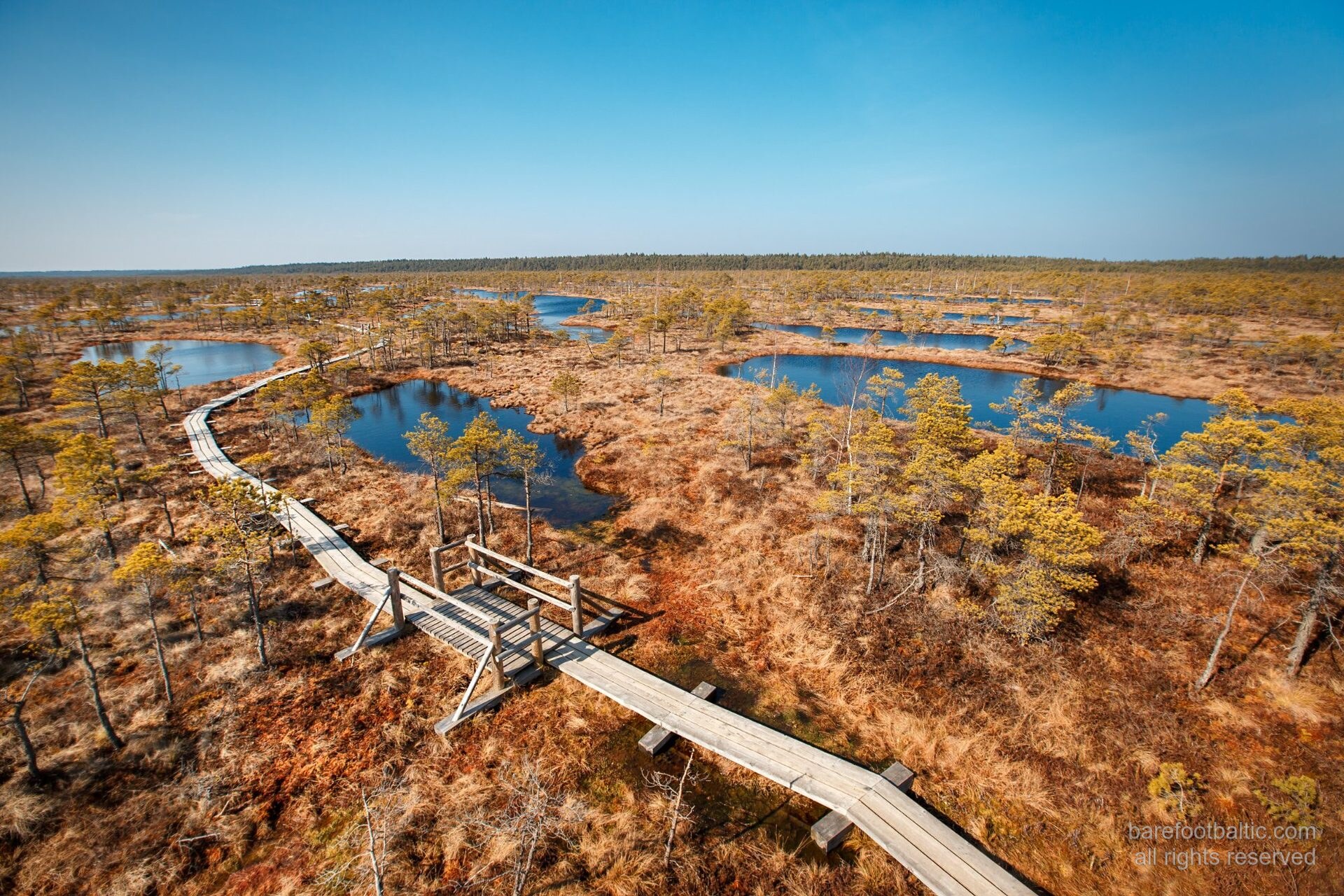
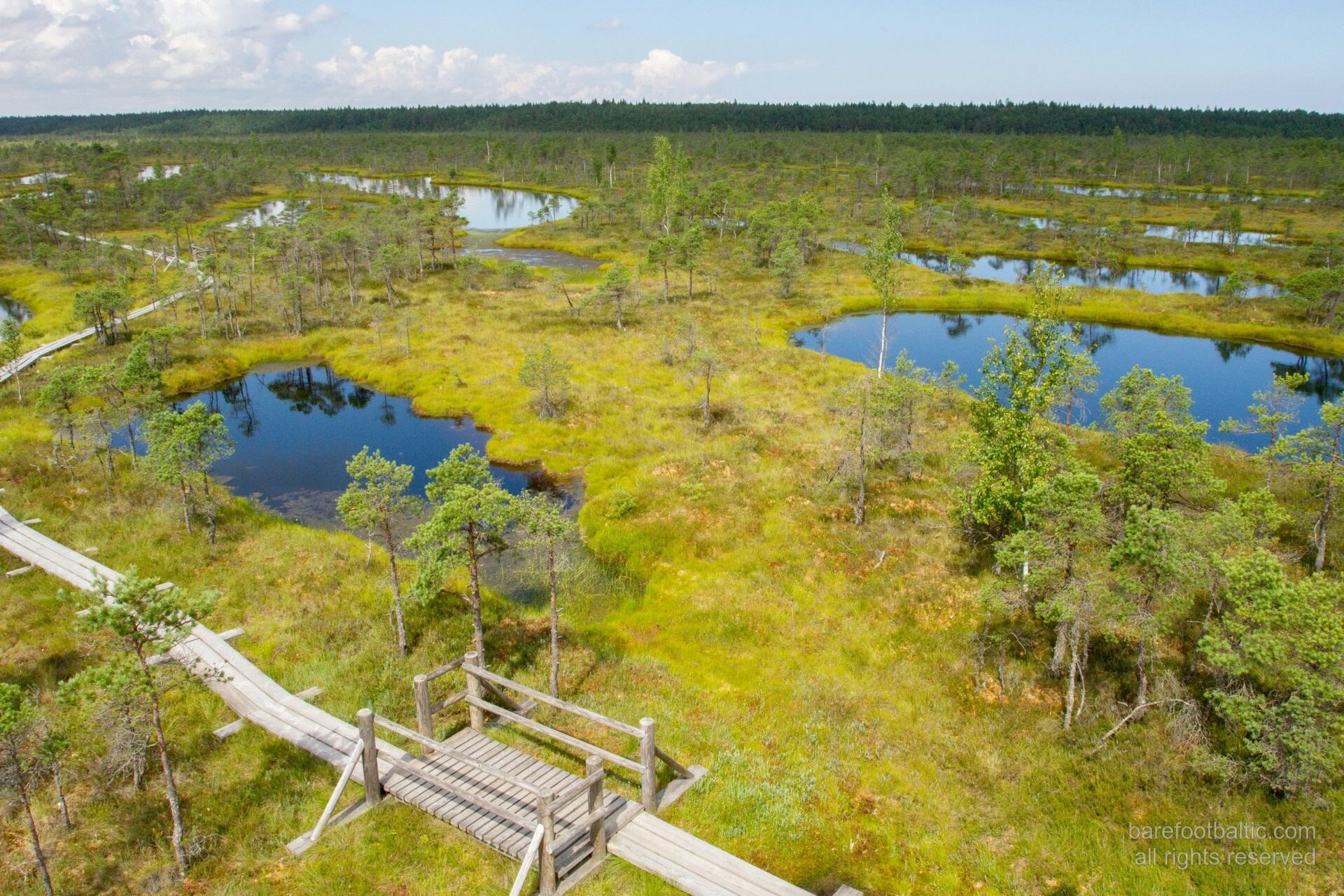
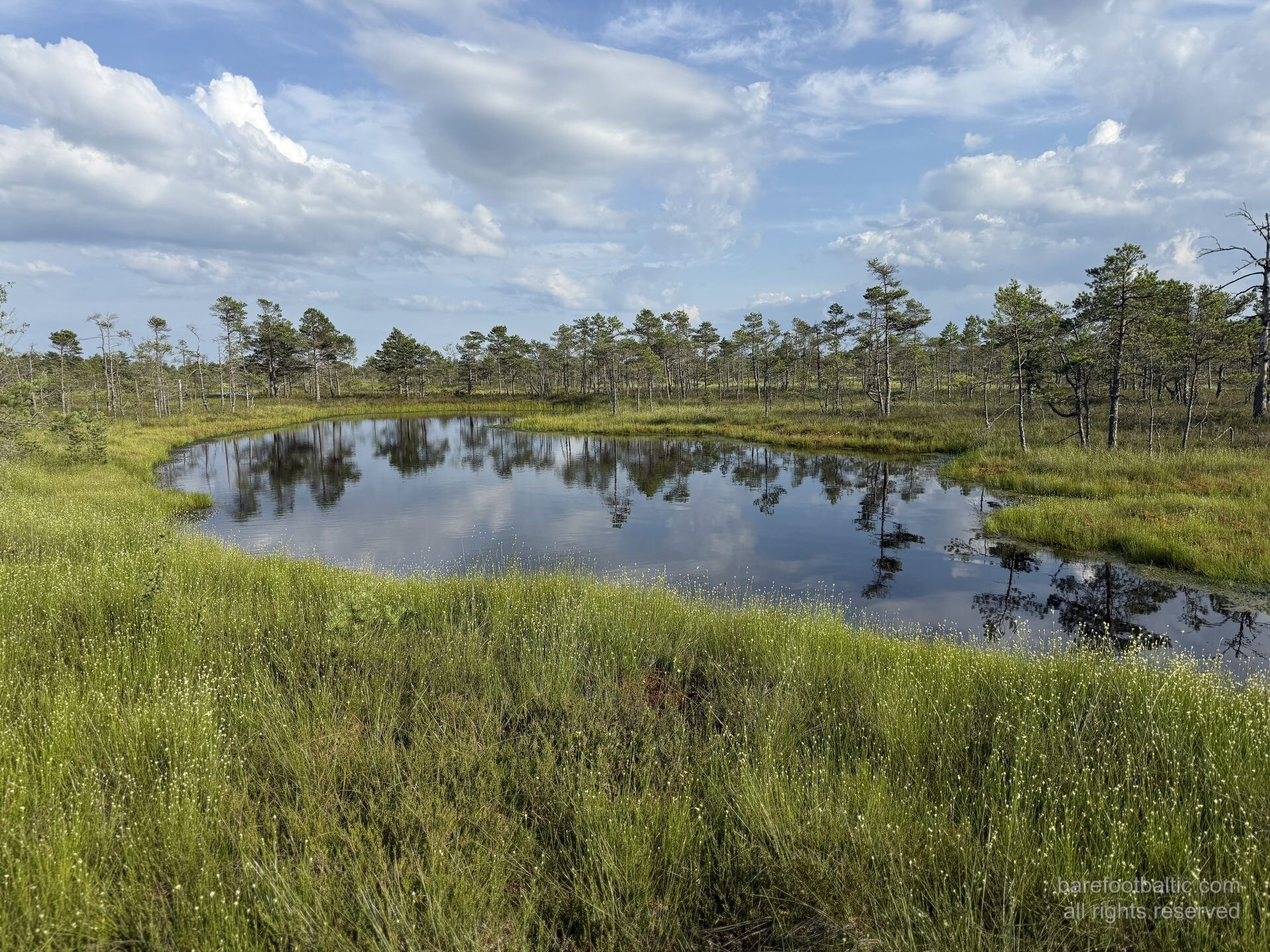
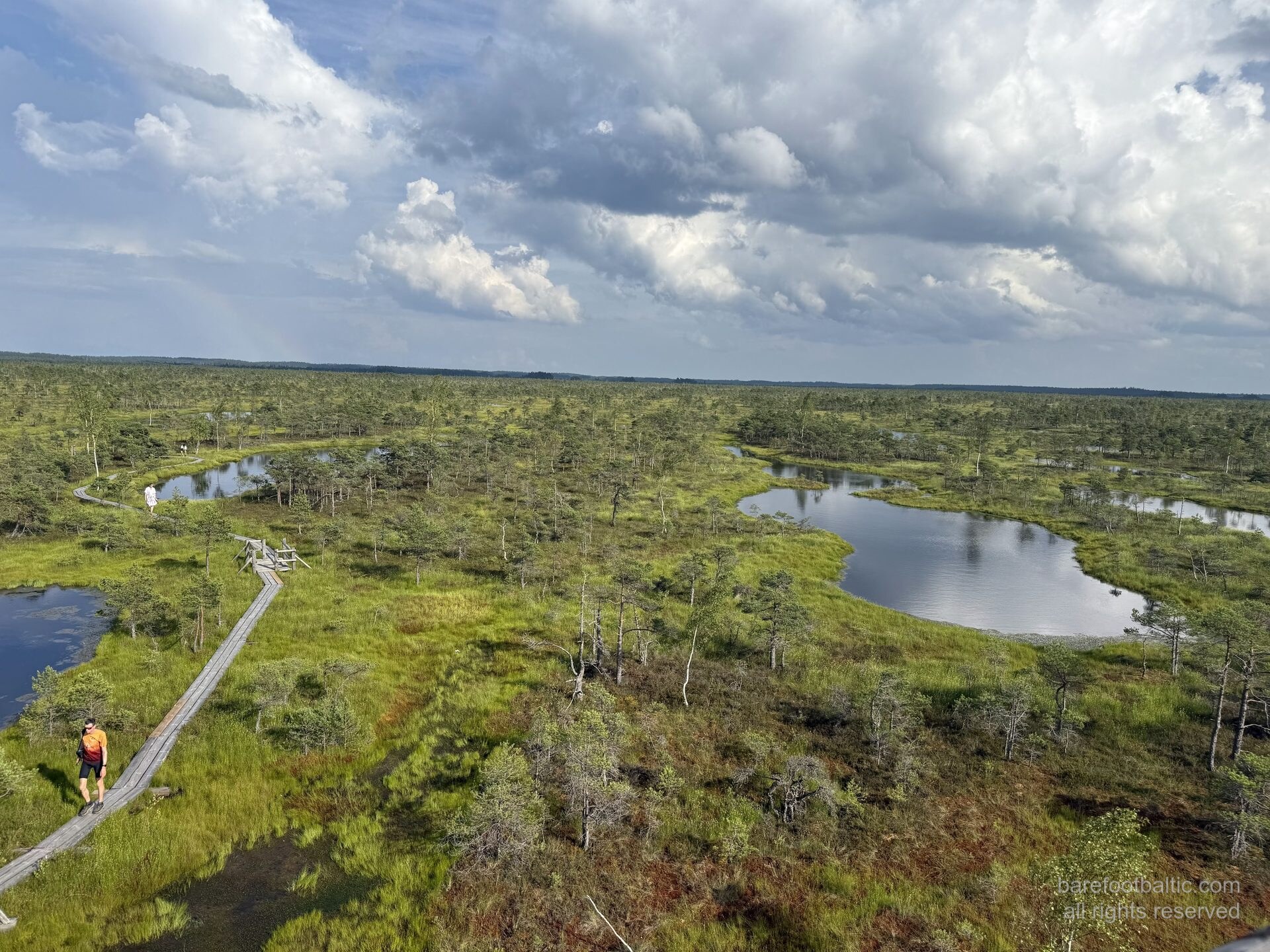
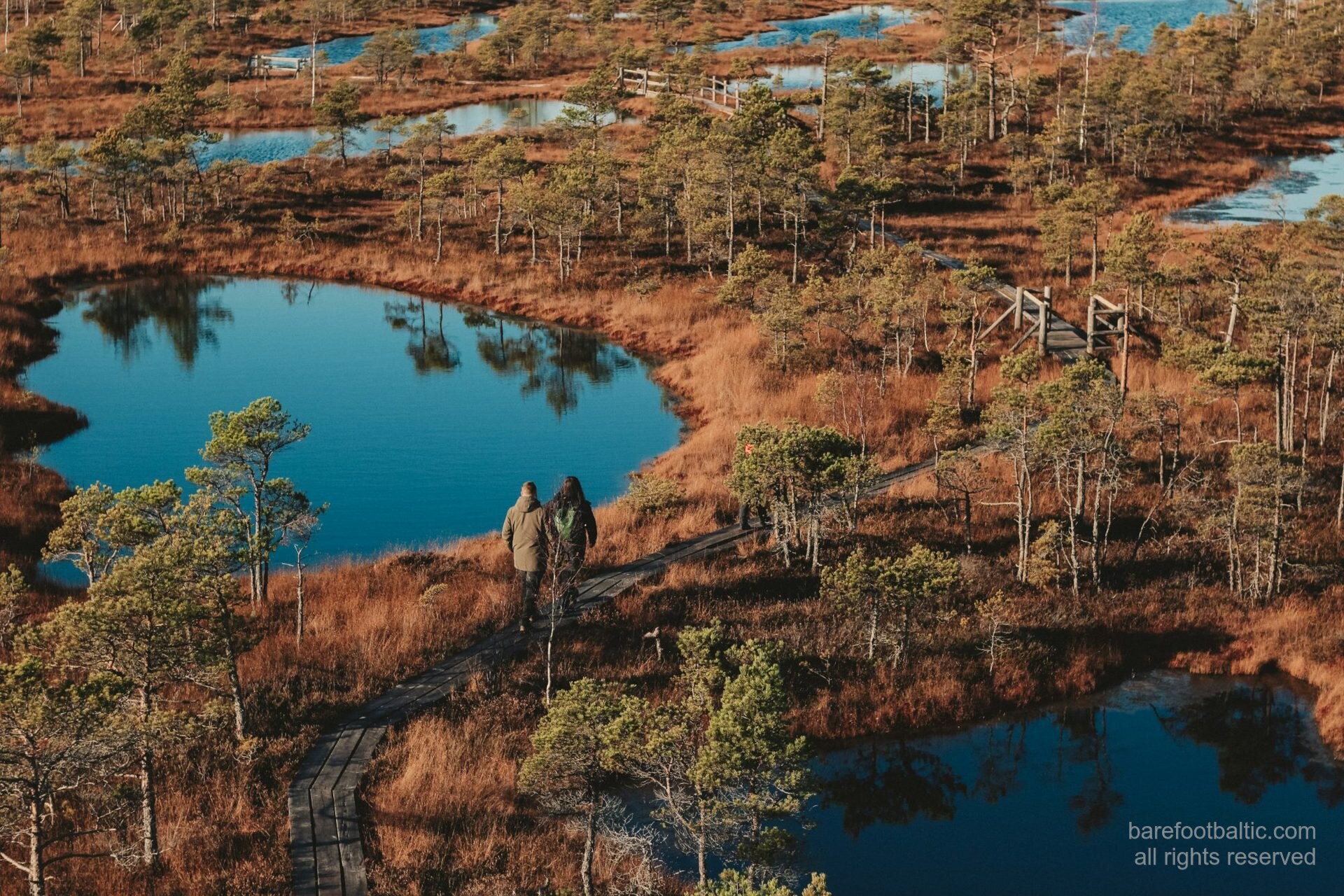
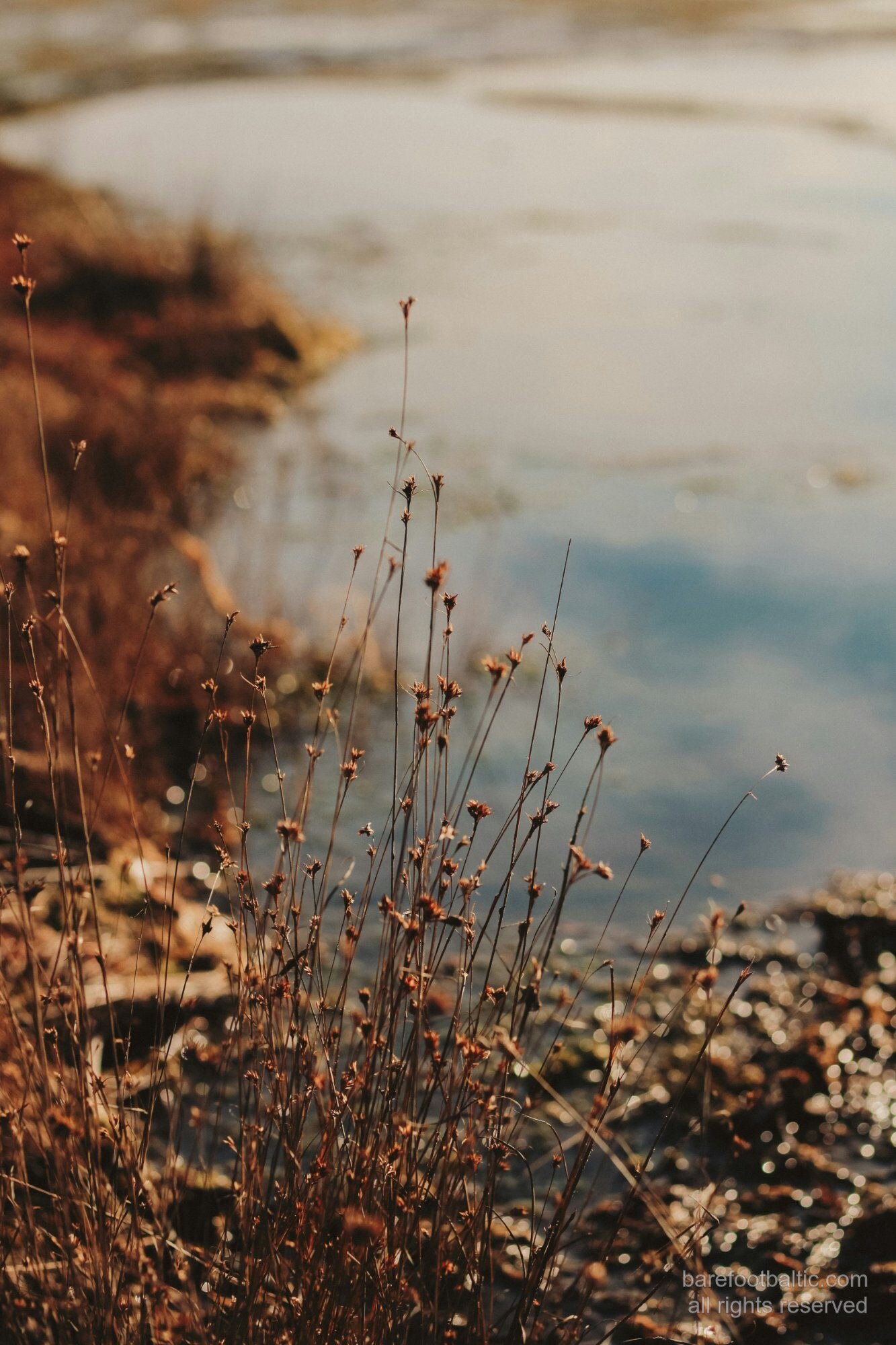
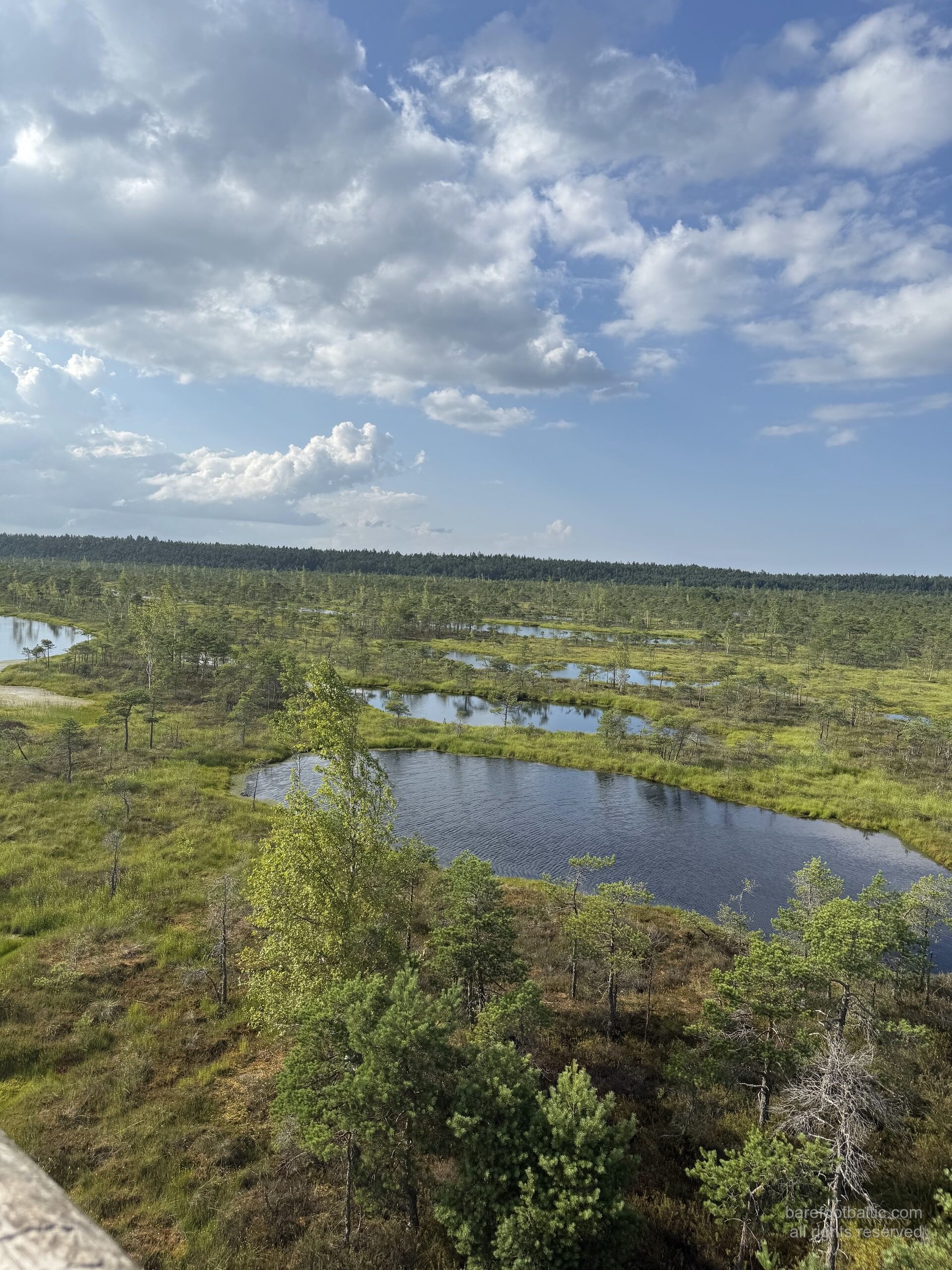
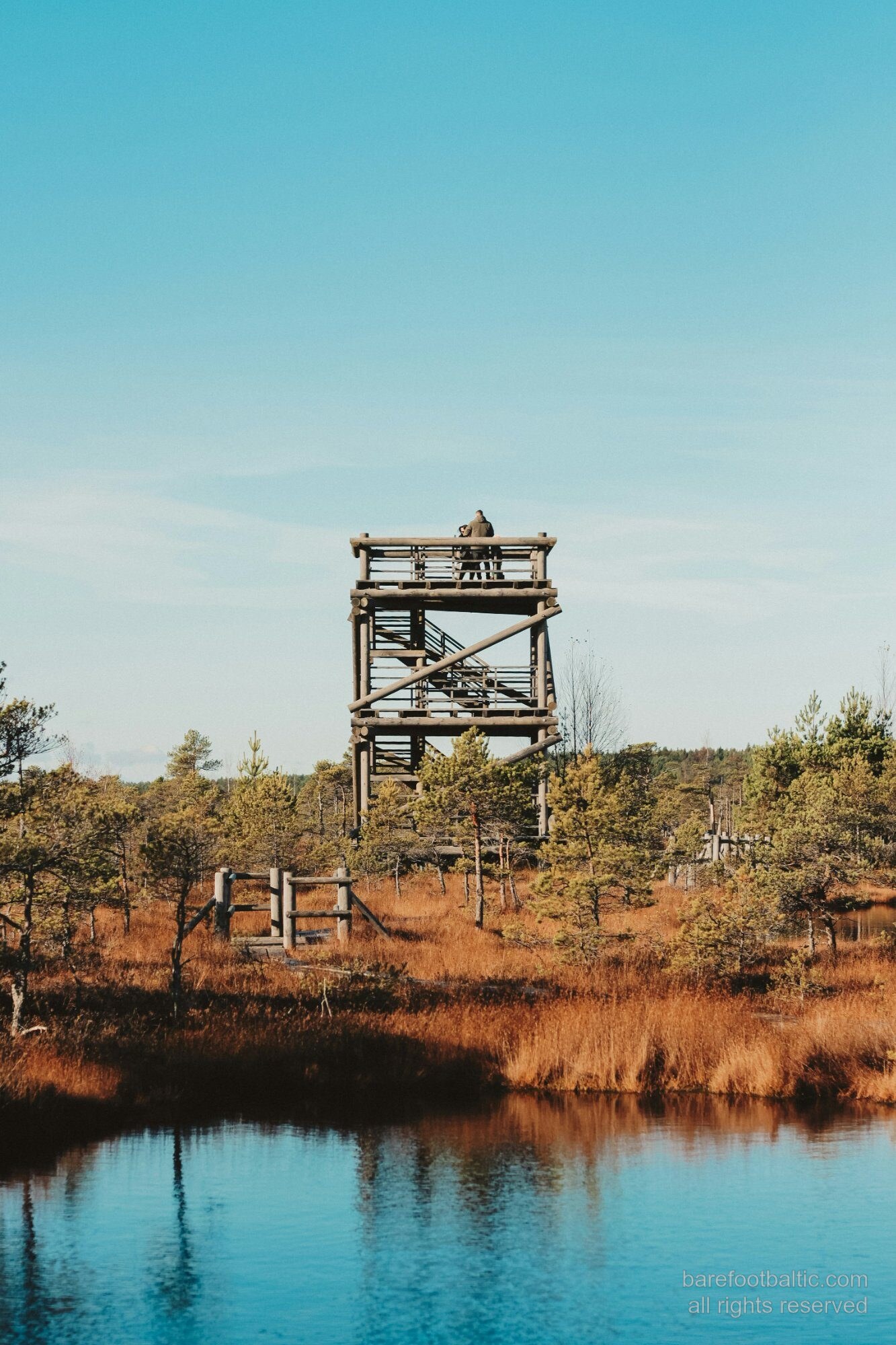
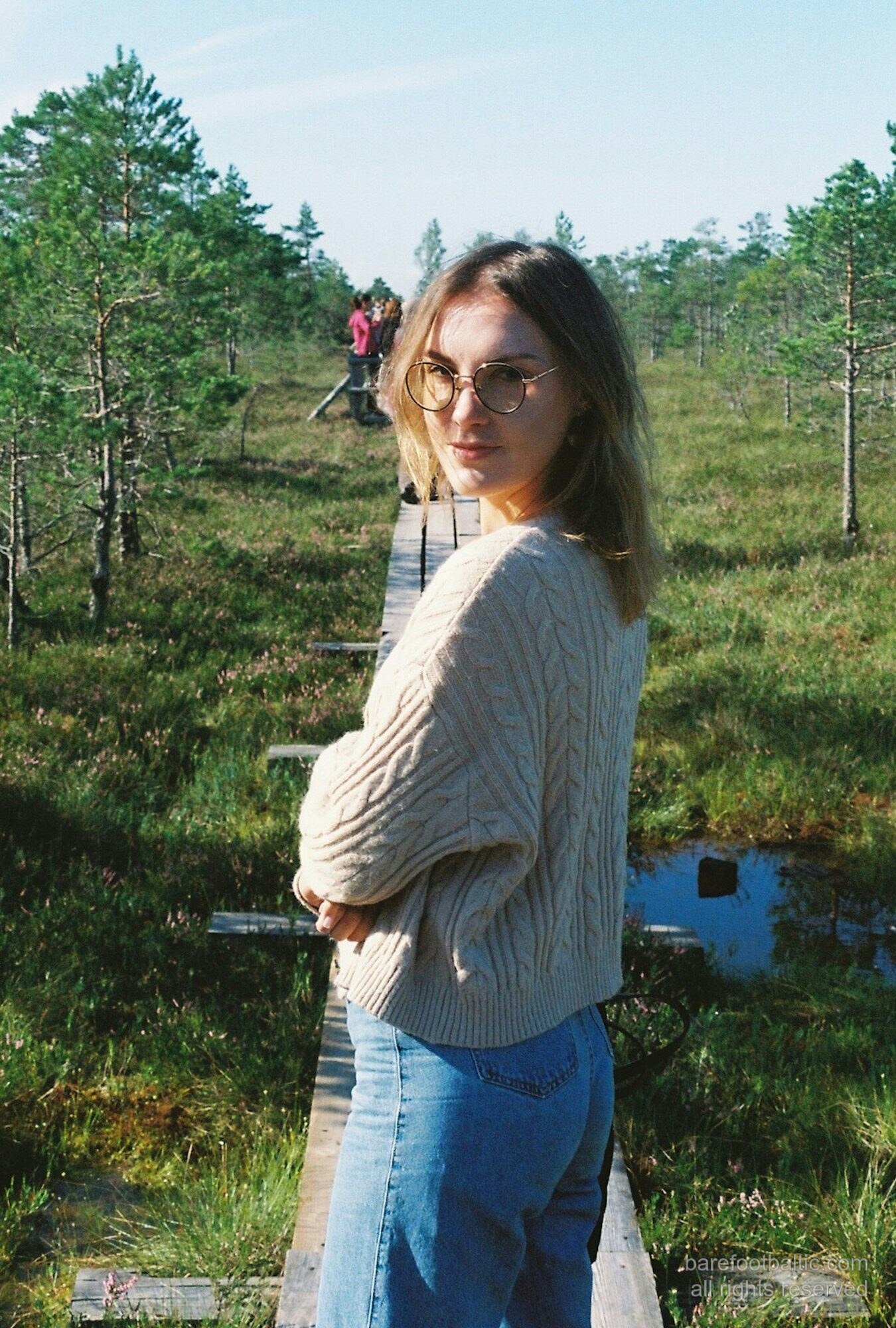
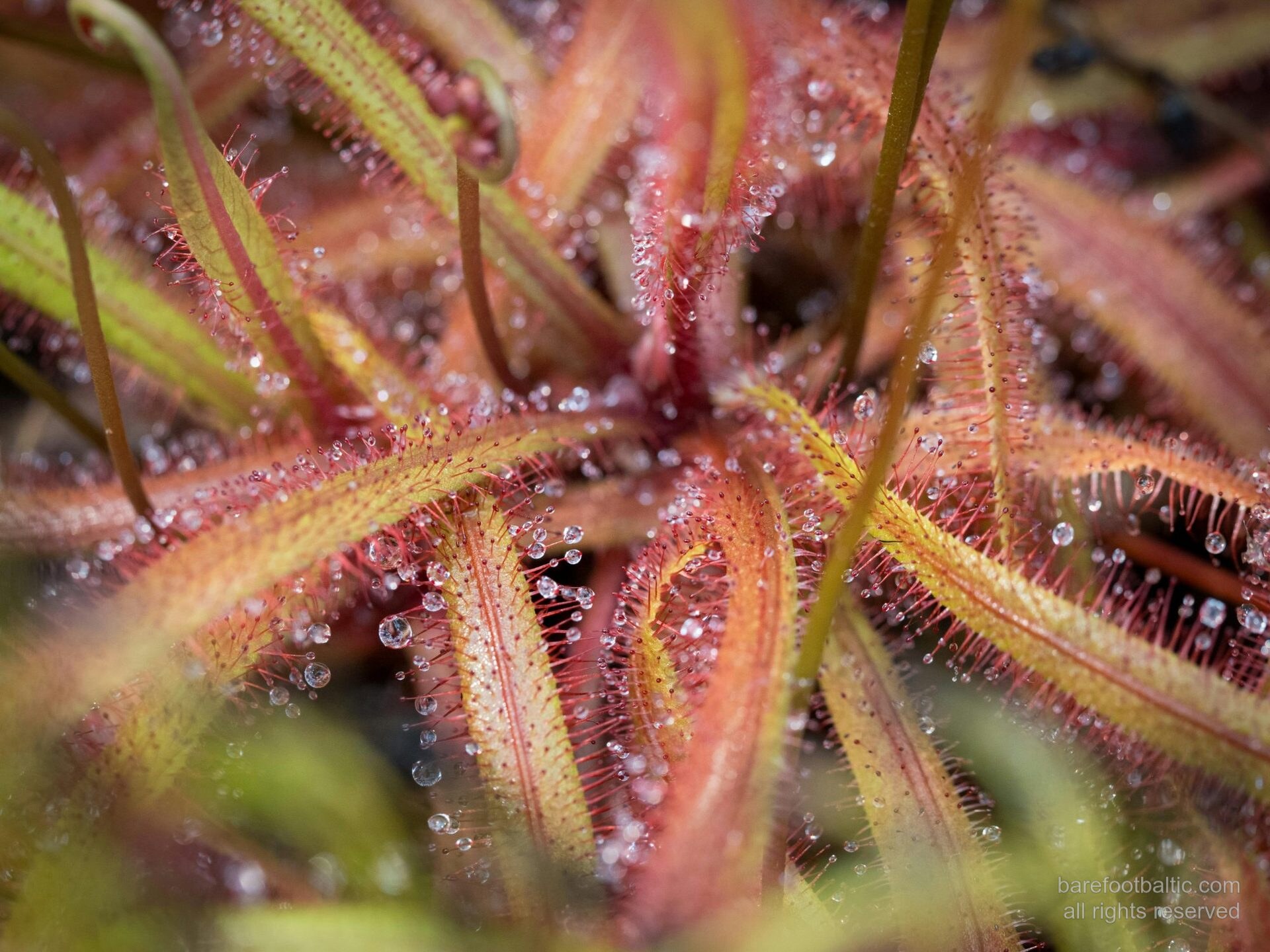
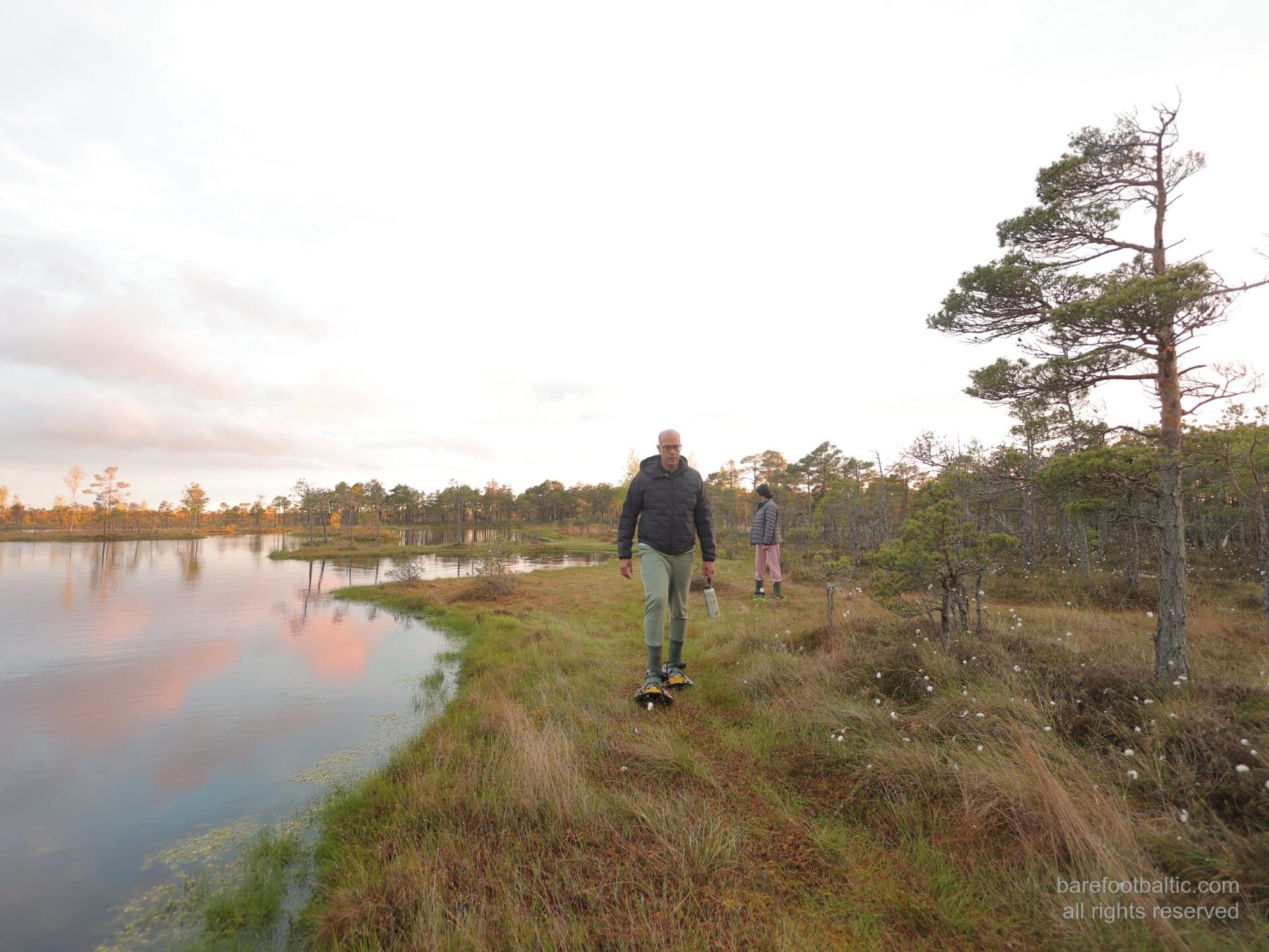
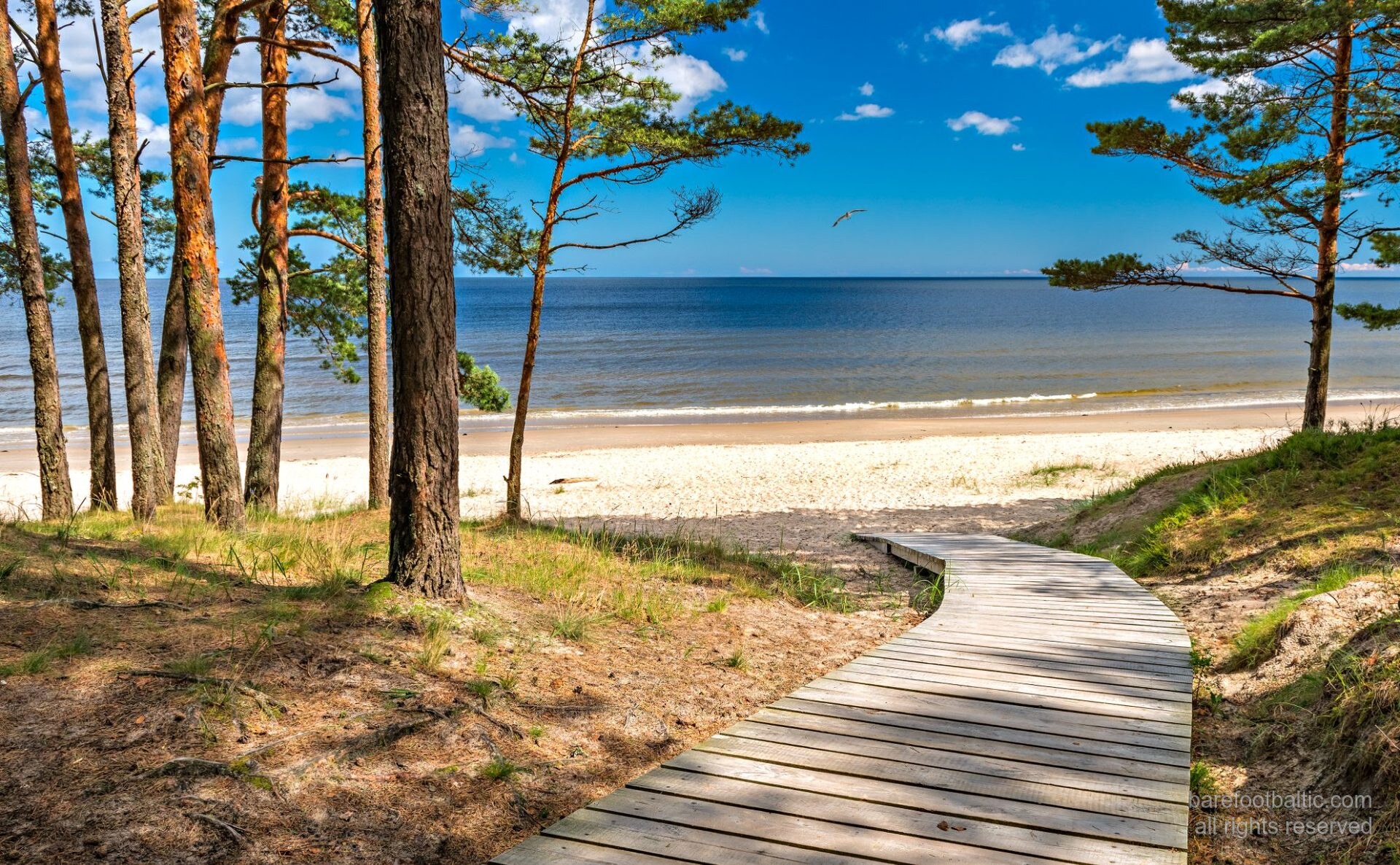
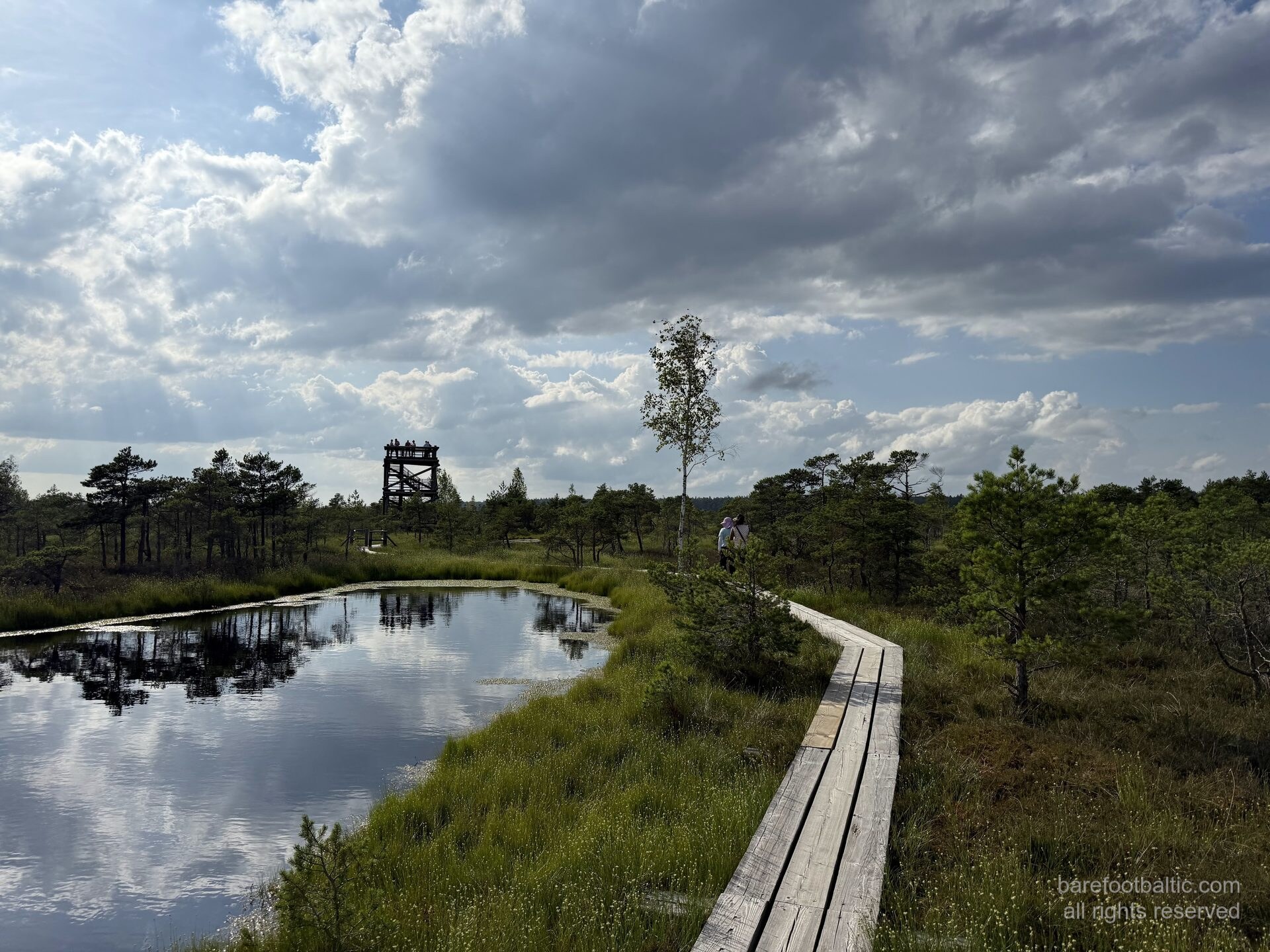
Fourteen photographs from across the bog walk. The boardwalk, the ponds, the dwarf-pine plain, the watchtower, the sundew, and the dawn.
Short answer, read this first
- Yes, for most visitors to Latvia, Ķemeri bog is worth it. It's the most photogenic natural place near Riga, and the people who make the trip out often call it the highlight of their visit.
- It's a 10,000-year-old raised bog. A specific, rare landscape that looks like nowhere else in Europe. Dark mirror pools, dwarf pines knee-high, soft sphagnum moss. A Natura 2000 site, a Ramsar wetland, and home to over 190 bird species.
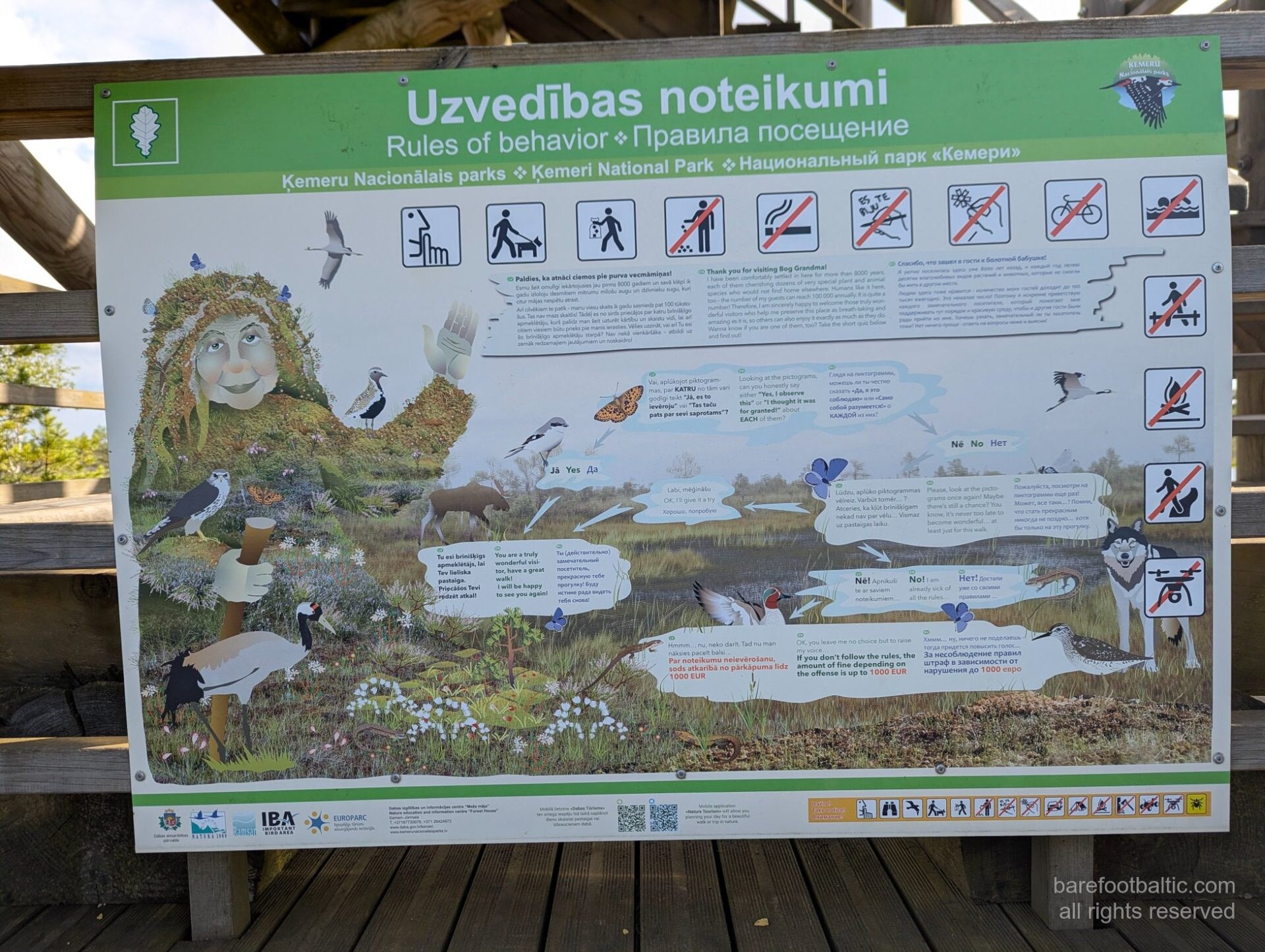
- The boardwalk is 3.4 km as a full loop, or 1.4 km as a shorter inner loop. Wooden, flat, and accessible to pushchairs. 75 to 90 minutes at a relaxed pace, including the observation tower.
- Two hard rules for DIY visits. Bring strong mosquito repellent and a head net. Ķemeri has a serious mosquito reputation year-round, worst at dawn and dusk, and repellent alone is often not enough. And never step off the boardwalk without bog shoes and a local guide. A raised bog hides deep pools under the moss carpet, and people sink.
- It's free. No entrance fee, no tickets, no gate. Open 24 hours, year-round. There's a free car park and basic toilets at the trailhead.
- Come at sunrise. The bog looks flat and dull in midday light. Come in the golden hour just after dawn and it changes completely. This is the one detail that makes or breaks a visit.
- It's 50 km west of Riga, about 45 minutes by car, 65 minutes by suburban train (plus a 3.5 km walk from the station, which is the main catch for a DIY visit).
- You should skip it if you only have 48 hours in Riga and you've never been to Old Town, if you can't do a very early start, or if you don't want to stay on a boardwalk. More on that last one below, because it matters.
What Ķemeri bog actually is
I should start with this, because half the people who ask me "is it worth it?" are imagining something wrong.
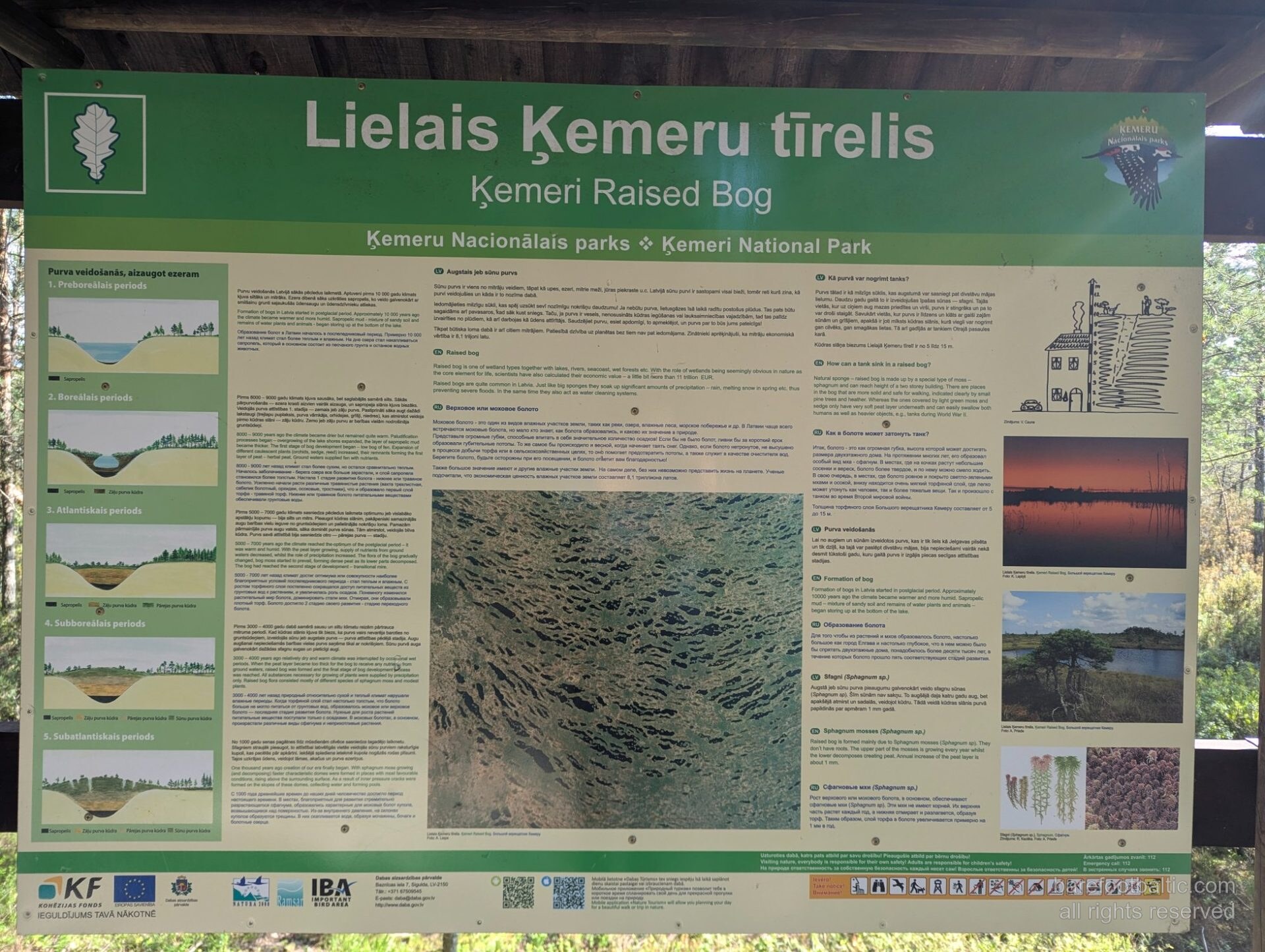
Ķemeri isn't a swamp. It's a raised bog, a specific geological thing. A wetland fed only by rainwater, with no streams, no rivers, no groundwater, slowly growing upward over thousands of years as sphagnum moss dies, compresses, and turns into peat. The Great Ķemeri Bog (Lielais Ķemeru tīrelis) has been doing this for about ten thousand years, since the last ice age retreated. The surface you stand on today is roughly eight metres higher than the ground beneath it. Everything you see, the dark pools, the tiny pines, the carpets of moss, is sitting on top of a peat layer as thick as a two-storey house.
The visual effect is hard to describe until you've seen it. A flat, treeless expanse stretches to the horizon. There are no full-sized trees because the bog is too acidic and too waterlogged for their roots. The pines that do grow are dwarfs, knee-high or waist-high, surviving on almost nothing. Between them, dozens of small dark pools reflect the sky like polished mirrors. These are called "bog eyes" in Latvian, and they form where the peat has subsided unevenly. The whole place has a silence you won't find anywhere near a city. No insects buzzing in midday heat, because the open bog is too exposed. No birds calling from nearby forest, because the forest is two kilometres away. Just the wind across moss, and occasionally the distant cry of a crane.
The carnivorous plants are the easiest detail to walk past. Growing right beside the boardwalk, small enough to miss a hundred times over, is the sundew (Drosera rotundifolia). Bright red tentacles tipped with what look like dewdrops, but the drops are a sticky glue that traps insects, which the plant then digests. A tiny meat-eater in a landscape that hasn't changed much since the mammoths left. Once you've seen one, you start seeing them everywhere.
One more thing about the bog surface, which matters if you're visiting on your own. A raised bog is not firm ground. The sphagnum carpet you see from the boardwalk is floating on top of a peat layer up to eight metres deep, with open pools hidden between the vegetation. Step off the boardwalk without traditional bog shoes (purva kurpes) and a guide who knows the terrain, and you can sink. There are anecdotal Baltic stories about heavy vehicles and even soldiers disappearing into bogs, exaggerated in the telling but built on a real physical fact. Stay on the boardwalk every time. If you want to actually walk on the moss, book a guided bog-shoe hike with Baltic Nature Tourism or one of the other Latvian specialist operators. They provide the equipment and the local knowledge. Our Barefoot Baltic sunrise tour is a boardwalk tour and doesn't include off-boardwalk hiking.
Is it actually worth your day? The answer
Depends. The four cases below cover most of the people who ask.
If you have three or more days in Latvia, yes, almost certainly. Ķemeri is the thing you'll talk about when you get home. The bog is unusual, the boardwalk is beautifully built, and the whole trip out and back is half a day at most. For anyone with a normal Latvia itinerary, a morning at the bog slots naturally between your Old Town days and your coastal or countryside days.
If you only have 48 hours in Riga and it's your first visit, maybe not. Old Town, Central Market, and a half-day for Art Nouveau architecture will give you a more complete picture of Latvia than a morning at a bog will, because the city itself is UNESCO-listed and has eight hundred years of stories stacked on top of each other. Ķemeri works best as an add-on to a Riga trip. If you have to choose, choose Riga.
If you want a big nature hit, yes. There are very few places in Europe where you can walk on moss that's 10,000 years old, next to carnivorous plants, in a landscape that looks like Finland crossed with Patagonia, forty-five minutes from a capital city. Nature travellers, photographers, birdwatchers, and anyone who likes quiet places will leave Ķemeri happier than they arrived.
Skip it if you hate early starts. I'll explain why in the next section.
The sunrise question, and why it matters so much
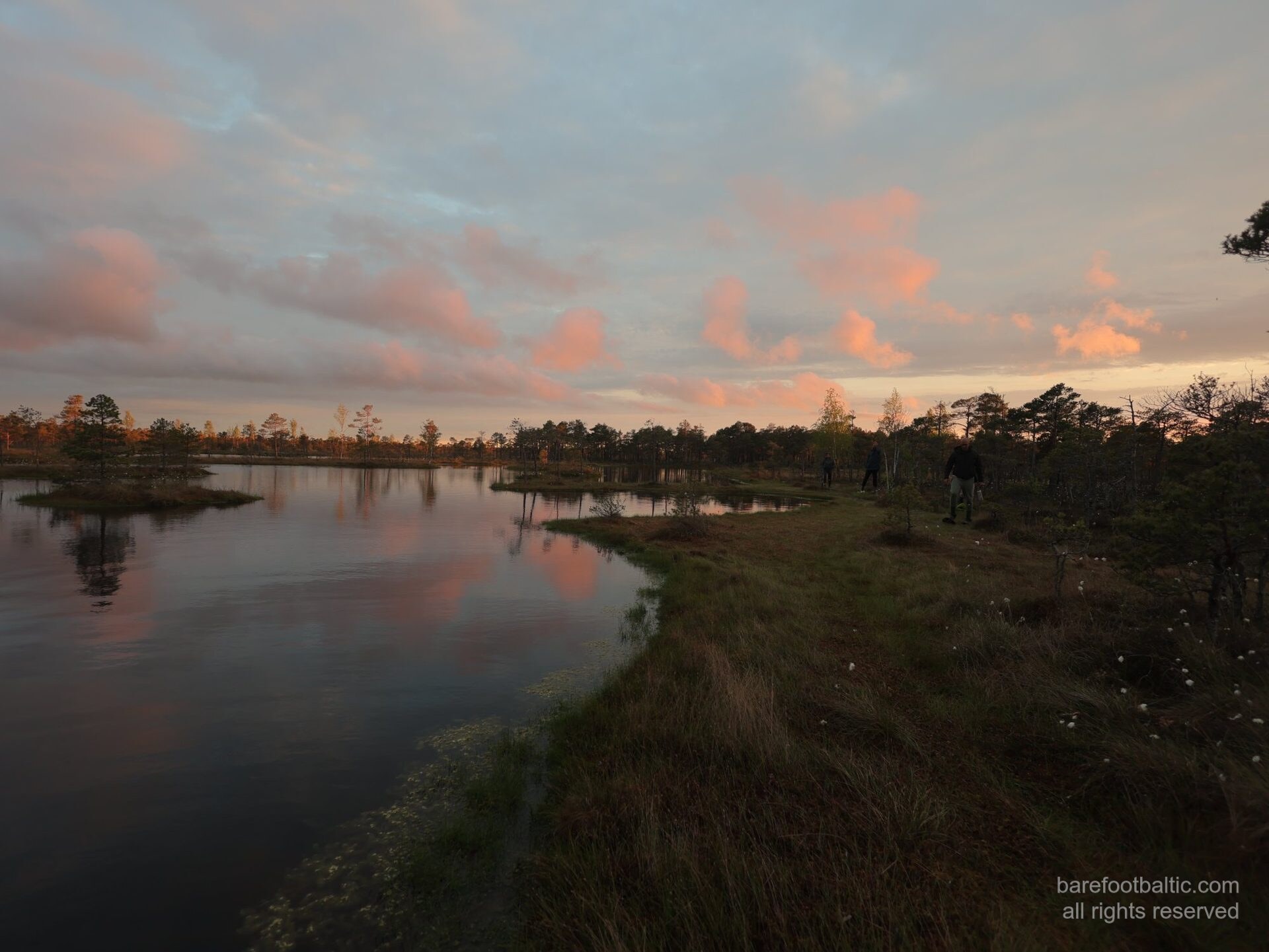
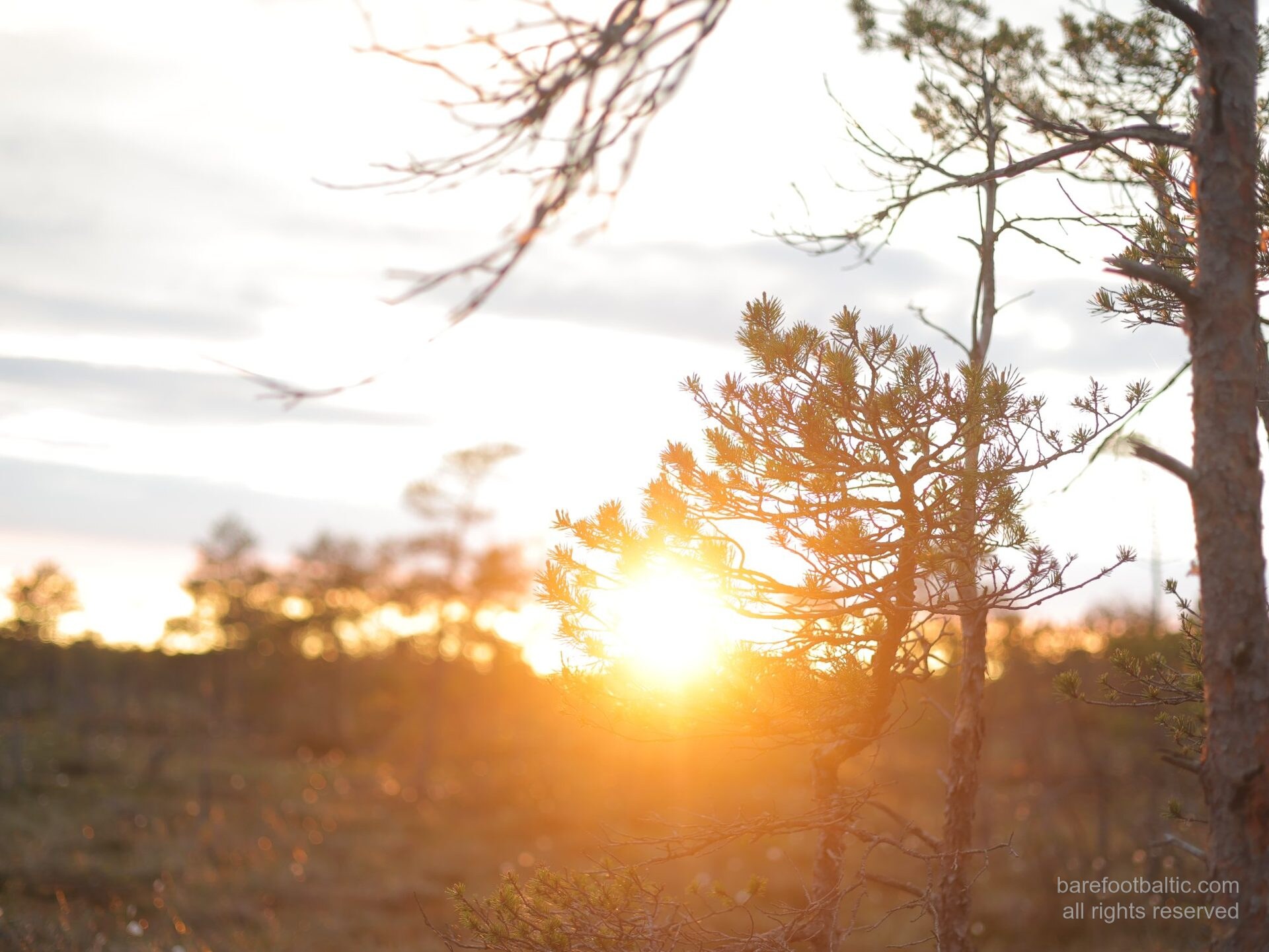
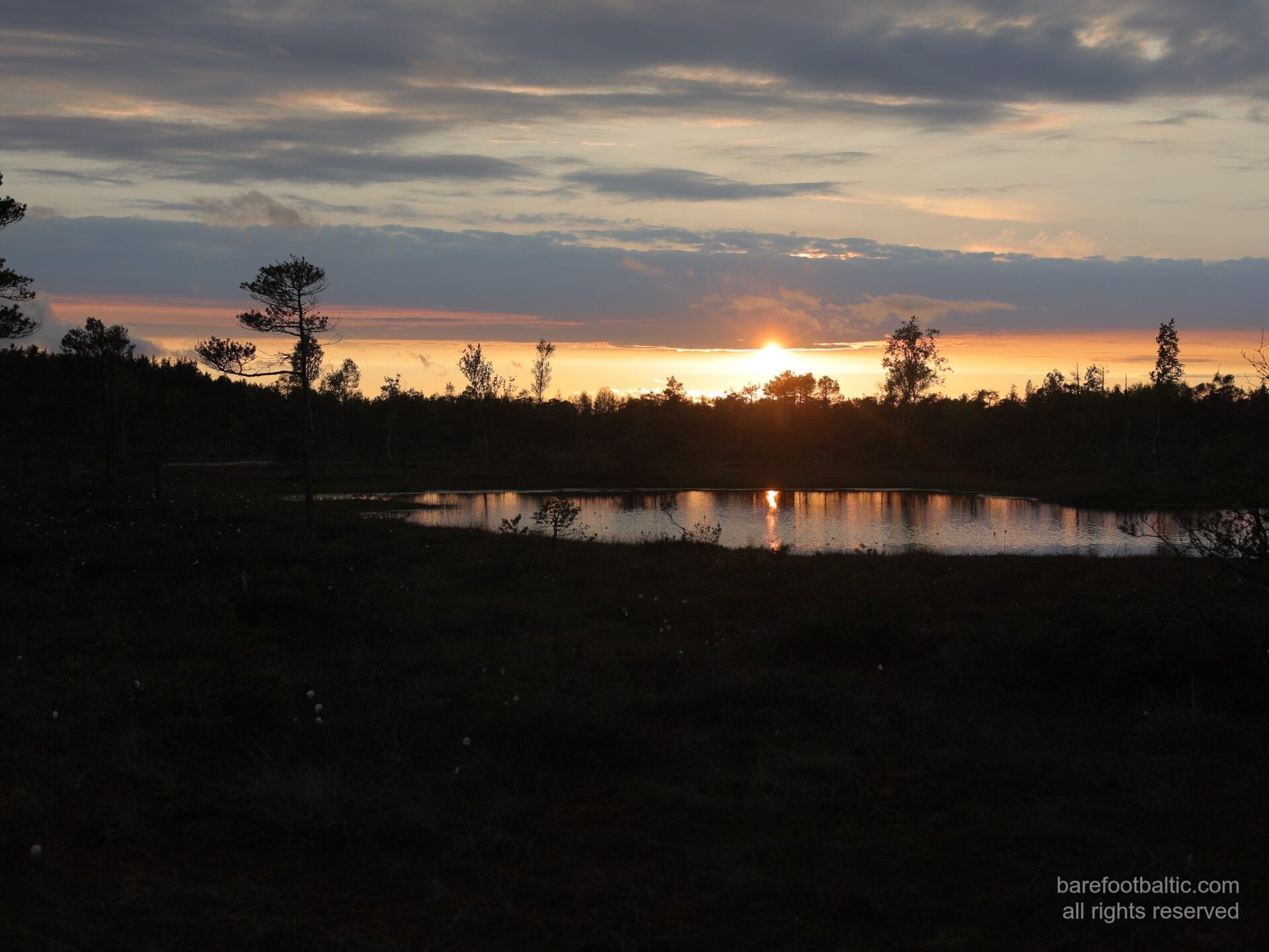
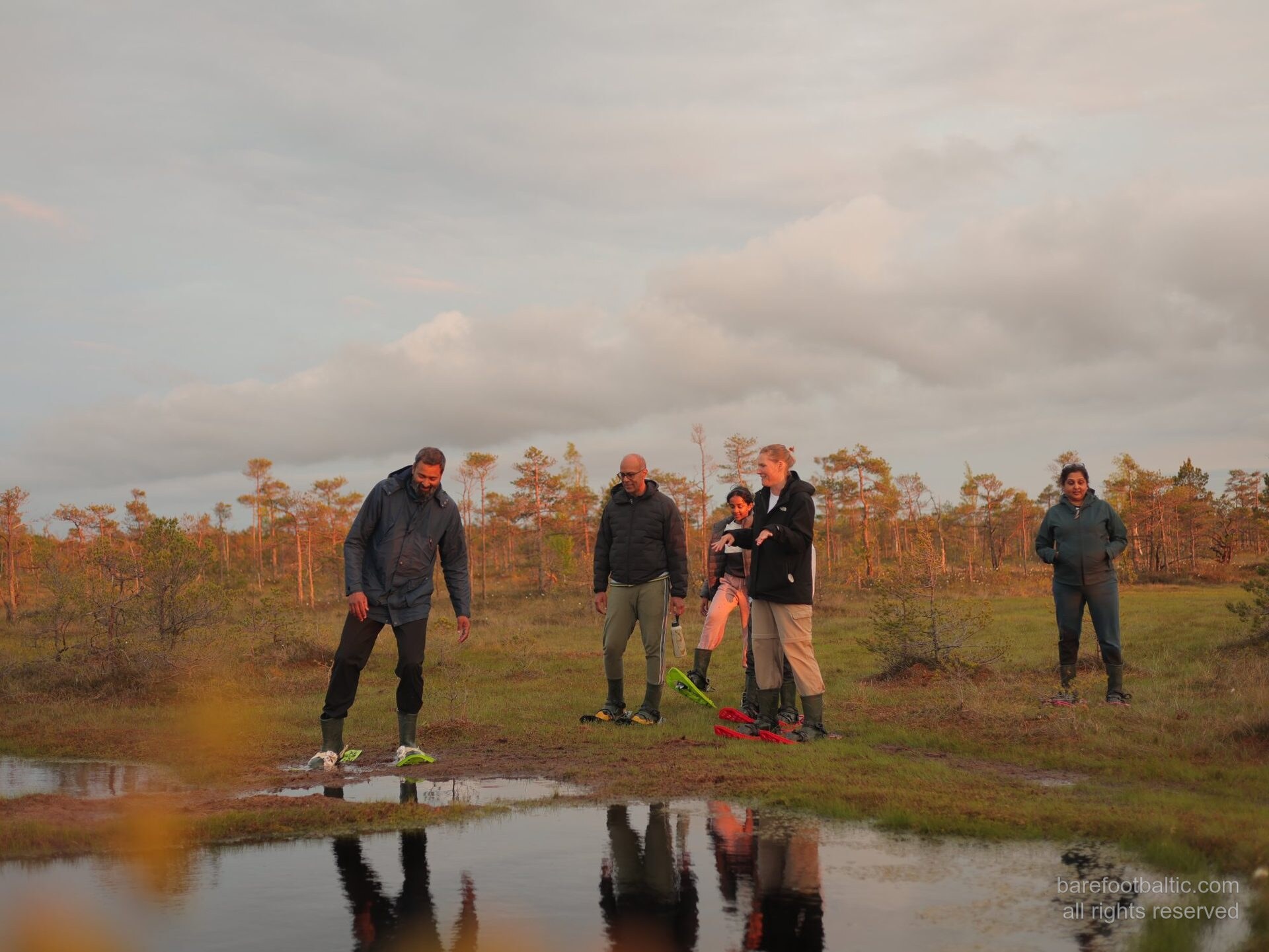
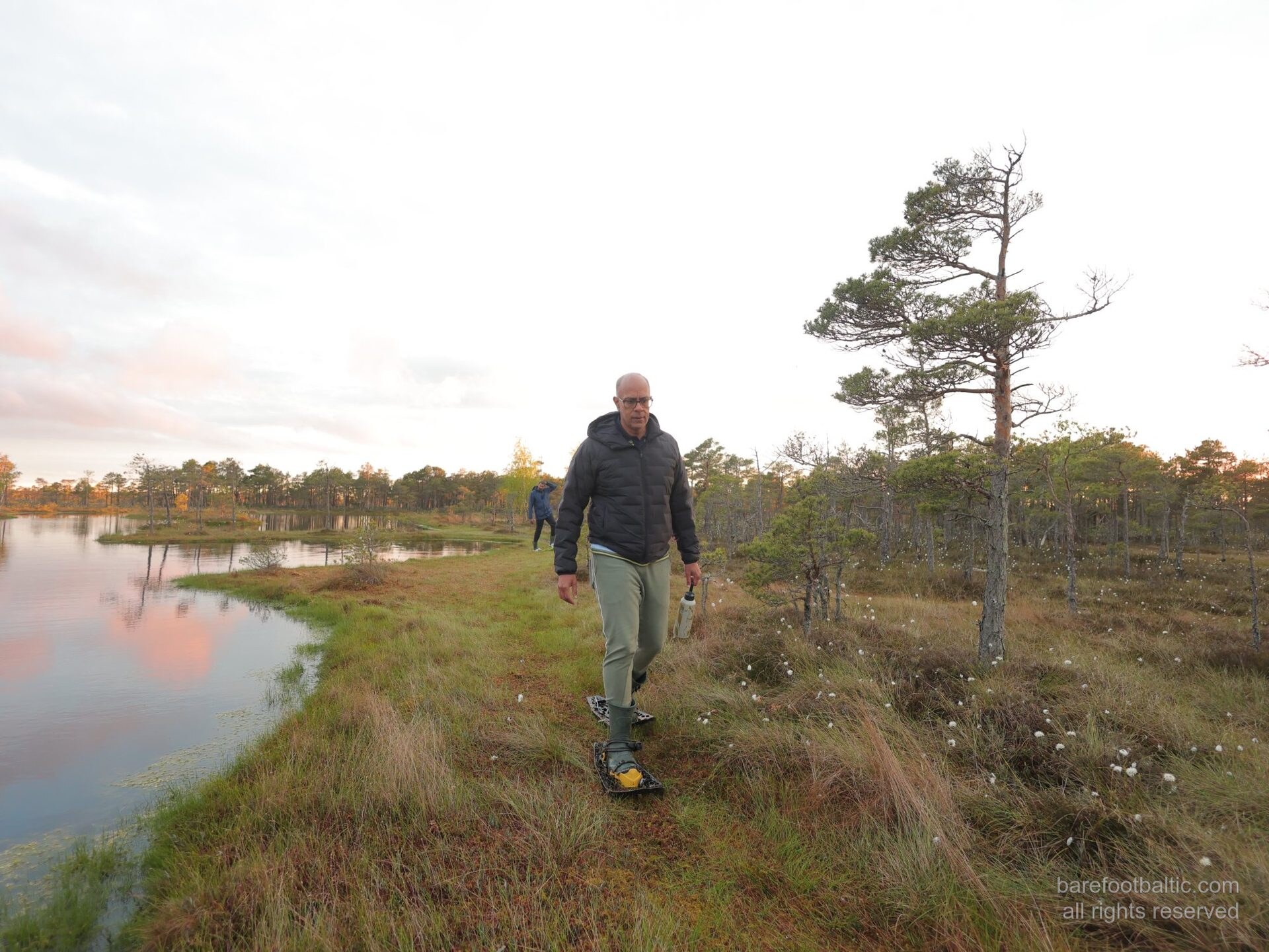
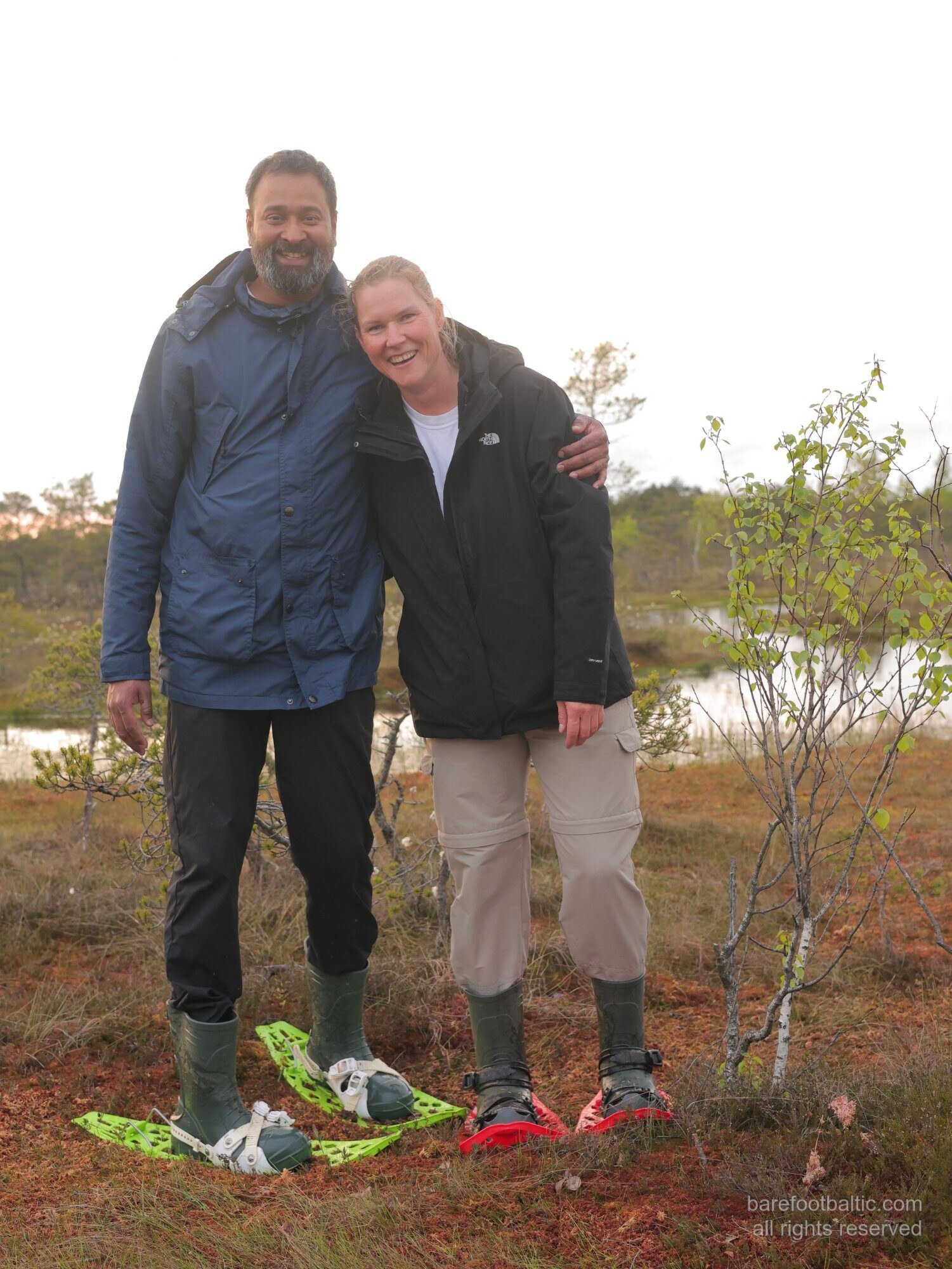
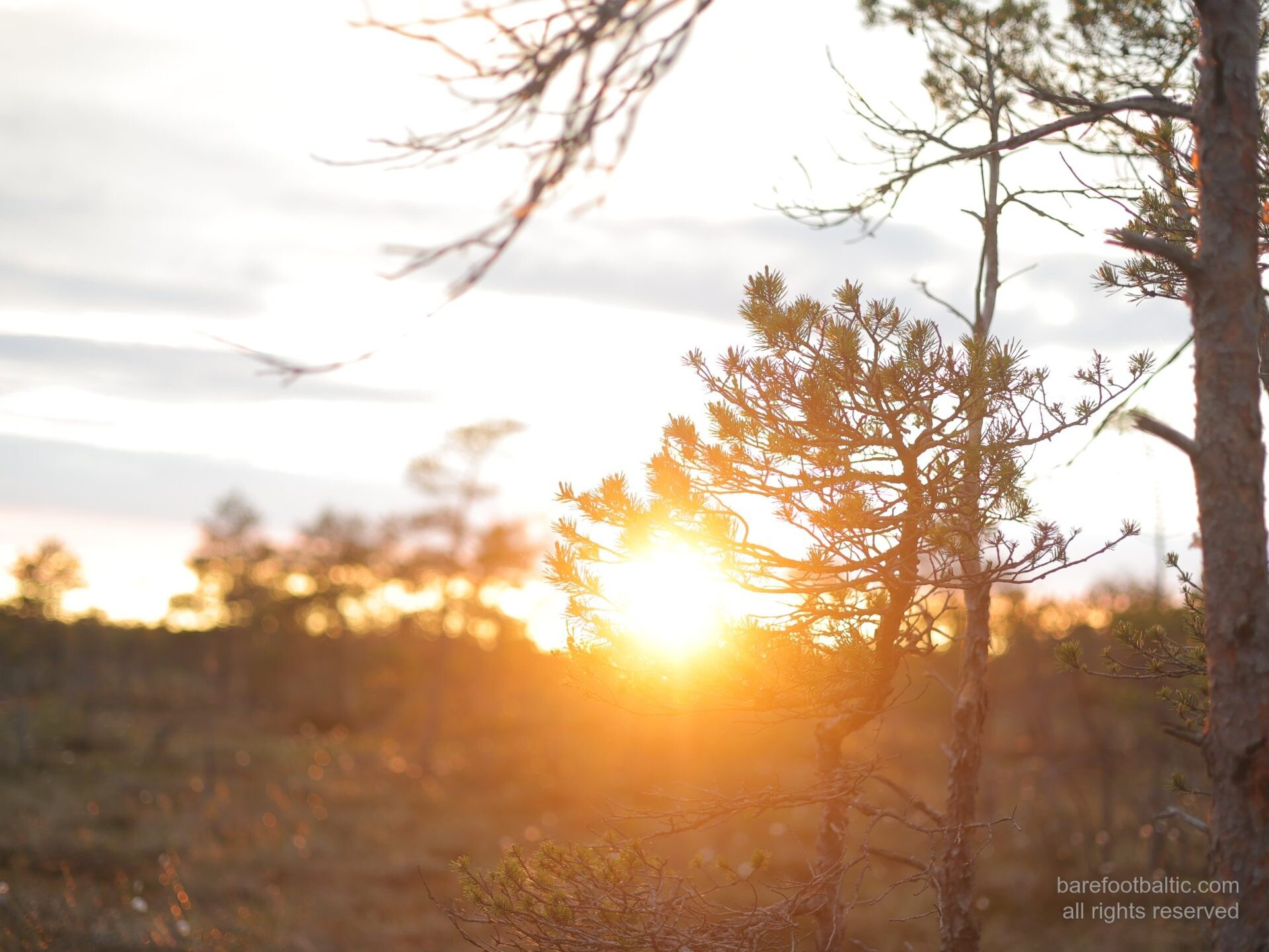
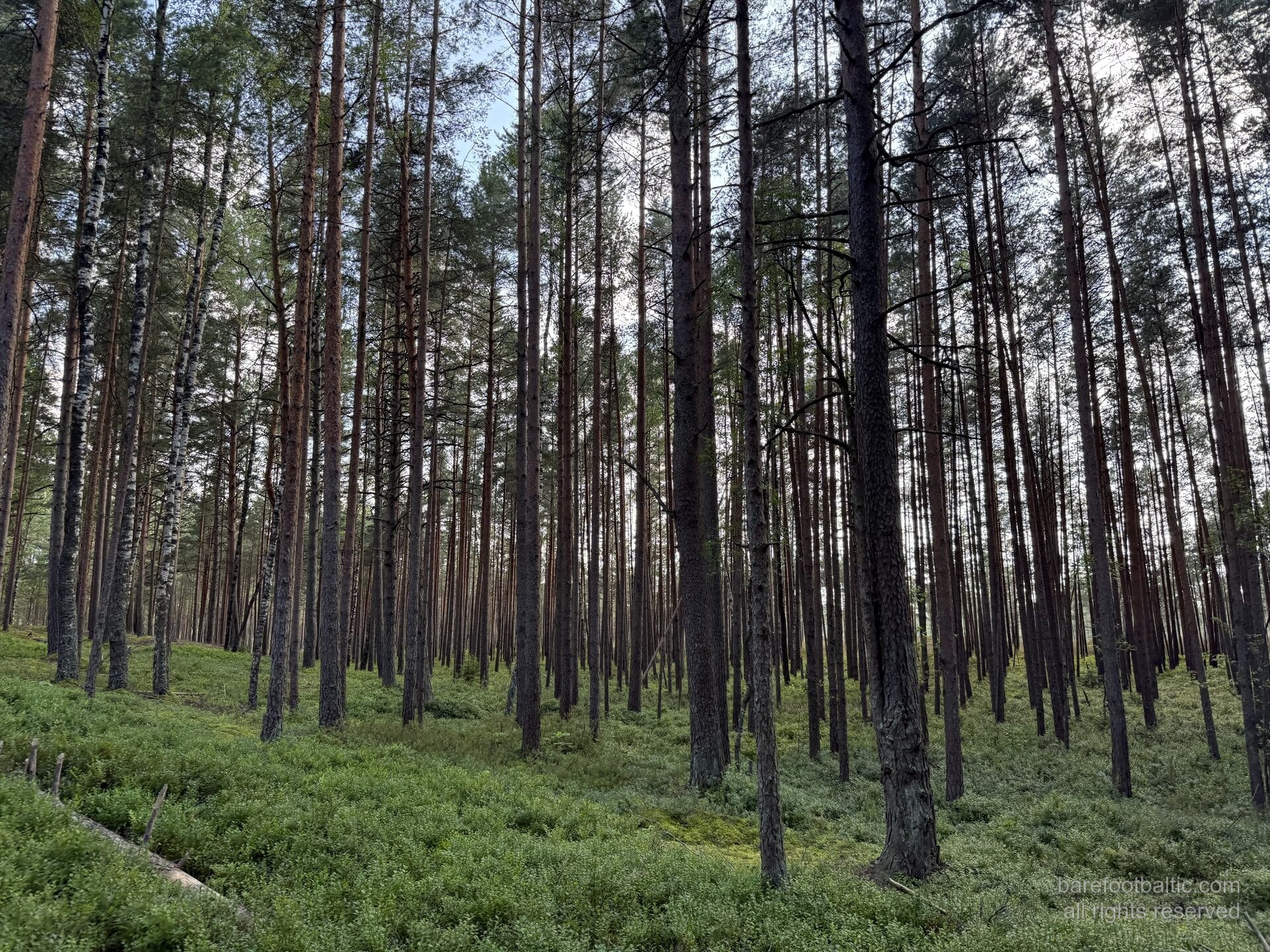
Nine photographs from the dawn hour. Why the bog is two completely different places at sunrise and at lunchtime.
Here is the single most important thing about visiting Ķemeri. The bog is two completely different places at sunrise and at lunchtime, and most of the "is it worth it?" complaints I've seen online come from people who visited at the wrong hour.
At sunrise, roughly 4:30 AM in June, 5:30 AM in August, 7:00 AM in October, the bog is at its most beautiful. Mist rises off the dark pools while the low sun turns the sphagnum moss a soft amber and the dwarf pines throw long shadows. The boardwalk is empty. The air is cool, still, and completely silent except for the occasional distant crane. The photographs that have made Ķemeri viral on Instagram in the last five years were all taken in this window.
At lunchtime in July, the same boardwalk is a different experience. Flat, high sun washes out the colour. The mirror pools look black and lifeless. The mosquitoes are at their peak, and in peak summer they are serious. Several Baltic-circuit tour buses will have arrived and left, so the boardwalk is crowded and the silence is gone. Most importantly, the light that makes the photographs is gone. The bog stops looking like the place you saw on Instagram and starts looking like a bog.
This is why our own Ķemeri excursion runs from Riga at 4:30 AM and is back in town by 10:30. We won't pretend the early start is fun. It isn't, it's brutal. But the bog at first light is the whole point. If you can't face a 4 AM wake-up, the next best window is late afternoon in September or October, when the sun is lower and the crowds have gone home.
How to get there, your four options
Ķemeri National Park is about 50 kilometres west of Riga, just inland from the Baltic coast and a few kilometres south of Jūrmala. There are four sensible ways to get there, each with trade-offs.
| Option | Cost per person | Sunrise visit? | Pros and catches |
|---|---|---|---|
| Self-drive hire car | ~€40 to 60 car hire plus fuel | Yes | Total flexibility. 45 minutes from central Riga on the A10. Free car park at the trailhead. The catch is that you have to be the driver at 4 AM, which kills half the point. |
| Suburban train from Riga | ~€3 each way | No | Cheapest option by far. Direct from Riga Central Station to Ķemeri (65 minutes). The catch is the timing. The first train in summer arrives around 7:30 AM, which is already 2 to 3 hours past sunrise. And from Ķemeri station you walk 3.5 km along a forest road to reach the boardwalk. |
| Taxi or Bolt from Riga | ~€50 to 60 each way | Yes, in theory | Flexible timing. The catch is the cost, and you need to arrange a return trip because Ķemeri is rural and there are no taxis waiting. |
| Guided sunrise tour | €45 per adult, €35 per child (ours) | Yes | Hotel pickup, minibus, guide, bog shoes, mosquito repellent, and a coffee stop on the way out. Back at your hotel by 10:30 AM. Limited to May through August. |
The single most common DIY approach, taking the train, is the one that leads to the most "was Ķemeri really worth it?" feedback I see on TripAdvisor and Reddit, because the train day and the sunrise day are essentially incompatible. If you take the train, you'll see the bog in flat midday light with other day-trippers. If you self-drive, hire a car or join a tour, you can actually get there at the hour when the bog looks like it does in the photographs.
When to go, month by month
May. Spring. Migrating birds arriving, forest floor waking up, long days (sunrise around 5 AM by mid-May), cool temperatures, very few mosquitoes. An excellent month for a first visit.
June. Peak light. The longest days of the year, sunrise around 4:30 AM, a soft northern dawn that lasts almost an hour. This is the month the best photographs come from. Mosquitoes are serious from June onward. Bring strong repellent and a head net, and accept that the first hour of the morning is when they're worst.
July. Warmest and driest. Everything is green, the sky is often dramatic, and the whole park is at its most vivid. Also peak mosquito season, particularly in the first hour after sunrise. Long sleeves, strong repellent, and a head net are all non-negotiable.
August. Easiest early start (sunrise around 5:30 to 6:00 AM) and still warm. A good choice for people who want the sunrise experience without the full June 4 AM ordeal. Our own tour season runs through the end of August because of this.
September. The quiet window. The light is lower, the mosquitoes are reduced (though not gone until the first hard frost in mid to late October, so still bring repellent and a head net), and the bog starts to take on its autumn colours (copper pines, rust-red sphagnum) by mid-month. Sunrise is a civilised 6:30 AM. Fewer visitors, and the trains are emptier. If I had to pick one month for a relaxed DIY visit, September would be it. There's a whole separate post on the autumn version of the bog. See Ķemeri Bog in Autumn for the full treatment.
October. Full autumn. The bog turns properly copper-coloured for about two weeks in mid-October, and the morning mist is at its most dramatic as the temperature drops overnight. The risk is the first frost and the first rain, which can make the boardwalk slippery.
November through March. Winter. The boardwalk is open but trails can be icy, the days are very short (sunrise around 8:45 AM in December), and there are no facilities open. For anyone who wants a winter visit, pick a clear bright day after fresh snow and bring proper boots. It's beautiful but less forgiving than the summer version. We don't run our tour in winter, and I wouldn't recommend the train option.
What to bring
- Layers. Even in July, a 4:30 AM start on the open bog feels cold. Bring a warm layer you can take off once the sun is up.
- Long sleeves and long trousers. Wear them against the mosquitoes, which are serious from June through August and still active until the first hard frost in mid to late October. The open boardwalk is slightly better than the forest approach because there's more wind, but you will still need cover.
- Strong mosquito repellent AND a head net. DEET-based or picaridin-based spray, not herbal. A head net that covers your face is cheap, light, and standard kit for Latvian bog visits. Ķemeri's mosquito reputation is real and repellent alone is often not enough, particularly in the first hour after dawn. If you're coming on a guided tour with us, repellent and a head net are included.
- Stay on the boardwalk. The one hard rule. See the safety paragraph above. A raised bog is not firm ground, and DIY visitors should never leave the wooden planks without bog shoes and a local guide.
- Comfortable walking shoes. The boardwalk is flat but you'll be on your feet for 75 to 90 minutes. Trainers are fine. Heels and sandals are not.
- Water. There's nowhere to buy anything at the trailhead, and the boardwalk has no facilities beyond the starting car park.
- A camera with a wide-angle lens, if you care about the photographs. Phone cameras work, but the dynamic range of a raised bog at sunrise is a challenge for phone sensors. Bright sky, dark pools, pines in shadow, all in one frame.
- Nothing left on the boardwalk. No food wrappers, no plastic, no cigarettes. The bog is a Natura 2000 site and the ecosystem is fragile. Rangers do check.
Who Ķemeri bog isn't for
- People who only have 48 hours in Riga. Prioritise Old Town, Central Market, and Art Nouveau. Come back for Ķemeri on your second trip.
- People who cannot do a very early start. The midday version of the bog is much less interesting, and you'll leave thinking you don't understand what the fuss is about. If 4 AM is impossible, consider a September or October afternoon visit instead, or skip it entirely.
- People who are claustrophobic about landscape. The bog is flat and featureless by design. If you need mountains, cliffs, or dramatic topography, go to Sigulda and the Gauja Valley instead.
- People who hate mosquitoes and won't wear a head net. I'm not being dramatic. Ķemeri mosquitoes are serious year-round and ferocious from June through August. Early May or mid-October onward (after the first hard frost) are the only low-mosquito windows. A head net solves most of the problem if you're willing to wear one.
- People who want a classic tourist attraction with gift shops, audio guides, and a café. Ķemeri is a national park. There's nothing to buy. There are no plaques explaining things in English. That's the point, but it won't suit everyone.
A final thing
The Ķemeri boardwalk has become the most-photographed wetland in the Baltics in the last five years because the combination is rare. A 10,000-year-old landscape that looks like the edge of the world, on a wooden walkway built carefully enough that almost anyone can experience it, forty-five minutes from a working European capital, for free, at an hour when almost no one else is awake.
If you can organise yourself to be there at sunrise, it will be one of the things you remember from Latvia. If you can't, come in September when the light is gentler and the crowds are gone. Or skip it entirely. Not every place is for every traveller, and a morning in Old Town Riga with a cup of coffee and the Dome Square bells is also worth remembering.
Either way, bring a warm layer. Even in July.
Frequently asked questions
Daiga Taurīte is a licensed Latvian tour guide and co-founder of Barefoot Baltic. She runs small-group day excursions from Riga. She grew up here, spent two decades in London, came home in 2024. Barefoot Baltic is licensed by Latvia's Consumer Rights Protection Centre (PTAC), holds ATD passenger transport licence PS-01995, and is insured by BTA Baltic for civil liability.