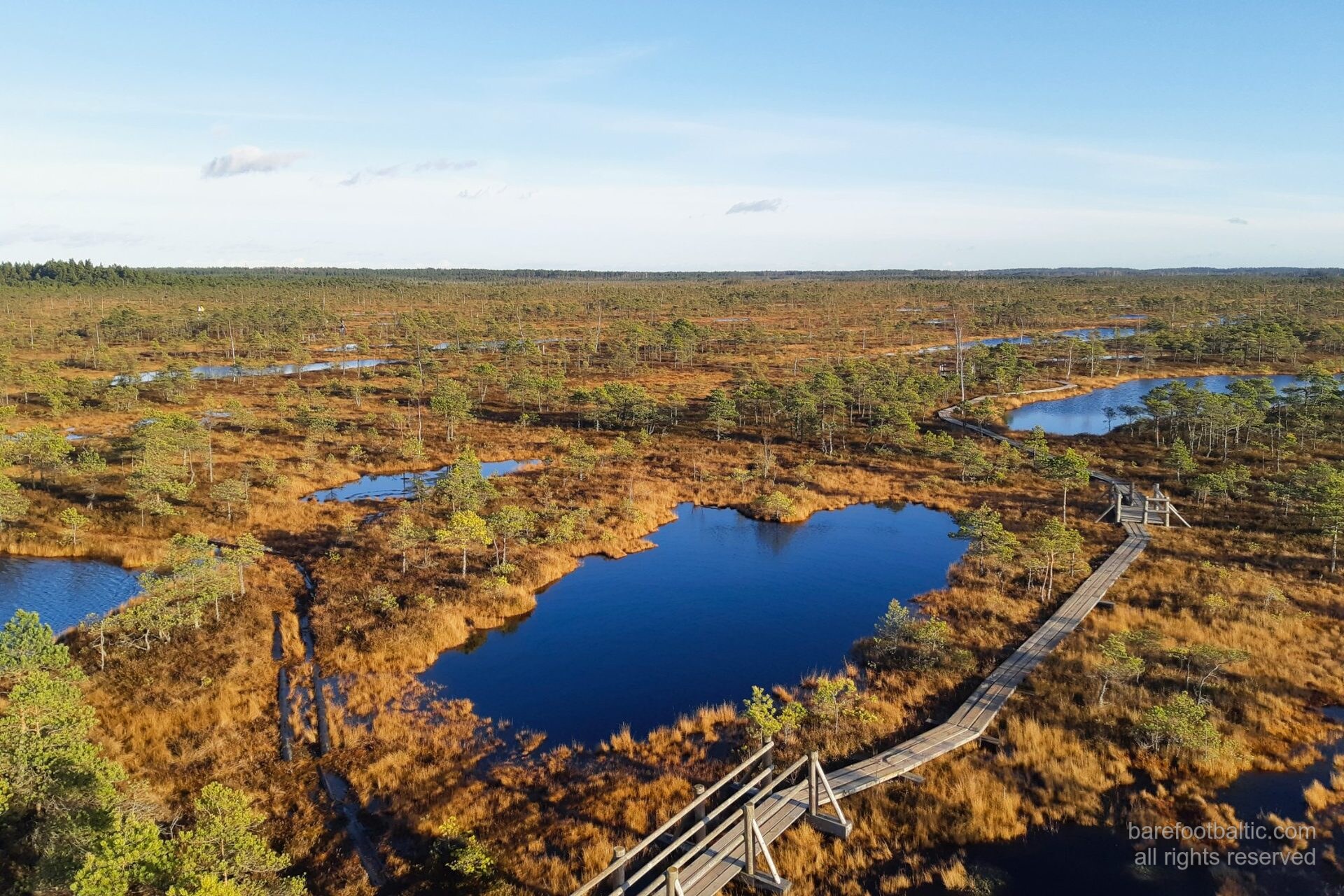
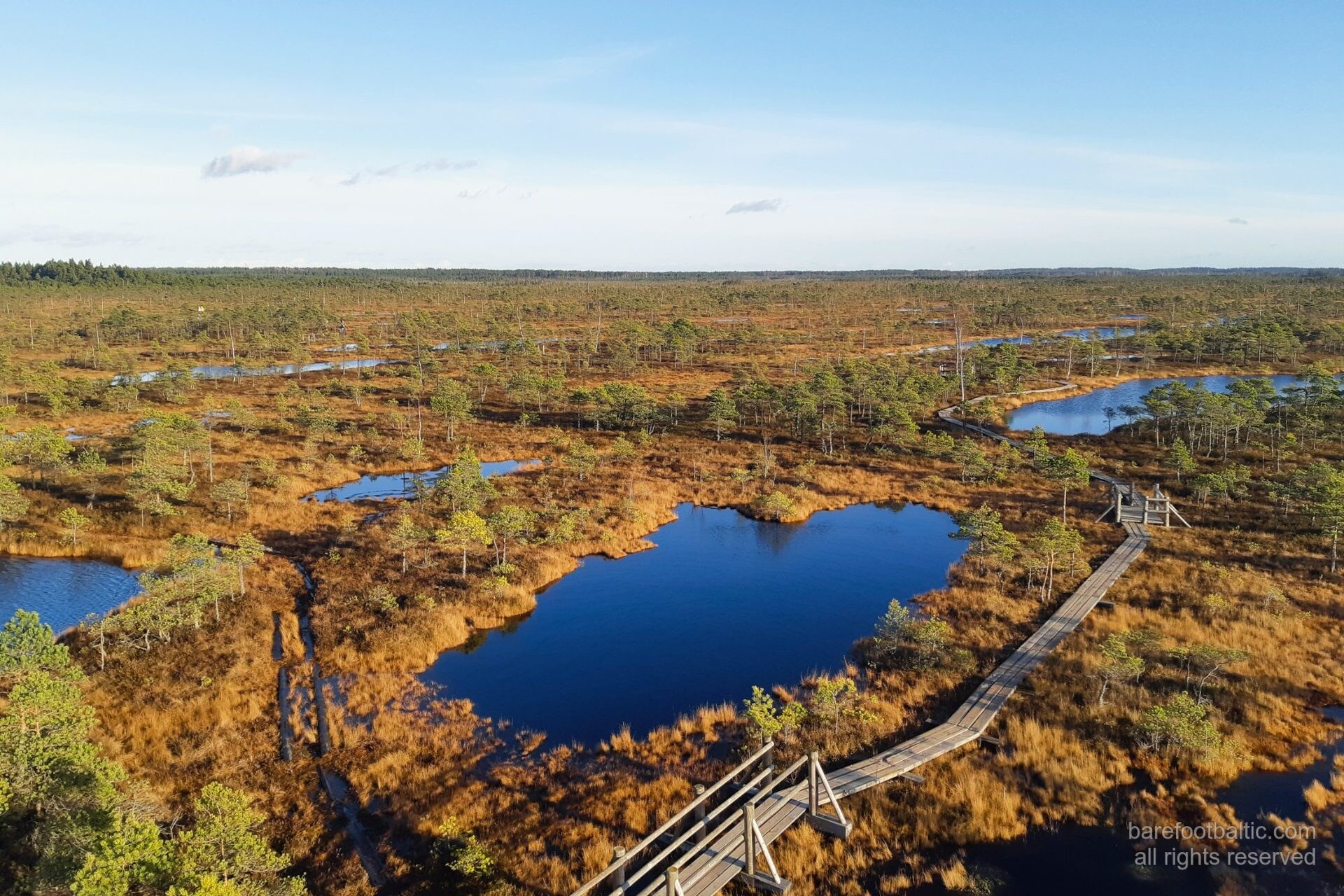
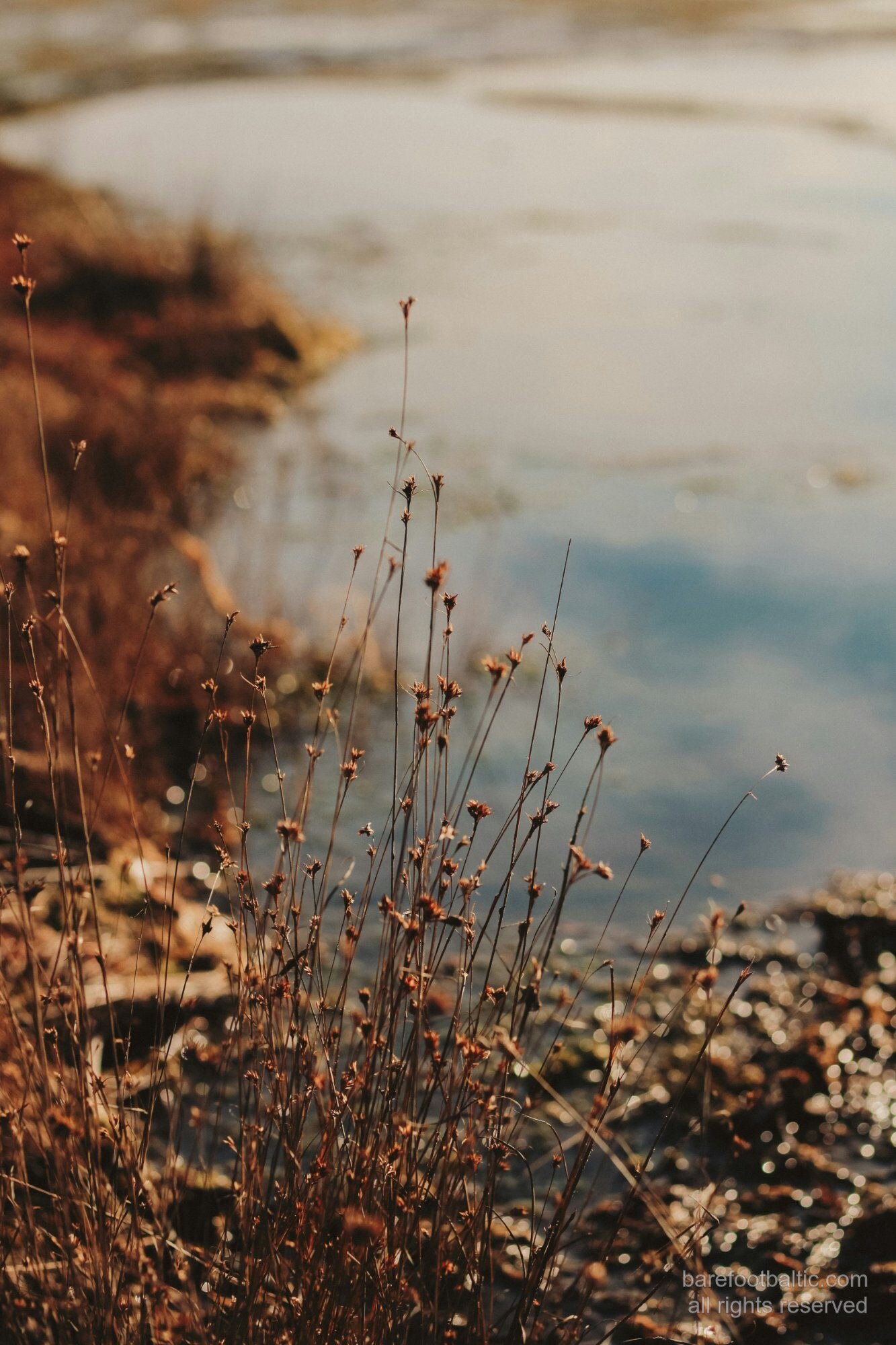
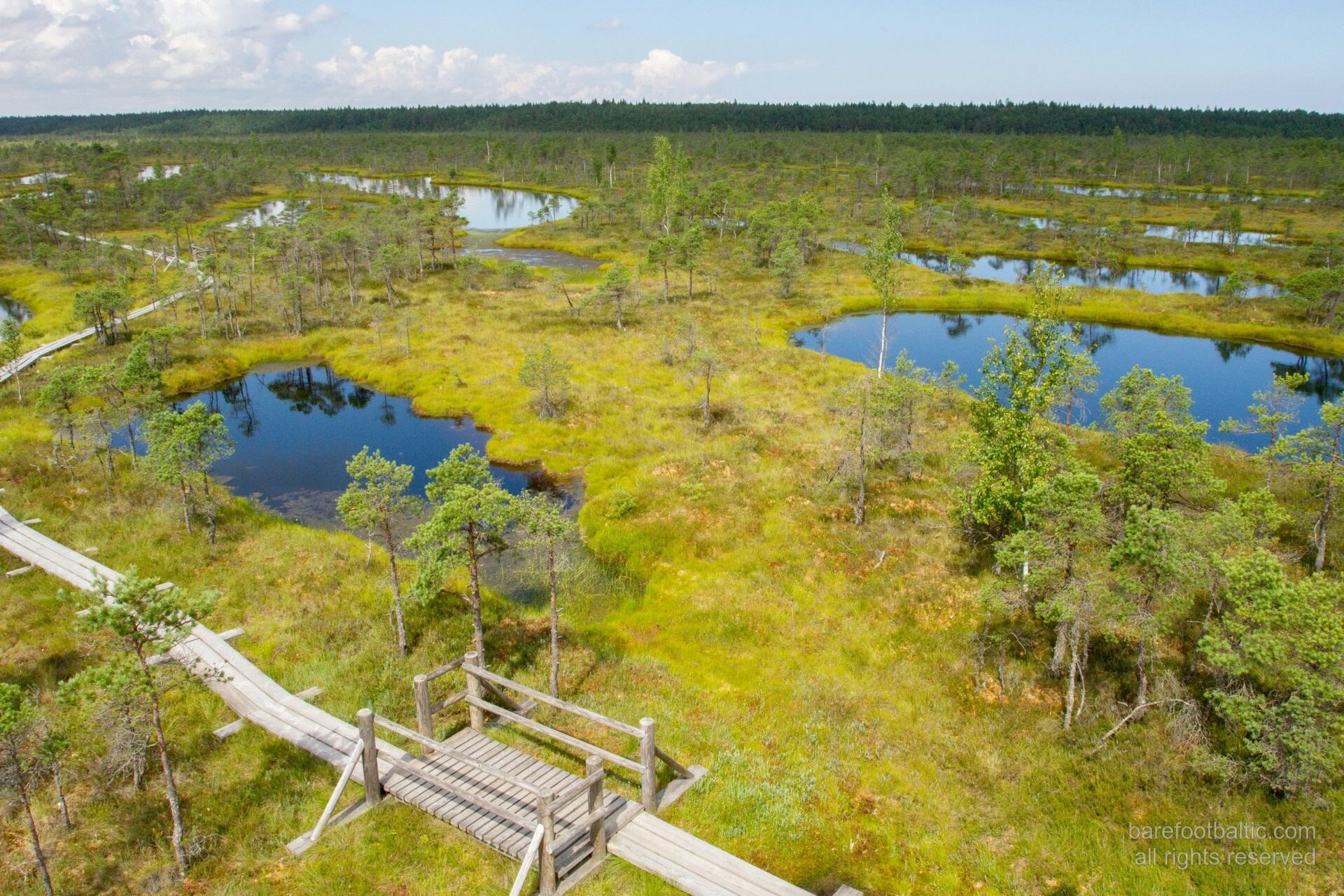
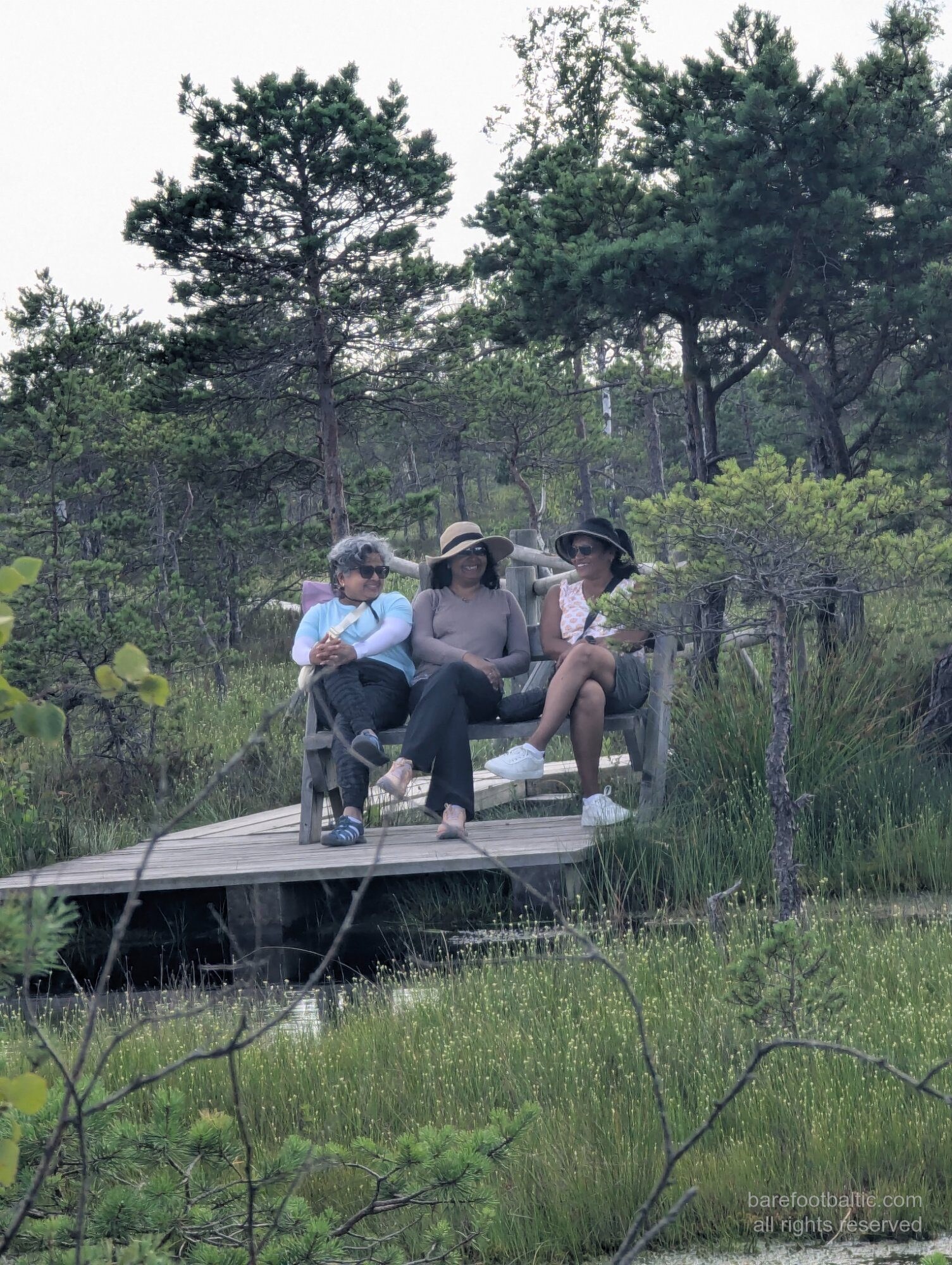
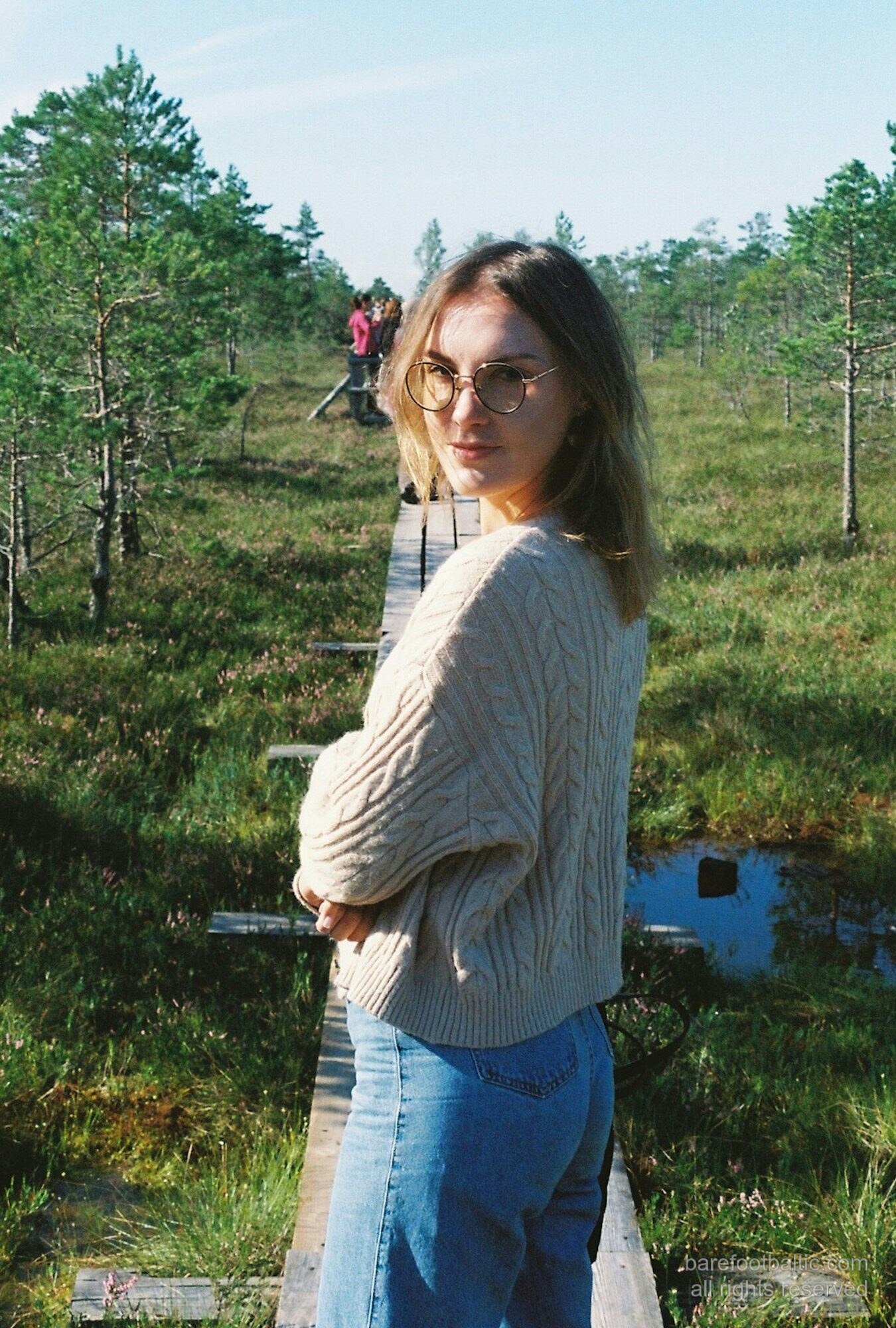
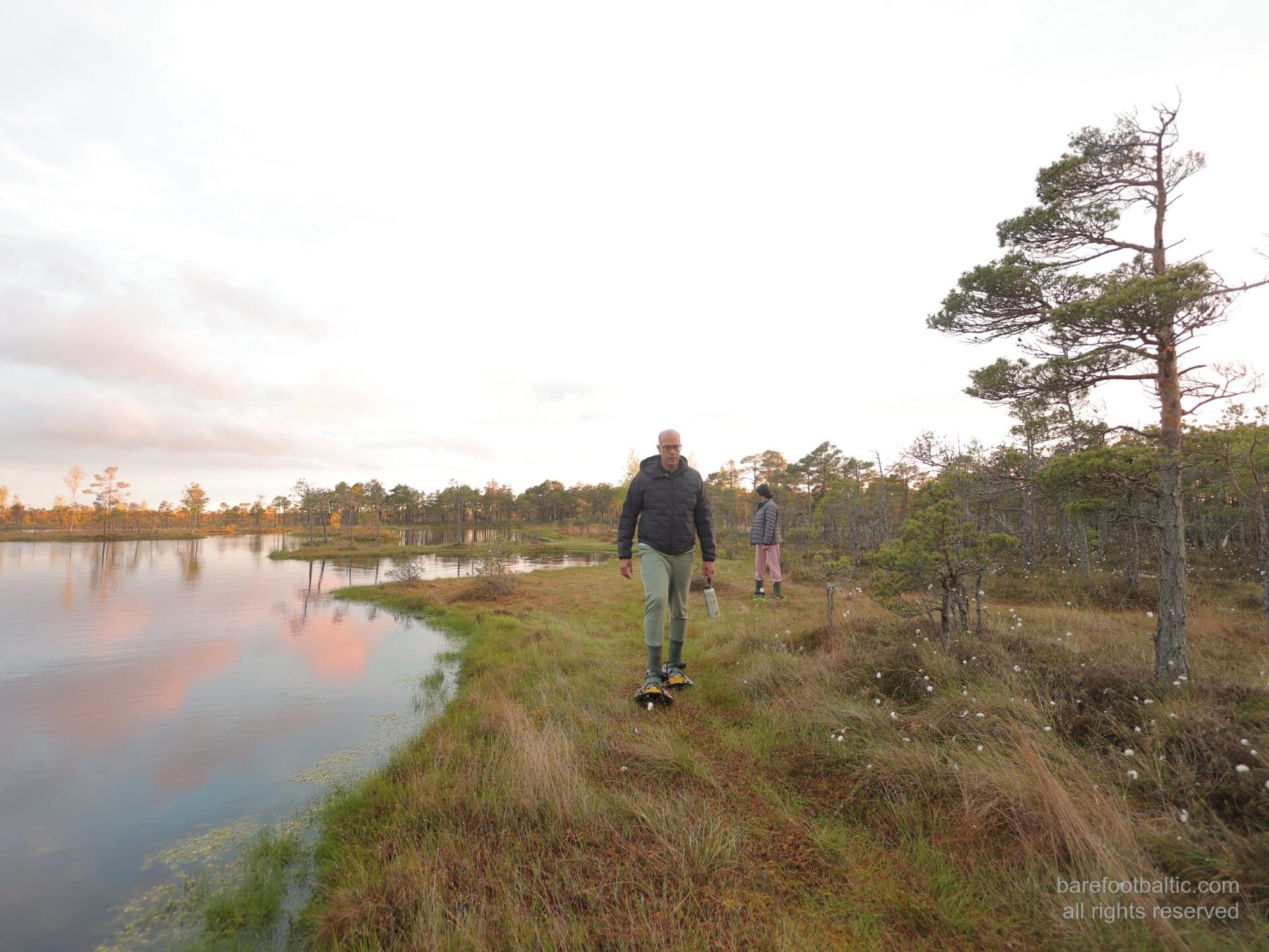
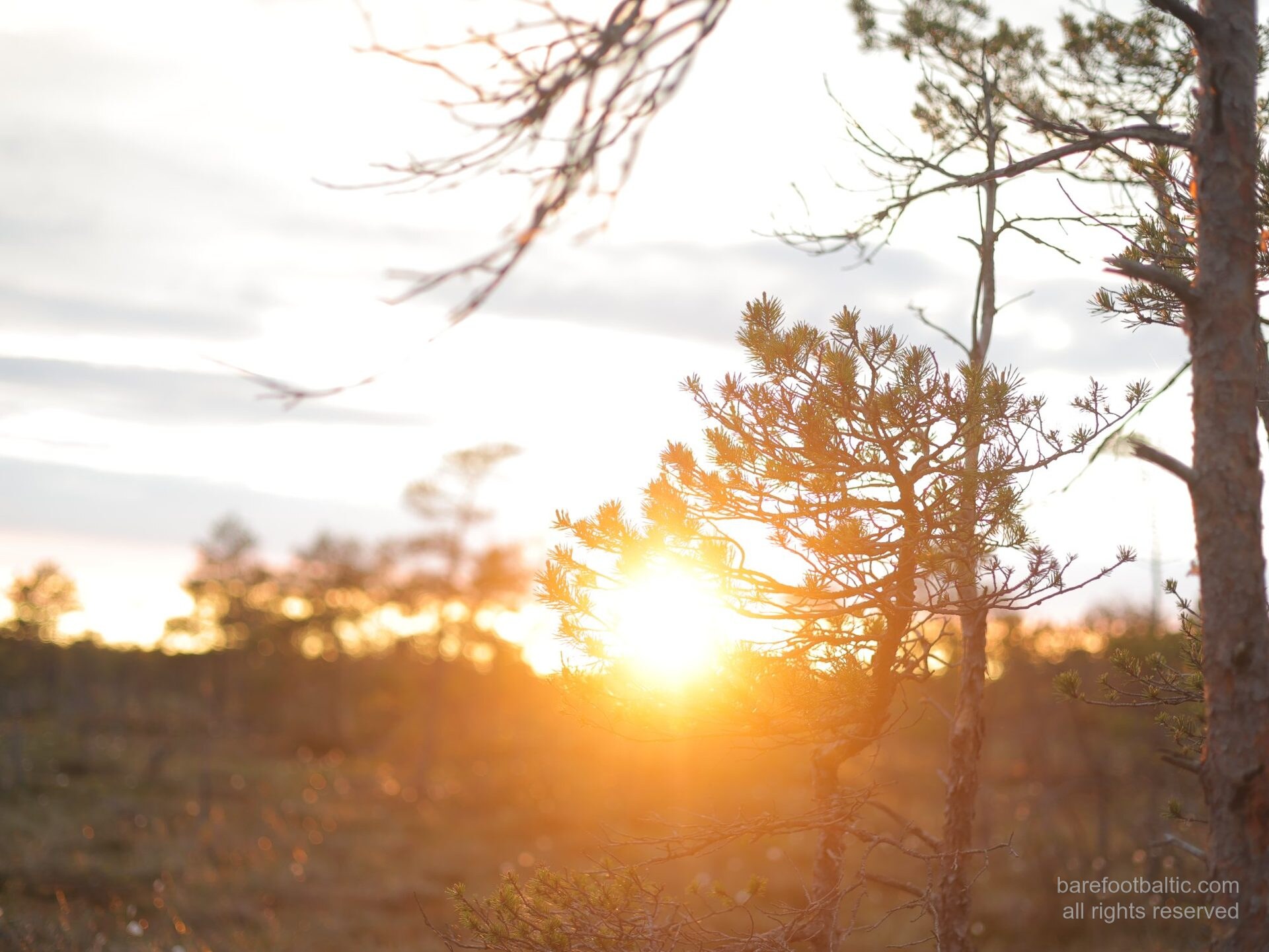
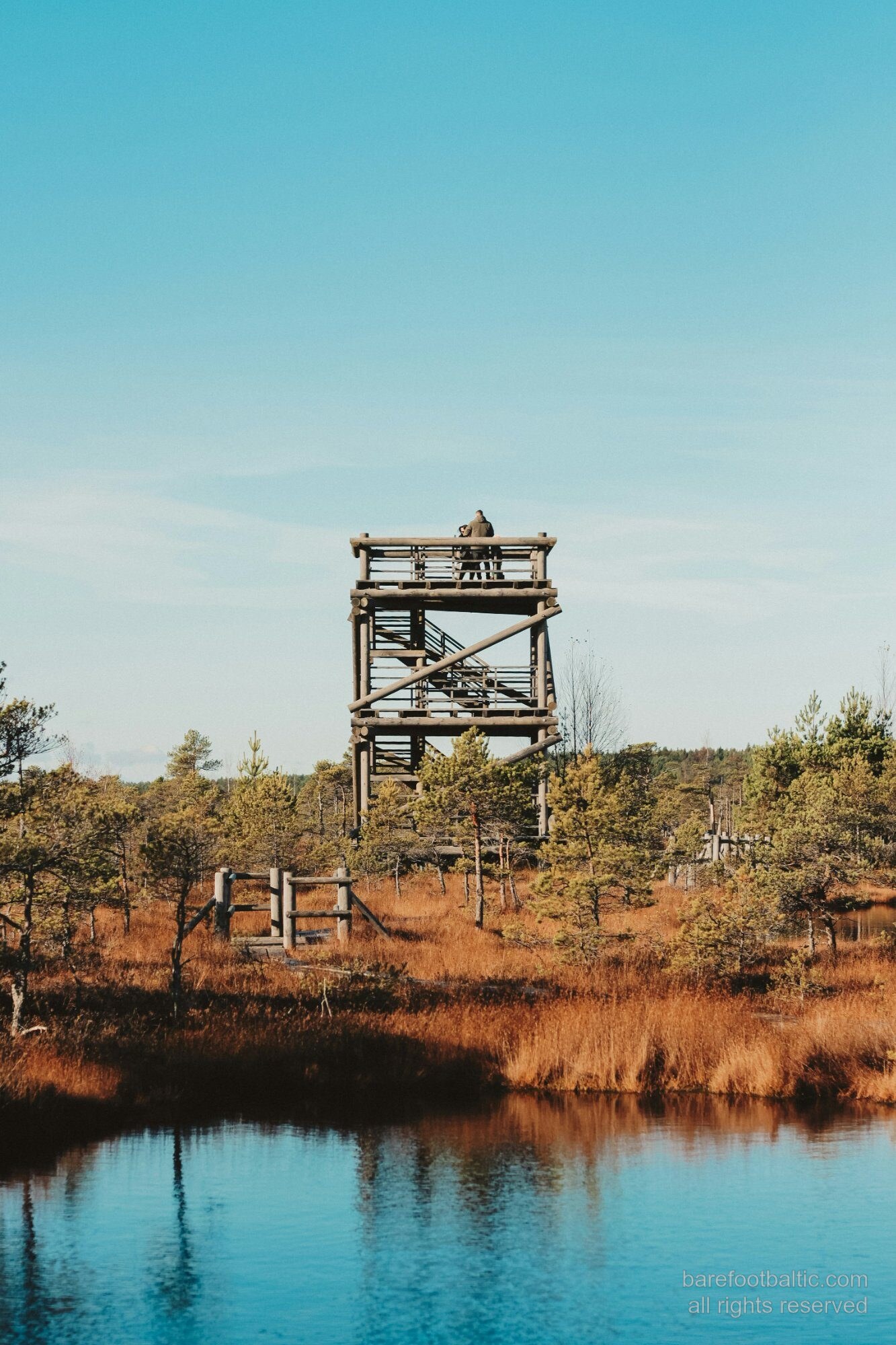
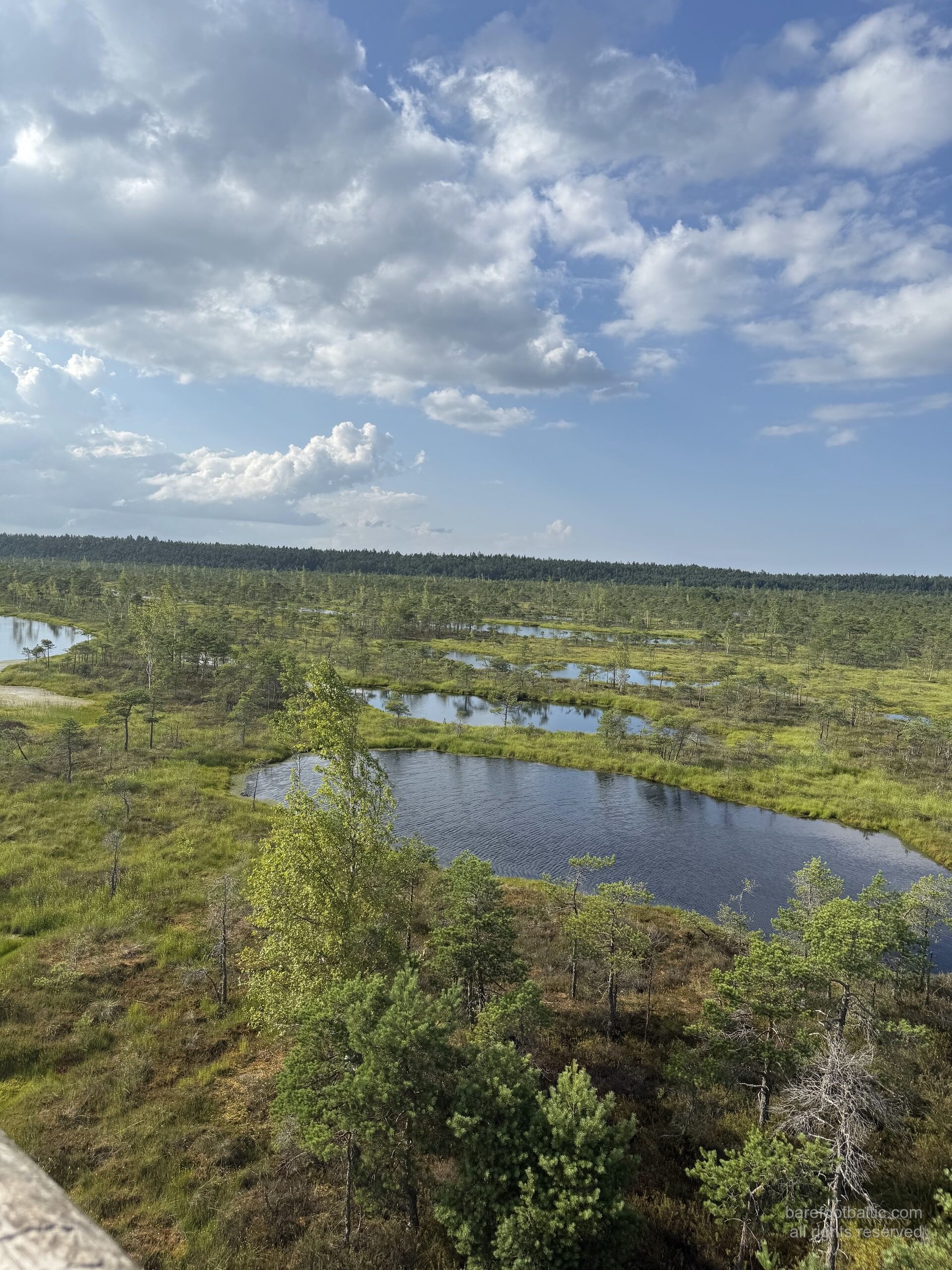
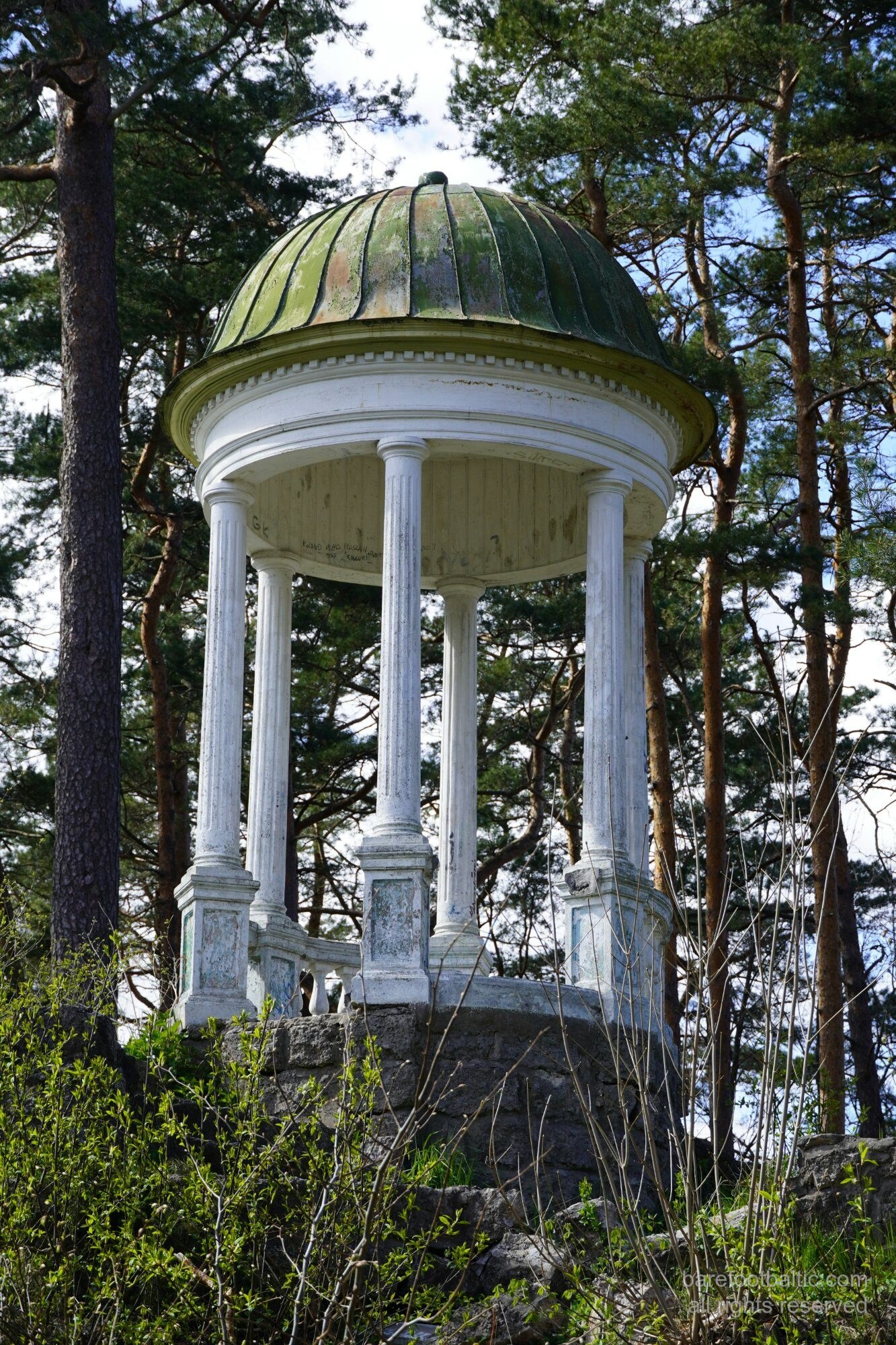
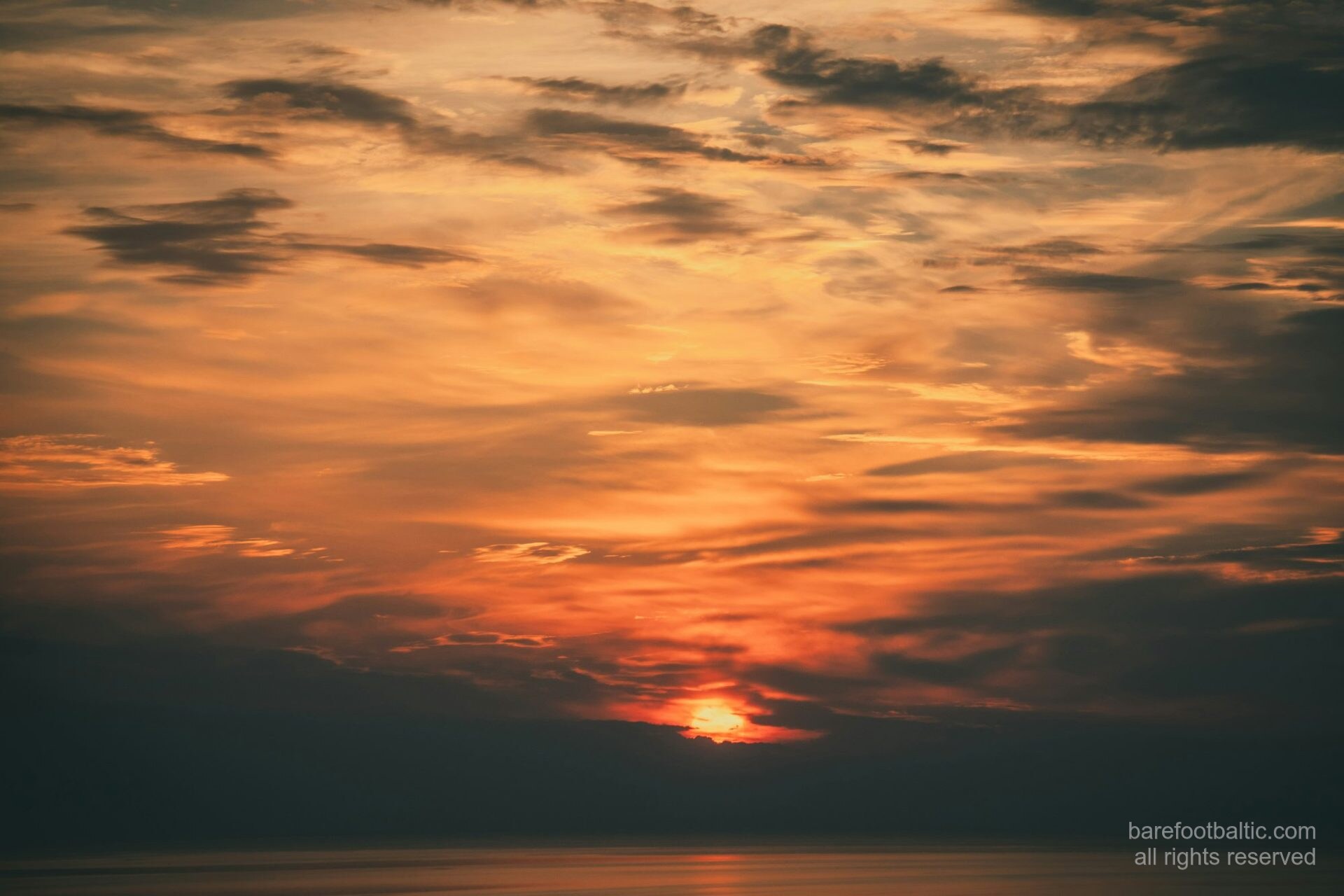
Fourteen autumn photographs. Rust-coloured dwarf birch, golden grasses, low light over the ponds, the watchtower, and the spa-town rotunda.
Short answer, read this first
- Yes, Ķemeri bog is worth visiting in autumn. Arguably the second-best window of the year after June sunrise. The colours are different, the crowds are gone, the light is gentler, and the bird migration is happening.
- Peak autumn colour runs roughly from the third week of September to mid-October. The dwarf pines turn copper, the sphagnum moss goes rust-red, and the dark mirror pools reflect amber instead of silver.
- Two hard rules for DIY visits. Bring strong mosquito repellent and a head net even in autumn. Ķemeri has a serious mosquito reputation year-round, worst at dawn and dusk. And never, never step off the boardwalk without bog shoes and a local guide who knows the terrain. A raised bog hides deep pools under the moss carpet, and people sink. This isn't hypothetical.
- Golden hour mist is the landscape photographer's holy grail here. You need the right autumn morning, after a clear still night, with a calm sunrise and cold air. When it lands, the bog gives you a version of itself that very few European landscapes can match.
- Autumn is the best birding window of the year, with cranes, white and black storks, and raptors staging through the park during migration. The observation tower is the best single vantage.
- I don't run the Ķemeri sunrise tour after August, and I'll explain why below. The autumn bog is a DIY or specialist-guided experience, not one I commercially guide.
- If you're in Latvia in autumn and you want a guided day, the Sigulda and Cēsis day and the Rundāle Palace day both run year-round and are at their best in late September. I'll point you at those instead.
What autumn does to the bog
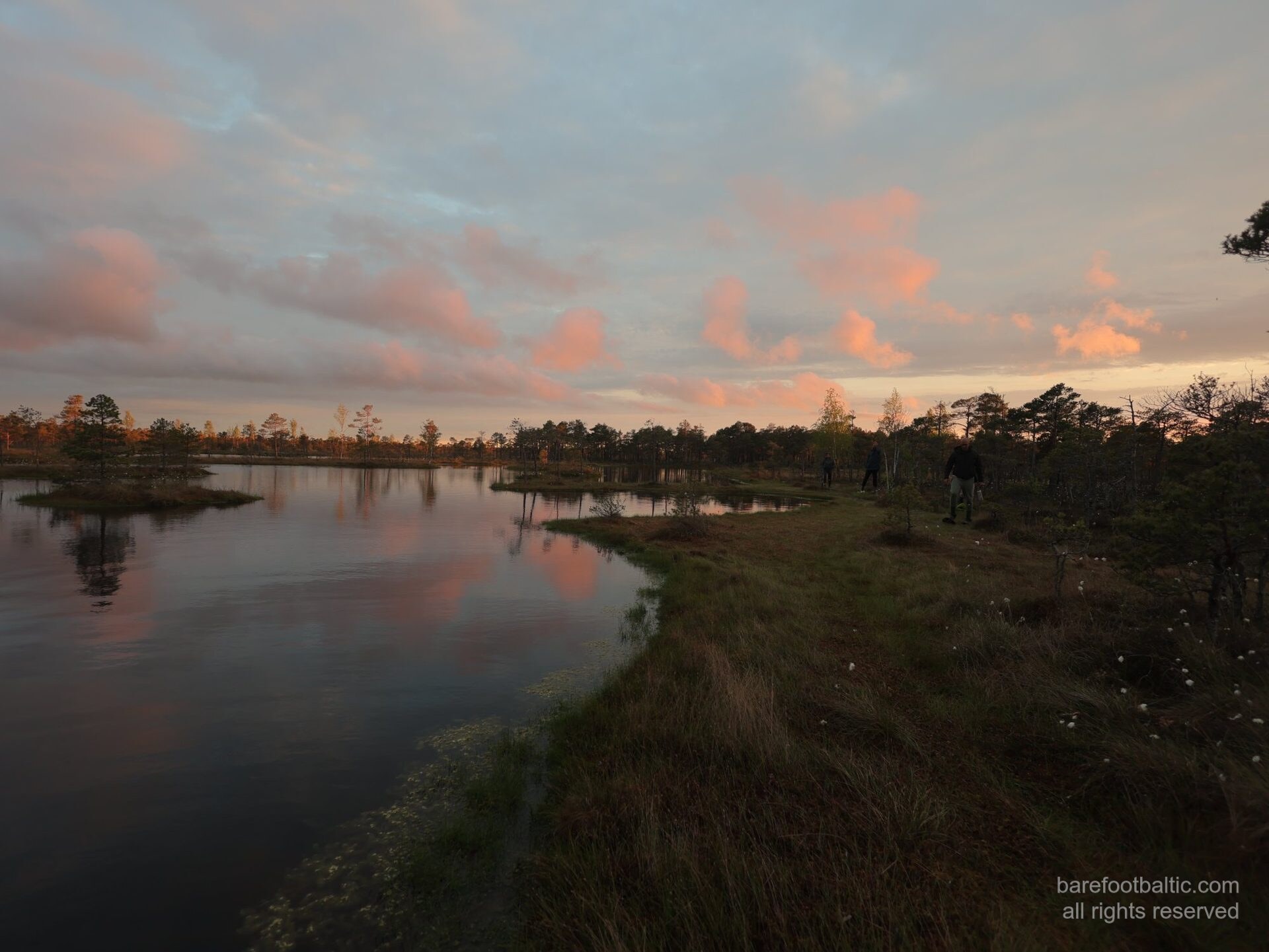
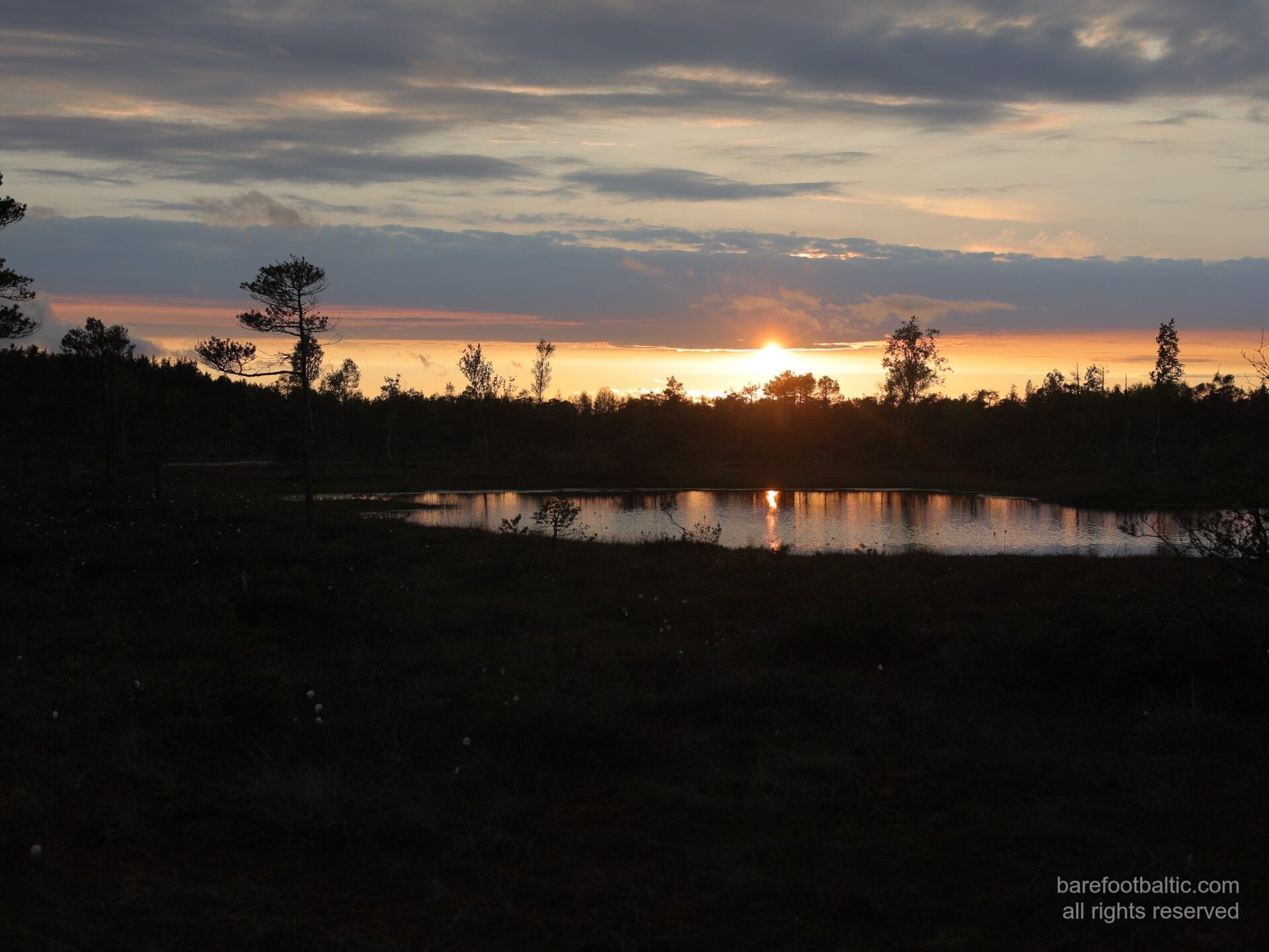
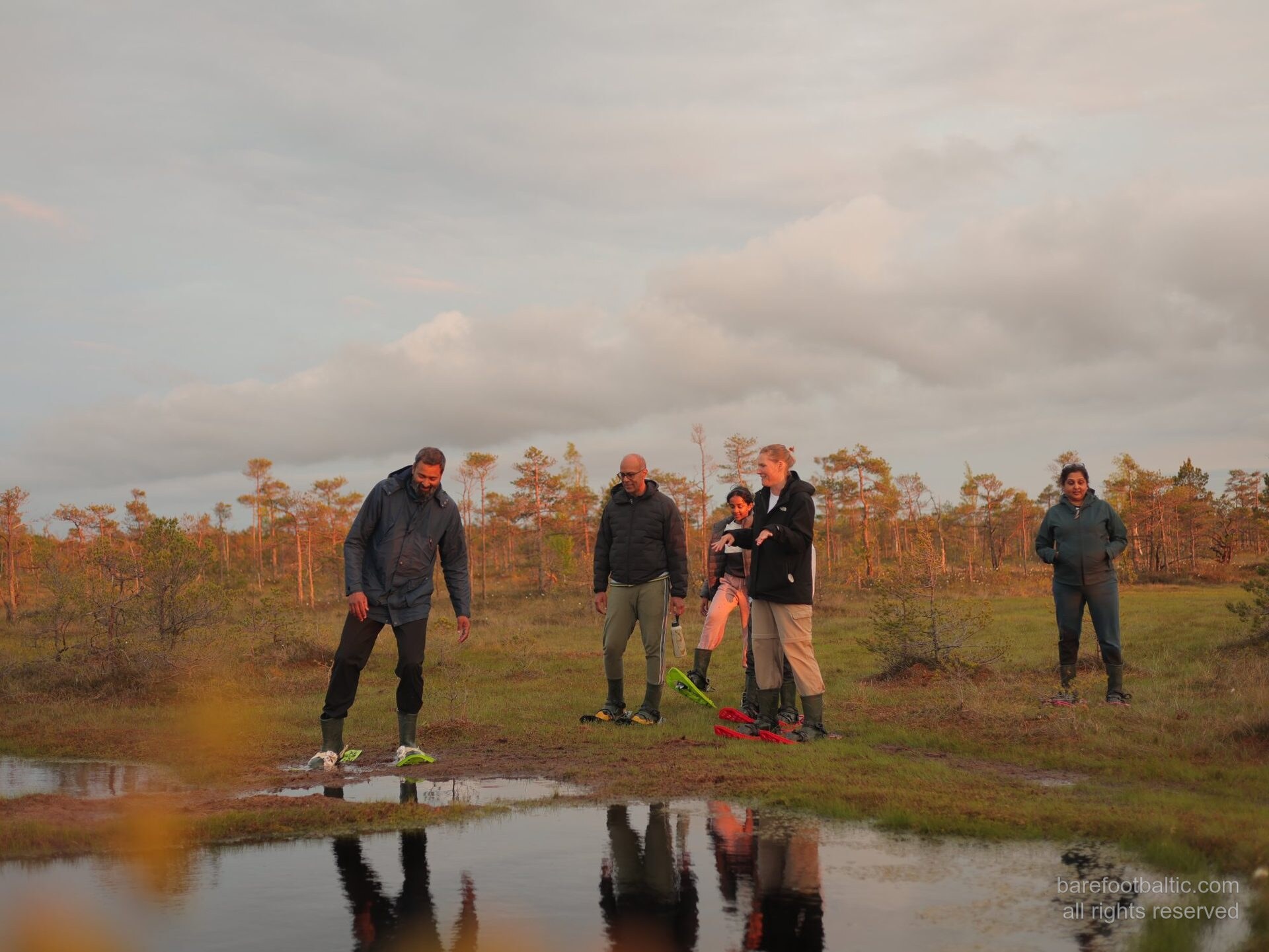
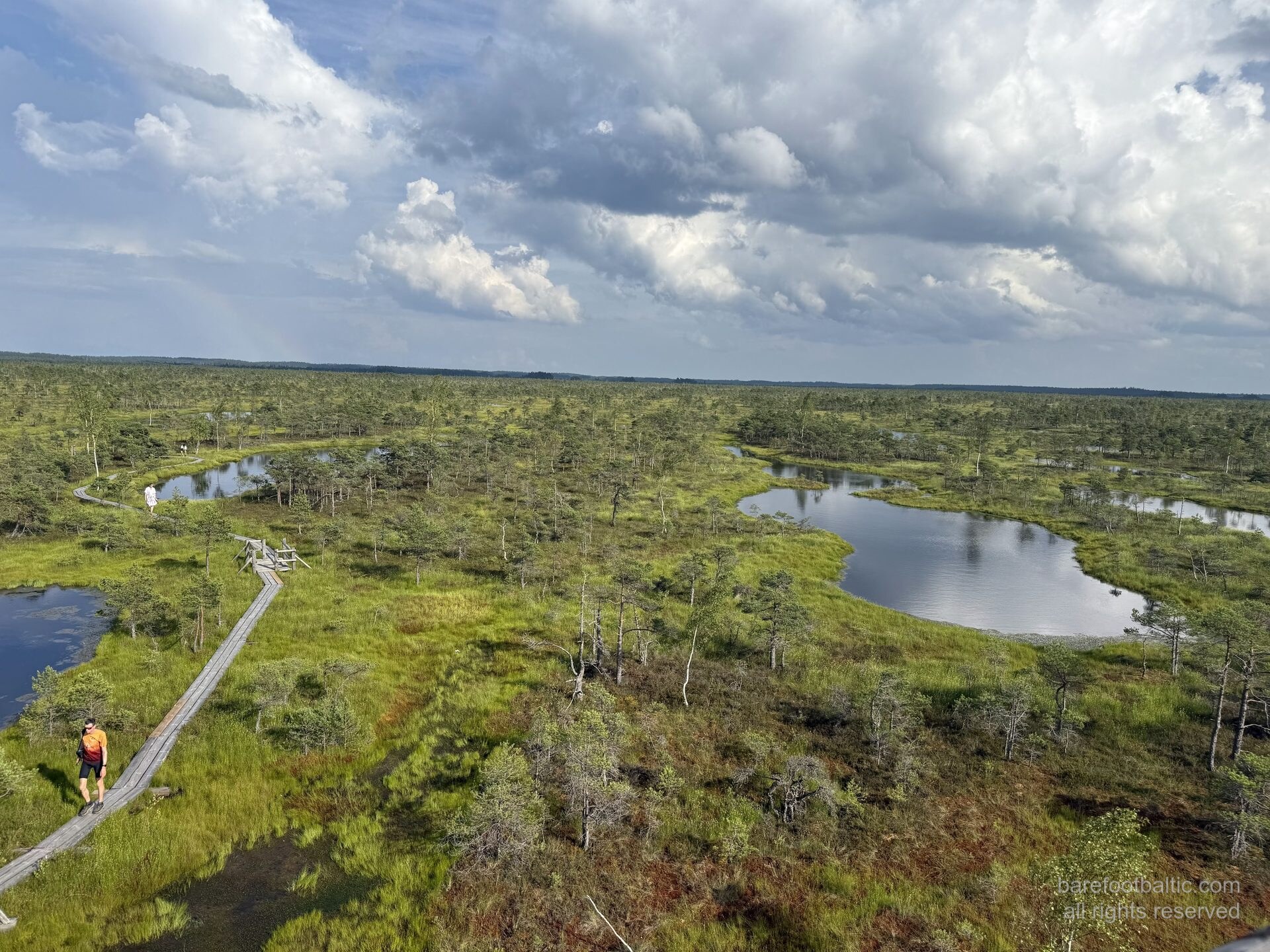
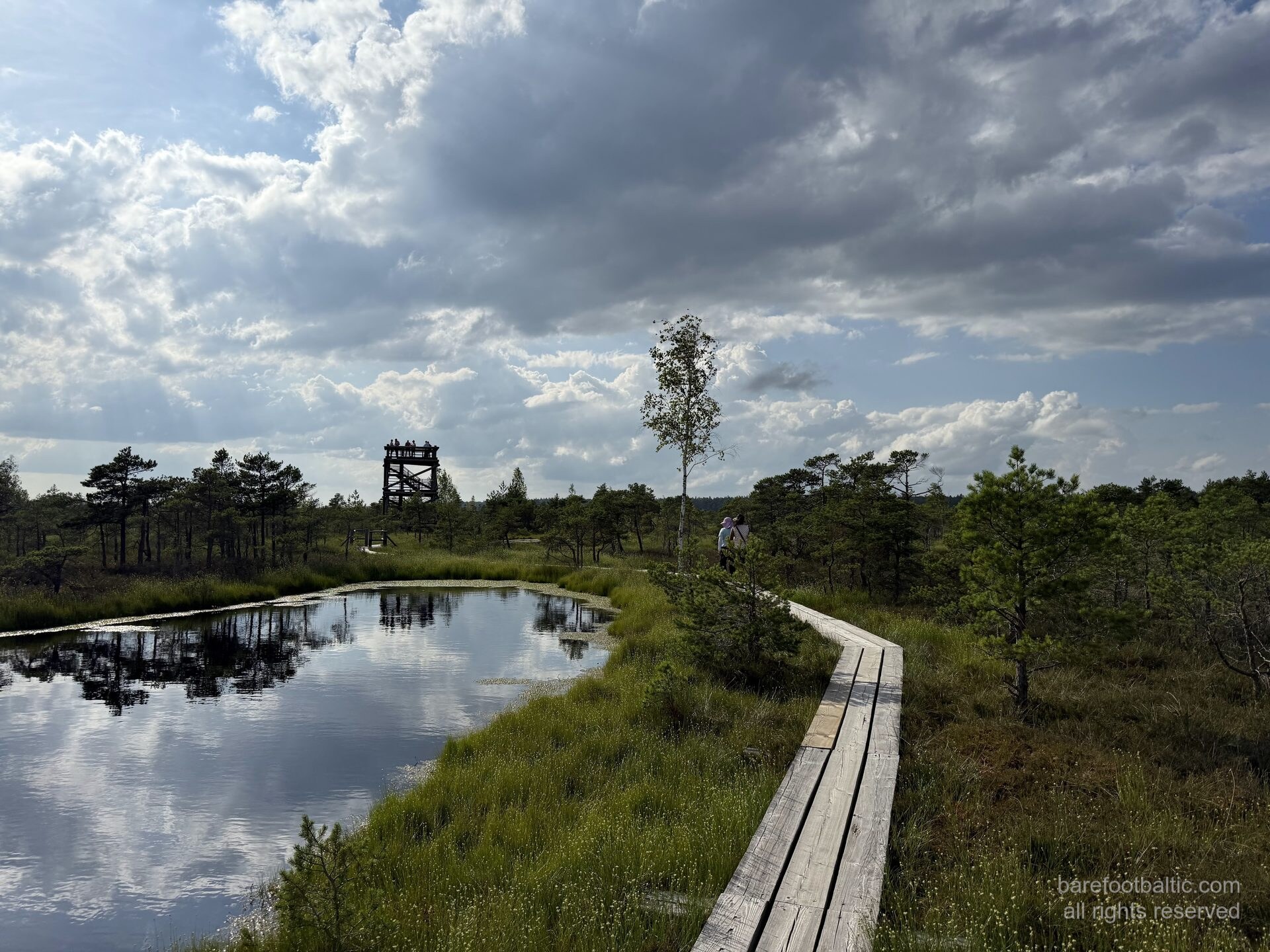
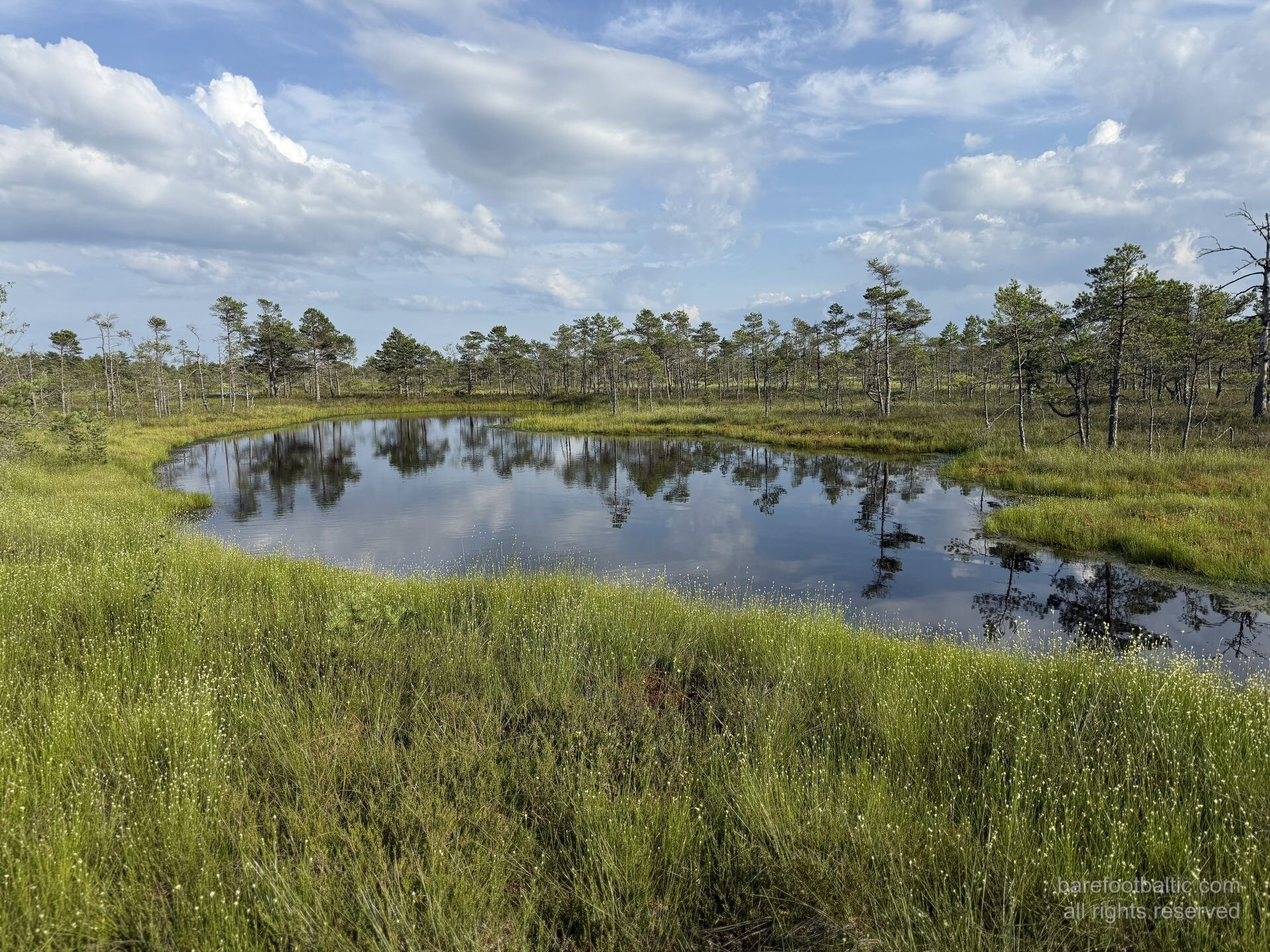
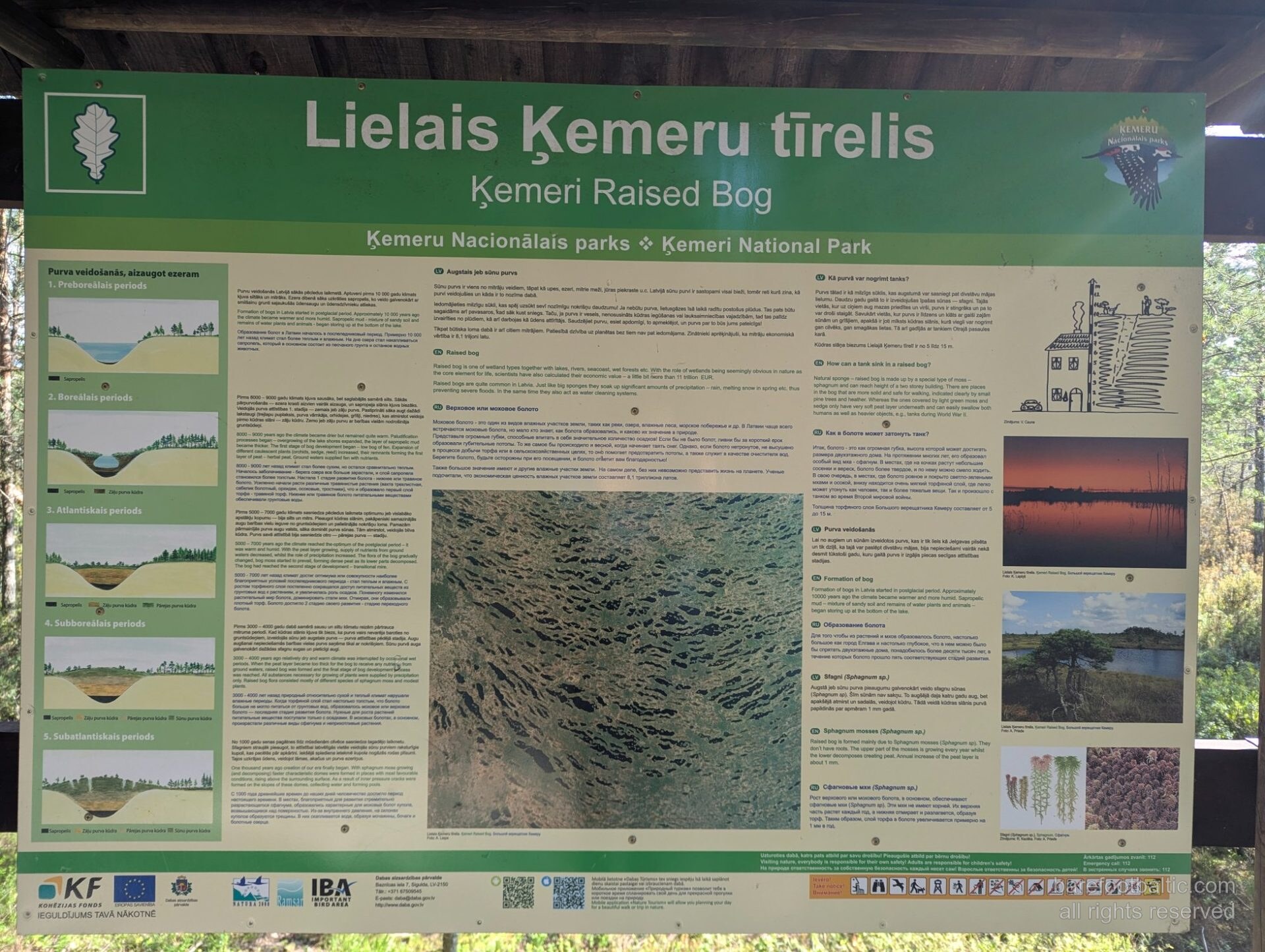
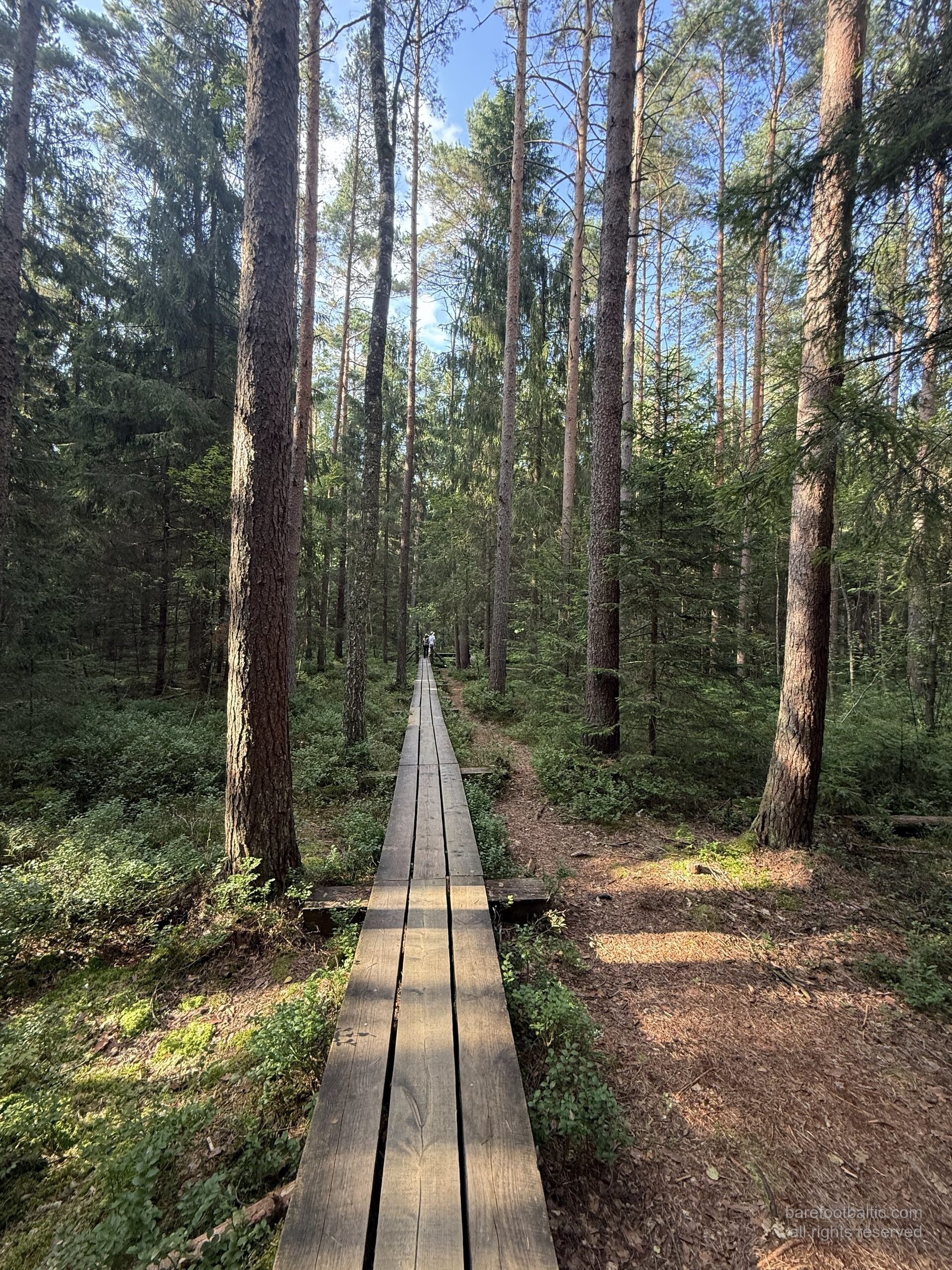
Nine photographs of the autumn shift. Copper pines, rust-red sphagnum, mist on dark ponds, and the dawn light photographers come for.
You may have seen the June version of Ķemeri. Mist lifting from dark pools in pale golden light, a knee-high forest of dwarf pines under a pink dawn sky. Autumn is not that. The shift happens over a few weeks in September, and the transformation is complete by the first week of October.
The sphagnum moss is the biggest change. For most of the year it's a soft muted green, almost grey in some lights. In late September it starts to turn rust-red, then a deeper copper, and by mid-October the whole bog floor has gone from the colour of dry winter grass to the colour of a rusting iron roof. It's the single most visually striking autumn shift I've seen in a Latvian landscape, and it happens quickly, often within ten days.
The dwarf pines shift more slowly. They're evergreen species, so they don't drop their needles or turn fully the way deciduous trees do, but the new-growth tips go copper and the older needles darken toward a kind of bronze. Against the red sphagnum floor, they look a bit like a rust-coloured coral reef from above.
The pools, the famous mirror-dark bog eyes, stay as dark as ever, but now they reflect copper instead of pink. On a clear autumn morning the combination is almost synthetic-looking, like someone has saturated the colours in a photo editing app. It is in fact what the place looks like. I spent a long time not quite believing my own eyes the first few autumns after I came back to Latvia.
The air changes too. Summer mornings at the bog smell of sphagnum and sun-warmed pine. Autumn mornings smell of cold peat, wet moss, and the first leaf mould drifting in from the surrounding forest. It's a different sensory experience, quieter and more grounded, and I think it's underrated.
Stay on the boardwalk. The one hard rule
I'm going to be direct about this because I've seen it misunderstood too many times. A raised bog is not firm ground. The surface you see from the boardwalk is a soft carpet of sphagnum moss, knee-high pines, and tufts of cotton grass, and it floats on top of a peat layer that can be eight metres deep, saturated with water, with open pools hidden between the vegetation. The weight distribution works for a sphagnum plant and a dwarf pine and a sundew. It does not work for a human walking without specialised equipment.
Step off the boardwalk without proper kit, and one of three things will happen. On firmer sections the moss flexes under you but holds. You sink ankle-deep into cold water, uncomfortable but fine. On average sections the moss gives way and you sink to your knees or thighs. Frightening, usually extractable with help. On the worst sections the moss gives way to a pool hidden under a thin mat of vegetation, and there's no reliable way to tell from above which sections those are. You will not touch the bottom.
There are anecdotal stories in the Baltics about heavy military vehicles sinking in bogs. A NATO tank lost during an exercise, a Soviet-era lorry, a horse and cart from the 19th century, soldiers who went down with their equipment. Some are exaggerated in the telling and some are true, but the underlying fact they're all built on is real. A raised bog can swallow things that look much too heavy to sink. What's true for a tank is even more true for a person in wellies.
The traditional Latvian solution is bog shoes, called purva kurpes in Latvian. They're wide lightweight frames that strap over your normal boots and spread your weight across the moss so you can walk on the surface instead of breaking through it. They work. They're a clever piece of folk engineering. The shoes are only half of it, though. What keeps guided groups out of trouble is local knowledge of which sections of the bog are safe to cross. A guide who grew up with this landscape knows where the stable moss is and where the deep pools sit under the vegetation.
A handful of Latvian operators run proper guided bog-shoe hiking days at Ķemeri and at other raised bogs around the country. Baltic Nature Tourism is the one I'd send you to if you want the full off-boardwalk experience. They provide the bog shoes, they provide the guide, and they know the terrain properly. There are other Latvian specialist operators doing similar hikes, and most are worth a look if you want to compare. On a guided bog-shoe hike the real thing you're paying for is the guide who knows where not to walk. The equipment rental is the cheap part.
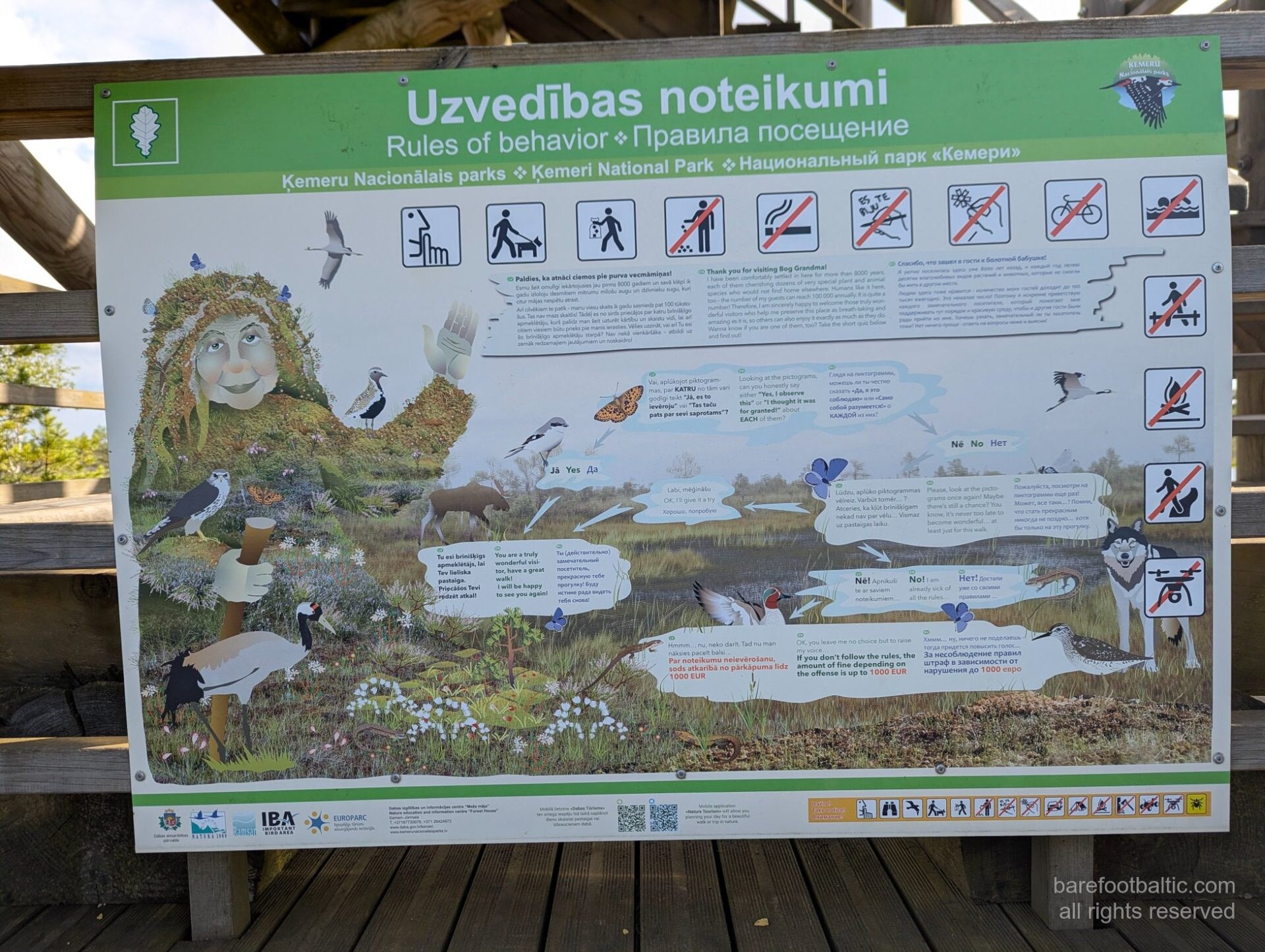
If you're visiting Ķemeri on your own, in any season, stay on the boardwalk every single time. The boardwalk is beautiful, it's long enough for a proper walk, it takes you past the best photogenic spots, and it keeps you alive. I don't usually write in that tone but in this one case I mean it literally.
Barefoot Baltic does not currently run a bog-shoe hiking product. We run the Ķemeri sunrise boardwalk tour in summer, which is a different kind of experience. You stay on the boardwalk with a guide, you see the bog in the best light, and you don't need specialised equipment. If you want to step onto the moss itself, book a bog-shoe hike with an operator that specialises in it. If you want the sunrise boardwalk experience, come back in May through August.
The wildlife, the carnivorous plants, and the birds
The bog is a specific kind of ecosystem, and it's easy to walk through it reading "pretty landscape" and miss the biology that makes it work. Here's what to look for, particularly in autumn.
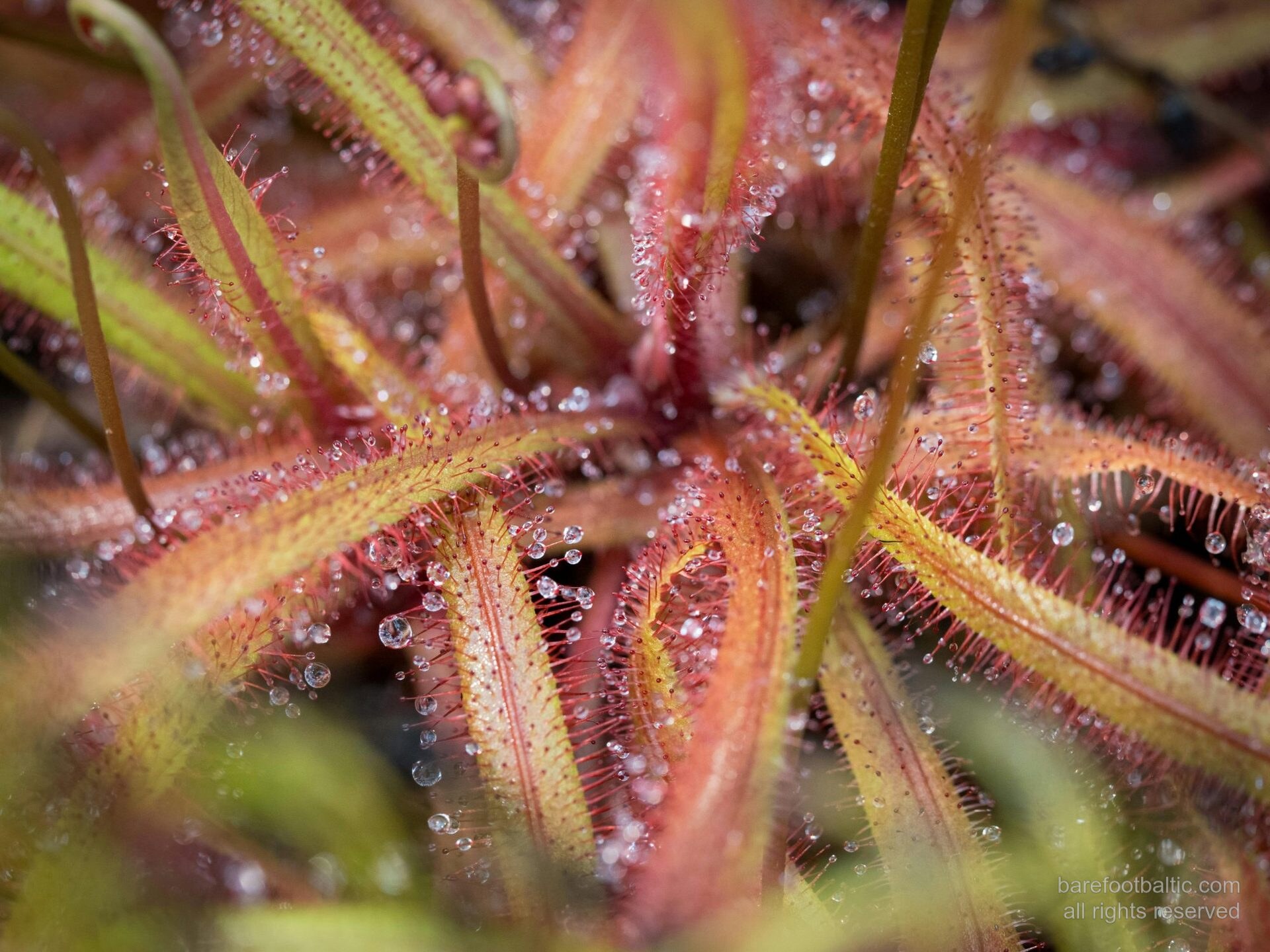
The sundew. The most famous resident of Ķemeri, and easy to walk straight past, because it sits low and small right at your feet. Sundew (Drosera rotundifolia) is a small carnivorous plant that grows right alongside the boardwalk, low to the ground, with a rosette of leaves covered in bright red tentacles tipped with what look like dewdrops. The drops are a sticky glue. When an insect lands it can't leave. The tentacles slowly curl inward over minutes or hours, and the plant digests the insect with enzymes released from the leaf surface.
The ecology is the story. Raised bogs are so acidic and so nutrient-poor that normal plants can't survive in them. There isn't enough nitrogen in the peat to build proteins, because everything that falls into a bog gets preserved rather than decomposed. The sundew's evolutionary answer was to skip the soil entirely and get its nitrogen from flying insects. In a landscape where everything is tiny because nothing can grow, the sundew is the apex predator.
Once you've spotted your first one you'll start seeing them everywhere along the boardwalk. Autumn is the end of their active season. The rosettes are smaller by October and many have turned red, preparing to overwinter as a compact bud. You can still see them through the middle of October if you know what to look for. Then they close up, and you won't see the tentacles again until May.
The autumn bird migration. Ķemeri is a birding destination in its own right, and autumn is arguably its best season. Over 190 species have been recorded in Ķemeri National Park. In September and October the park functions as a migration stopover for large flocks of cranes and white storks staging before their flight to southern Europe and Africa. Black storks, which are rarer and more secretive than the common white stork, also pass through the park during migration. The northern and eastern edges of the bog, where it meets the mixed forest, are the most reliable places to spot one.
The observation tower at the mid-point of the Great Ķemeri Bog boardwalk is the best single bird-watching vantage in the park. You stand raised above the flat bog, with 360-degree sight lines, and at dawn and dusk in autumn you can watch flocks circling and staging in numbers that would keep a serious birder happy for hours. White-tailed eagles, Latvia's largest raptor, are resident year-round and regularly seen from the tower. Marsh harriers quarter the bog at low level. Various ducks and waders use the bog pools during migration. For a dedicated birder, a dawn visit to the tower in the first week of October can turn up forty or fifty species in a single morning.
Cranberries and cloudberries. Ķemeri's forest edges and the bog margins are classic Latvian berry country, and autumn is the harvest season. Wild cranberries ripen through September and October, small red berries growing on thin vines through the sphagnum. Latvians have been harvesting bog cranberries for centuries, and you'll occasionally see people with specialised wooden combs working the edges of the bog during the harvest weeks. Cloudberries are rarer but do appear. Picking is permitted for personal use in most parts of the national park, though the core protection zones are off limits.
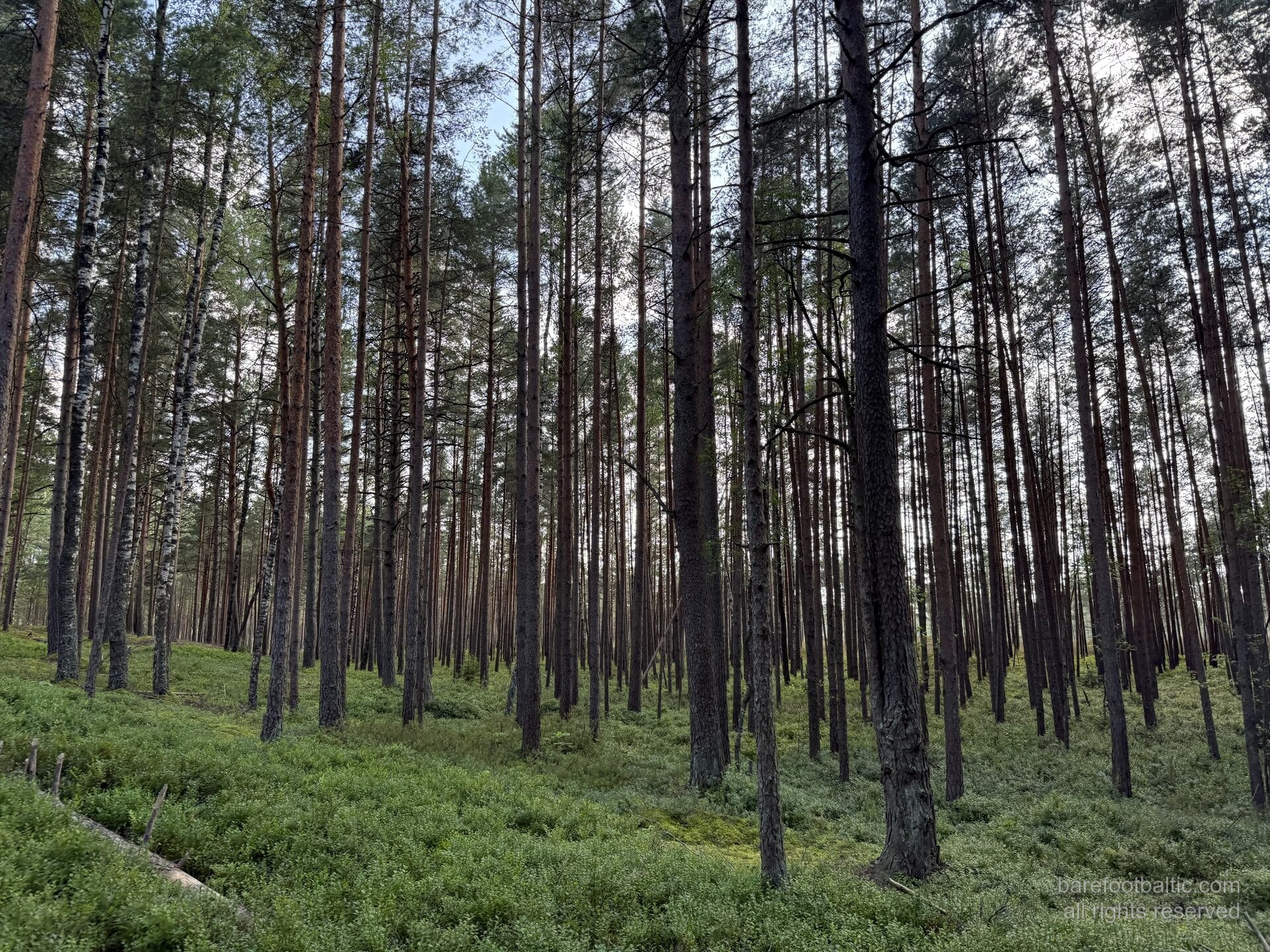
Mushrooms in the surrounding forest. Not in the bog itself, which is too acidic for most mushroom species, but the pine and mixed forest around Ķemeri is prime mushroom country in September and October. If you're driving to Ķemeri, the approach road through the forest is lined with cars in mushroom season, locals parked at random pull-offs with baskets of chanterelles, porcini, and milk-caps. Mushroom foraging in Latvia is a national hobby. A few lookalike species are toxic, so don't pick without knowing what you're doing. You can also buy from roadside sellers near the park if you want the experience without the expertise.
The spa town up the road, and the cosmetics it sends around the world
There's a backstory to Ķemeri that rarely makes the nature-reserve write-ups, and it's worth knowing because it tells you what kind of place this really is.
Ķemeri village, just up the road from the bog boardwalk, was one of the most important spa towns in the Russian Empire in the late 19th century. The Tsarist aristocracy took the trains here from Moscow and St Petersburg for sulphur bath treatments, peat mud wraps, and rheumatism cures. The sulphur comes from the same bog chemistry that formed the landscape itself. The peat and the underlying groundwater here are unusually rich in sulphur compounds, which surface at Ķemeri as natural springs. Royalty travelled a long way for this.
The grand 1930s Ķemeri spa hotel, the "White Liner," so called for its streamlined modernist façade, still stands at the edge of the village, in a long-running state of patient restoration. When it finally reopens, it should become one of the landmark heritage hotels in this part of Europe. In the meantime, smaller spa facilities in and around Ķemeri continue the tradition with peat mud treatments and sulphur baths at prices a fraction of Western European rates. A morning at the bog followed by an afternoon at a Latvian peat-mud spa is, for some kinds of traveller, the perfect day out of Riga.
The modern side of the same tradition is Latvian natural cosmetics. The country has developed a substantial beauty industry built on peat extracts, wetland plant infusions, and the mineral-rich mud that the sulphur-heavy bogs around Ķemeri produce. Several of the best-known Latvian natural cosmetics brands use peat or bog-derived ingredients in products aimed at sensitive skin and anti-inflammatory skincare. You'll see them in small boutiques in Riga Old Town and on the shelves in supermarkets. Some of what goes into those jars came from the same bog chemistry you walked across in the morning.
I mention this because it helps frame what kind of place Ķemeri actually is. It's a scenic nature reserve near Riga, yes, and it's also a thousand-year-old peat ecosystem with a two-hundred-year history of medical tourism and a living cosmetics industry that still draws on the bog's minerals. Autumn is the quietest season to see all of it, which is part of why it's worth coming.
Why I don't run the sunrise tour after August
This is the question I get asked the most when an autumn traveller discovers our Ķemeri page and realises we're not taking bookings. Here's the answer.
The sunrise tour works because the bog at first light is a specific, reliable experience. In June, sunrise is around 4:30 AM and by 6 AM the golden hour is in full effect, the boardwalk still almost empty. By August, sunrise has moved to 5:30, still civilised, still working. By mid-September, sunrise is 6:45. Respectable. But the light is different now, softer and cooler, without the warm amber of summer. You need to balance a later pickup against the shorter day that follows.
That's fixable. What's harder to fix is that by late September the bog is often overcast or drizzling, which washes out the light we came for, and the probability of getting the payoff version of the trip drops from about 85% in June to maybe 50% in early October. I'd rather not run a tour where half the departures don't deliver the version of the bog I told you to expect.
The economics stop working too. Autumn demand for this specific early-morning bog trip is low. September and October travel in Latvia tends to centre on Old Town Riga and the Gauja Valley autumn colour, and a 4-hour round trip to a bog in the dark is a niche within a niche. Running a minibus with two passengers on it isn't a sustainable way to be in business, and I'd rather stop running the trip than half-run it.
The third reason is the most honest one. I like the June-August version of this trip and I don't want to dilute it. The sunrise tour is the thing I'm best at, the version of the bog I know by heart, and the experience I want on my tour reviews. An autumn version would be a different product, with different reliability, and I'd rather point you at the DIY version and tell you how to do it properly than run a compromised commercial version.
So that's the admission. The autumn bog is beautiful, it's just not something I sell.
Is it still worth going on your own in autumn?
Depends on what kind of traveller you are and how you feel about a slightly less hand-held day.
If you're comfortable with DIY travel and happy to organise your own transport, yes, definitely. The boardwalk is free, open 24 hours year-round, and the autumn colours are photograph-worthy for about three weeks. You won't have the pastel-pink sunrise of the June tour, but you'll have empty boardwalks, rust-red moss, bird migration, and a quieter kind of beauty that the summer crowds never get, because they came in July instead.
For a guided, organised, relaxing day, autumn Ķemeri is probably not the right fit unless you specifically book a bog-shoe hike with an operator like Baltic Nature Tourism (who run these year-round with their own equipment and local guides). The best guided autumn day I can personally offer is the Sigulda and Cēsis day, which is a completely different trip but is extraordinary in the last two weeks of September and the first two of October.
Photographers, this one is for you. Autumn Ķemeri is the secret window the landscape photography community has been quietly visiting for the last few years. The mist, the colour, the low-angle light, and the absence of other people make it special. More on this in the photography section below.
Bird-watchers should come now. Autumn is unambiguously the best season at Ķemeri. Migration stopover is a once-a-year window that summer visits miss entirely. Come in the last ten days of September if you can.
The autumn calendar, week by week
Early September. Still summer-green. Temperatures in the mid-teens, occasional warm afternoons. The first hint of colour in the pine tips but nothing dramatic yet. Mosquitoes are still active, particularly at dawn and dusk, so bring repellent and a head net. Tourist numbers are dropping fast. A good window if you want the summer version of the bog without the crowds.
Mid-September. The first real colour shift. The sphagnum moss starts going yellow-orange in patches, particularly in the exposed parts of the bog away from the forest edge. Sunrise is around 6:45 AM, sunset around 7:30 PM. Light is already softer and more autumnal. Mosquitoes are starting to drop off but not gone. First migrating flocks appearing over the observation tower.
Late September to early October. Peak window. Full rust-red sphagnum, copper-tipped pines, dramatic temperature differential between cold nights and sunny afternoons meaning theatrical mist in the first hour after dawn. Peak bird migration. If you can time your visit for this three-week stretch, do it. The weather is still mostly dry, the boardwalk is firm underfoot, and the light between 7 AM and 10 AM is the version of the bog photographers come for. Mosquitoes diminishing but still present until the first hard frost.
Mid to late October. Past peak colour, but still beautiful in a darker, more wintry way. First frosts coming through, which finally clears the mosquitoes. Boardwalk can get slippery on frosty mornings. Daylight shortening rapidly. The forest approach road starts dropping leaves. A good window for atmospheric black-and-white photography and for travellers who like a slightly melancholy autumn mood.
November. Bare, grey, often wet. The colour is gone. The bog turns back to a muted green-brown, and the sky is usually low and flat. I wouldn't specifically travel to Latvia for the bog in November, but if you're already here and want an atmospheric quiet walk, it's still open and free.
December to early March. Winter. A completely different experience again, which deserves its own post. The bog in snow is extraordinary, but the logistics are harder and the light is shorter. I'll write about winter Ķemeri separately.
Photography in autumn, when golden hour mist is the holy grail
Every landscape photographer who comes to Ķemeri is chasing the same thing. Golden hour light, low mist drifting across the bog pools, and the dwarf pines catching the first rays of sun. On a good morning in autumn the bog delivers this so completely that the photographs look unreal. It's the reason the place has built a quiet reputation in the landscape photography world over the last decade, and it's why photographers keep coming back even when the weather is unpredictable.
Here's the specific thing that makes autumn bog photography work in a way that no other landscape in Latvia can match.
The mist. Bog mist is formed by the temperature differential between the cold pool surface, water that has held overnight cold, and the slightly warmer air above it at dawn. The bigger the differential, the heavier and more theatrical the mist. Summer mornings at Ķemeri produce mist, but gentle and quickly dispersed. Autumn mornings produce something different. Dense, low, knee-high, flowing across the boardwalk, filling the hollows between pools, and turning every foreground into a soft veil. On the best autumn mornings the mist sits on the bog like a second landscape stacked on top of the first. For the landscape photographer, this is the image you came for.
The conditions you need are a clear, still night with temperatures close to freezing, followed by a calm, clear sunrise. The clear sky cools the ground overnight. The stillness lets the mist form without being blown away, and the clear morning lets the sunrise light punch through it at a low angle and catch it from the side. Check the overnight forecast before you drive out. If it's going to be windy, the mist won't form properly, and if it's going to be overcast, you'll lose the golden-hour light.
The colour. Rust-red sphagnum moss, copper-tipped dwarf pines, and amber reflections in the dark bog pools. It's a saturated, warm palette that lasts about three weeks from late September to mid-October. A polarising filter helps deepen the pool reflections without washing out the moss. Bracketing exposures is worth it for the dynamic-range challenge between bright sky and dark water.
The solitude. On a weekday morning in early October you'll likely have long stretches of boardwalk entirely to yourself. No one else in your frames, no footsteps on the wooden planks. This is a level of emptiness you cannot get at Ķemeri in June or July even at 5 AM.
Gear notes. A wide-angle lens is ideal, something like 16 to 35mm on a full-frame, or the equivalent on a crop sensor. The compositions that work at Ķemeri are wide foreground-to-horizon sweeps, not telephoto details. A tripod is useful for pre-dawn blue-hour images where shutter speeds drop below a second, and essential if you want to bracket exposures or shoot focus stacks. The observation tower platform gives you a completely different angle from boardwalk level and is worth climbing with your gear. A polariser helps. Graduated ND filters are worth carrying for the sunrise dynamic range.
When to shoot. Be on the boardwalk at least 30 minutes before actual sunrise. The best colour is often in the twenty minutes either side of the sun appearing over the treeline, not after. Once the sun is properly up, the mist burns off quickly and the light flattens. A two-hour window from roughly blue hour through the first hour of proper daylight is the whole photography day. After that, walk back, get coffee in Jūrmala, and come back next time the weather aligns.
One last thing, and it matters. There is no guarantee. Autumn Ķemeri is weather-dependent, and some mornings the mist doesn't form, or the sky is overcast and the sunrise never really happens, or the rain moves in by 9 AM. That's part of the deal. The photographers who consistently come home with the portfolio shots are the ones who visit three or four times over the autumn window and accept that two of those trips will be a walk in the wet. If you can only get out there once, check the forecast the night before obsessively and pick your morning carefully.
How to get there in autumn
All four summer options still work in autumn, but the practicalities shift a bit because of shorter days, colder mornings, and occasional wet weather.
| Option | Autumn cost | Autumn catch |
|---|---|---|
| Self-drive hire car | ~€40 to €60 hire plus fuel | Still the best option for sunrise access. 45 minutes from central Riga on the A10. Headlights essential for the pre-dawn drive. Forest-road leaf fall can be slippery in October. |
| Suburban train from Riga | ~€3 each way | Still cheap. The catch is now bigger. The earliest train that gets you to Ķemeri station arrives around 7:30 AM year-round, which in October means arriving after sunrise and missing the golden window entirely. Good for a midday walk, wrong for photography. |
| Taxi or Bolt from Riga | ~€50 to €60 each way | Works. Pre-arrange a return pickup, because Bolt availability drops sharply outside Riga in autumn evenings. |
| Guided bog-shoe hike | Varies by operator | Available year-round from specialist operators like Baltic Nature Tourism. The only safe way to actually step off the boardwalk onto the moss. Includes bog-shoe rental and a guide who knows the terrain. Different from our Barefoot Baltic sunrise boardwalk tour, which we don't run in autumn. |
| Barefoot Baltic sunrise tour | Not available September to April | We don't run this in autumn, for the reasons above. Back from May 2026. |
One practical thing about autumn visits catches people out. The small wooden car park at the boardwalk trailhead drains poorly, and after a few days of October rain it can be muddy enough that a low-clearance hire car will struggle. Nothing dramatic. If there's been heavy rain, park at the first firm ground and walk the last fifty metres.
What to bring in autumn
- A proper warm layer. Not a fleece, but a real insulated jacket or a down mid-layer. Early autumn mornings on the open bog can feel ten degrees colder than the forecast, because the bog holds cold air and the wind has nothing to slow it down.
- A waterproof shell over the top. Autumn showers in Latvia come in fast and blow through in twenty minutes, and you want to be able to stay on the boardwalk rather than retreat.
- Waterproof footwear. The boardwalk itself stays dry but the forest approach from the car park can be wet, and if you've come by train the 3.5 km walk from Ķemeri station has muddy sections in autumn.
- Gloves and a hat for October mornings. Not needed in early September, essential by mid-October.
- Strong mosquito repellent AND a head net. Ķemeri has a serious mosquito reputation year-round, and autumn does not end the problem entirely. Early September can still be heavy, and even October mornings can have active mosquitoes until the first hard frost. Dawn and dusk are always the worst. A head net that covers your face is cheap, light, and will save your morning. DEET-based or picaridin-based repellent is worth it over herbal alternatives.
- A headtorch or bright phone torch. Sunrise in October is around 7:30 AM, which means you're walking the forest approach or the first section of boardwalk in pre-dawn light. It's safe but you want to see your footing.
- Water and a snack. Nothing is open at the trailhead in autumn. The nearest café is a 10-minute drive back toward Riga.
- A camera that handles low light, if you care about the photographs. Phone cameras at blue hour in October are a stretch. They'll produce something but it won't be the image in your head.
- Binoculars if you're a birder. The observation tower gives you the sightlines. Binoculars give you the species ID. Even a cheap pair will upgrade the visit.
If autumn Ķemeri isn't your day, here's what I do run in autumn
If you're in Latvia in September or October and you want a guided day out of Riga, I'd send you to one of our two year-round excursions instead.
The Sigulda, Cēsis & Gauja Valley day is at its absolute best in late September and early October. The Gauja Valley is the landscape the old German-Latvian nobility called "the Switzerland of Latvia," and autumn is the only season where the nickname almost makes sense. The valley goes amber and copper, the low afternoon light fills the river bend, and the view from Turaida castle tower in the second week of October is one of the best photographs you'll take in Latvia. €94 per adult, €70 per child, small-group minibus. I specifically recommend the late-September to mid-October window if your travel dates are flexible.
The Rundāle Palace day works beautifully in autumn too. The roses are gone, but the September light on the baroque south façade is at its best, the interior rooms feel calmer, and the Gold Hall on a Tuesday morning in October can feel like it belongs to you. The palace is open seven days a week, year-round.
If you're a serious photographer or a nature traveller and you really want the autumn bog specifically, I'd suggest doing Ķemeri yourself on one morning (with a hire car or a pre-arranged taxi, staying on the boardwalk) and then joining our Sigulda autumn day the next day, so you get both the intimate solo bog experience and a properly-guided Gauja Valley autumn colour day. That combination is probably the strongest autumn week you can have in Latvia.
And if what you really want is to step onto the bog itself, rather than looking at it from a boardwalk, book a bog-shoe hike with Baltic Nature Tourism or one of the other Latvian specialist operators. They run year-round and they do the one thing Barefoot Baltic doesn't.
Who should skip autumn Ķemeri
- People who can't face cold mornings or occasional rain. Autumn in Latvia is not reliably mild. If you want warm and dry, come in July.
- People specifically chasing the June pink-dawn look. That's a midsummer thing. Autumn light is warmer-coloured but it's not the same pastel palette, and if your reference images are all June ones, you'll leave disappointed.
- People who need the logistical hand-holding of a guided minibus trip. Barefoot Baltic doesn't run this trip in autumn. A bog-shoe hike with a specialist operator is an option for the off-boardwalk version but it's a different kind of day.
- People with short trips who haven't seen Old Town Riga or the Gauja Valley. Both are better uses of a three-day trip than a morning at an autumn bog.
- People who are phone-camera photographers only. Autumn light at blue hour is harder than summer light at sunrise. Modern phones cope but cannot match a proper sensor in low light, and the best autumn bog images need a real camera.
- People who can't commit to staying on the boardwalk. If you're not going to stay on the boardwalk or book a proper bog-shoe hike, Ķemeri in any season is not for you. The bog is not a casual walk in the woods.
A final thing
The reason I'm writing a post about a version of Ķemeri I don't commercially guide is that almost no one outside of Latvian photographers and a handful of serious birders knows the autumn bog is there. Every article about Ķemeri you'll find online is about the June sunrise version. The late-September to mid-October window is quieter, cheaper, colder, more dramatic, and more reliably empty. For the photographer, the birder, or the curious traveller who doesn't mind an early alarm, it's the version of the bog you should see.
If you're in Latvia in autumn and the photography or the nature pulls you, rent a car for one morning, set an alarm for 5:30 AM, drive out to Ķemeri in the dark, and walk onto the boardwalk as the first light comes across the pools. Bring the head net. Stay on the wooden planks. The mist will be there if you picked your morning right. The rust-red moss will be there regardless. And you'll be almost completely alone, which is the thing that no amount of guiding or marketing can replicate.
If you want a guided day instead, come with me on Sigulda and the Gauja Valley in the same week. The autumn colour in the river valley is its own reason to be in Latvia, and it's the trip I run when the Ķemeri tour stops for the season. If you want to actually step onto the bog itself rather than walking alongside it, book a bog-shoe hike with one of the specialist operators.
Either way, bring a head net. In autumn more than ever.
Frequently asked questions
Daiga Taurīte is a licensed Latvian tour guide and co-founder of Barefoot Baltic. She runs small-group day excursions from Riga. She grew up here, spent two decades in London, came home in 2024. Barefoot Baltic is licensed by Latvia's Consumer Rights Protection Centre (PTAC), holds ATD passenger transport licence PS-01995, and is insured by BTA Baltic for civil liability.