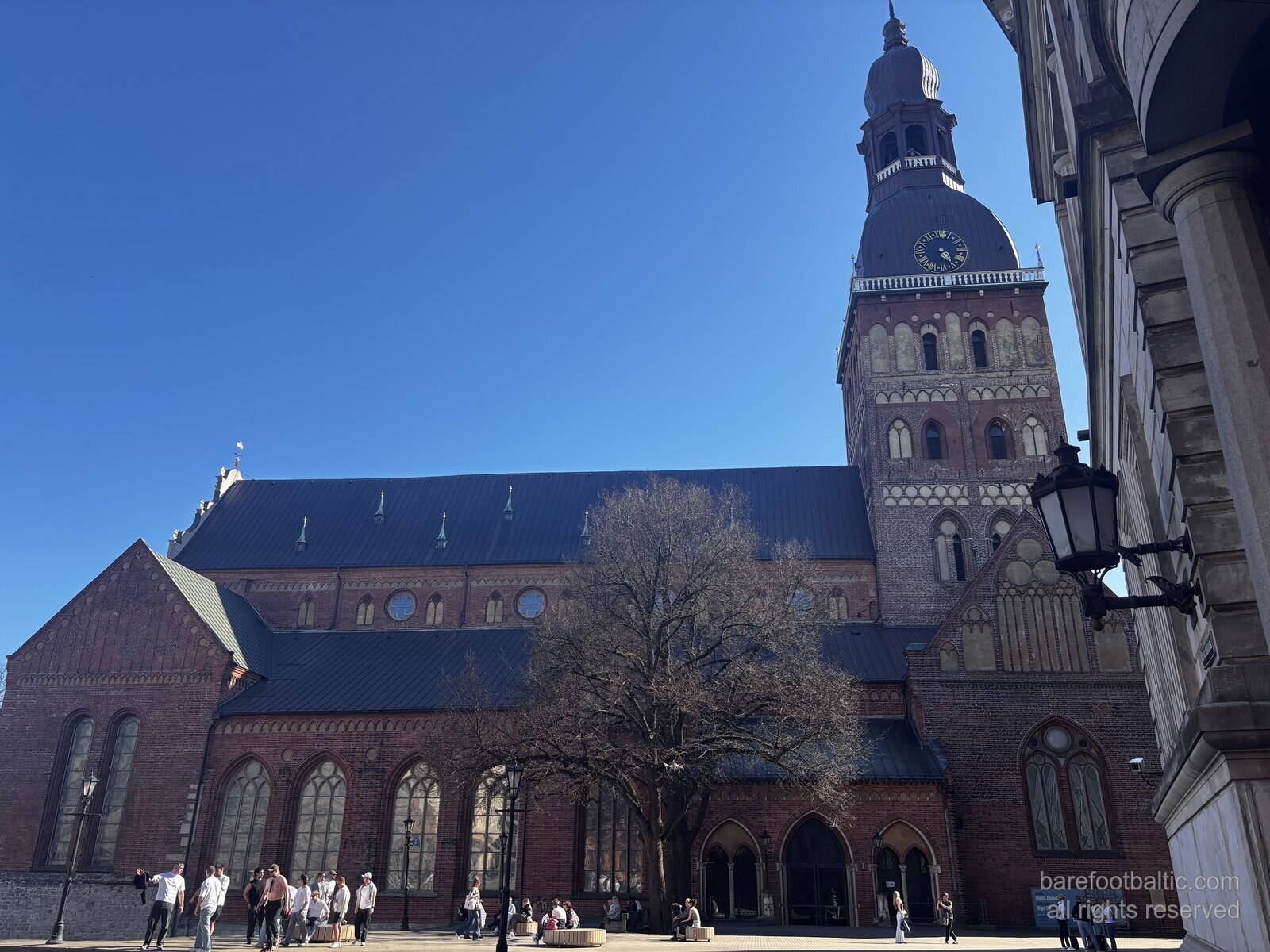
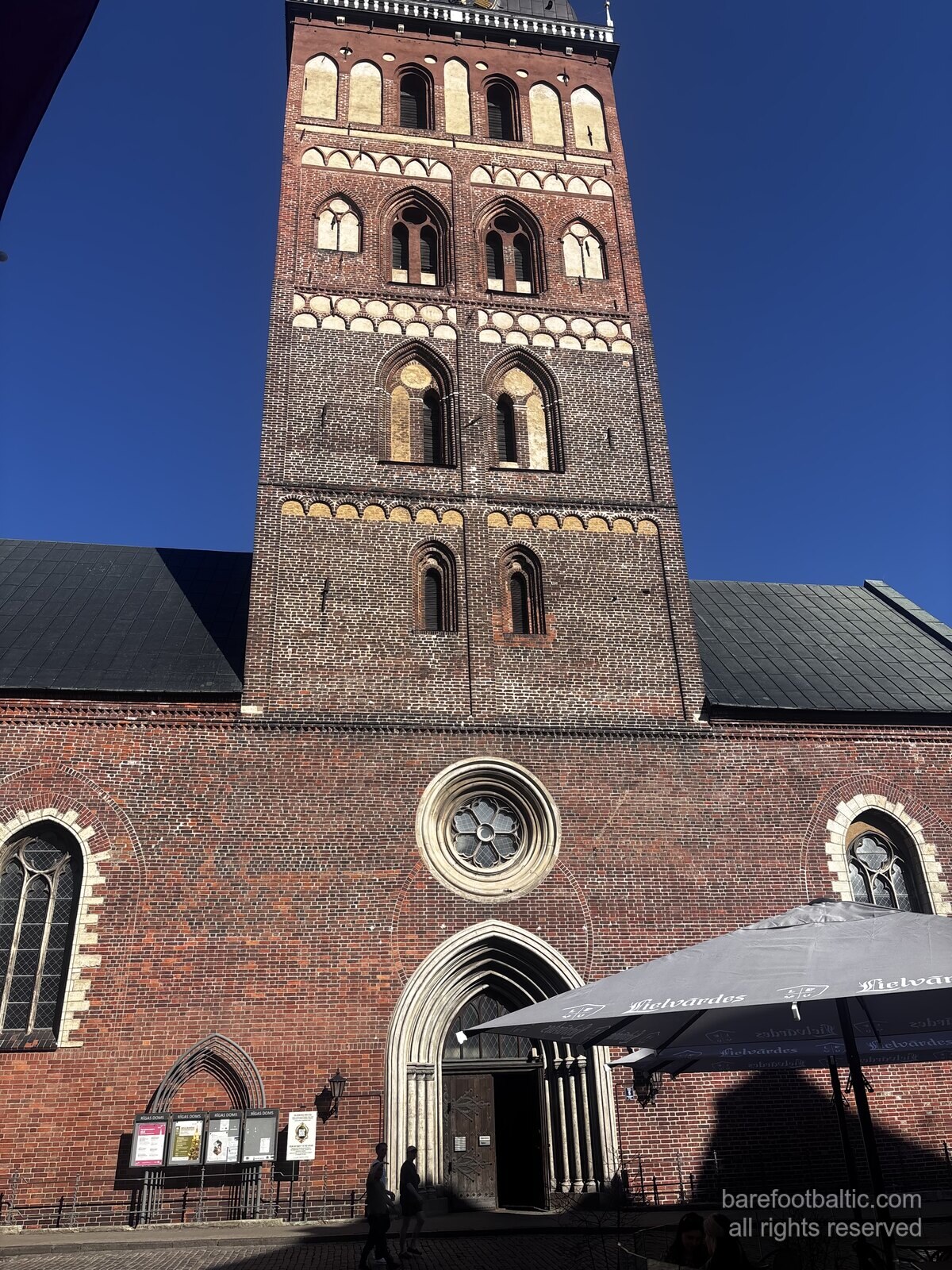
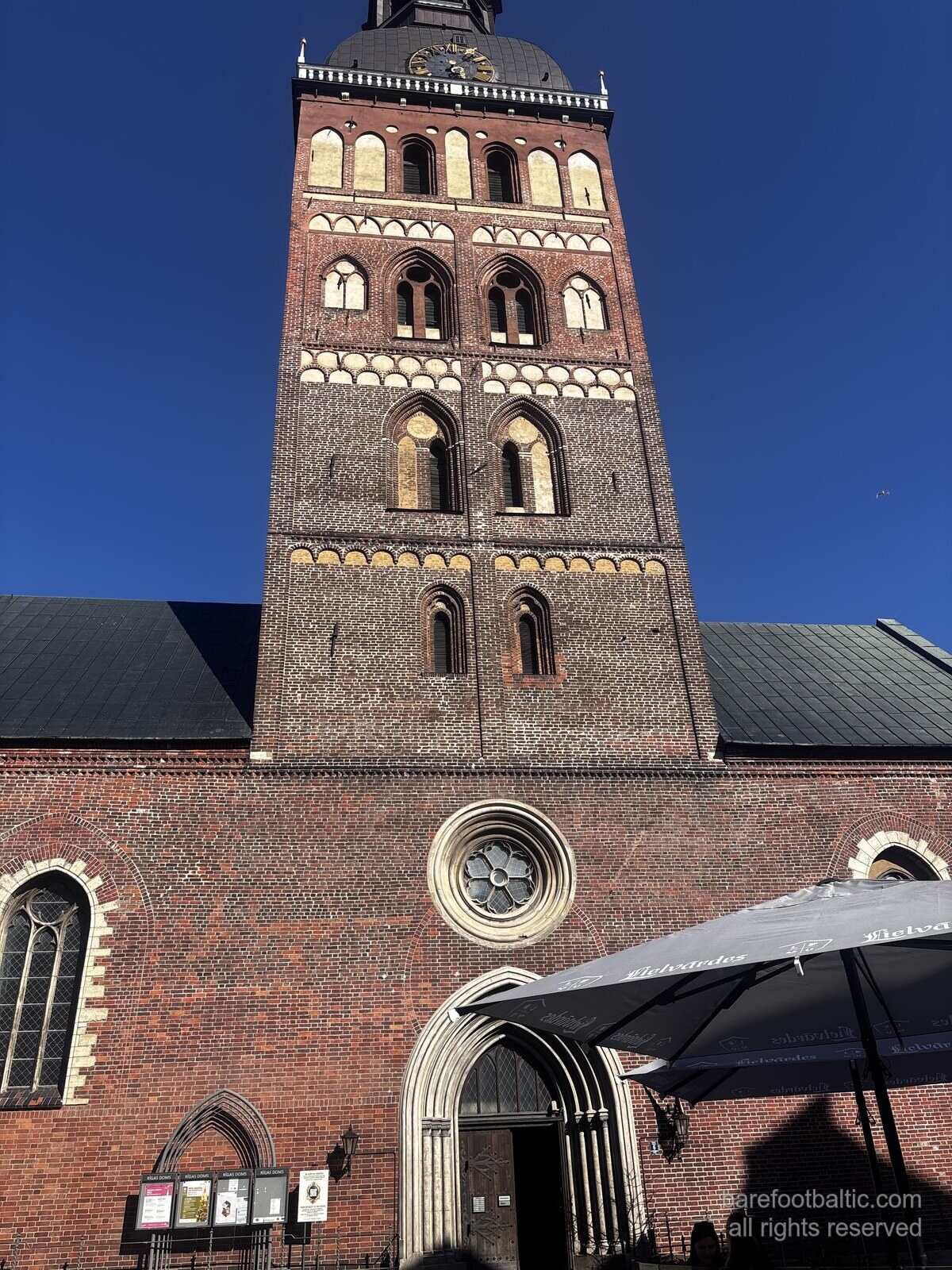
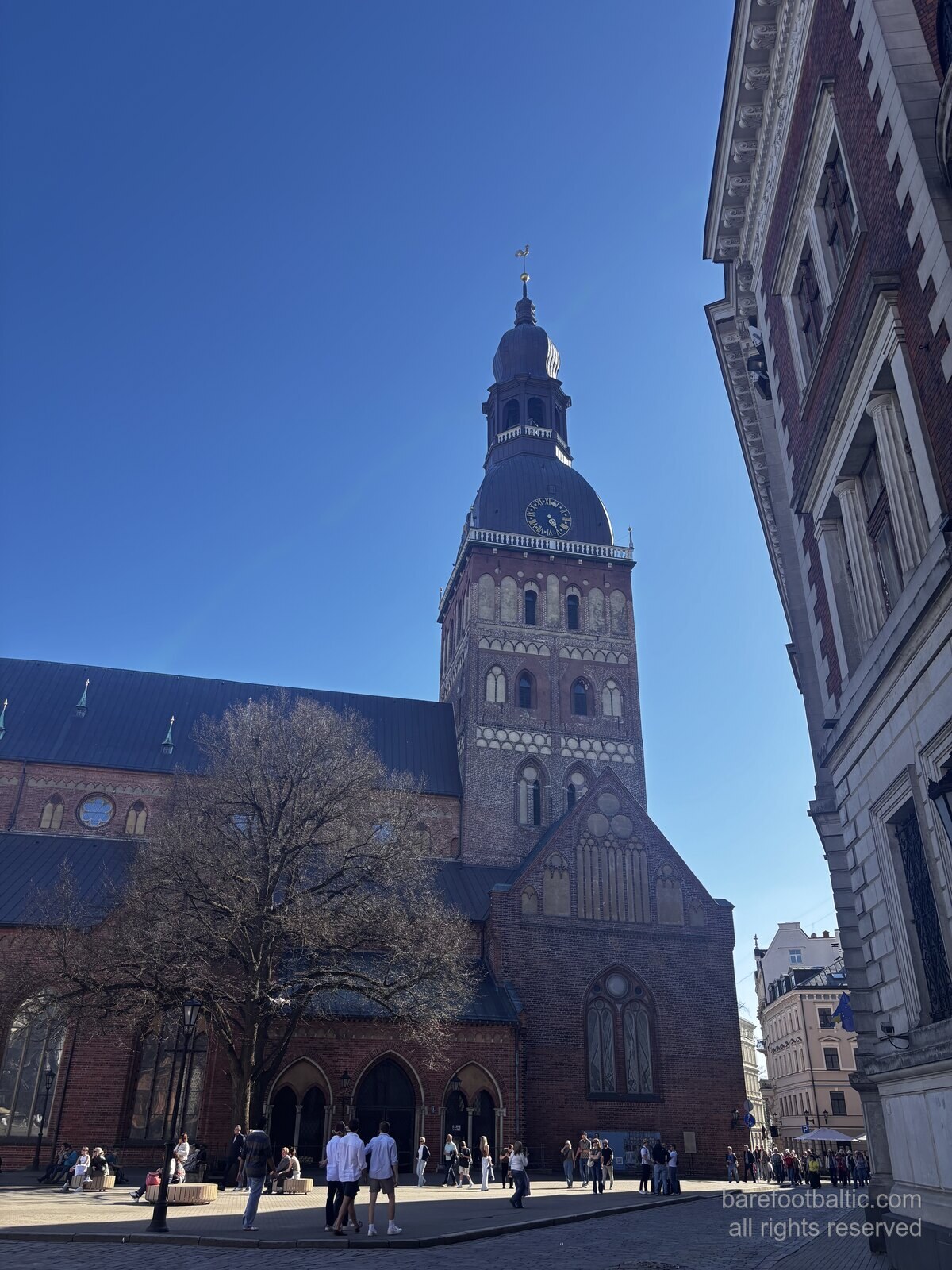
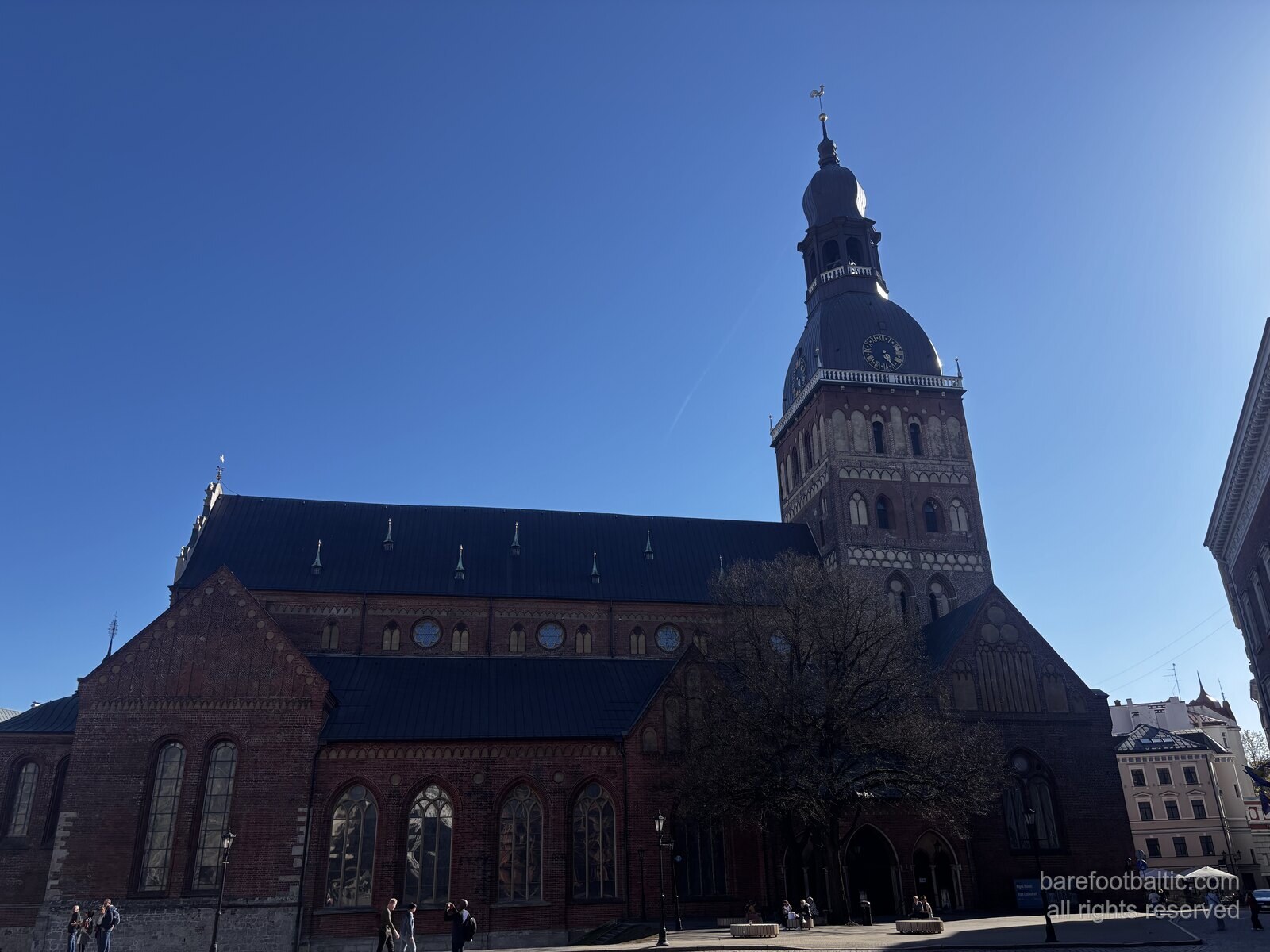
Riga Cathedral through a few seasons and a few angles. Click any image for the full-size view.
Short answer, what Riga Cathedral actually is
Riga Cathedral, in Latvian Doma baznīca, is the great red-brick Lutheran church on Doma laukums (Cathedral Square) in the middle of Riga’s Old Town. It was founded in 1211 by the German Bishop Albert, the same man who founded Riga itself ten years earlier. It is the oldest medieval building in the Baltic states still in continuous use as a place of worship. Inside is one of the largest pipe organs in the world, built in 1884 by E. F. Walcker of Ludwigsburg. 6,718 pipes, four manuals, the kind of instrument visiting musicians come to Riga specifically to play.
Here’s the practical version, in case you only have a minute.
- Open most days, roughly 10:00 to 17:00. Sunday morning service uses the building first.
- Entry runs around €3 to 5. Organ recitals are around €15 to 20 and run several afternoons a week.
- Allow 30 minutes for a quiet wander, an hour if there’s a recital, and longer if you’re into church history.
- Doma laukums outside is the most photographed square in the Old Town. In summer the cafés spread halfway across it.
The rest of this is the longer version. What to actually look at, why the name confuses every English-speaking visitor, and what I tell guests to do if they only have an afternoon. If you want the wider context, the Old Town pillar guide walks you through the whole quarter. This piece is the deep dive on the cathedral and its square.
There is no dome on Riga Cathedral
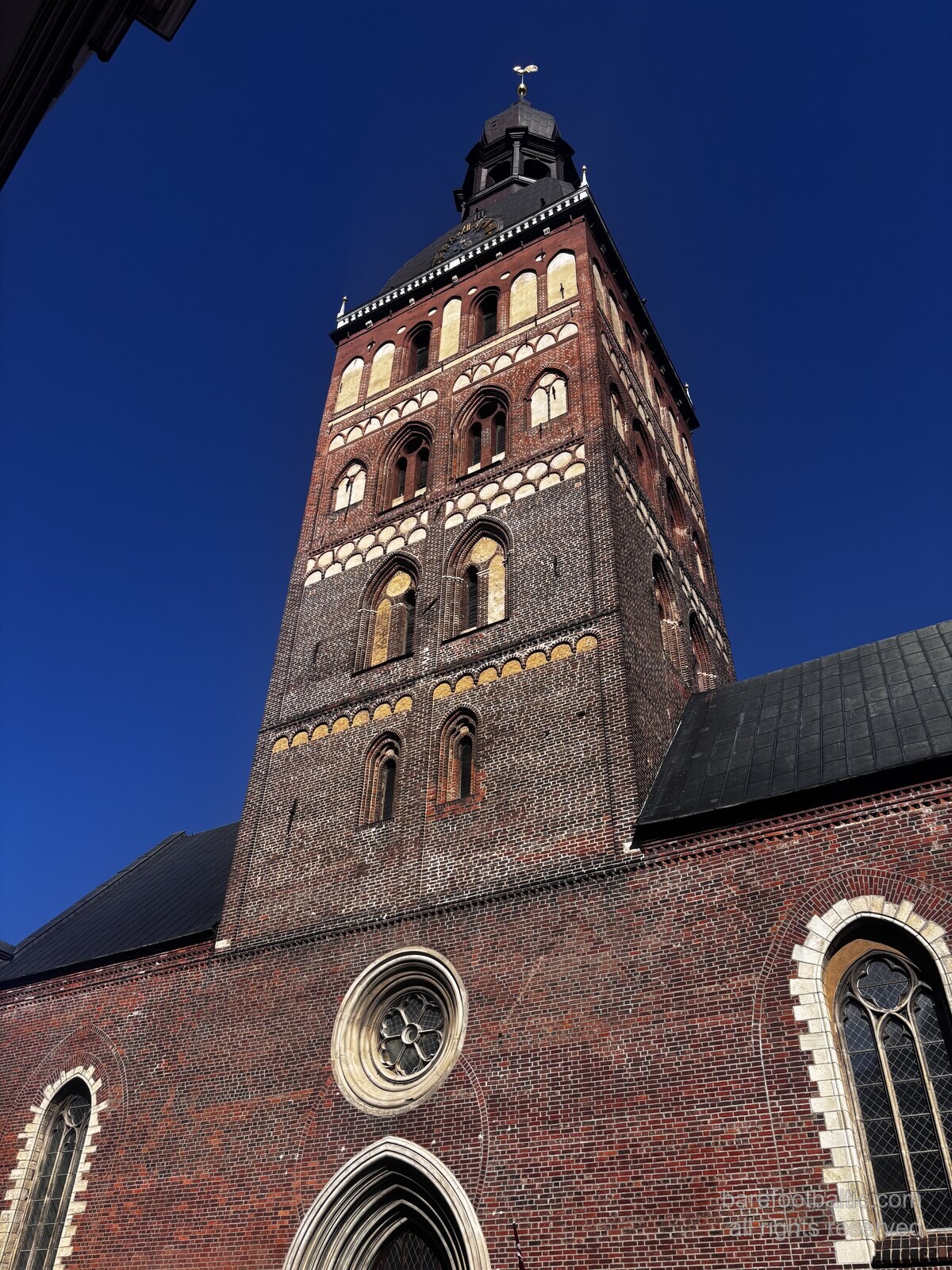
Let’s clear that up first, because it confuses a lot of visitors. The Latvian name is Doma baznīca, which translates to ‘the dome church’ if you go through English. Visitors then arrive at the square expecting a dome and don’t find one. What sits on top of the tower is a baroque cupola added in 1776. Pretty, but not a dome.
The word doma here is a loan from German Dom, which is a loan from medieval Latin domus (in the church-Latin sense of domus ecclesiae, the cathedral house). German speakers know this. Latvian speakers grew up with it. English doesn’t carry the same shortcut, and the visual mismatch is real. So Doma means cathedral. There’s no dome. The tower has a cupola, a clock, and a small golden weather-cock at the top. The same red-brick-and-rooster combination shows up on St Peter’s and St James’s, because rooster spires are the regional handwriting around here.
What you’re actually looking at from the square
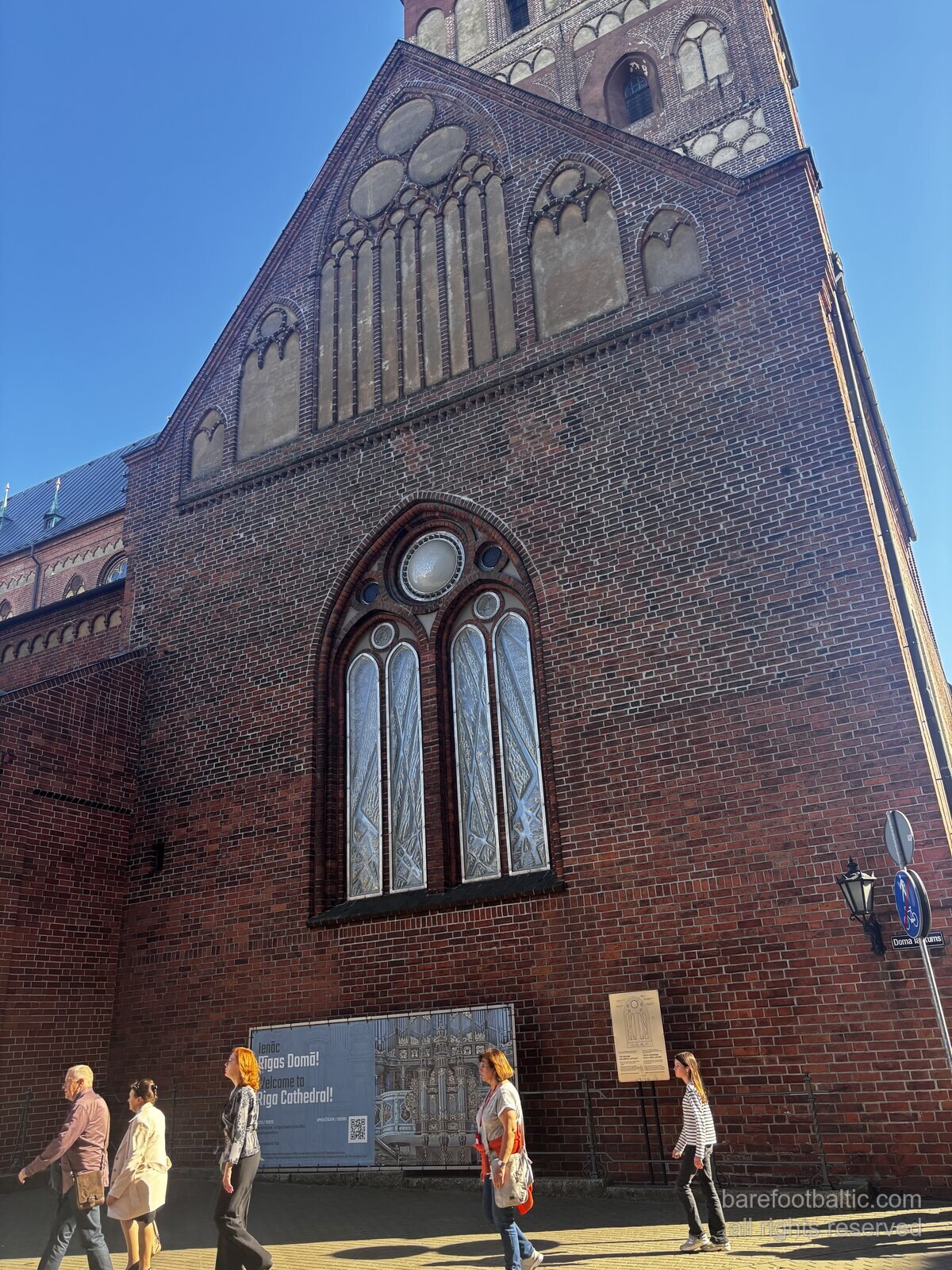
Stand in front of the west portal (the entrance with the rose window above it) and the building reads as one big red-brick mass. Look for two minutes and it starts to come apart into eras. There are at least five visible from the square if you know what to look for.
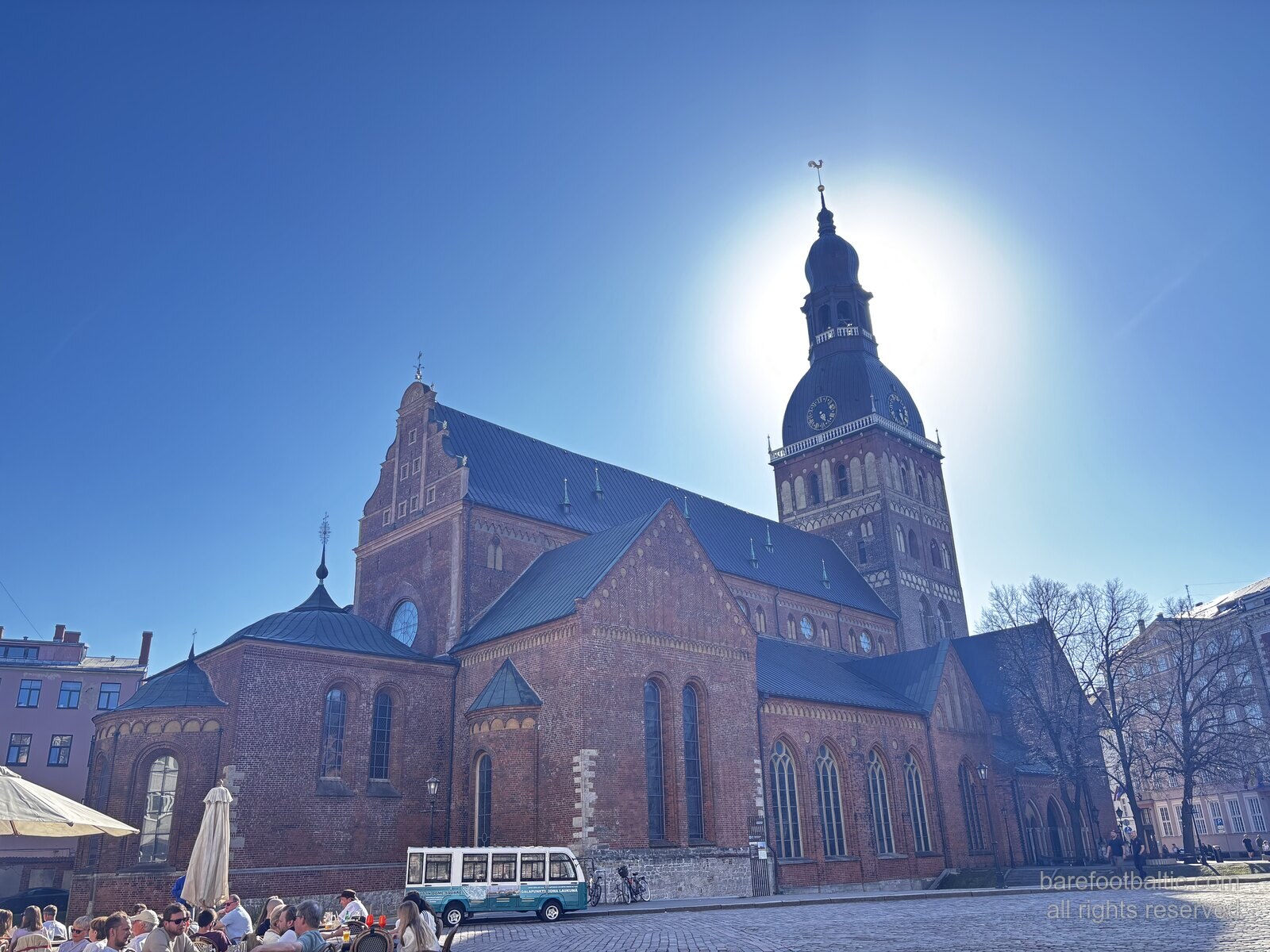
Start at the bottom. The lower walls of the nave and transepts are Romanesque, late 13th century. Round arches, small windows, very plain. The original Bishop Albert church is mostly buried inside the later construction. Above that, the clerestory and the gabled transept ends turn Gothic, 14th and 15th century. Pointed arches, taller windows, the rose window over the west door. The little chapels added to the south side came later in the Gothic period. The tower cupola is baroque, dropped on in 1776 after the much taller medieval Gothic spire collapsed and was deemed too dangerous to rebuild as it was. And finally, the eastern apse and several detail elements are 19th-century eclecticism from Riga’s great Tsarist-era restoration push.
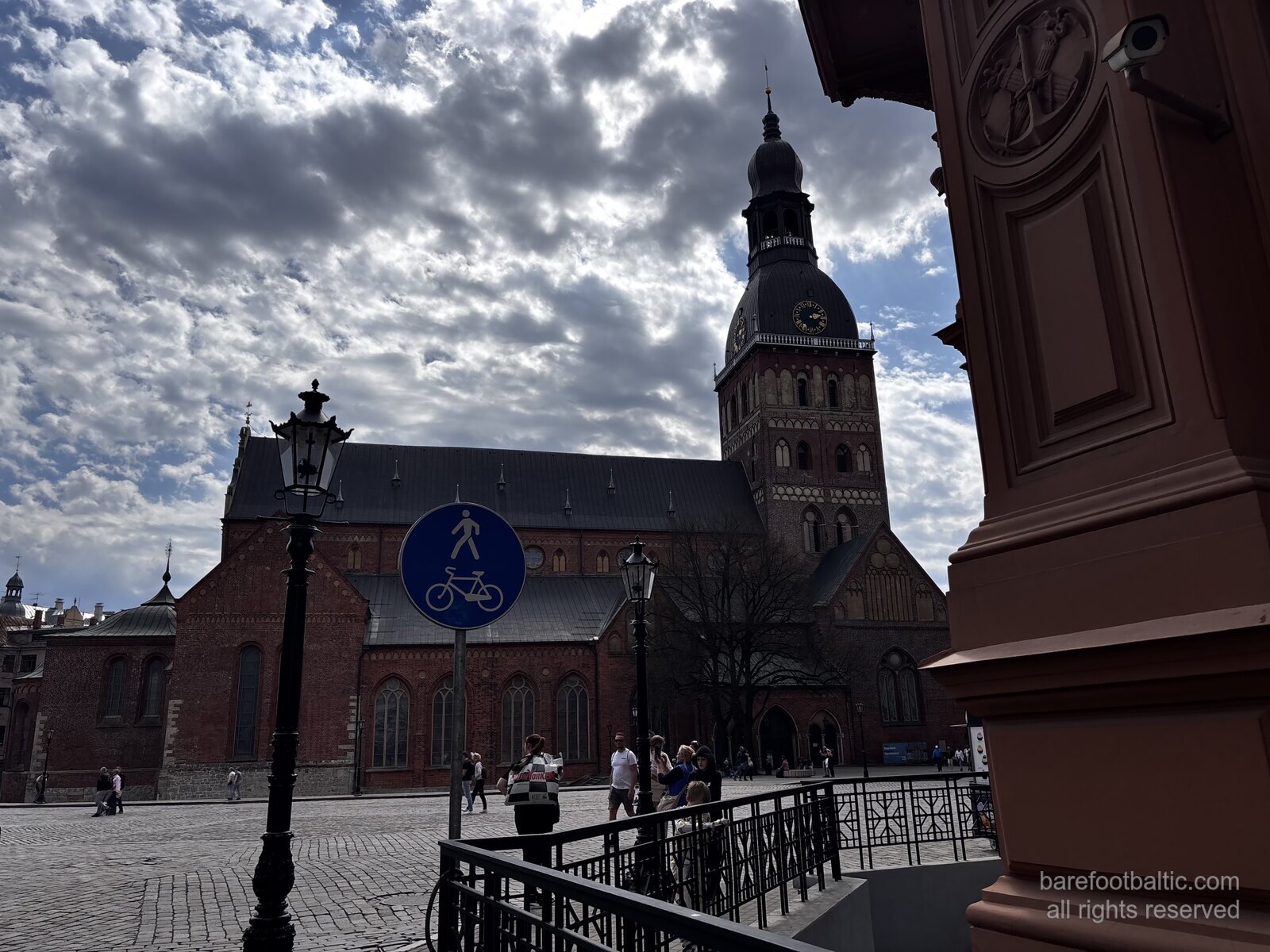
The other thing worth noticing from the outside is the floor level. The cobblestones around the cathedral sit roughly two metres higher than they did in 1211. Riga is built on alluvial soil at the edge of a river. Over eight centuries the city raised itself with each fire, each rebuilding, each new layer of cobbles. The cathedral sat still while the ground around it rose. From the south side you can see the original Romanesque entry sunk well below the modern street, like a building wading into a slow lake.
Inside the cathedral
The first thing visitors notice is how plain it is. If you’ve been in Cologne or Vienna or even Vilnius’s cathedral, the inside of Riga Cathedral can feel like someone took the volume knob and turned it most of the way down. There are no gilded altars. The walls are whitewashed, the pews dark wood. The light comes through clear glass on most windows, with only fragments of colour in a few of the more recent panels.
That’s the Lutheran Reformation, which arrived in Riga in 1524 and stripped the cathedral of most of its medieval Catholic decoration in a single energetic afternoon. The altars were removed and the saints taken down. The building was reset for the new theology of the spoken word. What you’re looking at, in other words, is what an unusually large medieval church looks like once 500 years of ornament have been politely removed.
If you stand at the back and look forward, the things to notice are the great organ at the west end (which I’ll come to in a moment), the simple pulpit halfway down the nave, the pews running away into shadow, and the eastern altar. It’s modest, dark, almost an afterthought compared to the organ behind you. There’s a small museum section in the cloisters next door, with stonework salvaged from earlier states of the building, including the original 13th-century tympanum. Worth ten minutes if you have them.
The floor is part of the experience too. Look down at it as you walk. You’re walking on the gravestones of bishops, archbishops, merchants, and city fathers from six centuries. Most of the inscriptions are in Latin or Middle Low German. A guide once told me there are over 200 named burials in the floor of this church. I’ve never counted to verify, but it feels right.
Latviešu doma baznīca nav doms. Tā ir mūsu pirmā baznīca, un tā tikai sauc sevi tā vecā vācu vārdā.
What an old guide of mine used to say to confused tourists. "The Latvian Doma church isn’t a dome. It’s our first church, and it just calls itself by an old German name."The organ, the actual reason to come inside
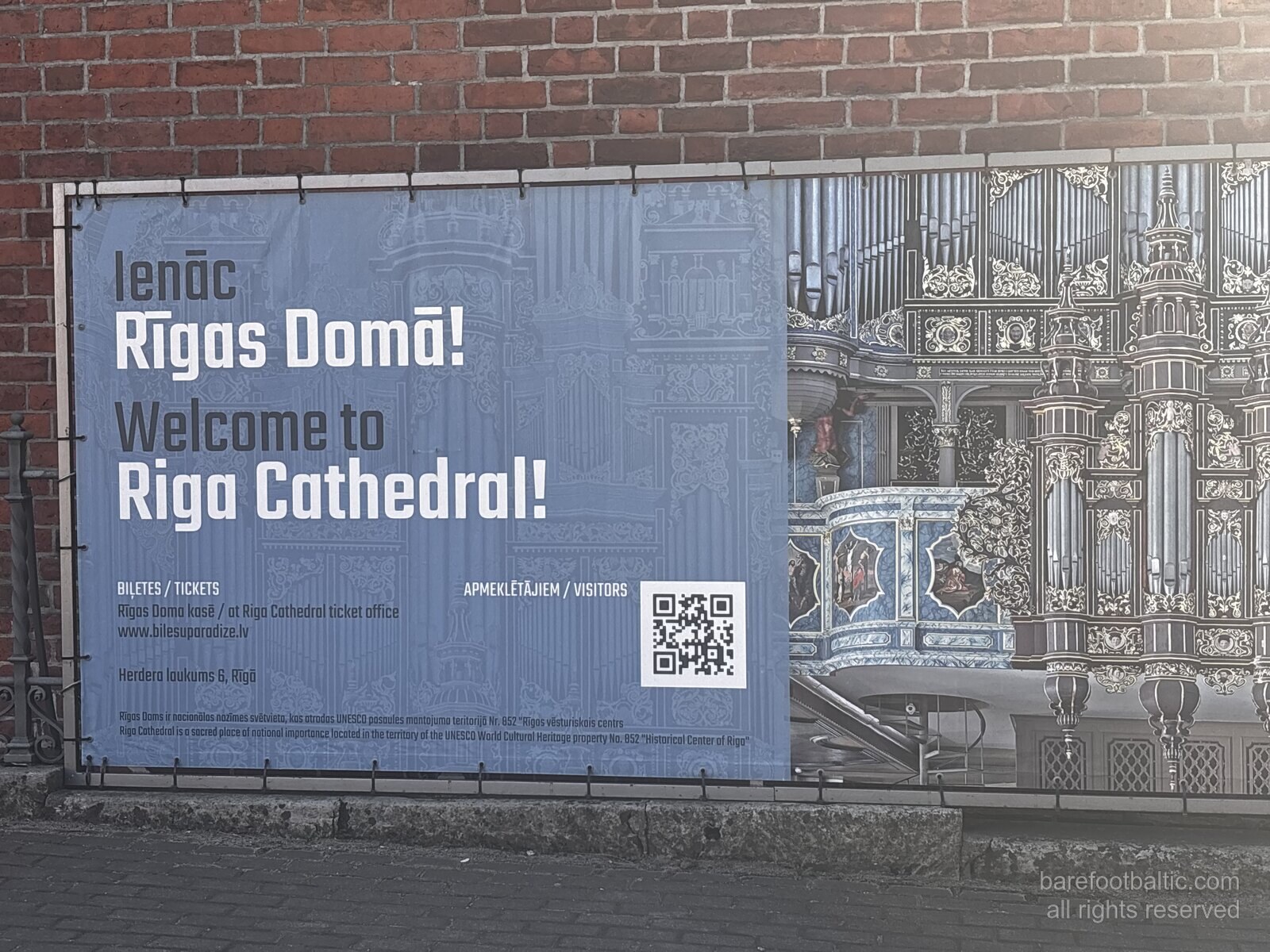
If there is a single non-architectural reason to plan around being inside Riga Cathedral, it is the Walcker organ. Built in 1884 by the firm of E. F. Walcker & Cie of Ludwigsburg, in southern Germany, it has 6,718 pipes, four manuals, and 124 stops. At the time it was built it was the largest organ in the world. It is no longer that (the title has long since moved on), but it remains a major historic Romantic-era pipe organ, and an instrument that organists fly to Riga specifically to play.
The case is from an earlier instrument, late 16th century, beautifully carved in dark oak and rising the full height of the western wall. The pipes (the visible ones, anyway, perhaps a couple of hundred of the total) sit in tiers behind that case, polished and silver. The thing is enormous and slightly absurd in scale. It looks like someone built a small cathedral out of pipes and put it inside the main one.
Lunchtime and afternoon recitals run several days a week, year-round, with a heavier schedule from May through September. Tickets are usually around €15 to 20 and you don’t need to book ahead unless you’re here in peak July. Posted schedule on the cathedral noticeboard is more reliable than the website. The recitals run roughly 20 to 40 minutes. That’s enough to hear the instrument do real work. Even people who don’t think they care about church organs walk out surprised.
Two pieces of practical advice if you go. First, sit on the right-hand side of the nave (as you face the altar) about two-thirds of the way back. The acoustic is best there. The front rows hear the pulpit, not the organ. Second, the cathedral isn’t heated. In December it is properly cold inside even when the radiators are on, and the temperature in January can be only a couple of degrees above outside. Wear what you’d wear for a 30-minute walk in the snow.
Doma laukums, what’s around the cathedral
Doma laukums is, by a clear margin, the most photographed square in the Old Town. The cathedral takes up the south-west corner. Across the square sits Latvian Public Radio, in a handsome 1930s building that still goes on the air every morning. Behind that, the small white-and-gold building is the Latvijas Radio ‘1’ canteen. Not a tourist place, but if you happen to walk past at noon, the smell of pork and dill is unmistakable.
The square is ringed by cafés, and in May they all roll out their outdoor seating at once. There’s a particular weekend (usually the second weekend of May) when you can feel the city decide that summer has begun. From then until late October, Doma laukums runs as something close to an open-air living room. Locals meet here. Buskers play. A vintage red tour bus from the 1960s sits parked on the south edge of the square most days, ready to take confused tourists on a 45-minute loop.
Near the south-east corner of the square, where Pils iela meets Doma, you’ll see a brass relief set into the cobblestones with the date 1989 stamped on it. That’s the line of the Baltic Way human chain. In August 1989, roughly two million people across all three Baltic states linked hands from Tallinn to Vilnius, passing right through Riga’s Old Town. The chain ran straight across this square. Latvians of a certain age, mine included, can tell you which spot they were standing on, if you ask.
Practical answers
Where it is and how to find it
Doma laukums 1, in the centre of Riga’s Old Town. Walk in from the Freedom Monument along Brīvības iela and Kaļķu iela, about ten minutes, or up from Town Hall Square along Šķūņu iela, which is the prettiest approach. There are no metro lines. The trams skirt the Old Town perimeter. From Riga Central Station it’s a 12-minute walk through the market and the south end of the Old Town. The Freedom Monument tram stop (‘Brīvības piemineklis’) is the closest, about seven minutes’ walk away.
Hours, tickets, and the recital schedule
The cathedral is generally open Monday through Saturday, around 10:00 to 17:00, with shorter hours in winter and longer ones in summer. Sunday morning is service first. Visitor access opens after the service ends, usually around 12:30. Standard adult entry is around €3 to 5, with a child or student ticket around €1 to 2. Organ recital tickets are usually €15 to 20 and include cathedral entry. Schedule changes seasonally and around major holidays. Check the cathedral’s own noticeboard at the west portal, which is the most up-to-date source.
Photography, accessibility, and what to wear
Photography is fine inside, no flash, and please don’t set up a tripod during a service. The main floor is wheelchair-accessible from the south portal entrance. Ask the staff to direct you. The cloisters and the museum sections are partially accessible. On clothing, the cathedral isn’t heated, so layer up in winter and bring a sweater even in spring. The cobblestones outside are real medieval cobblestones. Sensible shoes apply.
Combining the cathedral with the rest of the Old Town
The cathedral sits dead-centre in the medieval quarter and pairs with several other Old Town stops on a half-day walk. Five minutes south is the Cat House with its rooftop story, and beyond it the House of the Blackheads on Town Hall Square. The quiet Three Brothers lane and Riga Castle sit north-west. Due south, the St Peter’s tower climb is the panoramic counterpart to whatever quiet half-hour you’ve just spent inside the cathedral. The full route is in the Old Town pillar guide.
My take
Riga Cathedral isn’t a wow building from the inside. If you’ve been to a great Catholic cathedral, St Peter’s in Vienna, the Frauenkirche in Munich, the cathedrals of Cologne or Strasbourg, the interior here will feel underdressed by comparison. The Reformation took its colour. What it kept is something quieter. A useful, lived-in church that has been the Sunday building for the same congregation, more or less, for 800 years. It’s not a museum, and the longer you sit in it the less it tries to be one.
Come for the organ. Stay for the square. Walk out and have coffee on Doma laukums in the sun, and notice that the city has decided to live around this building, not around any of its newer ones. Latvia is small. Most of its institutions are recent and a little fragile. The cathedral is the one that has been here longer than any of the rest of it.
Frequently asked questions about Riga Cathedral
Daiga Taurīte is a licensed Latvian tour guide and co-founder of Barefoot Baltic, which runs small-group day excursions from Riga. She grew up in Riga, spent two decades working in London, and came home in 2024. Barefoot Baltic is licensed by Latvia’s Consumer Rights Protection Centre (PTAC), holds ATD passenger transport licence PS-01995, and is insured by BTA Baltic for civil liability.
The cathedral is on every walk we run through the Old Town. If you’d like a half-day Old Town tour built around the organ recital and the architectural eras, with a licensed Latvian guide, get in touch. We’ll plan it around your timing and your interests.